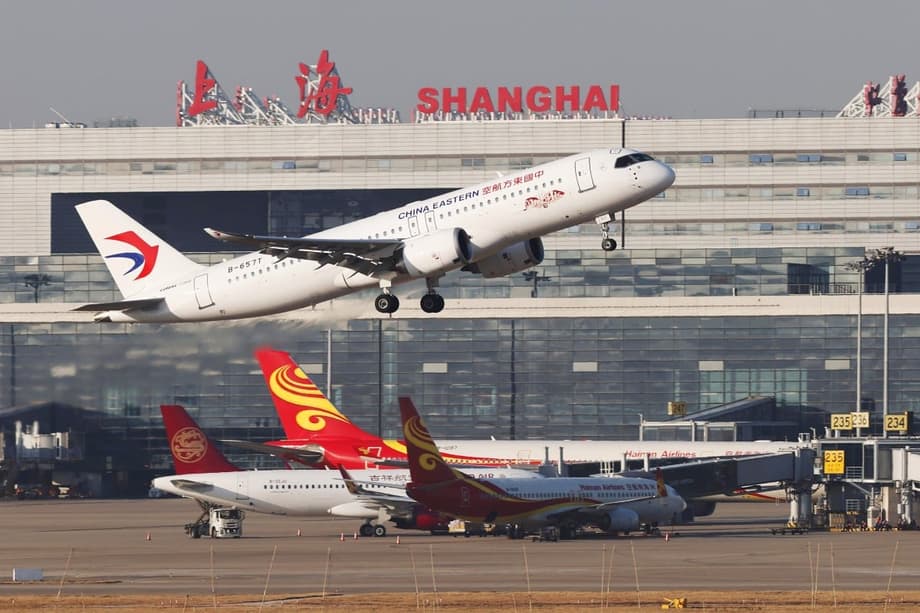
Travel advisory sparks a rare wave of cancellations
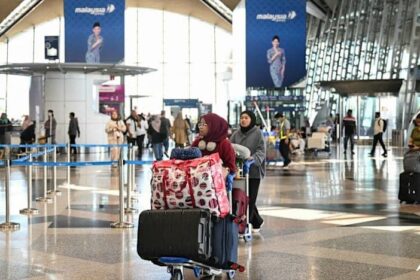
Chinese carriers logged a surge of cancellations for Japan trips after Beijing urged citizens to avoid travel, wiping out nearly half a million itineraries in a matter of days and shaking one of Asia’s most important tourism corridors. An independent aviation analyst said about 491,000 air tickets bound for Japan were canceled from Saturday through Monday, roughly 32 percent of total bookings to that destination at Chinese airlines. At the peak on Sunday, cancellations outnumbered new bookings by a ratio of 27 to 1. The share of flights affected rose to 82 percent on Sunday and remained more than 75 percent on Monday, levels not seen since the early months of the pandemic in 2020.
- Travel advisory sparks a rare wave of cancellations
- What set off the dispute
- Impact on airlines, tour groups and schedules
- Market reaction and economic stakes in Japan
- A diplomatic chill that spread beyond tourist itineraries
- Short term freeze or a more durable shift
- How the numbers stack up
- What this means for airlines and travelers
- Regional and trade angles
- At a Glance
The wave of changes accelerated after Chinese airlines rolled out full refunds and free rebooking for Japan routes following the official warning. Carriers then began scrapping schedules. More than 1,900 flights from mainland China to Japan for December were canceled, according to schedule data reviewed by civil aviation experts. That represents more than 40 percent of the month’s planned service and, because airlines typically operate routes in pairs, many return segments were effectively cut at the same time.
Independent aviation analyst Li Hanming said the numbers reflect travelers responding to perceived risks rather than price or convenience. After detailing the 27 to 1 ratio of cancellations to new bookings, he described the priority shaping decisions.
Safety concerns are the dominating factor for travel.
What set off the dispute
The advisory followed comments by Japan’s new prime minister, Sanae Takaichi, who told lawmakers on November 7 that a Chinese attack on Taiwan could trigger a military response by Tokyo. Japan’s postwar constitution limits the use of force in international disputes, yet security legislation allows action in a situation that threatens Japan’s survival. Linking a Taiwan contingency to potential involvement marked a sharp rhetorical shift in a region where leaders often avoid explicit military scenarios.
China’s Foreign Ministry escalated the response with a safety notice on Friday, saying Chinese citizens should refrain from visiting Japan. The announcement framed the warning as a step to protect travelers from a deteriorating atmosphere.
In a statement, the Chinese Foreign Ministry urged restraint by travelers.
The ministry and its missions remind Chinese citizens to refrain from visiting Japan for the time being.
China’s military outlets also sharpened the language. The People’s Liberation Army Daily cautioned that intervention in the Taiwan Strait could turn Japan into a target.
Japan risked turning the country into a battlefield.
Tokyo protested and summoned China’s ambassador, while Chinese officials had already called in Japan’s envoy to complain about Takaichi’s comments. Japan also issued guidance for its nationals living in China, asking them to stay alert, avoid crowded places and take care with daily interactions. Japan’s chief cabinet secretary, Minoru Kihara, explained the security calculus behind the advisory for Japanese residents in China.
We have made judgments based on comprehensive consideration of the security situation in the country or region, as well as its political and social conditions.
The two countries have stressed the need for stable ties in recent meetings, yet the exchange over Taiwan has quickly widened, with diplomacy struggling to keep pace with public sentiment and rapid policy steps on both sides.
Impact on airlines, tour groups and schedules
Chinese airlines moved quickly to make cancellations easier. Flag carriers and regional airlines offered full refunds and no fee changes on Japan routes announced within hours of the warning. Many have since extended those policies into spring 2026, allowing passengers to cancel or rebook travel plans through late March. The prolonged window signals that carriers and regulators are preparing for a chill in demand that could last through the winter travel season.
The effect on flight schedules has been swift. Analysts estimate that more than two out of five December services from mainland China to Japan have been dropped. Cutting one leg of a round trip typically removes the return leg as well, compressing capacity in both directions even as some residual demand remains among business travelers and students.
Tour operators reacted too. Large travel agencies in China canceled prepaid group packages for December and paused new marketing for Japan itineraries. That removed a meaningful pipeline of visitors who book months ahead and spend heavily on shopping, dining and entertainment. Hotel operators in Japan, especially in cities like Tokyo and Osaka and in ski regions that rely on winter travel, have reported lower occupancy expectations for late 2025 and early 2026 as they account for fewer arrivals from China.
How refunds and flexibility turbocharged cancellations
With free refunds and changes available, travelers faced little friction to back out. That reduced the cost of switching plans and led to cancellations at a scale rarely seen outside of a public health emergency. Li Hanming, the aviation analyst, said the size of the wave echoed what he observed in early 2020, when China’s aviation market saw a sharp drop in capacity after the Lunar New Year holidays. Chinese carriers, which dominate the China Japan market, are bearing the brunt of refunded tickets. Li estimated that 70 percent of the canceled tickets were round trips and that losses from refunds likely run into the billions of yuan.
Market reaction and economic stakes in Japan
Investors in Japan’s tourism and retail sectors reacted quickly. Shares of airlines, travel agencies, department stores and hotel operators fell at the start of the week as the scope of cancellations became clearer. The potential hit is large, because visitors from China spent more per person than most other foreign travelers and accounted for a large share of duty free and luxury purchases.
China delivered about 7.5 million visitors to Japan from January through September this year, by far the highest inbound total from any single market. Several private forecasters now warn that the travel freeze could cost Japan between 500 million and 1.2 billion dollars through the end of the year, depending on how long the advisory remains in place and how many flights are restored in early 2026. Hotels and restaurants that hired up for a brisk winter season are adjusting, while tourist areas that have struggled with congestion at peak times may experience a short respite in foot traffic.
Financial analysts say this is not a crisis for Japan’s economy, yet it is a clear reminder of how quickly geopolitical shocks can change assumptions about travel flows in East Asia. The repricing of risk in the region is visible in both airline schedules and consumer behavior.
A diplomatic chill that spread beyond tourist itineraries
The dispute has spilled into education and culture. China’s Ministry of Education advised citizens to exercise caution when making plans to study in Japan, citing public security concerns and alleged crimes targeting Chinese nationals. Authorities in Hong Kong issued a similar travel warning for residents. Tokyo’s embassy in Beijing urged Japanese citizens to stay vigilant and avoid traveling alone, especially with children.
Cross border cultural events have been called off. Concerts and comedy shows by Japanese performers in mainland cities were canceled or postponed. Distributors deferred releases of Japanese films in mainland theaters. State media spotlighted a downturn in box office receipts for a Japan produced animated feature, attributing the shift to public anger over the prime minister’s remarks. Organizers also pulled a long running annual survey of bilateral views at Beijing’s request, saying the findings would not reflect a fast changing climate.
Trade sensitive measures reappeared as well. China banned imports of Japanese seafood, a step that adds to the growing list of economic counter moves taken in response to Tokyo’s Taiwan language. Business groups in Japan urged the government to lower the temperature. In response, Tokyo dispatched a senior Foreign Ministry official to Beijing to seek a reset, while reiterating that Japan’s official stance on Taiwan has not changed and that peace and stability in the Taiwan Strait remain vital for the region.
Short term freeze or a more durable shift
Outbound travel between China and Japan has mirrored political temperature swings before. During a 2012 flare up over the Senkaku and Diaoyu Islands, Chinese arrivals to Japan plunged for months, then recovered once tensions eased and consumer sentiment stabilized. A similar pattern could unfold now, especially if the advisory is toned down and airlines restore capacity ahead of spring travel windows.
There are reasons to expect a slower thaw this time. Refund waivers now run through late March 2026. Reports from the airline sector suggest regulators have asked carriers to keep a reduced schedule to Japan for several months. If rhetoric around Taiwan hardens, cautious households could wait longer to rebook. For now, the signal is that tourism is being used as a visible, low cost tool to express displeasure without touching broader trade in a direct way.
How the numbers stack up
Behind the headlines is a set of data points that illustrate the scale of the shock across aviation and tourism.
By the numbers
- About 491,000 air tickets from China to Japan canceled between Saturday and Monday, roughly 32 percent of total Chinese airline bookings to that destination.
- On Sunday, cancellations were 27 times higher than new bookings.
- Flight disruptions peaked at 82 percent on Sunday and remained about 76 percent on Monday.
- More than 1,900 scheduled China to Japan flights were canceled for December, over 40 percent of the monthly plan.
- Refund and free change policies for Japan routes now extend to late March 2026 at many Chinese carriers.
- China sent about 7.5 million visitors to Japan in the first nine months of 2025.
- Analysts estimate refunded tickets, most of them round trips, imply losses in the billions of yuan for Chinese airlines.
- Private forecasts put the hit to Japan’s tourism revenue at 500 million to 1.2 billion dollars through year end if the freeze persists.
What this means for airlines and travelers
For airlines, the immediate task is to manage capacity and cash. Chinese carriers dominate traffic on China Japan routes, so refund costs and lost revenue fall heavily on them, yet the China Japan segment is still a small part of their total domestic and international networks. Cutting paired routes helps conserve aircraft and crews for markets with steady demand, while extended waivers keep customer goodwill for future travel.
For travelers, flexibility is unusually generous. Many passengers can cancel or change Japan tickets without fees into March 2026. Group tours have been shut off by large agencies, and individual travelers will need to check airline policies and official travel advisories before rebooking. Students and business travelers should also monitor embassy guidance, since safety notices have shifted quickly.
Regional and trade angles
The freeze threatens to ripple into larger economic debates. China’s application to join the Comprehensive and Progressive Agreement for Trans Pacific Partnership needs unanimous approval. Japan’s consent is essential, and the current use of economic pressure over a political dispute makes short term progress less likely. China is already part of the Regional Comprehensive Economic Partnership, a broader trade pact with looser rules, so trade flows will not stop, yet ambitions to join the higher standard group could stall.
The security context matters as well. The alliance between the United States and Japan means any Japanese involvement in a Taiwan conflict would probably draw in Washington. United States President Donald Trump recently spoke with both Takaichi and Chinese President Xi Jinping. Public readouts signaled support for Japan while stressing the need to manage competition with China. That balance will shape how far this travel freeze spreads into other areas of the relationship.
At a Glance
- China’s travel warning set off about 491,000 cancellations of Japan trips within days.
- At the peak, cancellations outnumbered new bookings by 27 to 1.
- More than 40 percent of December flights from mainland China to Japan were cut.
- Chinese airlines are offering free refunds and changes on Japan routes into March 2026.
- Tour groups have canceled December packages and paused new marketing for Japan.
- Japanese tourism and retail shares fell as the scope of cancellations became clear.
- China’s Education Ministry urged caution on study plans in Japan, and Hong Kong mirrored the travel warning.
- Concerts, film releases and cultural exchanges were canceled or postponed in China.
- China banned imports of Japanese seafood as tensions rose.
- Tokyo sent a senior diplomat to Beijing, while reiterating that its policy on Taiwan is unchanged.