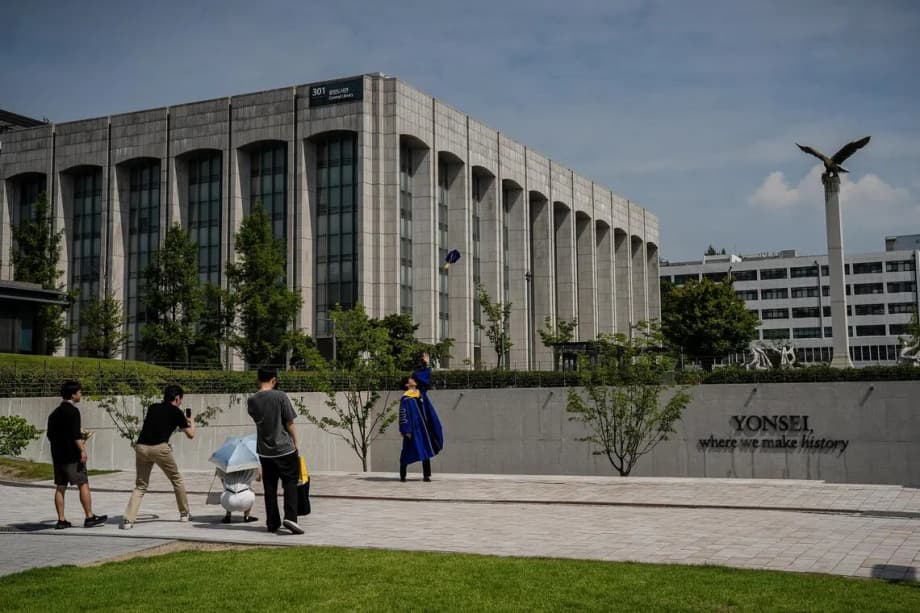
A fifth year becomes a safety net
Across South Korea, growing numbers of university seniors are choosing to stay in school even after they have met their degree requirements. Many call it a voluntary fifth year. It is a response to a job market that feels unforgiving and to hiring practices that reward students who remain closely connected to campus resources. Data shared by Representative Jin Sun mi indicate that as of September, more than 9,000 students at a group of nine major regional universities and six leading private institutions based in Seoul deferred graduation. That tally is nearly 50 percent higher than in 2022, and final figures are set to climb as additional requests are processed.
Deferral is simple. A student who has finished all credits pays a modest fee, often between 100,000 and 200,000 won, and stays enrolled for one more semester or year. Keeping student status brings access to campus career offices, alumni networks, internship notices, and on site recruiting. In a market where many companies have shifted away from large intake drives to rolling recruitment, being an enrolled student can be an advantage.
The economic backdrop is difficult. The Ministry of Employment and Labor’s job offer ratio fell to 0.42 in October, the lowest for that month since 1998. That metric compares the number of job openings to the number of applicants. A ratio below 1.0 means there are fewer openings than job seekers, and a reading near 0.4 signals intense competition for every available role.
What the numbers show
The surge in deferrals is most pronounced outside the capital area. At Pusan National University, 589 students deferred graduation in 2025, up 36 percent and the highest level in four years. Across major campuses in Busan, more than 1,800 students chose to delay graduation in 2025. At some universities in the city, as many as 13 percent of would be graduates stayed enrolled.
Gangwon province shows a similar pattern. Over three years, deferrals there rose 51 percent, reaching 647 students in 2025. While the totals vary by campus and major, the direction is consistent. Students are waiting longer to enter the job market and are using the extra time to prepare.
In the sample spanning nine regional universities and six top private universities based in Seoul, the aggregate count of deferrals surpassed 9,000 by early autumn. That is already far above the 6,138 students recorded in 2022. Universities say more requests typically arrive through the end of the academic year, which points to a higher final figure.
Employment data help explain the hesitation. With the job offer ratio at 0.42 in October, there were roughly 42 openings for every 100 applicants. Graduates say the greater challenge is not only the scarcity of vacancies. Many roles now expect broader skill sets, internships, certificates, or portfolio evidence that take extra time to build.
Why staying enrolled helps in a rolling hiring market
For decades, many large Korean firms hired in set seasons. Those mass recruitment windows admitted thousands of new graduates at once. That pattern is changing. Major employers increasingly post openings year round and move fast when they find a match. In that environment, timing graduation to a specific hiring season matters less. Staying enrolled can make it easier to respond quickly to an internship posting or a skills test invitation.
Enrollment preserves access to campus career services, alumni mentoring, and practice interviews. Students also keep their university email accounts and logins for company information sessions, lab openings, and research assistant roles that frequently go first to current students. Faculty recommendations and internship credit options are easier to secure while on the student rolls.
A business major who chose to defer this year said the extra time creates breathing room to meet new hiring expectations. The student, who asked not to be named to discuss job search plans, described how companies expect broader resumes and practical experience.