A flagship train meets a balance sheet reality
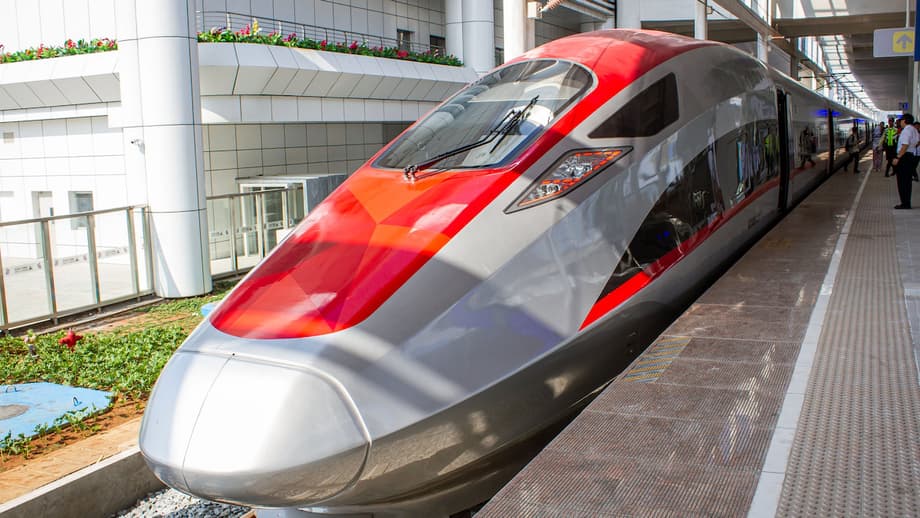
Indonesia’s first high speed rail, the Jakarta to Bandung line known as Whoosh, is a technological milestone for Southeast Asia. It slashes travel times to about 40 to 45 minutes, replaces unpredictable road journeys, and showcases Chinese rail technology working on Indonesian soil. The achievement is real. So is the financial strain. The project’s debt burden, shaped by higher than expected costs and loans from China Development Bank, now weighs heavily on Indonesian state companies that own the majority stake. Decisions taken over the next few months on debt restructuring, subsidies, and governance will determine whether Whoosh becomes a durable transport backbone or a prolonged fiscal headache.
- A flagship train meets a balance sheet reality
- Why the financial pressure is building
- How the financing works
- The cost overrun and why it happened
- Ridership, fares, and the business case
- Who bears the risk, and where corporate and sovereign lines blur
- What Indonesia is considering now
- How this compares to debt trap narratives
- Governance and transparency questions
- Could an extension improve the economics
- What success would look like in the next 24 months
- The Bottom Line
The numbers frame the challenge. Construction costs climbed from an initial estimate near 6.1 billion dollars to roughly 7.2 to 7.3 billion dollars after a cost overrun of about 1.2 billion dollars. Around three quarters of the funding came from China Development Bank loans, with an initial 40 year tenure, a 10 year grace period, and a 2 percent interest rate on the principal loan. Additional borrowing to cover the overrun carried a higher rate reported around 3.4 percent. That shift, together with slower than forecast ridership, has pushed losses onto the Indonesian consortium and its largest member, PT Kereta Api Indonesia, better known as KAI.
Political stakes are just as large. Indonesia’s government has insisted that Whoosh was structured as a company to company project, not a sovereign obligation. Yet the state is also the majority owner through its state companies, and public pressure is intense when national champions post red ink. That tension between legal form and economic reality lies at the heart of the current debate. Officials are now weighing a mix of loan renegotiation with China, budget support for day to day operations, and changes to how assets and responsibilities are split between the operator and the state.
Why the financial pressure is building
Whoosh launched commercial service in October 2023 after delays linked to land acquisition, civil works, and the pandemic. By mid 2025 it had carried millions of passengers and drawn steady weekend demand. Weekday averages have hovered around the high teens in thousands, with weekends stronger. That is far below early projections that aimed for tens of thousands per day on average. Lower than expected ticket revenue has collided with high operating costs and rising interest expenses.
KCIC, the joint venture that runs Whoosh, reported losses in 2024 and into the first half of 2025. The local parent consortium, PSBI, posted multi trillion rupiah losses over the same periods. KAI, as the largest shareholder in PSBI, has shouldered the biggest share of the pain. Its new leadership has been unusually candid about the risk Whoosh poses to the company’s finances.
In a recent parliamentary hearing, KAI’s president director, Bobby Rasyidin, warned lawmakers about the gravity of the situation. He described the financial strain facing KAI and the operator as an explosive risk if left unmanaged.
We are studying KCIC’s issues, which resemble a time bomb.
The warning resonated because it matched what investors and analysts already saw in the numbers. Interest payments on the original loan are manageable during the grace period, which runs until 2028. Servicing the additional borrowing at a higher interest rate, and preparing for principal repayment once the grace period ends, create a rising cost profile. Without stronger revenue streams, cash flow pressure intensifies each year.
How the financing works
Whoosh is owned and operated by PT Kereta Cepat Indonesia China, or KCIC, a joint venture that is 60 percent Indonesian and 40 percent Chinese. On the Indonesian side, PSBI brings together several state companies, with KAI holding the largest stake. Chinese participants include railway builders, rolling stock manufacturers, and signal and communication firms. All the high speed technology on the line is Chinese, from the CR400AF Yawan trains to signaling and electrification.
Debt provides most of the project’s funding. China Development Bank financed about 75 percent of the total through long tenor loans. Reuters reported that the initial loan package carries a 40 year term and a 10 year grace period at 2 percent interest. The cost overrun required additional borrowing, for which China proposed higher rates in the mid three percent range. Indonesia accepted a limited government guarantee for the new loan in late 2023 after previously resisting that step. KAI has also taken some direct loans from China Development Bank to cover parts of the overrun at interest rates reported between 3.7 and 3.8 percent.
These details matter because they define the cash flow obligations that KCIC and, by extension, its shareholders must meet. A grace period delays principal repayment, not interest. Once amortization begins, annual debt service rises, particularly when a slice of the debt carries a higher rate. That is why policymakers are focused on two levers: improving the project’s operating performance and reshaping debt terms to fit more realistic revenue expectations.
The cost overrun and why it happened
Cost growth is at the core of the current predicament. The line’s per kilometer cost has been estimated at around 52 million dollars, above figures seen in China and Europe. Project sponsors point to the geology of West Java, tunneling, complex civil works, and difficult land acquisition as drivers of higher costs. The pandemic period also affected schedules and logistics, adding to expenses.
Those realities do not erase the fact that Indonesia agreed to financing that is more expensive than alternatives it once considered. When the project was first awarded in 2015, Japan’s offer included very low interest financing reported near 0.1 percent. Indonesia chose China’s proposal that stressed speed of delivery, joint ventures, and technology transfer. The Beijing backed loans were commercial, not concessionary. That choice was strategic, and it imposed a cost of capital that looks heavier now that operating cash flows are tight.
Indonesia’s acceptance of a government guarantee for the additional loan during the overrun phase signaled a shift. The project was sold to the public as an enterprise risk borne by the consortium. A limited guarantee acknowledged that creditors wanted added protection before disbursing more funds. It also blurred the line between corporate and sovereign exposure, at least at the margin.
Ridership, fares, and the business case
The core question for any high speed rail is whether it can attract enough riders at sustainable fare levels to cover operating costs and contribute to debt service. Whoosh has clear advantages for travelers who value time and predictability. It is less sensitive to traffic jams and weather. It offers modern stations and amenities. Still, the Jakarta to Bandung corridor already had conventional rail with dozens of daily trips, and express road options compete aggressively on price.
Ticket pricing must strike a difficult balance. If fares are set too high, ridership suffers. If they are too low, revenue shortfalls grow. Early figures showed roughly 13,000 passengers per day during initial operations, then an increase through 2024 and into 2025. Weekday averages around 16,000 to 18,000 and stronger weekends suggest the market is still developing. The company has promoted feeder buses and better last mile connections, but station access and integration with urban transport remain works in progress.
Globally, farebox revenue alone rarely pays for high speed rail. The model depends on station area development, commercial leasing, and increased land values. Indonesian officials and developers have begun to plan transit oriented development around stations in Halim, Padalarang, and Tegalluar. That strategy can help over time, yet it requires coordinated zoning, transport links, and private capital. In the near term, KCIC must bridge a financial gap before non fare income matures.
Who bears the risk, and where corporate and sovereign lines blur
By design, Whoosh was meant to sit outside the state budget. The consortium structure was supposed to insulate taxpayers while allowing state companies to lead. Reality has been messier. KAI has reported losses tied to its role in the consortium. Other Indonesian members, including construction and toll road companies, have also taken hits. At the same time, the government’s new holding entity for state assets, known as Danantara, has been drawn into oversight and solution hunting.
Finance Minister Purbaya Yudhi Sadewa made the government’s stance explicit in public remarks. He rejected the use of the national budget to pay Whoosh’s debts and pushed for solutions within the state company system.
We will not use the state budget to cover this debt.
That position reflects a hard lesson from large projects worldwide. Once governments assume direct fiscal responsibility for a struggling asset, the burden can snowball. Yet a hands off approach is not viable if key state companies risk liquidity or solvency pressure. Indonesia has already moved to share some of the operating burden, with budget support to stabilize day to day service while longer term restructuring is negotiated. This is the balance policymakers are trying to strike: keep the asset running, protect core state companies, and avoid turning company liabilities into sovereign ones.
What Indonesia is considering now
Officials and company leaders have placed several options on the table. Each comes with trade offs.
Renegotiating with China Development Bank
The most practical avenue is to seek longer maturities, lower interest margins, or more flexible repayment schedules. Extending tenors and smoothing amortization past the end of the grace period could ease the annual burden. Indonesia also has explored multi currency repayment options to match cash flows and limit currency risk.
Unbundling infrastructure and operations
One approach would formalize a split where the state or a designated agency assumes responsibility for tracks and stations, while KCIC or KAI focuses on trains and customer service. The operator would pay an access fee, and the infrastructure side might be treated like other public assets with budget support. This mirrors models used in parts of Europe and could clarify accountability.
Equity injections or new investors
Fresh equity could reduce leverage and interest costs. That would most likely require government support for Indonesian shareholders, which conflicts with the desire to limit fiscal exposure. Bringing in new investors is complicated by geopolitics and by the need to maintain operational coherence. Still, it remains a theoretical option if a credible partner can be found.
Operational improvements and non fare revenue
Ridership growth is essential. Better station access, integrated ticketing with commuter services, and targeted pricing can lift load factors without eroding revenue. Station area projects can bring leasing revenue and one time land monetization. These steps take time, but they are critical to the long term business case.
How this compares to debt trap narratives
Public debate often invokes Sri Lanka’s Hambantota Port, which was leased on a long term basis after debt distress. The comparison carries political weight, yet the structures differ. Whoosh is a domestic rail service operated by a joint venture where Indonesia holds control through its majority stake. Its debt sits with a company group tied to state firms, not the treasury. China is a lender and a technical partner, not a concession holder of a strategic port.
Other regional cases offer more useful guidance. Malaysia renegotiated its East Coast Rail Link contract to lower costs and redefine responsibilities. Kenya reworked repayment terms on its standard gauge railway to ease pressure. In both cases, restructuring did not erase debt, but it made repayment more manageable and clarified operational control. That is the zone Indonesia appears to be targeting.
Chinese officials have signaled a willingness to cooperate to stabilize Whoosh, recognizing the project’s profile as a Belt and Road showcase. Beijing has limited incentive to push a partner into distress. Indonesia also benefits from a constructive outcome that preserves service, protects its state companies, and avoids unnecessary fiscal exposure.
Governance and transparency questions
The financial debate runs alongside governance concerns. Indonesia’s anti corruption agency opened a preliminary probe in 2025 into allegations of inflated construction costs and irregularities in land acquisition. Investigators have not announced formal charges. The scrutiny reflects the size and complexity of the procurement and the public interest in how the project was managed.
Per kilometer costs that exceed international benchmarks demand clear explanations. Tunneling and terrain can legitimately raise costs. So can delays that force contractors to remobilize and renegotiate. Transparent disclosure of change orders, land compensation, and contractor claims would help restore confidence. KCIC’s publication of audited financial statements would also sharpen the public discussion by moving it from estimates to verified data.
Could an extension improve the economics
Indonesia and China are preparing to discuss extending the line from Jakarta toward Surabaya, creating a longer corridor across Java. A longer route with more stations and a broader catchment could improve ridership and support stronger station area development. The extension might also enable better asset utilization of trains and maintenance facilities. Some Indonesian officials argue that the extension only makes sense after the current debt structure is reshaped and operational responsibilities are crystal clear.
Negotiators have outlined priorities. Governance must define who is responsible for what in operations and maintenance. Financing should reduce pressure on KCIC and parent companies without placing the full burden on the state. Indonesia wants to retain authority over urban development around stations. Risk management protocols need to address delays, technical adjustments, and integration challenges. These are the conditions that can turn a high cost rail investment into a catalyst for regional development instead of a drag on balance sheets.
What success would look like in the next 24 months
Progress will not come from a single announcement. It will likely arrive through a sequence of steps. A loan restructuring with China Development Bank that moderates near term repayments. A clear decision on whether the state will assume responsibility for track and station assets while the operator pays access fees. A targeted operations subsidy that is transparent and linked to service obligations. A schedule for publishing audited financials. A plan to accelerate station area development with private capital to build non fare income.
Each step reduces uncertainty. Taken together, they can stabilize KCIC’s cash flows and protect the health of KAI and fellow Indonesian shareholders. The strategic relationship with China remains important. Both sides have an interest in a functioning, financially viable railway that showcases technology and serves the public.
The Bottom Line
- Total project cost sits near 7.2 to 7.3 billion dollars after a 1.2 billion dollar overrun, with about 75 percent financed by China Development Bank loans.
- The initial CDB loan carries a 40 year term, a 10 year grace period, and a 2 percent interest rate, while added borrowing for the overrun is around 3.4 percent.
- Ridership and ticket revenue have trailed early projections, and KCIC and its Indonesian parent consortium reported significant losses in 2024 and early 2025.
- KAI, the largest Indonesian shareholder, has absorbed the biggest portion of losses and warned of a potential time bomb if finances are not stabilized.
- Indonesia accepted a limited government guarantee for new debt in 2023, blurring corporate and sovereign lines despite a company to company structure.
- Policy options include loan renegotiation, a split between infrastructure and operations, targeted operating support, and faster non fare revenue growth.
- Chinese officials have signaled openness to cooperation, and Indonesia aims to renegotiate terms before advancing a proposed extension toward Surabaya.
- Governance scrutiny has increased, with a preliminary KPK probe into cost and land acquisition practices, and calls for more transparent financial reporting.