A comeback story heads toward Wall Street again
Luckin Coffee, China’s largest coffee chain by store count, says it is preparing to return to a major U.S. stock exchange five years after an accounting scandal forced its delisting. The company, headquartered in Xiamen, has told investors and local officials that it is working toward an eventual relisting. There is no firm timetable. Executives say the immediate focus remains on running the business, expanding the store network, and strengthening the brand at home and abroad.
- A comeback story heads toward Wall Street again
- What went wrong in 2020 and how the company rebuilt trust
- Inside Luckin’s new playbook for growth
- Can it clear the regulatory gatekeepers
- Rivalry with Starbucks and the U.S. push
- The state of the Chinese coffee market
- What a U.S. relisting would signal
- Key Points
That cautious tone sits beside strong operating momentum. Luckin reported that third quarter revenue rose 50.2 percent year on year to 15.3 billion yuan, while same store sales at self operated locations grew 14 percent. Monthly transacting customers reached a record 110 million. The chain has used sharp pricing, seasonal drinks, and fast delivery to capture value seeking consumers across Chinese cities.
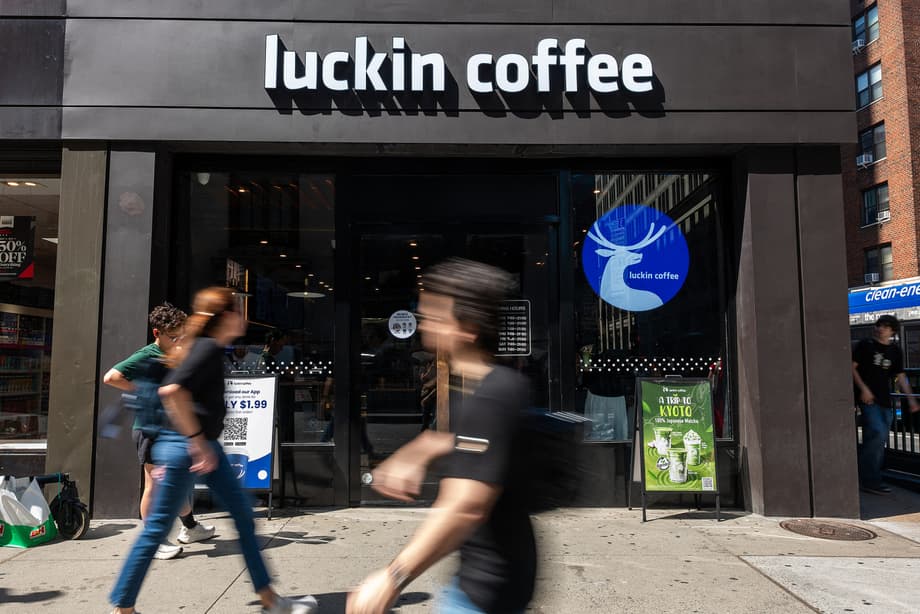
Founded in 2017, Luckin built an app centered model around quick pickup stores and delivery. That formula has powered rapid expansion to more than 29,000 stores worldwide, with roughly three Luckin outlets for every Starbucks in China. The company has also stepped onto Starbucks home turf. It opened two New York City shops in July 2025 and has since added three more.
At an entrepreneurs gathering hosted by the Xiamen municipal government, co founder and chief executive Jinyi Guo sketched the ambition behind a U.S. return. He described the process as a step that could raise the city’s profile and support Luckin’s international ambitions.
Under the municipal government’s guidance, we are actively pushing the process of relisting on a U.S. main board.
What went wrong in 2020 and how the company rebuilt trust
Luckin listed on Nasdaq in 2019 after a fast rise that challenged Starbucks in China. The momentum collapsed in 2020 when an internal probe found that employees had fabricated more than 2.2 billion yuan in 2019 sales, roughly 310 million dollars at the time. Nasdaq delisted the shares in June 2020. The company later agreed to pay a 180 million dollar civil penalty to resolve charges by the U.S. Securities and Exchange Commission. The stock moved to over the counter trading in the United States, where it still changes hands.
The scandal triggered sweeping management changes. Then chief executive Qian Zhiya and chief operating officer Jian Liu were fired. Jinyi Guo, a co founder, took the helm and led a restructuring of finances under U.S. Chapter 15 proceedings that wrapped up in 2022. Private equity firm Centurium Capital became the largest shareholder and installed new governance. In April 2025, Centurium’s founder David Li became chairman, a signal that the company was preparing for the next phase of capital market engagement.
New internal controls, stricter store level reporting, and a reset of incentive structures followed. Luckin replaced a former auditor with BDO China in 2022 and says it is prioritizing compliance alongside growth. The company also shifted attention to efficient formats, using pickup heavy locations and a data guided menu to drive volume per store while keeping costs in check.
Inside Luckin’s new playbook for growth
Luckin leans on a technology first retail model. Orders flow through its app and partner platforms, payments are cashless, and most stores are compact pickup sites that prioritize speed. Central kitchens and a standardized supply chain feed a menu that changes quickly with social media trends. The company rewards frequent buyers with daily deals and coupons, a tactic that has set off a price war across China’s coffee market. The result is high foot traffic and a steady stream of new customers, balanced against thinner unit margins.
A numbers heavy comeback
The scale of the rebound is visible in the numbers. Luckin reported revenue of 15.3 billion yuan in the quarter ended September 30, up just over 50 percent from a year earlier. Same store sales at self operated units rose more than 14 percent, reversing a double digit decline the year before. Monthly transacting customers hit 110 million. The store base stood at 26,206 at midyear and surpassed 29,000 in the third quarter as expansion accelerated in lower tier cities and transport hubs.
Market analyst Shaun Rein, who has tracked consumer brands in China for two decades, called the recovery one of the standout turnarounds in recent Chinese business history.
Luckin is one of the great turnaround stories in Chinese business history.
He has pointed to the company’s technology stack and aggressive pricing as the twin forces that squeezed rivals and widened customer reach.
Can it clear the regulatory gatekeepers
A return to a U.S. main board requires more than sales momentum. Any Chinese company seeking a new overseas listing must file with the China Securities Regulatory Commission under rules that took effect in 2023. In parallel, U.S. markets require detailed financial disclosures that are audited by a firm registered with and overseen by the Public Company Accounting Oversight Board. Those audits must be available for inspection, a point that has driven much of the cross border regulatory tension of recent years.
Audit history will be scrutinized. In July, the U.S. audit watchdog permanently revoked the registration of Centurion ZD CPA, a firm that once worked on companies with operations in China, citing failures that included a lack of fraud risk assessment in a 2021 audit tied to Luckin. Luckin has used BDO China as its auditor since 2022. The company says compliance is a priority, but it still must demonstrate reliable controls and transparent reporting that can withstand inspection.
What a relisting could look like
Luckin shares trade in the United States on the over the counter market, where the company is valued at roughly 10.9 billion dollars. A relisting could take the form of an uplisting of its American depositary shares to Nasdaq or the New York Stock Exchange, or a fresh public offering that moves the listing back to a main board. Either route could expand liquidity, draw more analyst coverage, and create a currency for future fund raising or incentive plans. It would also place the company under the day to day glare of U.S. exchange rules and investor scrutiny.
Rivalry with Starbucks and the U.S. push
Luckin entered the U.S. retail market in mid 2025 with two compact stores in Manhattan. The brand has since opened three more New York locations, taking the total to five. Executives have said additional U.S. sites are planned for 2026 and that menus will be adapted for local tastes. Store formats emphasize grab and go speed and mobile ordering, a contrast with the larger cafe layouts that dominate many American streets.
In China, Luckin now operates roughly three outlets for every Starbucks location, a lead driven by small sites, tight delivery integration, and aggressive new store openings. Starbucks has focused more on premium sit down experiences and loyalty rewards in higher tier cities. The two companies rarely compete store for store in identical formats. They instead push distinct value propositions aimed at different moments in the day.
In New York, the competitive test will be whether value pricing and digital ordering can win repeat customers in a dense, high rent market that already has strong cafe coverage. Labor rules, permitting, and real estate costs differ sharply from China. That means every new U.S. location will need to prove that the model can deliver consistent throughput and margins without heavy subsidies.
The state of the Chinese coffee market
Coffee shop growth across East Asia has been rapid. Industry tallies point to an 18 percent increase in branded outlets over the past year to around 180,000 stores, with China alone adding more than 20,000 net new shops. Domestic chains have multiplied across provincial cities and university districts, helped by low entry formats and a growing base of consumers who see coffee as a daily routine rather than an occasional treat.
That pace has sharpened competition. Chinese coffee brands have used steep discounts and delivery bundles to draw in first time buyers, a tactic that boosts transactions but puts pressure on profitability. The cost of green coffee has swung widely in recent seasons, while milk and cup costs have risen. For a chain with thousands of stores, scale can offset part of the squeeze, but sustained discounting still weighs on store level margins. This is the backdrop for Luckin’s push to keep customer growth strong while protecting cash flow.
What a U.S. relisting would signal
A successful return to a U.S. exchange would mark a milestone in Luckin’s rehabilitation. It would show that auditors and regulators accept the company’s progress on controls and disclosure. It would also broaden the investor base beyond over the counter trading, potentially lowering the cost of capital for expansion in China and overseas.
For investors, two near term points matter. Whether unit economics in China hold up if the price war persists, and whether the U.S. pilot scales into a repeatable format outside Manhattan. The answers will shape whether a relisting is greeted as the final step of a turnaround or as the start of a new test in public view.
Key Points
- Luckin Coffee says it is preparing to relist in the United States, with no set timetable.
- Third quarter revenue rose 50.2 percent to 15.3 billion yuan, and same store sales at operated outlets increased 14 percent.
- The chain now runs more than 29,000 stores worldwide and has roughly three outlets for every Starbucks store in China.
- A 2020 accounting scandal led to a 180 million dollar SEC penalty, management changes, and a shift to over the counter trading.
- Private equity firm Centurium Capital is the largest shareholder, and David Li became chairman in April 2025.
- Luckin uses BDO China as auditor and must meet both Chinese and U.S. listing requirements to relist.
- Five stores are open in New York City, with more U.S. locations planned for 2026.
- Intense price competition in China supports customer growth but tightens margins, a key variable for investors.