Why foreign labor is not reversing population decline
South Korea is recruiting more foreign workers to keep farms running, maintain assembly lines, and fill shifts in care facilities. A new analysis from the National Assembly Budget Office says this strategy can slow decline in many places, but it cannot reverse the country’s shrinking population. The numbers show why. Foreign residents reached 2.58 million in 2024, lifting their share of the total population to about 5 percent, up from 3.4 percent in 2015. Over the same period, the resident registration population that excludes noncitizens peaked in 2019 at roughly 51.85 million, then fell by about 630,000. Most municipalities now host more foreign residents than five years ago, including rural counties where the local youth population has thinned to historic lows.
- Why foreign labor is not reversing population decline
- How the foreign population is changing across Korea
- Government policy shift toward immigration
- Why temporary workers have limited local impact
- Skilled talent, students, and a different strategy
- The labor market puzzle at home
- Lessons from Japan and other peers
- What success would look like
- The Bottom Line
The study’s core finding is blunt. Foreign labor supports production and helps local services survive, yet it does not create enough new households, births, or lasting consumption to change the national trajectory. Korea is already a super aged society, with more than 20 percent of people aged 65 or older. Fertility sits near the bottom of global rankings, around 0.7 births per woman in recent estimates. A larger inflow of short term or rotating workers cannot offset that math. Foreigners also make up a relatively small share of the population by international standards, and many visas are temporary with limited paths to settlement. The result is a safety valve for labor supply rather than a demographic pivot.
How the foreign population is changing across Korea
The foreign population is spreading well beyond the greater Seoul area. Between 2019 and 2024, 211 of 229 municipalities saw an increase in foreign residents. The share of foreign residents outside Seoul, Incheon, and Gyeonggi rose from 40.6 percent to 43.3 percent. That shift is most pronounced in communities the government classifies as at risk of extinction, where the number of people aged 65 or older is at least double the number of women aged 20 to 39. Of 130 such regions, 35 recorded increases in foreign residents of more than 50 percent since 2019. These newcomers help sustain local labor supply and keep shops, buses, and clinics viable.
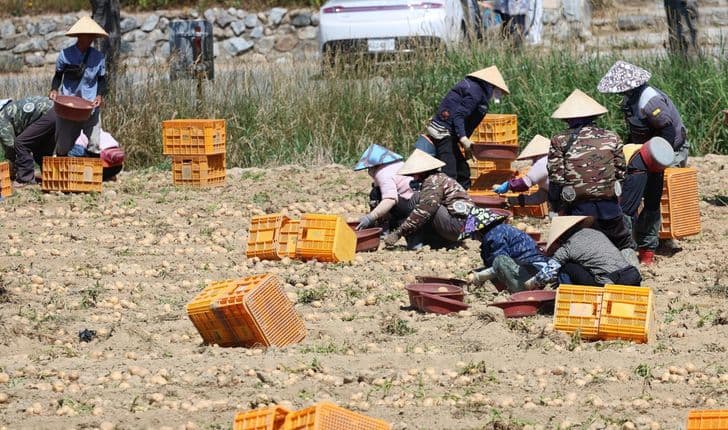
Many rural counties have watched school enrollments fall and service providers leave as the working age population shrinks. New arrivals from abroad can anchor a minimum level of demand. Agricultural cooperatives find pickers for harvest season. Small factories avoid production stoppages. Local merchants gain customers. The budget office report recognizes these contributions while cautioning that they do not guarantee long term renewal if core economic drivers keep eroding.
What is the extinction risk index?
Policy makers track age structure with a simple signal: when the population aged 65 or older is at least twice the number of women in their twenties and thirties, a town faces severe birth shortfalls for many years ahead. That metric captures the depth of aging and the thinning base of potential mothers. Regions that meet this threshold often struggle to keep schools open and specialty medical services on site. Foreign workers can slow the decline, but permanent households and secure jobs are needed to stabilize the age profile.
Government policy shift toward immigration
Immigration policy now aims to support regional economies, not just fill urgent labor gaps. The Ministry of Justice launched a region specific F 2 R visa in 2022 to reflect local labor needs. The government’s Master Plan for Immigration Policy set out economic and regional development goals tied to foreign inflows. The direction is clear. Programs are crafted around what each municipality needs and which industries cannot staff positions with local candidates.
Caregiving is a case in point. Korea crossed the super aged threshold after the 65 plus population surpassed 10 million. To respond, the government opened elder care jobs to foreign graduates of Korean universities in 2024, designated 24 universities to train foreign caregivers, and scheduled a pilot from 2026 to 2027. The goal is to prepare a pipeline of trained aides who can support hospitals, long term care centers, and home based services in every province.
Even with these steps, the composition of foreign workers remains weighted toward lower skill roles. In 2024, about 547,000 people held employment visas. Roughly 15.6 percent were classified as skilled, while about 84.3 percent were in low skill categories. The skilled share tends to be higher in large cities. Outside metro areas, most employers rely on entry level or manual workers. That profile supports current production but does little to lift technology capacity or drive new investment.
Why temporary workers have limited local impact
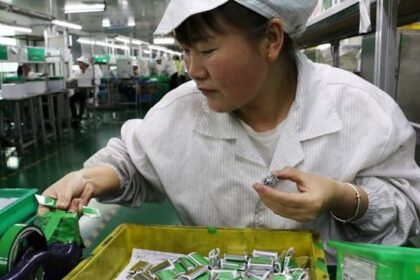
Short term workers stabilize output in agriculture and manufacturing. They arrive with a clear purpose, often to earn and remit money. Many spend cautiously and rotate home once contracts end. That limits local retail activity, school enrollment, and housing turnover. It also holds down municipal tax revenue even when job sites are busy. The National Assembly Budget Office report says this pattern can keep a plant or farm open, yet it does not seed a new generation of households or diversify the economic base.
Industry structure adds friction. Small and medium sized enterprises struggle to recruit younger Koreans for tough, low wage roles. Many of these firms rely on the Employment Permit System to hire from abroad under tight rules on job mobility and stay duration. A recent survey by a business group found that about 94 percent of SMEs with at least 50 employees already employ foreign workers, and most plan to maintain or increase that number. This shows persistent labor demand. It also shows how foreign hiring has become a stabilizer for sectors that find it hard to raise productivity or wages.
Academic work on Korea’s labor market suggests mixed effects from foreign labor. In some segments, foreign workers can depress wages or substitute for native workers. In other cases, job segmentation and induced investment can blunt those effects. Researchers also argue that quota systems should account for long run trends in population and industry, and that the original principle of short term migration is breaking down as stay durations lengthen. Without a clearer path for higher skill entrants and family settlement, however, the impact on innovation, entrepreneurship, and local consumption remains narrow.
Skilled talent, students, and a different strategy
One route with larger gains is to welcome more skilled graduates and professionals who are likely to settle, spend, and build careers. A recent study by the Korea Chamber of Commerce and Industry, with a research team led by a Korea University economist, estimated that admitting one million additional foreign university graduates could lift GDP by around 6 percent. The analysis used regional data from 2012 to 2023 and found a positive link between the share of foreign graduates in the labor force and per capita output. The economics are straightforward. Skilled workers tend to earn more, spend more locally, and help firms climb the value chain.
Korea has relatively few highly skilled foreign workers given its size and income level. Ministry data shows about 68,600 people held professional work visas such as E1 professor or E7 specialty occupation in 2023. Fewer than 55,000 foreign graduate students were enrolled in 2024. This keeps the pipeline tight. The KCCI report proposes measures to make settlement more attractive, including better schools and health services, predictable visa rules for families, and neighborhoods designed to help newcomers integrate quickly.
KCCI’s industry innovation division head, Lee Jong myung, described the aim as building places where talent can thrive and contribute from day one. Introducing his view, the association argues that settlement friendly cities would make Korea more competitive in the global race for skills.
“It is time to build internationally competitive cities that help foreign professionals settle quickly and contribute to growth.”
The labor market puzzle at home
Immigration alone cannot cover the gap as the native workforce shrinks. Policy research from the Korea Development Institute points to underused talent at home. Older workers, people with disabilities, and many women face barriers that reduce participation or push them into part time and unstable work. KDI recommends a staged approach. Near term policy should prioritize productivity gains and selective attraction of talent from abroad. Mid term reforms should ease rigidities in hiring and career progression. Longer term investment should focus on education, skills development, gender inclusion, and social integration.
Age discrimination also weakens labor supply. A recent human rights report argued that age based employment rules, widespread mandatory retirement, and reemployment practices push many Koreans in their sixties into low paid roles. That undercuts earnings, spending power, and the tax base just as the population ages. The report’s senior researcher on the rights of older people, Bridget Sleap, summarized the problem.
“They deny older workers the opportunity to continue working in their main jobs, pay them less, and push them into lower paid, precarious work, all just because of their age.”
Fixing these domestic constraints would make immigration policy more effective. If seniors can extend careers, if parents can access reliable childcare, and if mid career workers can retrain for growth industries, then foreign hiring can complement a stronger foundation rather than substitute for it.
Lessons from Japan and other peers
Japan and Korea share aging pressures, cautious public opinion on immigration, and complex visa systems built over decades. Both countries expanded temporary work routes to keep factories and service jobs staffed, while creating narrow tracks for professionals and ethnic returnees. This has produced a multi tier migration regime where rights vary by visa type and long term settlement remains constrained for many migrants.
Japan is now revising key programs to shift from pure rotation to retention. The country plans to replace the long criticized Technical Intern Training Program with an Employment for Skill Development program in 2027. That route would serve as a bridge into the Specified Skilled Worker system, which offers more stable employment and a path toward long term stay for those who pass language and skills tests. The intent is to build a sustainable workforce in sectors like caregiving, construction, food services, and manufacturing by giving motivated workers better protection and mobility. Korea’s Employment Permit System regularized recruitment for smaller firms but does not offer a clear settlement path. The contrast suggests Korea could gain from adding ladders that allow capable workers to upgrade skills and move into more stable status over time.
What success would look like
A durable response to demographic decline will blend domestic reform with a sharper shift in the type of immigration Korea encourages. That means raising the share of higher skill entrants, improving conversion from student visas to jobs, smoothing paths to permanent residence for contributors, and incentivizing families to settle outside Seoul where jobs exist. It also means tackling obstacles at home that keep participation low or push experienced workers out of the labor force.
Settlement matters as much as headcount. When workers bring families, enroll children in local schools, and buy homes, they anchor communities. Retail and service demand grows naturally. Local tax revenue rises. Officials should invest in integration services that are responsive to each region, including language classes tied to employment, credential recognition, and support for small business formation by newcomers.
Industrial policy and immigration must reinforce each other. Regions that target advanced manufacturing, clean energy, or biomedical clusters will not spark without the right mix of technicians, engineers, and managers. Linking corporate investment approvals to concrete plans for recruiting and retaining specialized workers can spread growth beyond the capital region. Universities can partner with employers to prepare international students for specific roles and ease their transition into the labor market.
Finally, data and governance will decide how quickly policy can adjust. Better real time measures of labor shortages, stronger oversight of recruitment practices, and periodic updates to quotas can reduce bottlenecks. Municipalities can be given incentives to create settlement friendly environments, with funding tied to outcomes such as graduate retention, wage growth, and the share of workers who transition from temporary to more stable status.
The Bottom Line
- Foreign residents rose to 2.58 million in 2024, or about 5 percent of the population, while the native resident registration population has fallen by roughly 630,000 since 2019.
- Most municipalities saw foreign population gains, including 35 of 130 extinction risk regions with increases above 50 percent since 2019.
- Government policy now links immigration to regional development, including a region specific F 2 R visa and a caregiver training pilot planned for 2026 to 2027.
- About 15.6 percent of employment visa holders are in skilled categories, with the rest concentrated in low skill roles that stabilize output but do not drive upgrading.
- Business groups and researchers argue that attracting and retaining more skilled graduates could lift growth, with one estimate pointing to a 6 percent GDP gain if one million foreign graduates settle and work in Korea.
- Domestic reforms on age discrimination, childcare, and labor market flexibility are essential to raise participation and make immigration work as a complement, not as a replacement.