Urban combat moves to the center of the Taiwan Strait standoff
China’s People’s Liberation Army released rare footage of troops fighting through a ruined cityscape, a live fire urban assault sequence that featured reconnaissance, room clearing and the seizure of a building described as critical to the city’s infrastructure. The timing was pointed. The video aired shortly after Taiwan’s president, Lai Ching-te, advanced a plan to allocate roughly 40 billion US dollars over eight years starting in 2026 to sharpen the island’s defenses, with a strong focus on air defense, uncrewed systems and other asymmetric tools. The message from Beijing looked straightforward: the PLA is training for a city fight if a Taiwan conflict crosses the shoreline.
- Urban combat moves to the center of the Taiwan Strait standoff
- What the PLA showed in its latest drill
- Why urban warfare matters for Taiwan
- Taipei reshapes its defenses for a street by street fight
- Signals and timelines behind the military messaging
- How a city battle could unfold
- Risks of miscalculation and limits of drills
- What to Know
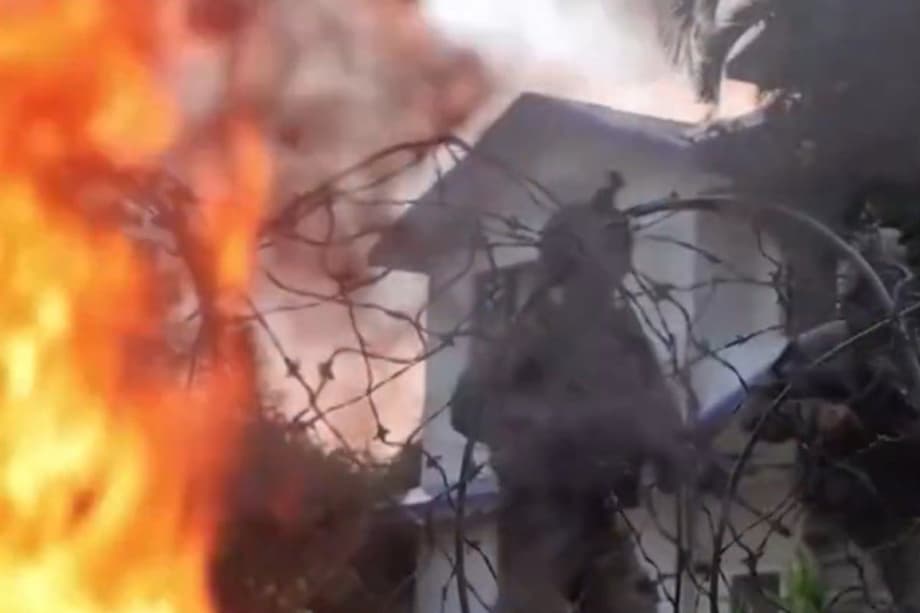
In the state broadcast, infantry moved through concrete rubble in light protected tactical vehicles, a heavy machine gun thumping overhead while a roof mounted sensor mast scanned for threats. Soldiers advanced behind smoke, pushed past burning barricades and rolls of barbed wire, then stacked on doors with rifles and portable anti tank rockets. The segment did not disclose the time or location, a familiar practice when the PLA seeks to show capabilities while hiding sensitive details. The core of the drill, however, was visible: a combined arms push to enter, clear and hold urban terrain.
Taipei’s defense push has accelerated in parallel. Leaders are signaling a shift to a more mobile, dispersed force designed to absorb a first strike, deny an easy landing, and turn any attempted push into Taipei or other cities into a grinding street by street campaign. That approach fits the geography. Taiwan’s west coast is crowded with towns and industrial zones, creating a vast, irregular urban network from Taoyuan to Tainan. An invader would need to fight for neighborhoods rather than open plains, a costly prospect for any military.
What the PLA showed in its latest drill
Urban warfare stresses every branch. The broadcast emphasized reconnaissance before movement, then a deliberate breach, room clearing and the hold phase. That sequence matters in cities where threats hide behind every wall. Clearing one block does little if a unit cannot secure key intersections, power nodes and bridges, or if counterattacks cut off the assault force. The PLA vignette highlighted that logic by focusing on a building deemed essential to the city’s functioning, a classic urban target set along with substations, telecom hubs and water works.
Though the PLA did not identify the unit, similar formations regularly practice with light armored transports fitted with stabilized guns, turrets that combine optics and thermal sights, and dismount teams that carry anti armor rockets to deal with ambushes. The imagery, with rubble, fire and wire obstacles, matched training complexes where Chinese troops rehearse urban assaults under simulated combat stress.
Drones, robots and simulated cities
PLA urban units are blending uncrewed systems into these drills. Small drones scout stairwells and rooftops. Uncrewed ground vehicles trundle forward to deliver ammunition or probe booby traps. Training cadres use computer simulation to rehearse entry routes and fields of fire, then run near identical patterns in physical mock towns. The PLA’s expansion of those facilities, including replicas of Taiwanese government buildings at the Zhurihe Training Base in Inner Mongolia, underlines how seriously Beijing takes city fighting. Satellite imagery over the past few years shows the complex growing, with soldiers practicing barricade removal, roadblocks and coordinated pushes with armored vehicles in settings that mimic parts of Taipei.
These mock sites serve two aims. They offer realistic, repeatable training for assault teams. They also send a political signal. Making the replicas visible is a form of psychological pressure, a reminder to Taiwan’s public that Chinese units are rehearsing not just beach landings but also the fight for city centers and transport nodes.
Technology and rehearsal cannot erase the inherent difficulty of urban operations. Small quadcopters are loud and vulnerable. Robots break down in rubble. Simulations help, yet reality is chaotic. Even so, the growing presence of drones and robots in PLA training points to a force intent on reducing risk to infantry and speeding up the find, fix, finish cycle inside dense neighborhoods.
Why urban warfare matters for Taiwan
Fighting in cities blunts many advantages of a larger force. Tanks cannot maneuver freely, long range sensors lose sight lines, and communication becomes unreliable indoors. Civilians complicate every engagement. The reality, seen in places like Mosul and Marawi, is that urban battles are slow, ammunition hungry and brutal. If Taiwan can impose that kind of fight, it will raise the cost and length of any invasion, while presenting an attacker with a thousand small decisions in streets that favor ambush and deception.
Taiwan’s strategic focus is to avoid a large scale landing in the first place, then, if one occurs, to make city blocks into strongpoints. Engineers are improving barriers, mobile units can plant obstacles in hours, and precision guided munitions can strike support ships and ferry routes. The point is not only to stop the first wave, but to cut off resupply and isolate forces that reach the shore. In an urban environment, isolated units burn through ammunition and medical supplies quickly. Exhaustion sets in. Casualties rise. The defender’s aim is to exploit that spiral.
Urban terrain favors defense but carries a high cost
Urban defense demands discipline. Units must hold fire until the right moment, move along covered routes, and set traps that funnel attackers into kill zones. It also requires hardened logistics. Transport under fire is hard above ground, which is why Taiwan is experimenting with protected movement through tunnels and underground stations. The modern defender also needs persistent eyes. Small drones are now standard for every squad. Thermal sights and commercial cameras help watch alleys and rooftops around the clock.
U.S. military analyses of a Taiwan scenario argue that the best way to exploit urban defense is to stretch the fight and target what feeds it. The lifeblood of an amphibious force is its logistics chain. Civilian ferries and roll on roll off cargo ships pressed into service, fuel barges, and small landing craft are vulnerable to shore based missiles, artillery rockets and fast attack boats. Hitting those links forces the attacker either to pause or to push deeper into cities with diminishing stocks, exactly the attrition battle a defender seeks inside dense neighborhoods.
Taipei reshapes its defenses for a street by street fight
Taiwan’s largest annual military exercise, Han Kuang, has been refocused around the idea that a conflict will spread from beaches to urban cores. The most recent iteration ran for ten days and nine nights, double the usual duration, and stress tested command decisions under unscripted conditions. More reservists were called up than in prior years, and civil agencies were integrated to manage power, transport and emergency services under wartime conditions.
In Taipei, the military police shut down the Wanban Bridge linking New Taipei and Taipei during the early morning hours and built a four layer blockade. The barrier mixed buses, concrete blocks, coils of wire and rapidly assembled Hesco style bastions to create depth and delay. Drones scouted a simulated approach, snipers engaged from overhead, and domestically produced Clouded Leopard wheeled vehicles swept the span to clear notional infiltrators. The drill rehearsed a likely task in any invasion attempt, denying access to the capital’s core bridges and intersections that connect to the Presidential Office Building and transport hubs.
Urban defense planning is not limited to bridges or roadblocks. Taiwan is testing movement and sustainment under fire. The Taipei Metro was used in exercises to redeploy troops and supplies while the system was closed to passengers. Soldiers practiced boarding with heavy weapons, moving materiel on maintenance cars, and popping up at stations near likely conflict zones before shifting again underground. Metro tunnels offer protection from missiles and aircraft, and can serve as temporary command posts or field hospitals. The concept raises hard questions about dual use infrastructure in war, yet it reflects the imperative to keep units moving and supplied inside a threatened capital.
Civilians and cities as part of defense
Taiwan’s civil defense drills, branded as urban resilience training, have been merged with Han Kuang. Sirens sound across northern cities, cars are pulled over, shopfronts shut and residents move to shelter as mobile alerts guide them step by step. The pattern teaches basic wartime discipline, from entry only protocols in metro stations to blackouts when ordered. The government has also signaled enforcement, with fines for those who ignore instructions, underscoring that civil behavior will matter if a crisis hits.
The leadership has tied these steps to a broader aim: deterrence through preparedness. Taiwan’s president has visited reservist training and observed instruction in small drones and urban blocking tactics. He frames the buildup as a way to prevent war by raising the risks of aggression.
During one such inspection, President Lai said Taiwan must back words with credible strength.
Taiwan must rely on strength to obtain true peace.
Budget plans, if passed by lawmakers, would fund air defense upgrades and speed the growth of uncrewed aerial and maritime systems that can spot, strike and resupply at a fraction of the cost of larger platforms. The shift reflects lessons from recent conflicts where cheap, mobile assets create dilemmas for heavier forces.
Signals and timelines behind the military messaging
China’s urban assault broadcast served a domestic training purpose and a strategic communication goal. Leaders in Beijing have called for more realistic combat preparation, and televised clips of troops fighting through mock towns are meant to show progress. The visibility also pressures Taiwan. Mockups of central Taipei government buildings and a replica political district at PLA training grounds are a pointed symbol. Their expansion suggests that city fighting is not a theoretical topic in PLA doctrine.
On the Taiwanese side, the longer, unscripted drills and the integration of civilian agencies are calibrated signals to both partners and adversaries. They show a whole of society effort to generate resilience. The presence of foreign observers at training sites, including retired officers and defense industry representatives, highlights growing outside interest in how Taiwan prepares. That attention also brings scrutiny. Exercises reveal gaps. Transport safety, clear chains of command and coordination between central and local authorities are being refined in every round.
Hardware timelines shape the picture. China’s third aircraft carrier, Fujian, is moving through trials. PLA air and naval activity near Taiwan has become routine, including regular crossings of the strait’s median line by aircraft and drones. Taiwan’s acquisitions, such as mobile rocket artillery and additional air defense systems, are arriving on a staggered schedule. Both sides are racing to build capacity they believe will deter the other while avoiding an incident that spirals out of control.
How a city battle could unfold
A Taiwan conflict would likely begin far from the capital. China could first seek to isolate the island through a blockade, cutting air and sea traffic and choking flows of fuel and food. That may be followed by precision strikes on air bases, radar sites and missile batteries, and possibly raids by small, highly mobile teams against key bridges or government offices. Planners in Taipei expect attempts to land near airports or ports, to open a path toward the political center quickly. Drills at Taoyuan Airport and urban bridge crossings mirror those scenarios.
If PLA units gained a foothold, the fight would become a contest of movement and resupply in dense terrain. Attackers would try to push along wide roads and rail lines, seize high ground such as overpasses and office towers, and capture utility sites to control power and water. Defenders would break up avenues with obstacles, collapse stairwells, flood tunnels if needed, and use short range missiles and rockets to strike support columns and logistics hubs. Small teams would pop up near armored spearheads, deliver quick blows with anti armor weapons, then slip into side streets or metro access points.
Taiwan’s partners would focus on the lifelines of any amphibious thrust. Intelligence and strikes against ferries, barges and supply vessels in embarkation ports would slow the flow of ammunition and fuel across the strait. Submarines and aircraft could complicate the logistics picture without seeking full sea control. That pressure would magnify the attrition inside cities, where units already burn supplies at a high rate. The combination, a stretched supply chain and urban attrition, is the scenario Taipei’s planners aim to create.
Logistics, drones and information control
Drones will saturate the air. Cheap quadcopters can drop small munitions, spot snipers and chase vehicles through alleys. Larger uncrewed aircraft can stalk convoys and feed targeting data to artillery batteries. Both sides are fielding jammers and decoys to confuse those sensors. The side that sustains a resilient communications network while disrupting the other’s will gain a marked edge in a city fight.
Information control also matters. Rumor, panic and disinformation can spread through crowded districts in minutes. Taiwan’s civil drills, with standardized alerts and clear instructions, are designed to keep order when power or networks fail. China would seek to amplify confusion with cyberattacks and social media manipulation. Taiwan would push verified updates through radio, text and public address systems. The battle for clarity becomes part of the battle for streets and bridges.
Risks of miscalculation and limits of drills
Exercises are meant to deter, train and signal. They are not a guarantee of performance in the fog of a real war. Events often move faster than plans. Misread signals and accidents can escalate a standoff. That is why both sides are trying to demonstrate capability without crossing red lines, a balance that grows harder as training becomes more realistic and frequent.
The PLA’s urban assault footage and Taiwan’s urban resilience drills point to a shared assumption: any fight would not stop at the shoreline. For Taipei, that means preparing the public for disruptions, drilling units to move and resupply under fire, and improving the ability to target the logistics of an invading force. For Beijing, it means teaching troops to operate in tight streets against small, nimble defenders who know the terrain. The scenes now on television screens, from roadblocks on bridges to soldiers moving through metro stations, show how both militaries are adapting to that reality.
Taiwan’s government says its goal is deterrence. President Lai’s line about peace through strength echoes that idea. The PLA, for its part, is showcasing a force in constant training. A city fight across the strait would be devastating for soldiers and civilians alike. That prospect is precisely why both sides are trying to shape the choices that might prevent it.
What to Know
- China aired a live fire urban warfare drill showing troops seizing key buildings and clearing city blocks, a display released after Taiwan advanced a multiyear defense budget increase.
- The PLA segment featured light protected vehicles, heavy machine guns, reconnaissance turrets, obstacles such as wire and burning barricades, and a focus on combined arms tactics inside city terrain.
- Uncrewed systems are increasingly integrated into PLA urban training, including small drones, ground robots and computer simulation, and mockups of Taipei government sites at Zhurihe have expanded.
- Taiwan’s Han Kuang exercise doubled in length, became less scripted and integrated civil agencies to test urban resilience, with drills that closed a major bridge and used the Taipei Metro for protected troop movement.
- President Lai Ching-te tied defense reforms to deterrence, saying Taiwan must rely on strength to obtain true peace, and outlined funding for air defense and uncrewed systems from 2026.
- Analysts argue that urban defense can drain a larger attacker, especially if Taiwan targets logistics links like ferries and supply ships that sustain an amphibious force.
- Both sides are preparing for operations that include drones, jamming and information control, reflecting lessons from recent conflicts where cheap, mobile assets complicate heavier forces.
- Training signals resolve but does not make conflict inevitable. The risk of miscalculation remains as both militaries raise the pace and realism of drills around Taiwan.