Semiconductors power record exports as other sectors slow
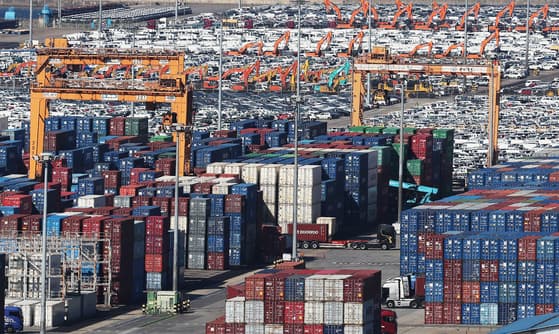
South Korea is on the verge of a historic export milestone. Shipments reached 640.2 billion dollars from January through November, up 2.9 percent from a year earlier and the highest level ever for that period. A December tally comparable to last year would lift the full year above 700 billion dollars for the first time. The momentum has strengthened late in the year, with November exports at 61.04 billion dollars, a record for the month. Daily average exports rose 13.3 percent in November despite one fewer working day, and the trade surplus widened to 9.73 billion dollars as imports edged up 1.2 percent to 51.3 billion dollars.
Behind the headline figure sits a powerful reality. The surge is concentrated in semiconductors. Chip exports climbed to 17.26 billion dollars in November, up 38.6 percent on year, and accounted for 28.3 percent of total exports, the highest share this year. Over the first eleven months, exports excluding semiconductors fell 1.5 percent on year to 487.6 billion dollars, reflecting weakness across a broad swath of industry. Some categories have advanced this year, including automobiles, ships, biohealth items and computers. Many others have contracted, among them machinery, petroleum products, petrochemicals, steel, auto parts, displays, home appliances and secondary batteries.
The concentration raises strategic questions, yet officials stress that the broader export base has shown resilience given the global backdrop of trade frictions and softer demand in cyclical goods. Kang Kam-chan, deputy trade and investment minister, said the small decline in exports outside semiconductors is a sign of underlying stability and that chip demand should stay firm as artificial intelligence and data centers expand their capacity.
“While exports rely heavily on semiconductors, the fact that exports excluding semiconductors fell by only 1.5 percent is a fairly solid result. Robust demand for semiconductors is expected to continue into next year with the continued growth of AI and data centers,” Kang said.
What is behind the chip surge
The chip upswing is grounded in technology shifts, pricing dynamics and strategic inventory moves. Data center operators are buying high value memory to run larger AI models and accelerate cloud services. Device makers are refreshing product cycles around next generation standards. Large buyers have also built buffer stocks to guard against policy shocks and supply squeezes.
AI and data centers set the pace
Exports of memory that serve AI and server markets have led the rebound. High bandwidth memory, used alongside advanced GPUs, and DDR5 server DRAM are in heavy demand. A midyear jump in shipments showed how those trends translate to the export ledger, with buyers in key chip hubs adding orders for server memory and logic that complements the build out of AI infrastructure. The combination of stronger volumes and higher unit prices has lifted value growth in recent months.
Industry data point to another strong year ahead for semiconductors. Global chip sales reached an estimated 627 billion dollars in 2024 and are projected to approach 697 billion dollars in 2025, driven by AI accelerators, server memory and widening adoption of AI features in PCs and smartphones. Generative AI chips could exceed 150 billion dollars in sales next year. Yet capacity has not grown uniformly. Wafer shipments lagged during the upturn in 2024 and advanced packaging remains a bottleneck, which helps explain the pricing power seen in high end memory and accelerators.
Product mix, prices and capacity
The current cycle looks different from past memory rebounds. HBM and server grade DDR5 carry higher average selling prices and require sophisticated packaging steps that few facilities can deliver at scale. That has magnified the revenue impact of each unit shipped. Supply additions are coming, but they are concentrated in advanced nodes and packaging, and they take time to ramp. Any delay in bringing on new capacity could keep prices firm. On the other hand, swift expansions or a pause in orders from cloud providers would cool pricing. This sensitivity to small shifts in supply and demand is a hallmark of memory cycles and it will shape month to month export prints.
Trade policy and geopolitics reshape markets
Export patterns in 2025 reflect a fast changing policy landscape. The year began with higher tariffs on several goods bound for the United States, which hit cars and steel. A deal reached in late November restored tariff rates on autos and parts to 15 percent, easing pressure on key manufacturers. The latest monthly data show a mixed picture across destinations, with shipments to China up 6.9 percent in November, exports to the United States roughly flat and gains across ASEAN and the Middle East.
Global industrial policy is reshaping where and how Korean firms invest. Companies are adding plants and partnerships in the United States to qualify for subsidies and tax credits in strategic sectors. At home, the K Chips Act provides tax incentives for capital spending and research in semiconductors and other critical technologies. Export controls on advanced equipment and sensitive technologies have protected some Korean chipmakers from lower cost rivals, but they also limit upgrades to legacy facilities in China. Restrictions on sourcing critical minerals have lifted costs for parts of the electric vehicle supply chain, encouraging diversification into new suppliers across Asia and beyond. The government is also moving to cut tariffs on key imported materials used for wafer production to zero by 2026 to preserve a cost edge in chipmaking.
Trade officials argue that reducing uncertainty can unlock investment and orders. Kim Jeongkwan, minister of trade, industry and energy, welcomed tariff relief for autos and signaled continued policy support as exporters chase the 700 billion dollar milestone.
“Tariff reductions for automobile and parts companies have eased uncertainties for Korean companies exporting to the United States. The government will strengthen policy support to ensure that export growth momentum continues and that exports play a key role in economic recovery and growth,” Kim said.
Winners and losers beyond semiconductors
The November report underlines a split between sectors tied to AI and transportation and those exposed to commodity cycles and heavy industry. Automobile exports rose 13.7 percent to 6.41 billion dollars in November, supported by strong sales of internal combustion engine and hybrid models and by gradual normalization in supply chains. Ship orders also provided a lift in recent months, with a surge in sales earlier in the autumn helped by specialized vessels.
By contrast, categories linked to energy and basic materials struggled through much of the year. Over the first eleven months, machinery exports fell 8.9 percent, petroleum products dropped 11.1 percent, petrochemical products declined 11.7 percent and steel shipments fell 8.8 percent. Auto parts, displays and home appliances were also weak, falling 6.3 percent, 10.3 percent and 9.4 percent respectively. Secondary battery exports decreased 11.8 percent in the same period, reflecting inventory adjustment across electronics and transport as well as uneven demand for electric vehicles in key markets. Some stabilization appeared in November where wireless devices and batteries saw modest monthly improvements, but the broader trend outside chips remains soft.
The regional breakdown highlights how sector trends interact with trade policy. Exports to China, still the largest single market for Korean chips, have improved with stronger orders for semiconductors and refined products. Sales to ASEAN rebounded alongside chip shipments. Exports to the United States have been capped by earlier tariffs on autos and steel, though the late year deal easing rates should help. Europe showed mixed results as demand for steel and ships cooled. Energy import costs were lower, which helped the overall trade balance despite firmer non energy imports tied to capital goods and components.
How exposed is Korea to a chip downturn
The chip share of exports has jumped from around 10 percent in the 2002 to 2010 period to 28.3 percent in November 2025. That concentration delivers windfall gains when the cycle runs hot, and it can mask weakness elsewhere. Official statistics show a broader manufacturing base under pressure. The number of manufacturing firms peaked at 586,000 in 2022 and fell to 504,000 in 2024. Manufacturing jobs were down about 4 percent between 2022 and September 2025, with most of the drop at small and medium sized companies. Production by large firms has grown over the past decade while output at smaller firms has declined. Import dependence for manufacturing inputs has risen from roughly a quarter in 2020 to about 30 percent by mid 2025, with a larger share coming from China as its component makers moved up the value chain.
Geographic concentration has also increased. The combined share of the United States and China in Korean exports climbed to roughly 36 percent in the first nine months of 2025 from about 26 percent in 2020. That concentration in both sector and destination leaves exporters more exposed to shifts in policy or demand in a small number of markets. Some analysts warn that a cyclical downturn in memory around 2027 could expose these imbalances. If that happens, weaker firms could struggle to finance operations, and the number of companies unable to cover interest costs from operating profits could rise further.
Policy can reduce that exposure. International institutions have encouraged Korea to diversify export destinations and supply chains, expand services trade, and keep support measures as neutral as possible across sectors. Recommendations include stronger competition policy, lower regulatory burdens, and labor market reforms that improve mobility and training. Expanding and upgrading trade agreements can broaden market access. For industry, new export engines could include software and cloud services tied to manufacturing, defense equipment, and advanced food processing. These steps would not diminish chips. They would help ensure that gains in semiconductors lift a wider set of industries.
What to watch in 2026
Short term indicators point to continued strength in chips. AI infrastructure build outs remain a priority for cloud providers. HBM and server grade memory are in tight supply. New capacity is coming online but will take time to reach volume. The path of memory prices will hinge on the pace of data center orders and the timing of new lines. Capital spending plans by large technology buyers early next year will be a key signal. If orders for accelerators and server memory stay high, chip exports are likely to remain elevated in the first quarter.
Policy risk remains the wild card. Any renewed tariff moves affecting autos, steel or electronics would ripple through the export basket. Potential changes to chip tariffs or export controls would be especially consequential given current concentration. Efforts to deepen supply chain diversification, including moves to secure critical minerals and chemicals, and the plan to reduce tariffs on imported wafer materials to zero by 2026, will be important for cost competitiveness. Domestically, watch for progress on tax incentives and permits under the K Chips Act, and for signs that non chip sectors are stabilizing. Regular daily export readings and the trajectory of exports excluding semiconductors will show whether the recovery is broadening.
Key Points
- Exports from January to November reached 640.2 billion dollars, up 2.9 percent, putting a 700 billion dollar full year within reach.
- Semiconductors drove the gains, with November chip exports at 17.26 billion dollars and a 28.3 percent share of total exports.
- Exports excluding semiconductors fell 1.5 percent on year to 487.6 billion dollars over the first eleven months.
- Autos, ships, biohealth and computers improved, while machinery, petrochemicals, petroleum products, steel, auto parts, displays, home appliances and secondary batteries declined.
- A late year deal restored auto and parts tariffs to 15 percent in the United States, easing earlier pressure on carmakers.
- Global chip sales are projected to approach 697 billion dollars in 2025, led by AI hardware, HBM and DDR5 memory.
- Manufacturing dependence on chips has increased, with rising input import shares and a drop in smaller manufacturers and jobs since 2022.
- Policy priorities include diversification of markets and supply chains, promotion of services exports, and sector neutral support to broaden growth beyond chips.