How Malaysia’s US trade pact triggered a Chinese counteroffer
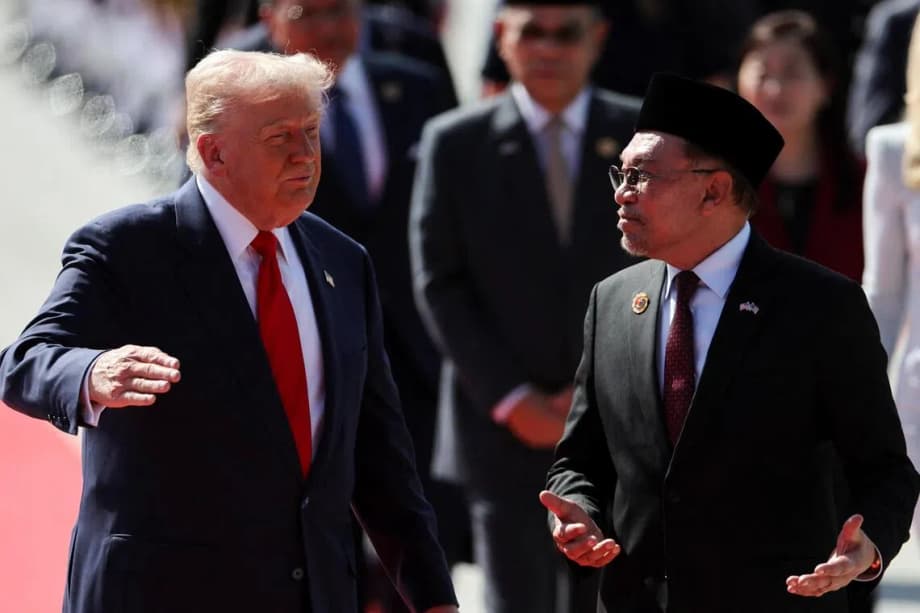
Malaysia is walking a tightrope in a new phase of great power competition. In late October, Kuala Lumpur signed a new Agreement on Reciprocal Trade with the United States during an Association of Southeast Asian Nations summit in Malaysia. The deal offered tariff relief for select products and closer cooperation on digital trade, standards and investment, but it also came with clauses that push alignment with Washington on national and regional economic security.
- How Malaysia’s US trade pact triggered a Chinese counteroffer
- What is inside the new US deals across the region
- Why Beijing is worried about poison pill provisions
- Rare earths and critical minerals take center stage
- How neighbors are navigating the same squeeze
- The investment calculus for Malaysia’s tech and supply chains
- Domestic politics and strategic autonomy in Kuala Lumpur
- What happens if the US China truce holds through implementation
- What to Know
Beijing reacted with concern and speed. Chinese officials pressed Malaysia for clarifications and then proposed a memorandum of understanding aimed at reassuring both sides and preserving China’s vast commercial footprint in the country. Malaysian Investment, Trade and Industry Minister Tengku Zafrul Aziz said the proposed MOU would focus on strategic sectors. In the vocabulary of regional commerce, that means the links that bind modern industry together, including tech supply chains, semiconductors and rare earths.
The Chinese proposal underscores a wider regional push and pull. Cambodia signed a similar US trade pact and quickly faced Chinese questions. Thailand and Vietnam agreed to frameworks with Washington. Indonesia is still negotiating terms and has pushed back on demands that would raise its shipping costs. Each country is trying to gain market access in the United States without losing access, capital or technology from China. That balance has become harder as trade is now closely connected to export controls, investment screening and critical mineral supply chains.
What is inside the new US deals across the region
The US agreements use a simple structure. Washington sets a high reciprocal tariff rate on imports from partner countries, then promises zero percent duty on a defined list of goods for those that sign and implement a qualifying pact. Partner governments commit to open their markets, accept US standards in key sectors, and cooperate on economic security.
Tariffs and standards
Malaysia faces a 19 percent US tariff on most exports, but the new pact identifies products eligible for zero percent tariffs once criteria are met. Malaysia secured exemptions for select aerospace equipment, pharmaceuticals, palm oil, cacao and rubber. Thailand agreed to remove tariffs on about 99 percent of goods and to relax long standing limits on foreign ownership in parts of its telecom sector. Vietnam accepted a 20 percent reciprocal tariff but will remove many barriers to US-origin goods. Several partners agreed to accept vehicles built to US safety and emissions standards, a change that could reshape automotive supply decisions in the region.
Economic security clauses
The agreements go beyond tariff schedules. Malaysia and Cambodia committed to support a permanent moratorium on customs duties for digital transmissions, to reduce nontariff barriers, and to streamline approvals for US cosmetics, pharmaceuticals and other products. Critically, Malaysia pledged not to ban or impose quotas on exports of critical minerals and rare earth elements destined for the US. Partner governments also agreed to align aspects of export controls, sanctions compliance and investment screening with US policy in sensitive sectors. That is the core of the controversy now unfolding, because it touches the commercial arteries of China’s advanced industries and the region’s integration with both superpowers.
Why Beijing is worried about poison pill provisions
China says it has grave concerns about portions of the new US deals, especially parts that tie trade benefits to national security alignment. One clause attracting attention among analysts is often described as a poison pill. In Malaysia’s case, an article allows the US to reimpose higher tariffs if Kuala Lumpur later signs a trade agreement with a country deemed to jeopardize essential US interests. The text does not name China, yet the target is obvious to policymakers across the region.
Lynn Song, chief economist for Greater China at ING, has warned that such provisions could squeeze Southeast Asian governments into uncomfortable choices at the expense of their own policy flexibility. She argues that clauses like these are designed to shape partner behavior beyond tariff lines.
Such a clause appears to be an attempt to pressure countries into choosing a side.
For Beijing, the risk is twofold. First, tighter alignment between Southeast Asian partners and US export controls could further limit China’s access to advanced chips, manufacturing tools and software. Second, if regional hubs like Malaysia and Thailand apply US style investment screening in critical sectors, Chinese capital and firms could face new barriers in exactly the places where they have built deep supply chain roots over the past two decades.
Rare earths and critical minerals take center stage
Critical minerals are the quiet centerpiece of these deals. Malaysia has a sizable rare earth resource base, with past estimates placing deposits in the tens of millions of tonnes. It has banned raw rare earth exports in recent years to promote downstream processing, yet it also emerged as China’s second largest source of rare earth imports in 2024 after Myanmar. That reality makes Malaysia central to supply chain strategies on both sides.
Washington’s agreements with Malaysia and Thailand include cooperation on diversifying critical mineral supply chains and countering China’s dominance in rare earths and magnet production. Malaysia’s pledge not to restrict shipments of critical minerals to the US gives American manufacturers and defense contractors some assurance as they plan investments in magnets, batteries and other inputs essential to electric vehicles and electronics.
Talks between US and Chinese officials at the ASEAN summit also produced a tentative truce that matters for minerals. Officials indicated that a framework was set to cancel a planned additional 100 percent tariff on imports from China and, in parallel, to delay China’s rare earth export controls for one year. The temporary pause in retaliation and controls would give companies time to adjust contracts and inventory strategies. It would not erase the structural rivalry, but it could ease near term volatility for buyers of magnets, oxides and allied components.
How neighbors are navigating the same squeeze
Indonesia is still negotiating its own trade deal with the US. Jakarta has made clear that some demands are non starters. One point of friction concerns shipping. Avoiding Chinese carriers on certain routes would raise logistics costs for Indonesian exporters, many of whom rely on the capacity, schedules and pricing of those lines. In a region where transportation costs already swing widely with fuel prices and port congestion, even small restrictions on carriers can ripple through profit margins for commodity and manufactured goods.
Vietnam signed a framework that keeps a 20 percent reciprocal tariff on its exports to the US, while removing tariffs on many US goods and easing market access for agricultural products and aircraft purchases. Hanoi also agreed to refrain from customs duties on electronic transmissions and to address a list of nontariff barriers. In parallel, Vietnam will increase purchases of US products to rebalance trade, a step that reflects its heavy exposure to the US market and the shock of higher tariff baselines.
Thailand accepted a 19 percent reciprocal tariff rate in a framework that will remove duties from almost all goods on its side, accelerate regulatory approvals and embed labor, environment, intellectual property and digital trade standards. Bangkok also inked a memorandum to deepen cooperation on critical minerals, a sign that the race to secure magnet and battery materials is rewriting trade priorities as much as any headline tariff figure.
Cambodia, whose economy is highly reliant on US-bound apparel and footwear, agreed to eliminate tariffs on nearly all US industrial and agricultural goods. In return, hundreds of Cambodian products will enjoy lower US tariffs or zero duty under the executive order that enables such relief for signatories. Phnom Penh also accepted deeper alignment with US export controls and cooperation on sanctions enforcement. China has pressed Cambodian officials with questions similar to those posed to Malaysia, a reminder that Beijing sees these clauses as a direct challenge to its room to maneuver in Southeast Asia.
The investment calculus for Malaysia’s tech and supply chains
Malaysia’s manufacturing base is a vital node for global electronics, especially in semiconductor assembly, testing and packaging. The US deal could unlock new commitments from chipmakers looking to de risk China exposure while keeping operations in a familiar Southeast Asian hub with skilled labor and established suppliers. Acceptance of US product and safety standards in key sectors reduces friction for American aerospace, medical and automotive firms considering new plants or expansions in the country.
There are trade offs. Aligning with US export controls and sanctions regimes adds compliance obligations for Malaysian firms and for foreign investors operating through Malaysia. Companies with complex networks connecting Chinese design, Malaysian packaging and US end markets will need to map product flows, assess technology transfer risks and inventory rule changes tied to chipmaking tools and software. Investment screening for national security, encouraged by the US deal, will require clear guidelines so that legitimate projects in electronics, power grid equipment and transport infrastructure are not chilled by regulatory uncertainty.
The proposed Chinese MOU, focused on strategic sectors, would aim to keep Malaysia in the center of Asian supply chains linked to China’s industrial ecosystem. Access to Chinese capital, equipment and intermediate goods remains critical for many Malaysian factories. Any bilateral framework with Beijing will need to be crafted so that it does not trigger punitive clauses under the US agreement, while still providing confidence to Chinese firms that Malaysia will remain a hospitable platform for export oriented production.
Domestic politics and strategic autonomy in Kuala Lumpur
Malaysian leaders have long emphasized agency and balance. After a year of tariff shocks and tightened export controls worldwide, that theme has become more than a slogan. Malaysia maintains deep economic ties with China through the Regional Comprehensive Economic Partnership and a dense web of project finance and industrial cooperation. During President Xi Jinping’s 2025 trip to the region, Malaysia and China announced dozens of agreements and a new joint foreign and defense dialogue mechanism. Those steps signaled an interest in closer coordination without abandoning a diversified foreign policy.
At the same time, the United States remains a top export destination and a source of high value investment. The new deal with Washington contains requirements on export control alignment, sanctions compliance and investment screening, particularly in critical minerals and infrastructure. If executed with transparency and careful scoping, Malaysia can reinforce national security while preserving openness. If drawn too broadly, screening rules could slow needed upgrades in grids, ports and industrial parks that enable growth.
Domestic debate will likely center on the practical scope of alignment. Malaysian companies will ask how far they must go in vetting counterparties and monitoring third country transactions. Chinese investors will look for guardrails that protect projects from political swings. The test for policymakers is whether they can write clear rules that keep the benefits of both tracks, US market access and Chinese supply chain integration, without tripping the penalties embedded in either side’s agreements.
What happens if the US China truce holds through implementation
Officials from both sides signaled during the ASEAN summit that they had reached a framework to pause escalation. The package included canceling a new round of additional 100 percent US tariffs that was set to start in November, a one year delay to Chinese export controls on rare earths, and steps on agricultural purchases and fentanyl precursor flows. A meeting between the two presidents was expected to seal the arrangement and extend a 90 day pause in retaliatory measures.
If that framework holds, it could ease the immediate pressure on Southeast Asian trade planners. Stable tariff baselines and delayed export controls would allow factories to plan purchasing and inventory without guessing at duty shocks every quarter. For Malaysia, the breathing room would help officials finalize a practical blueprint that aligns with the US on security where needed while drawing a clear lane for Chinese investment and cooperation under a new MOU. That said, the structural contest will continue. Chips, AI hardware, lithography tools and magnet production remain subject to intense scrutiny that will not fade with a temporary truce.
Regional states will keep hedging. Indonesia and Malaysia are deepening talks with Gulf partners. Vietnam, Thailand and the Philippines are advancing agreements with Europe and Canada. Several governments are exploring membership or deeper ties with the Comprehensive and Progressive Agreement for Trans Pacific Partnership to anchor trade rules in a broader, more predictable framework. These moves are all part of the same effort to reduce one country risk in trade and investment portfolios.
What to Know
- Malaysia’s new US trade deal offers targeted tariff relief and market access gains, while tying cooperation to economic security and export control alignment.
- China responded by pressing for clarifications and proposing a strategic MOU covering tech supply chains, semiconductors and rare earths.
- A clause in the US deal lets Washington reimpose higher tariffs if Malaysia later signs a pact with a country seen as threatening essential US interests.
- Critical minerals are central: Malaysia pledged not to restrict shipments to the US, and the US and China floated a temporary pause on rare earth export controls and new tariff escalation.
- Indonesia is resisting US demands that would limit the use of Chinese shipping carriers, citing higher costs to exporters.
- Vietnam and Thailand accepted frameworks that keep high reciprocal tariffs but remove many barriers for US goods, with Thailand lifting nearly all of its tariffs.
- Cambodia eliminated tariffs on US goods and agreed to align with US export controls, drawing questions from Beijing.
- Malaysia’s challenge is to implement US aligned screening and controls without undermining Chinese investment or triggering penalties under either deal.