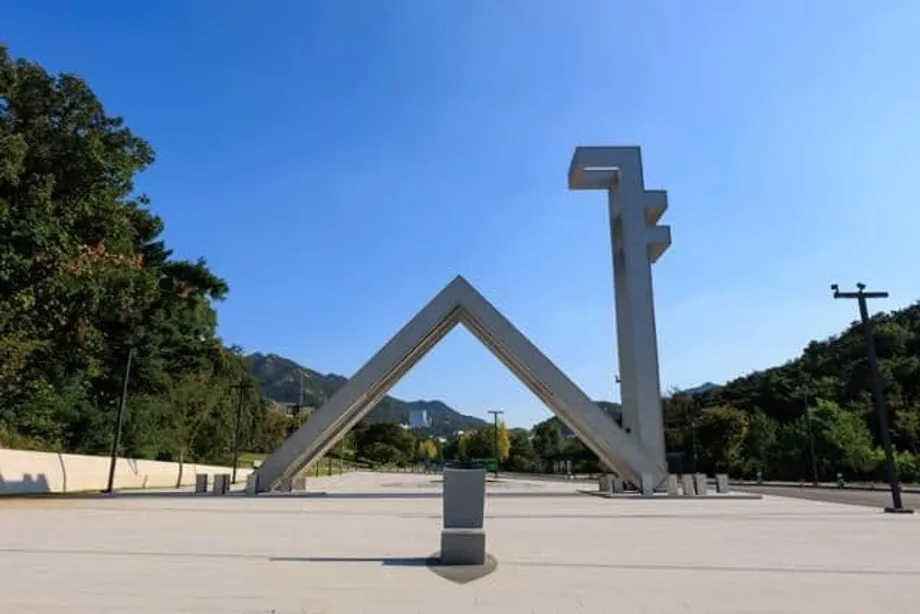
118 foreign professors, limited access to campus decisions
Seoul National University has 118 foreign professors working full time in 2025, fewer than 5 percent of its full time faculty. In 2015, it had 104. Over a decade, South Korea's flagship university added just 14 foreign professors, while international academics describe persistent obstacles to building research networks, joining campus decisions and finding a stable home in Seoul.
Contents
- 118 foreign professors, limited access to campus decisions
- Why starting without a network matters
- Korean committee meetings restrict participation
- A decade of limited change in hiring
- Housing support has a seven year limit
- When routine paperwork becomes a cultural barrier
- An international office and a faculty association
- What support at other global universities involves
- Departures put recruitment and retention together
- Changes foreign faculty want SNU to make
- What to Know
SNU presents itself as a global research hub, yet its faculty composition and daily practices remain heavily domestic. A diversity council report found that, as of October 2024, 77.5 percent of Korean faculty members had completed their undergraduate studies at SNU. Many foreign professors also have Korean heritage, according to international faculty members, who estimate that professors without Korean heritage account for roughly 2 to 2.5 percent of the faculty.
Foreign professors describe a gap between holding a position at SNU and participating fully in the institution. Committee meetings and internal communications commonly operate in Korean. Alumni connections help shape professional relationships. Housing assistance makes an initial move easier, but university apartments come with a maximum stay of seven years.
SNU raised the status of its international affairs unit in 2025, creating the Office of International Affairs. University officials say it offers programs to help foreign professors settle. Faculty members nevertheless describe the absence of a dedicated office responsible for their complete experience, from recruitment and housing to participation in campus leadership.
As of December 3, 2025, the central concern is therefore broader than recruiting more people from abroad. Foreign faculty want the practical support and institutional access that would allow them to build lasting careers and help run the university where they teach.
Why starting without a network matters
Martin Steinegger, a German professor in SNU's Department of Biological Sciences, describes arrival without local professional connections as a major disadvantage. Research depends on finding collaborators, securing funding and assembling people who can help a laboratory or research group develop.
Steinegger explained how closely those tasks are tied to personal relationships:
You start with no network, and that makes it extremely difficult to even get your footing because who you know is crucial for research success, grants, collaborations and everything.
SNU's alumni circles can make that beginning particularly difficult for someone who has never studied or worked in Korea. Several professors describe outside candidates feeling like visitors in an institution where shared educational histories continue to carry considerable weight.
Personal networks matter in academic life in many countries. At SNU, foreign professors say alumni ties influence hiring, the formation of research teams and informal access to opportunities. A newcomer without the language or institutional background must build relationships while also learning how the university works.
The first months and years can shape whether a scholar wins grants, finds collaborators and develops a research group that lasts. Formal appointment is only the beginning: access to colleagues and everyday assistance helps turn a new position into a sustainable research career.
Korean committee meetings restrict participation
Uwe Fischer, a German associate professor in the Department of Physics and Astronomy, identifies the language of university meetings as a direct obstacle to participation in governance. Governance means the committees and councils through which an institution makes decisions about its work and policies.
Fischer described the standard practice:
Committee meetings are conducted entirely in Korean.
Foreign colleagues in the sciences and humanities say that practice limits their ability to serve as full partners in running departments and colleges. An accomplished researcher may be able to teach and collaborate internationally while finding campus committee discussions difficult to follow or influence.
Korean language proceedings also sit within a wider professional culture. Unspoken expectations about hierarchy, how to raise concerns and how discussions unfold can be difficult for newcomers to learn. Translating a document helps with its words, but professors say participation also requires understanding the habits surrounding it.
A decade of limited change in hiring
SNU's foreign faculty count rose from 104 in 2015 to 118 in 2025, an increase of about 13.5 percent. The number remains below 5 percent of the full time professoriate. Several professors say international student recruitment has advanced while faculty recruitment continues to favor familiar domestic pathways.
Hiring committees, they say, often prefer Korean candidates with domestic degrees or prior service to SNU. Familiarity with local practices and the ability to handle administrative work in Korean can weigh in a candidate's favor. Departments differ in their openness, and some have recruited outside talent, but foreign faculty describe a broader pattern shaped by the domestic academic pipeline.
Sascha Trippe, a German professor in the Department of Physics and Astronomy, recalled a government program about 15 years earlier that funded positions specifically for international recruits. He said the program briefly increased opportunities before that momentum faded.
Trippe described the change in his department:
In my department, two positions were added. But since then, the trend has reversed, and those kinds of openings have mostly disappeared.
The university's recent history shows both efforts to support international faculty and the slow movement in their numbers:
- 2015: SNU had 104 foreign professors working full time.
- 2017: Foreign faculty established the SNU International Faculty Association.
- October 2024: A diversity council report found that 77.5 percent of Korean faculty had earned their undergraduate degrees at SNU.
- 2025: The foreign faculty count reached 118, and SNU created the Office of International Affairs by raising the status of its existing international affairs unit.
Faculty members' estimate of 2 to 2.5 percent for professors without Korean heritage reflects their concern about how much international experience and cultural variety the headline figure captures. Their estimate sits alongside the count of 118 foreign professors. For a university seeking global research connections, the backgrounds and training of its recruits matter because they can broaden collaboration networks and attract a wider range of research funding.
Housing support has a seven year limit
Seoul's rental market presents another obstacle to settling for a full career. Foreign professors describe difficulties with jeonse, a Korean rental arrangement in which a tenant pays a large refundable deposit instead of monthly rent. The landlord holds that money during the lease and returns it when the agreement ends.
Jeonse deposits can require a substantial share of a newcomer's savings. Foreign arrivals may have limited access to local loans, struggle to read contracts written in Korean and be unfamiliar with the rules governing the agreement. Those conditions make an already large financial commitment harder to assess.
Fischer explained why the arrangement can feel unsettling to someone new to Korea:
It means locking up most of your savings in a system you do not understand, a contract written in Korean, with a landlord you have never met. It feels like taking a huge risk.
SNU's faculty apartments help bridge the first years after a move, giving professors time to establish themselves before entering the wider housing market. The apartments are limited, however, and residents can stay for no more than seven years.
The university has no current plan to expand its faculty residences or add new ones. Professors also say recent restrictions on property purchases by foreigners have created further uncertainty about settling permanently. Details of those restrictions are not specified in their account.
A professor hoping to remain at SNU therefore faces a housing decision that can become more difficult after the initial period of university support. Stable accommodation is part of career planning, particularly when a scholar is deciding whether to build a laboratory, move a family or commit to a long stay.
When routine paperwork becomes a cultural barrier
John DiMoia, an American professor in the Department of Korean History, says the difficulty extends beyond the availability of English translations. Foreign faculty need help understanding institutional expectations, including procedures that administrators may consider routine.
DiMoia described the underlying assumption he encountered:
The main issue is that the system assumes everyone, even those who are not Korean, will think and operate like a Korean.
During his hiring process, DiMoia recalled being asked to provide fingerprints for a background check. Administrators regarded the request as standard paperwork for an official procedure. Without that context, he found it startling.
DiMoia explained the associations the request carried for him:
For me, fingerprinting is associated with criminal processing and a violation of privacy.
Foreign faculty say a trained adviser could reduce friction of this kind by explaining why a procedure exists and how it works. Their concern covers contract signing, everyday administration and the unwritten expectations that guide decisions. An English form can communicate a requirement; an adviser can explain the setting in which it is being made.
An international office and a faculty association
Fischer says foreign professors lack a clear point of contact for the range of issues they encounter. Proposals and administrative requests often have to move through individual departments, with no guarantee that they will receive attention at university level.
Fischer summarized his experience of the support gap:
There is nobody for foreign professors.
SNU officials say the Office of International Affairs runs support programs to help foreign professors settle. Faculty respondents argue that the university still needs assistance designed specifically around professors, rather than support centered mainly on students. Their proposed office would follow a faculty member's needs across recruitment, arrival, housing and institutional participation.
Foreign professors created the SNU International Faculty Association in 2017 to give colleagues a voice and help the university develop its global vision. The university's overview of the International Faculty Association describes its goals.
David Wright, a professor who helped establish the association, identified language as the most visible obstacle in meetings:
The language barrier is the greatest obstacle.
Wright also described cultural differences as a deeper divide in academic life, harder to teach and slower to learn than vocabulary or grammar. The association continues to advocate for fuller integration, bringing together concerns that might otherwise remain within separate departments.
What support at other global universities involves
Research universities that recruit internationally commonly combine language assistance with practical help for faculty and their families. Bilingual governance, dedicated assistance during arrival and a clear route into committee work address different parts of the same transition.
Some campuses train committee chairs to manage meetings involving people with different first languages. Others circulate agendas, minutes and draft policies in English alongside the local language, giving participants enough time to review them before discussions.
Universities in places such as Singapore and Hong Kong typically provide substantial housing and relocation support. Measures include negotiating with banks over deposit guarantees, organizing vetted housing searches and offering short courses on local legal practices, tax rules and tenant rights.
Formal mentoring across departments can help a new professor build relationships beyond an immediate laboratory or school. Clear promotion and tenure criteria can also reduce uncertainty. Tenure concerns an academic's continuing position at a university, while promotion concerns advancement in rank. Transparent criteria help scholars understand how international collaboration and university service count toward their careers.
Research across borders also benefits from agreed expectations about authorship, credit and workload. Routine contact across time zones helps collaborators coordinate when they work in different countries. Foreign faculty at SNU describe a need for support that addresses these professional expectations alongside translation and relocation.
Departures put recruitment and retention together
SNU lost 56 professors to posts overseas in the previous four years. South Korea's leading science and technology institutes recorded 119 professor departures over the same period. Those figures place foreign recruitment within a wider challenge of retaining researchers already working in the country.
Salary, research budgets and administrative workload all influence academic career choices. Pay remains linked to systems based on seniority, while tuition freezes have constrained university resources. Researchers say bureaucratic steps can slow their work, and political changes can alter funding priorities, making projects planned over many years harder to sustain.
Korean scholars considering overseas opportunities and foreign scholars considering Korea face some of the same concerns about resources and career stability. International recruits also have to assess whether they can participate in governance, navigate administration and secure a lasting home.
Departures can affect graduate training, the continuity of laboratories and the collaborations through which researchers obtain grants. A laboratory is built around people as well as equipment, so recruitment and retention influence whether its work can continue over time.
Proposals to strengthen regional universities face the same practical requirement: institutions need to attract and keep leading scholars. Predictable research support, transparent hiring and a campus culture in which foreign professors can chair committees, run laboratories and help shape policy are part of the competitive package described in the debate.
Changes foreign faculty want SNU to make
Foreign professors identify several practical changes that could make joining SNU easier and staying more attractive. Their proposals connect daily needs, such as finding housing, with institutional questions about hiring, advancement and leadership.
A dedicated office is central to those requests, but the proposed changes extend across departments and university administration:
- Create a dedicated foreign faculty office with professional staff responsible for arrival support, housing, visas and campus guidance for professors and their families.
- Provide committee agendas, minutes and draft policies in Korean and English, and train chairs to run meetings that include colleagues with different language backgrounds.
- Set clear goals for search committees to widen applicant pools and include finalists from outside Korean networks. Add external members to hiring panels.
- Offer guaranteed deposit assistance or bank partnerships for jeonse and other rentals, together with legal advice that reviews housing contracts in English.
- Expand faculty housing or partner with nearby developments to provide more apartments. Allow longer stays when relocation difficulties continue.
- Establish structured mentoring across departments so newcomers build professional and social networks beyond their immediate unit.
- Publish transparent promotion and tenure criteria that value international collaboration, service and leadership in university governance.
- Provide cultural orientation covering legal procedures, workplace expectations and everyday practices, rather than translation alone.
- Help spouses and partners find job search resources, and connect families with childcare and nearby schools.
- Reserve small, flexible funds so new foreign recruits can establish laboratories or begin collaborations while larger grant applications are pending.
These remain proposals from faculty members. SNU points to its international affairs support programs, while professors seek a service responsible for following their needs across the institution. The university's stated position on faculty residences remains that it has no current expansion plan.
What to Know
- SNU has 118 foreign professors working full time in 2025, fewer than 5 percent of its full time faculty, compared with 104 in 2015.
- A diversity council report found that 77.5 percent of Korean faculty were SNU undergraduate alumni as of October 2024.
- Foreign faculty estimate that professors without Korean heritage represent about 2 to 2.5 percent of the faculty.
- Professors describe Korean committee meetings, alumni networks and cultural expectations as barriers to full participation and leadership.
- A government program about 15 years earlier funded international recruitment, including two positions in Trippe's department, but he says those opportunities later diminished.
- Jeonse deposits, limited loan access and a seven year limit on university housing complicate settlement. SNU has no current plan to expand faculty residences.
- The International Faculty Association began in 2017. SNU created the Office of International Affairs in 2025, but professors continue to seek a dedicated faculty support office.
- During the previous four years, 56 SNU professors left for overseas posts, alongside 119 departures from South Korea's leading science and technology institutes.
- Faculty proposals include bilingual governance, broader recruitment, housing assistance, mentoring and clearer routes to advancement and campus leadership.