A week after the shock, officials urge caution
One week after a magnitude 5.8 earthquake rattled the Aso region of Kumamoto Prefecture on November 25, seismologists and local authorities are asking residents to remain alert for more shaking. The evening quake, centered in the Aso area at about 9 to 10 kilometers depth, produced strong local shaking that reached upper 5 on the Japan Meteorological Agency intensity scale in Ubuyama Village and lower 5 in Aso City in Kumamoto and in Taketa in neighboring Oita. The Japan Meteorological Agency says seismic activity has continued since the main shock, with tremors gradually decreasing in frequency.
- A week after the shock, officials urge caution
- Where the quake hit and how strong the shaking was
- What aftershocks are likely now
- Landslides, rockfalls and structural risks
- Volcano status around Mount Aso
- Transport, power and critical infrastructure
- How residents and travelers can prepare
- Lessons from 2016 Kumamoto and Japan’s preparedness
- Monitoring and where to get reliable updates
- What to Know
During the first two days after the earthquake, the agency recorded 47 tremors with intensity 1 or greater across the region. That rate has eased, which is a typical pattern after a moderate inland quake, but the agency continues to caution that another felt event is possible. Aftershocks sometimes cluster near shallow faults in the area, so sudden, sharp jolts can still occur without warning.
Authorities say the impact has been limited compared with the region’s damaging sequences of 2016. Local officials confirmed a single minor injury in Aso on the day of the quake. By the following day, Kumamoto Prefecture reported no new casualties or residential damage. Two prefectural roads remained closed because of rockfalls and cracks, and two vehicles were struck by falling rocks in Ubuyama without injuries. Oita Prefecture reported no injuries or building damage.
Where the quake hit and how strong the shaking was
The epicenter was in the Aso region of central Kyushu, inside one of Japan’s most active seismic belts. The quake struck at 6:01 p.m. local time. Different monitoring networks estimated its magnitude between 5.4 and 5.8, which is common because agencies use different calculation methods. The JMA placed the focal depth near 9 kilometers, a shallow depth that tends to amplify shaking at the surface.
Japan uses two measurements to describe earthquakes. Magnitude reflects the energy released at the source. Intensity describes how hard the ground shook at each location. An upper 5 on the JMA scale means many people find it difficult to walk and unsecured furniture can topple. A lower 5 means many people feel frightened and dishes, books and appliances may fall. Reports indicated strong shaking in Aso and surrounding towns, with lighter shaking felt across much of northern and central Kyushu, including Kumamoto City and Fukuoka. International monitoring estimates suggest that up to about 17 million people felt some level of shaking in Japan and parts of South Korea.
No tsunami warning was issued. The quake occurred under land and was not large enough to generate a sea wave. Rail operations on the Kyushu Shinkansen continued without disruption, according to JR Kyushu. Kyushu Electric Power said its Genkai and Sendai nuclear power stations reported no abnormalities. Emergency agencies received scattered reports of falling items and short power interruptions, but there were no broad service outages.
What aftershocks are likely now
Most aftershock sequences follow a familiar pattern. Many small earthquakes occur in the hours and days after a main shock, then the rate declines. The strongest aftershock is usually at least one step lower in magnitude than the main shock. In this case, independent catalogs logged more than a dozen aftershocks in the first days, including one around magnitude 4.3. The JMA’s intensity based counts showed 47 tremors of intensity 1 or greater in the first 48 hours. Smaller quakes continued to ripple through the Aso area through the week, such as a magnitude 2.8 event north of Aso two days after the main shock.
Even as activity tapers, a larger jolt is not impossible. Shallow inland faults can produce abrupt, strong shaking over short distances. Researchers who study the Aso region say the focal zone hosts shallow structures that can snap without much warning.
Yokose Hisayoshi, an associate professor at Kumamoto University who studies the area’s geology, urged households to secure interiors and plan ahead. He warned that another quake close to the November 25 source could produce stronger local shaking.
“An earthquake of similar size could generate jolts up to lower 6 in some places. People should make sure furniture is secure and take other preventive steps.”
Landslides, rockfalls and structural risks
Mountain valleys around Aso are prone to rockfalls when shaking loosens slopes. The prefecture kept two roads closed after the quake because of fallen rocks and surface cracks. Officials said debris could still fall after rainfall or new tremors. Homes built on or below steep slopes face a higher chance of sliding soil. People in these areas should watch for new cracks in the ground, leaning trees or unusual sounds from hillsides.
Inside homes, the main hazards after a moderate inland quake are falling furniture and items. Tall shelving, televisions and gas appliances can topple during short, sharp shocks. The fire service advises residents to fix bookcases and wardrobes to studs, install latches on cabinets and move heavy objects to lower shelves. Keeping a flashlight and shoes near the bed helps avoid cuts if a night aftershock scatters glass.
Volcano status around Mount Aso
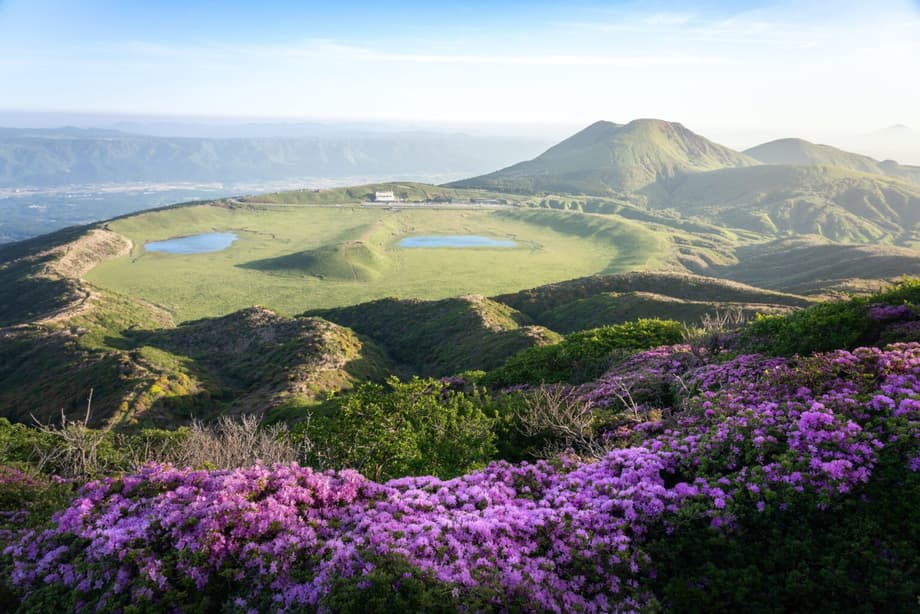
Mount Aso dominates the region, and its presence often raises questions whenever an earthquake strikes nearby. The JMA reported no change in volcanic activity at Aso after the November 25 quake. Tectonic earthquakes, which occur when faults slip, are different from volcanic tremor caused by moving magma or gases. A moderate crustal quake in this area does not automatically signal a change in the volcano.
The Aso caldera is surrounded by a network of faults that have produced damaging earthquakes in the past. Scientists monitor both tectonic faults and the volcano with dense sensor networks, cameras and gas measurements. If any change in the volcano occurs, the JMA issues separate volcanic alerts. No such change was detected after this event.
Transport, power and critical infrastructure
Transport and lifeline services remained largely intact. JR Kyushu reported normal operations on the Kyushu Shinkansen after the evening shock. Local rail and road operators conducted inspections that night. Power and water utilities did not report widespread disruptions. Kyushu Electric Power said inspection rounds found no abnormalities at the Genkai nuclear plant in Saga Prefecture and the Sendai plant in Kagoshima.
Local governments checked public facilities such as schools, clinics and community centers used as shelters. Fire and disaster response teams reminded residents to keep access lanes clear in hillside neighborhoods where emergency vehicles can be blocked by fallen rocks or parked cars.
How residents and travelers can prepare
Preparedness reduces risk from the next strong jolt. Residents and visitors in the Aso region can take simple steps that lower injury risk and ease stress if another quake arrives.
- Secure tall furniture, TVs and appliances to walls or stable bases.
- Place latches on cupboards and move heavy items to lower shelves.
- Keep a go bag with water, snacks, medications, masks, a battery radio and phone chargers.
- Know safe spots in each room, such as under a sturdy table, away from glass and tall furniture.
- Practice drop, cover and hold on. If outdoors, move away from buildings, signs and power lines.
- Review local hazard maps for landslides and check evacuation sites designated by your city or village.
- When driving in the mountains, avoid narrow roads under cliffs after heavy rain or aftershocks.
- Enable emergency alerts on your phone and follow guidance from local authorities and the JMA.
Lessons from 2016 Kumamoto and Japan’s preparedness
The Aso and Kumamoto area still carries memories of the powerful 2016 earthquakes that killed dozens and damaged tens of thousands of buildings across central Kyushu. Those quakes ruptured several faults, including the Futagawa and Hinagu faults, and triggered landslides around Aso. Many homes, bridges and cultural sites were rebuilt or strengthened afterward, and building codes continue to evolve based on lessons learned.
Japan’s warning and monitoring systems have expanded over the past decade. The nationwide early warning system can deliver an alert seconds before strong shaking arrives if sensors detect a fast rise in energy. Municipalities run regular drills and stockpile supplies. Even with these investments, moderate inland quakes can still cause household injuries and block roads, so personal readiness remains important.
Monitoring and where to get reliable updates
Residents can check current seismic information on the JMA’s earthquake page and on local government channels. The agency posts magnitude, location, depth and intensity maps within minutes of an event, and issues statements when activity clusters. A mobile JMA observation team was deployed to the Aso area after the November 25 shock to refine data on local shaking and fault behavior.
For daily life, the most useful signals are intensity maps, road reports and weather forecasts. Aftershocks can dislodge slopes that have been soaked by rain. City offices in Aso, Ubuyama and Taketa post closures and safety notices on official websites and social media. Avoid rumors on chat apps and rely on official accounts. For technical details and recent events, see the JMA’s earthquake information page at data.jma.go.jp.
What to Know
- M5.8 inland earthquake struck the Aso region on November 25 at 6:01 p.m., with upper 5 intensity in Ubuyama and lower 5 in Aso and Taketa.
- JMA logged 47 tremors of intensity 1 or higher in the first two days, and activity has been declining.
- No tsunami, trains and power plants operated normally, and only minor injuries were reported.
- Two prefectural roads were closed after rockfalls and cracks, and two vehicles were hit by falling rocks without injuries.
- Aftershocks continue, including events up to magnitude 4.3. A stronger jolt is possible though less likely as time passes.
- Mount Aso shows no change in volcanic activity, according to the JMA.
- Officials and researchers advise securing furniture, checking hazard maps and staying alert for further shaking.
- Reliable updates are available from the JMA and local governments. A JMA mobile team is assessing the area.