Why Tokyo families are heading south for school
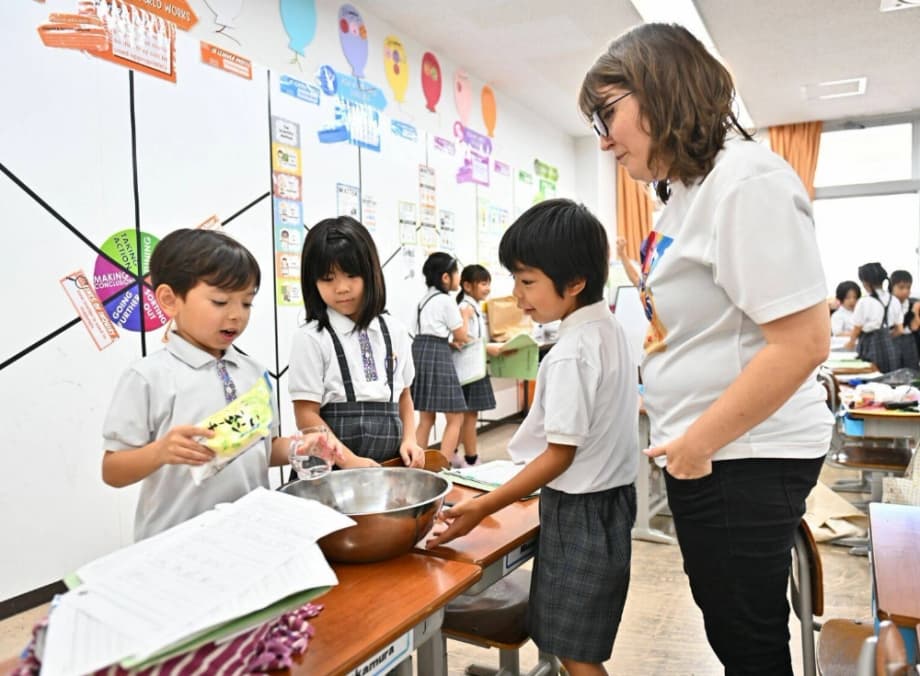
Inside a bright seaside classroom in Nanjo, Okinawa, first graders cut, measure, and test with balloons, plastic bottles, and cups while switching between Japanese and English. Of the 21 students in that class, two thirds have parents who recently moved from outside the prefecture, most from the Tokyo metropolitan area. The scene captures a larger shift underway at Okinawa International School, where families are relocating to secure a continuous International Baccalaureate pathway alongside a slower island lifestyle.
- Why Tokyo families are heading south for school
- What makes Okinawa International School different
- How the IB pathway compares with Japan’s national system
- Cost, fees, and life in Okinawa
- Other international school options on the island
- Trends in Tokyo show a crowded, fast changing market
- Relocation practical steps for parents
- What to Know
Okinawa International School began in 2003 as an international preschool in Naha. It now delivers a full International Baccalaureate continuum from kindergarten through high school. The student body has tipped toward newcomers for the first time, with students from outside Okinawa now accounting for more than 60 percent of enrollment. Many come with IB experience, including transfers from accredited schools in Tokyo. For these families, continuity matters. Moving within the IB system helps students stay on track academically without recalibrating to a new method or assessment style.
Parents cite a mix of reasons for heading south. The island offers green space, beaches, and short commutes. Remote work and flexible arrangements make relocation easier than a decade ago. Some families find that Okinawa provides a calmer daily rhythm and more room for exploration, while the school offers a globally recognized curriculum taught in English and Japanese. The phrase educational relocation has entered family conversations, reflecting a choice to move first for schooling and then fit other parts of life around that decision.
What makes Okinawa International School different
The school stands out for its IB continuum, a bilingual environment, and a classroom culture built on inquiry and projects. Students learn by asking questions, investigating ideas across subjects, and reflecting on their progress. Teachers encourage collaboration, presentation, and community service, skills valued by universities in Japan and abroad.
IB from kindergarten to diploma
The IB Primary Years Programme (PYP) shapes early learning through concepts and units of inquiry. Young children explore how the world works by combining science, language, arts, and physical activity. The Middle Years Programme (MYP) builds on that foundation with interdisciplinary study, design work, and personal projects that help students connect classroom content to real problems.
The Diploma Programme (DP) prepares older students for university with a mix of subject requirements and core components. Students complete Theory of Knowledge, a philosophy style course on how we know things, an Extended Essay, a supervised independent research paper, and Creativity, Activity, Service, which documents artistic, athletic, and community engagement. A school that runs PYP, MYP, and DP can align teaching across grades so that transitions feel smooth rather than abrupt.
Bilingual classrooms and inquiry first
Okinawa International School teaches in English and Japanese. Bilingual instruction lets students continue developing strong language skills while studying science, math, and humanities. Lessons often include experiments, projects, and presentations. Students gain practice speaking and writing in both languages, a practical advantage for families coming from Tokyo where many children have already studied in international or bilingual settings.
Campuses and growth
The school’s roots are in Naha, where it opened as a preschool. Today classes run in Nanjo with a view of the ocean, giving teachers a living laboratory for fieldwork and environmental projects. The expansion to a full K to 12 program has coincided with a rise in interest from families outside the prefecture, especially those who want to keep children on an IB track while changing pace from life in the capital.
How the IB pathway compares with Japan’s national system
Japan’s public system is respected for consistency, strong math foundations, and broad content coverage tied to national standards. It also orients many students toward entrance exams. Families who seek a different approach often look at IB because it balances content with inquiry, communication, and reflection. Assessment is frequent and varied. Students write, present, and build portfolios rather than relying mainly on a single high stakes test.
IB DP students choose from subject groups and study at standard or higher levels. The core is a distinctive feature. Theory of Knowledge challenges students to analyze claims from science, history, and the arts. The Extended Essay builds research skills that transfer to university. Creativity, Activity, Service requires sustained engagement beyond the classroom. These pieces, combined with internal and external assessments, result in a diploma recognized around the world.
Many universities in Japan accept IB Diploma results. The introduction of a Japanese language DP track widened access for students who prefer to study in Japanese while keeping IB methods. Families who aim for domestic universities should still review each campus policy, subject prerequisites, and score expectations. Students focused on overseas study find that the IB diploma is often a familiar credential to admissions offices, which can reduce uncertainty when applying across borders.
Cost, fees, and life in Okinawa
Private education is a major commitment in any prefecture. For the 2025 to 2026 year, published tuition at Okinawa International School ranges roughly from 1,169,500 yen to 1,912,900 yen depending on grade level. Other international schools on the island sit at different price points. Okinawa Christian School International lists annual tuition in the range of about 1,150,000 yen to 1,250,000 yen. Okinawa AMICUS International lists fees that start around 636,000 yen and go up to about 814,000 yen. Families should confirm the latest figures directly with schools and ask for a breakdown of additional costs.
On top of tuition, budgets often include registration fees, technology fees, uniforms, transportation, lunches, and optional activities. IB programs can require teacher training and subject resources, which can affect tuition. Families moving from Tokyo may find housing to be more affordable in Okinawa, though costs vary by neighborhood, commute time, and proximity to the coast. Airfare for trips to the mainland, car ownership, and seasonal utilities are other items to include when mapping out a yearly budget.
Daily routines tend to change as well. Commutes are shorter, and children spend more time outdoors. School bus services may cover select routes, though coverage differs by school. Parents moving from Tokyo often visit campuses to test commute times and check the fit of after school options before making housing choices.
Other international school options on the island
Okinawa has a small cluster of international schools that serve different needs and philosophies. Families compare language of instruction, accreditation, and age ranges before deciding. Only some schools follow the IB, while others use American style or broader international approaches.
- Okinawa Christian School International, established in 1957, teaches in English with an American style curriculum rooted in Christian education. It serves prekindergarten through grade 12 and reports a student body of more than 500.
- Okinawa AMICUS International serves kindergarten through junior high. Instruction is in English with a focus on developing a global mindset and independent learning.
- Santa Monica Okinawa International School operates from prekindergarten through high school and serves a broad age range.
- New Life Academy and World Mission Christian School offer programs from preschool through high school with an English medium focus.
- Da Vinci International School offers programs from preschool through higher grades and places an emphasis on a creative learning environment.
Families who want the IB continuum focus on whether schools are authorized for PYP, MYP, and DP. Those who want a strong English academic track without IB might find a better financial fit at a non IB school. The key is to align the curriculum and language mix with the student’s goals for university and life after graduation.
Trends in Tokyo show a crowded, fast changing market
Tokyo’s international school sector keeps expanding. One major IB World School plans to move to a new campus in Takanawa Gateway City in 2026, signaling continued investment in larger facilities, science labs, and design studios. These upgrades attract families who want advanced labs, arts facilities, and better access to central stations. The capital now offers an array of choices for IB, American, British, and Indian curricula, each with different tuition levels and class structures.
Indian curriculum schools in Tokyo have drawn more Japanese families in recent years in part because of tuition that is often lower than long established Western international schools. At the same time, demand for IB in the capital remains steady, especially among families considering overseas universities. For some parents who want IB but prefer a coastal setting and more space, Okinawa has emerged as a realistic alternative. Permitting a move while keeping a consistent curriculum is a powerful draw, and the pace of island life is a bonus.
Relocation practical steps for parents
Parents who are considering a move for school often start planning months in advance. A clear process helps reduce stress for children and ensures that transcripts and testing align with the new school’s requirements.
- Verify authorization. Use the International Baccalaureate school finder to confirm PYP, MYP, and DP status for each campus. The search tool is here: IB World School finder.
- Map the continuum. Ask how the school connects PYP to MYP and MYP to DP, including subject availability and language pathways.
- Check language support. Confirm how the school supports students who are stronger in English or Japanese and how it builds proficiency in the second language.
- Review staffing. Request information about teacher qualifications, ongoing professional development, and turnover in recent years.
- Assess student support. Inquire about counseling, university guidance, and resources for students with learning differences.
- Plan the commute. Review school bus routes, pickup times, and traffic patterns between potential neighborhoods and the campus.
- Understand admissions timelines. Confirm application windows, assessments, interviews, waitlists, and how transfer credits are handled.
- Budget carefully. Ask for a full list of fees, payment schedules, sibling discounts, and any scholarships or financial aid.
- Confirm exam pathways. For students targeting Japanese universities, confirm how the school supports IB Diploma candidates with domestic applications.
- Prepare the child. Build a transition plan that includes school visits, summer reading lists, and bridge activities so the first weeks feel familiar.
It is helpful to speak with current parents who have moved from Tokyo. Their experience can clarify how the school manages transitions, how clubs and sports work, and what daily life looks like after the move.
What to Know
- Two thirds of first graders at Okinawa International School have families who moved from outside the prefecture, and more than 60 percent of the student body now comes from outside Okinawa.
- The school offers the full IB continuum, from the Primary Years Programme to the Diploma Programme, with classes in English and Japanese.
- Many students transfer from IB schools in Tokyo to maintain continuity while relocating.
- Published tuition spans a wide range by grade, with Okinawa International School at roughly 1.17 million to 1.91 million yen per year, and other island schools at different levels.
- Okinawa Christian School International uses an American style program in English, and Okinawa AMICUS International serves kindergarten through junior high in English without the IB.
- Tokyo continues to add capacity, including a planned relocation of a major IB school to Takanawa Gateway City in 2026, while Indian curriculum schools attract families with lower tuition.
- Parents choose Okinawa for IB access plus lifestyle factors like shorter commutes, open space, and a calmer daily rhythm.
- Before moving, verify IB authorization, review language support, plan the commute, and confirm admissions timelines and fees.