A City in Mourning as Security Officials Issue Stark Warning
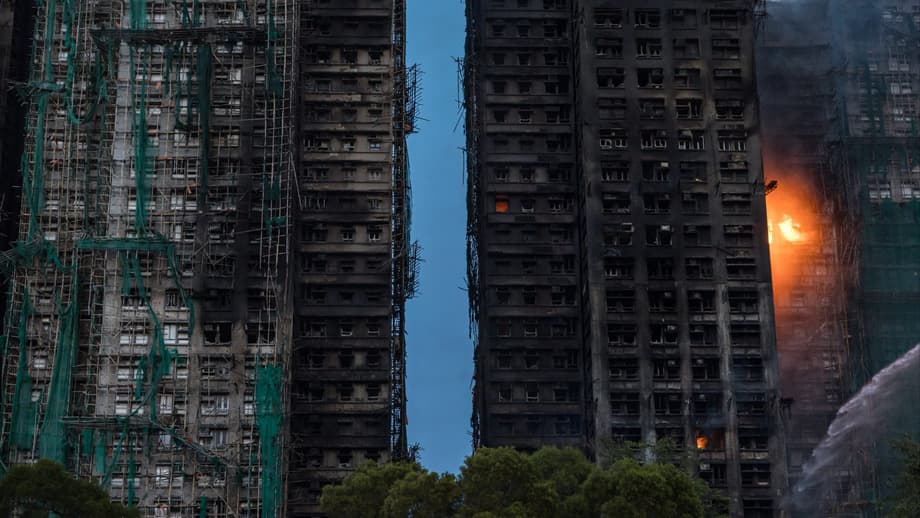
Hong Kong is grieving after a high rise apartment fire at the Wang Fuk Court estate in Tai Po killed at least 128 people. About 150 residents remain unaccounted for. The disaster is the city’s deadliest blaze in almost eight decades. As families mourn and rescue teams work through charred towers, China’s security agency in the city issued a warning aimed at stemming anti government movements. It accused anti China forces of spreading false information and vowed to punish anyone who used the tragedy to disrupt Hong Kong under the national security law. The warning coincided with the detention of a man on suspicion of sedition after he helped circulate an online petition that demanded accountability and an independent investigation.
- A City in Mourning as Security Officials Issue Stark Warning
- Why a security warning followed the blaze
- How the fire turned a renovation site into a conduit for flames
- Residents say warnings were missed
- What authorities are doing now
- Cross border help and the autonomy question
- Fire service capability and standards
- Security law, free speech and public trust
- What to Know
The fire tore through seven of the estate’s eight towers that were wrapped in bamboo scaffolding and green safety mesh for renovations. Some building alarms failed. Authorities say the cause is still under investigation, and possible safety violations are central to the inquiry. Police and the anti corruption agency have detained people linked to the renovation contractors as criminal and corruption probes move forward. Donations and volunteer support have poured into the area, although local media said some volunteers distributing supplies in a nearby square were asked to leave by officials.
Why a security warning followed the blaze
The Office for Safeguarding National Security in Hong Kong said hostile actors were exploiting the disaster to sow division and hatred toward the government. It warned that those who disrupt the city under the pretext of the fire will face consequences under the national security law. The tone matches the hard line that has defined Hong Kong’s politics since 2020, when the security law reshaped civil society and limited protest.
Police detained a university student after he helped launch an online petition that gathered more than ten thousand signatures before it was closed. The petition called for four steps: provide support and proper resettlement for residents; pursue accountability for officials through an independent commission of inquiry; review construction oversight and fire safety compliance across high rises; and ensure transparent communication with affected families. Investigators say the man is suspected of inciting sedition, a colonial era offense revived in recent years alongside national security prosecutions.
How the fire turned a renovation site into a conduit for flames
The blaze began on Wednesday afternoon, then sprinted up the exterior of Wang Fuk Court by feeding on materials meant to protect and repair the towers. Seven of the eight 32 storey blocks were undergoing renovation. The buildings were wrapped in bamboo scaffolding and draped in green mesh. Windows in many flats were covered with foam boards, while corridors and facades were crowded with temporary fixtures. Once flames reached the scaffolding and insulation, wind pushed the fire from block to block. Fire crews fought for nearly 40 hours before declaring the entire site extinguished.
Bamboo scaffolding and safety nets
Bamboo scaffolding is a long standing feature of Hong Kong construction. It is fast to assemble and strong, and workers rely on it across the city. The green mesh that covers the scaffold is designed to catch falling debris and shield pedestrians. City rules require that covering materials and nets be flame retardant. Investigators now suspect that protective nets and other coverings at Wang Fuk Court failed to meet those standards. If nets ignite, they can act like a wick that runs up the outside of a tower. The narrow gaps between scaffold, mesh and the building can trap heat and smoke, creating a vertical channel that speeds fire upwards.
Foam panels and broken windows
Foam boards used during window repairs can be highly combustible if not properly treated. Common foams, including polystyrene and polyurethane, burn quickly and release thick toxic smoke. At Wang Fuk Court, heat appears to have built up behind some panels, causing windows to blow out and feeding oxygen to the flames. Once inside flats, fire can skip across rooms through curtains, furniture and corridors. With strong wind and many openings, even concrete structures face a fast moving exterior and interior fire.
Officials also acknowledged that some alarms did not function correctly. If smoke detectors, alarm bells or public address systems fail in a complex fire, residents lose time that can save lives. Fire codes have improved over the decades, yet maintenance lapses and renovation shortcuts can leave older estates exposed. Experts have compared the fire spread pattern to the mechanism seen in London’s Grenfell Tower disaster, which was driven by combustible cladding and insulation. That comparison underlines how dangerous exterior fire paths can be in dense high rise estates.
Residents say warnings were missed
Long before the tragedy, residents flagged hazards to officials. Tenants raised concerns in 2024 about the flammability of the green mesh and the foam panels that contractors used to block windows during repairs. They also complained about workers smoking near scaffold and about malfunctioning alarms. According to government responses cited by residents, the risk of a scaffolding fire was described as relatively low since the work did not involve open flames. The Labour Department said it carried out inspections and issued improvement notices to contractors. Police have since said they suspect some protective nets and materials did not meet fire safety standards.
Police arrested three men linked to the main renovation firm on suspicion of manslaughter and gross negligence. The Independent Commission Against Corruption later detained that group and more suspects, bringing the total number of people held to at least eleven, including scaffolding subcontractors and project managers. Authorities suspended work on 28 projects handled by the same contractor and opened a criminal and corruption investigation into the Wang Fuk Court works. Investigators are examining procurement, oversight and whether any officials or company leaders ignored or downplayed warnings.
What authorities are doing now
The government has announced emergency relief and shelter for survivors. Officials set up multiple centers and arranged places in youth hostels and hotels. They also proposed transitional housing and dedicated flats from the Housing Authority, providing around 1,800 units in the first phase. Each affected household will receive a cash grant of HK$10,000. A public relief fund of HK$300 million is being assembled to support daily needs, medical bills and relocation.
Leaders ordered a safety crackdown on contractors and renovation sites across the city. Companies must submit proof that nets and coverings are flame retardant, with tight deadlines for compliance. Work on 28 projects run by the Wang Fuk Court contractor has been paused for auditing. At the national level, Chinese authorities announced a high rise safety review to remove hazards such as bamboo scaffolding used with not flame retardant nets and the improper blocking of windows.
Rescue operations at Wang Fuk Court have ended, but identification and accounting continue. Officials say at least 128 people died, with about 150 still unaccounted for. More bodies may be found as teams search hazardous areas. The fire injured dozens, including firefighters. One fire officer died during the response.
Cross border help and the autonomy question
Images on social media showed mainland fire engines waiting near the border as the blaze raged a short distance away. Hong Kong authorities said they did not request firefighting assistance from Guangdong. Leaders faced a delicate choice. Accepting mainland crews could have sped help, yet it might also have been viewed as a sign that the city could not manage a major emergency on its own.
In recent years the city has built processes for cross border disaster cooperation within the Greater Bay Area. Fire and rescue departments from Hong Kong, Guangdong and Macao run joint drills and plan for a fast Green Channel that lets selected fire appliances cross the boundary with dual licence plates. Training ties and technology exchanges have also deepened through formal agreements between Hong Kong training academies and China’s national fire institute.
Ronny Tong, a senior adviser to Chief Executive John Lee, urged sensitivity about public perceptions when asked about the prospect of mainland crews entering Hong Kong.
‘People should be sensitive to the image that may arise that the Hong Kong people are unable to deal with matters within Hong Kong.’
Officials said the city was bringing the situation under control and thanked national leaders for their concern. The decision not to call in cross border brigades is likely to be revisited in reviews of emergency protocols and public expectations.
Fire service capability and standards
At the height of the emergency, more than two thousand firefighters battled flames that leapt across facades and climbed scaffolding. Crews faced limited access around wrapped buildings, falling debris and intense heat. The complex exterior fire limited the usefulness of some standard tactics such as ladder rescues and external water jets, especially where mesh and scaffolding obstructed reach. The multi building front meant commanders had to split resources across seven towers while also conducting search and rescue.
Response targets and what they mean
The Fire Services Department has a pledge to reach building fires in built up areas within six minutes in the great majority of cases, and to reach emergency ambulances within twelve minutes for most calls. These targets measure the time from call to arrival. They do not reflect how long it takes to gain control of a complex blaze. The department has been upgrading training and equipment. Plans include a new mobilising and communication system to speed deployment, more modern fire appliances and vessels, and closer cooperation with hospitals, civil aid teams and academic partners on rescue technology and safety. In parallel, officials are moving to tighten fire safety requirements for older residential blocks and to give regulators clearer authority to carry out improvement works when owners fail to comply.
Security law, free speech and public trust
The sedition detention tied to the online petition highlights a wider tension. Many residents want answers and a credible investigation. National security authorities warn against any mobilization that could trigger unrest. Volunteers distributing supplies at a square near the estate were told to leave, according to local reports. These actions keep the focus on order and stability, yet they also risk chilling grassroots relief efforts and civic discussion at a moment of shared grief.
Studies of past unrest in the city have found that indiscriminate or highly visible coercion can backfire by reducing enthusiasm among pro government voters and by hardening distrust among critics. That dynamic is familiar to governments worldwide. Managing grief, safeguarding public order and allowing space for legitimate criticism is a difficult balance during a disaster.
Modern China has seen how tragedies can galvanize people. In late 2022, anger over a lockdown linked apartment fire in Urumqi helped spark nationwide demonstrations. Authorities later shifted course on pandemic restrictions. City leaders in Hong Kong have tried to show that they can deliver safer homes and better services after the turmoil of 2019. Handling this fire with transparency, respect for the dead and real accountability will shape public confidence.
What to Know
- At least 128 people are confirmed dead and about 150 are missing after the Wang Fuk Court fire in Tai Po.
- Seven of the estate’s eight towers burned. Scaffolding, safety nets and foam panels accelerated fire spread. Some alarms failed. The blaze took about 40 hours to extinguish.
- National security authorities warned against using the tragedy to disrupt the city. Police detained a man on suspicion of sedition over a petition with four demands.
- Police and the anti corruption agency have arrested at least eleven people linked to the renovations. The government suspended 28 projects run by the contractor for audits.
- Relief measures include HK$10,000 per affected household, shelter centers, hotel placements and about 1,800 units of temporary accommodation, plus a HK$300 million relief fund.
- Citywide safety checks are under way with deadlines to prove materials are flame retardant. Mainland authorities ordered a high rise safety review.
- Hong Kong did not request firefighting assistance from Guangdong, although joint Greater Bay Area protocols exist for cross border rescue.
- The Fire Services Department sets six minute urban response and twelve minute ambulance targets, and is pursuing upgrades in equipment and training.
- Public anger persists, with calls for an independent inquiry and better oversight of contractors and building safety.