A rare ultimatum to a core revenue agency
Indonesia’s Finance Minister, Purbaya Yudhi Sadewa, has issued a stark directive to the Directorate General of Customs and Excise. If the agency cannot restore public trust and fix long running inefficiency and misconduct, it faces a freeze and the possible outsourcing of key functions to the Swiss inspection group SGS. The minister stressed that this is not rhetorical. President Prabowo Subianto has given him a one year mandate to carry out a comprehensive overhaul without interference. Few ministries take on a more sensitive mission than customs, which stands at the gate of the economy, filters imports and exports, administers excise, and protects a vital stream of state revenue.
- A rare ultimatum to a core revenue agency
- Why customs reform is back on the table
- What outsourcing to SGS would look like
- Indonesia in the 1990s and pre shipment inspection
- How the reform clock will tick over the next year
- Impact on trade, revenue, and business confidence
- Corruption risks and the public trust deficit
- Digital fixes and process overhauls that could move the needle
- Regional and global context
- What to Know
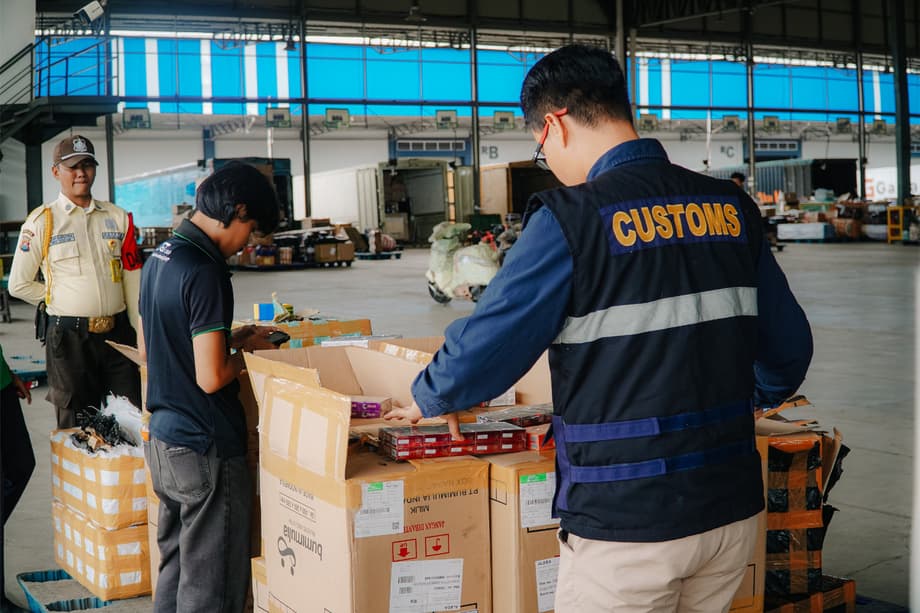
The pressure follows mounting complaints from businesses and an avalanche of public criticism. Customs employs roughly 16,000 staff across Indonesia. Traders have circulated claims that illicit payments can climb to 550 million rupiah to clear a single imported container, a figure that, if accurate, would crush thin margins for small firms. Senior officials now acknowledge that the agency’s image is poor in the media, in society and even among the country’s leadership. The message from the top is blunt. Underperformance will no longer be tolerated. A real reset is expected.
The option to call in SGS draws on an older playbook. In the 1990s, following corruption scandals under the Soeharto administration, parts of customs verification were shifted to PT Surveyor Indonesia in cooperation with SGS. That approach, known as pre shipment inspection, shifted key checks to the point of origin before goods reached Indonesian ports. The goal was to reduce fraud, ensure correct valuation and classification, and speed clearance once cargo arrived.
Why customs reform is back on the table
Indonesia wants faster logistics, greater investment and stronger non tax revenue. Customs sits at the junction of these goals. When clearance is slow or unpredictable, supply chains suffer, factory schedules slip and costs rise. When declarations are inaccurate or payments are diverted, the state loses money and compliant importers face unfair competition. Viral allegations, even when unproven, widen a trust deficit that is hard to close. The current push reflects a broad demand for predictable, rules based border management that treats a small trader and a large multinational in the same fair and transparent way.
The one year window shows urgency and a readiness to be judged on outcomes. That signals a shift from slogans to measurable changes on the ground. Better targeting of high risk cargo, consistent application of valuation and origin rules, and transparent procedures for holds and penalties are often the difference between a port that runs smoothly and one that stalls. A credible clean up would be felt not only at the quay but across trucking yards, warehouses and factory floors.
Outsourcing to a third party is not the default. It is a contingency if internal reforms do not bite quickly. The minister’s warning keeps pressure on the organization while signaling to traders that the government will act even if institutional resistance slows progress.
What outsourcing to SGS would look like
SGS is a Swiss based inspection, verification, testing and certification company. In many countries, governments have hired SGS to perform pre shipment inspection, valuation support and verification of conformity for regulated products. In practice, independent inspectors check the price, quantity, tariff classification and compliance with national standards before goods are loaded abroad, then issue a report that customs officers can use at the border to speed clearance and reduce disputes.
What SGS typically does
Under a typical pre shipment arrangement, SGS reviews invoices and contracts, inspects cargo at warehouses or ports of loading, confirms tariff classifications against the national schedule, and tests whether declared values are plausible compared to price databases. Inspectors flag suspected underinvoicing or misdeclaration, tactics often used to lower duties. For products that must meet safety or quality rules, the company can also verify conformity so that non compliant goods are intercepted before departure.
What would likely stay in government hands
Even if parts of the process are outsourced, core state powers remain with the government. Only the state can seize goods, conduct enforcement inside the country, set tariffs, grant exemptions and impose penalties. Line officers still decide whether to open a container, whether to escalate a case and whether to prosecute. Outsourcing would add an external layer of verification and specialized tools, not transfer sovereignty.
The potential benefits are straightforward. Honest traders gain predictability when a reliable pre shipment report helps them move quickly through the port. The state gains a check against undervaluation and a clearer picture of revenue at risk. There are trade offs. Pre shipment inspection adds a step in the supply chain and can trigger disputes if importers contest the findings. Outcomes depend on the contract design, data sharing with customs, and how disagreements are resolved without clogging ports.
Indonesia in the 1990s and pre shipment inspection
Indonesia has experience with this model. During the Soeharto era, the government paired PT Surveyor Indonesia with SGS to verify cargo values and classifications abroad after scandals exposed leakage and bribery at ports. The shift moved checks upstream. Many firms adapted, paperwork improved and clearance times fell in some lanes. It also created new debates over fees, overlap with line officers and the timing of a transition back to fully internal controls.
Beyond Indonesia, several countries turned to pre shipment inspection when customs organizations faced similar stress. Case studies show mixed results. Revenue often rose in the short term, and compliance improved for common misdeclaration schemes. Over time, some administrations built their own risk engines, price databases and post clearance audit teams and then scaled down or ended inspection contracts. The lesson for Jakarta is to build internal capacity from day one, even if a contractor serves as a bridge.
How the reform clock will tick over the next year
The ministry has not published a step by step schedule. The minister’s framing suggests early moves that do not require new laws. Rotations for sensitive posts, tighter supervision at high volume ports, lifestyle audits for exposed officers and a stronger whistleblower channel are likely candidates. External monitoring, either through an inspectorate or an independent panel, would give the public confidence that progress is real.
Technology reforms can run in parallel. Customs can expand trusted trader schemes such as Authorized Economic Operator status for companies with strong compliance. That shifts resources toward risk based checks and reduces routine interventions. Deeper integration with the Indonesia National Single Window and the National Logistic Ecosystem can cut redundant submissions, limit discretion and shrink face to face interactions where rent seeking can occur.
Impact on trade, revenue, and business confidence
Importers prize speed and predictability. A clean, rules first customs environment helps manufacturers plan, lowers inventory costs and supports exporters who rely on timely inputs. The state benefits when duties and excise are collected on time with fewer disputes. If outsourcing is limited to pre shipment checks for high risk goods, clearance could accelerate for compliant traders while the net tightens around deception and fraud.
The fiscal dimension will matter. Inspection contracts come with fees. Some may be passed to traders, others borne by the state. If a contract lifts collection and reduces leakage, the net effect can be positive. If it adds friction without gains, it could crowd out investment in people and systems. Publishing metrics such as average clearance time, dispute rates, audit yields and revenue growth by sector would let the public judge whether reform is delivering.
Corruption risks and the public trust deficit
Customs corruption tends to follow familiar patterns. An importer misstates the tariff classification to lower duty. A declarant underreports quantity or value. A broker seeks a side payment to fix a problem. These tactics are not unique to Indonesia. What stands out now is the wave of public attention, with viral stories about staggering informal costs turning the agency into a symbol of broken processes. Reports by used clothing traders that a single container can absorb 550 million rupiah in illicit payments have angered small businesses and strengthened calls for change.
Rebuilding trust means consistent enforcement and a culture shift. Honest officers need protection and a clear path for advancement. Those who take bribes must face visible consequences. Data transparency helps. Publishing anonymized statistics on inspection outcomes, reasons for holds and the distribution of penalties can deter rent seeking. Linking officer rotations and assignments to risk indicators can prevent cozy relationships. An external partner, if engaged, can act as a backstop while internal changes take hold.
Digital fixes and process overhauls that could move the needle
More cargo should clear based on data and risk, not face time at the counter. That starts with better information. Advance electronic manifests, real time interfaces with shipping lines and price reference databases for sensitive goods give officers a stronger footing. Wider use of non intrusive inspection, such as container X ray and radiation portals, reduces the need to open boxes and limits contact between traders and officials.
Reform of licensing and permits matters as much as customs rules. Many delays occur in non tariff approvals from sectoral ministries. The National Logistic Ecosystem aims to streamline those flows. The closer the Single Window comes to a one stop platform, the less room there is to shop for shortcuts. Training is the other pillar. Risk management is a craft. Officers need tools, feedback and recognition when they make sound decisions.
Regional and global context
The wider region is under scrutiny for how oil and other sensitive cargo move and how origins are declared. Traders told market watchers this year that some crude deliveries to China were labeled as Indonesian despite data gaps that point to trans shipment and relabeling of sanctioned oil. The episode shows how origin, valuation and compliance can be manipulated on paper and at sea. It also highlights why customs systems need better analytics, vessel tracking and close coordination with maritime authorities.
For Indonesia, the takeaway is practical. The country seeks investment, deeper supply chains and stable access to markets. That requires a border regime that is fast for the honest and tough on fraud. The current ultimatum, backed by a one year mandate and the possibility of outsourcing, is an attempt to break patterns that have frustrated traders and hurt credibility. If the right mix of internal reform and targeted external support is found, the gains would be felt well beyond the port gates.
What to Know
- Finance Minister Purbaya Yudhi Sadewa gave Customs one year to show reform results.
- The ministry may outsource selected functions to SGS if progress stalls.
- The approach echoes 1990s pre shipment inspection with PT Surveyor Indonesia and SGS.
- Public trust has slumped amid business complaints and viral claims of large illicit payments.
- Outsourcing would cover verification tasks, while enforcement and tariff setting remain with the state.
- The ministry has not published a timeline, but rotations, audits and digital risk tools are likely early moves.
- Pre shipment inspection can speed clearance for compliant traders, but adds costs and must be carefully designed.
- Regional cargo origin controversies underscore the need for stronger analytics and interagency cooperation.