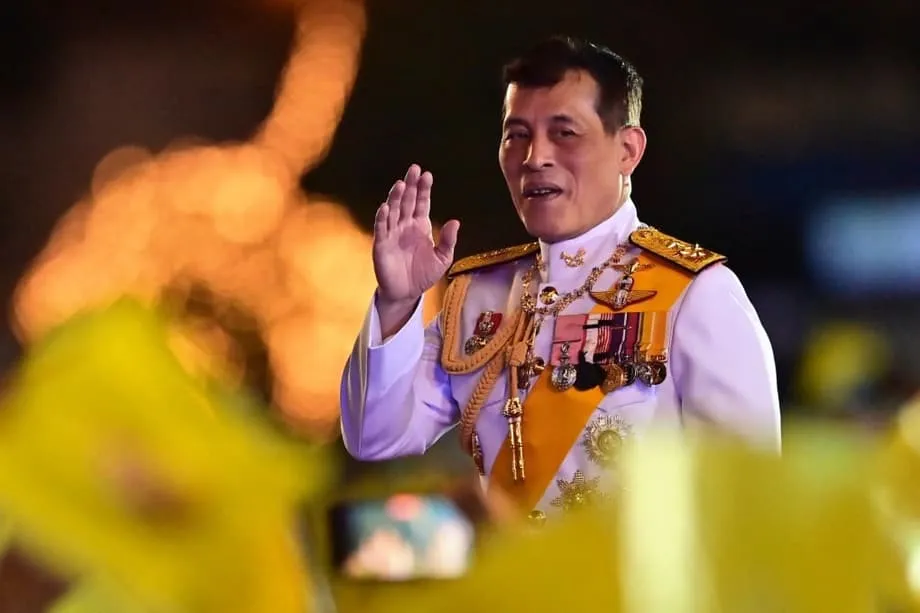
A royal milestone follows a major extradition
Thailand extradited She Zhijiang, a Chinese national accused of running large online gambling and fraud operations in Myanmar, to China a day before King Maha Vajiralongkorn arrived in Beijing for the first state visit to China by a sitting Thai monarch. The handover followed years of legal battles and placed security cooperation at the center of a historic diplomatic moment.
Contents
- A royal milestone follows a major extradition
- Why the partnership is gaining weight
- Scam networks put security at the forefront
- Fourteen documents set out the economic agenda
- The railway promises a route through Laos
- Tourism and space exchanges broaden the relationship
- Closer to Beijing while keeping Washington ties
- Rights concerns and industrial competition remain
- Costs and delivery will test the agreements
- Key Points
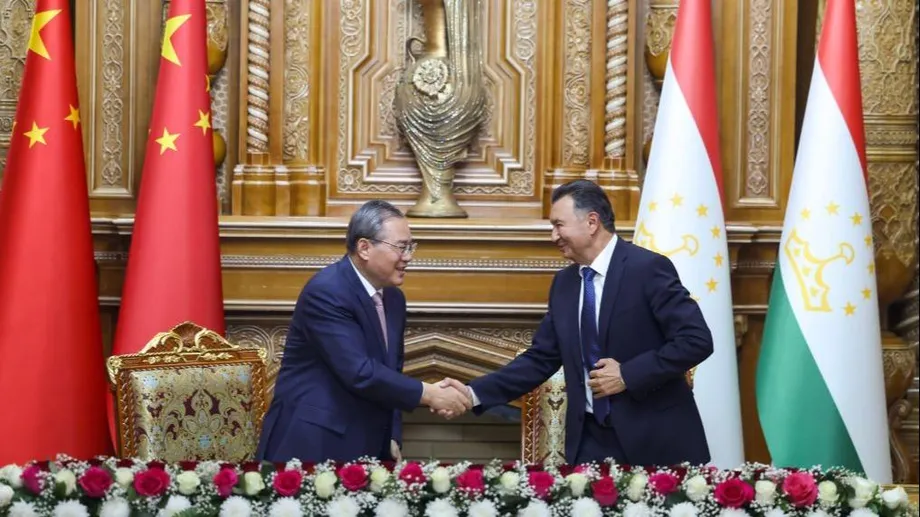
The visit came as Thailand and China marked 50 years of diplomatic relations in 2025. President Xi Jinping welcomed the king and queen at the Great Hall of the People with full honors. The ceremony celebrated a relationship that now reaches into trade, military equipment, transport, technology and efforts to dismantle criminal networks operating across borders.
China is Thailand's largest trading partner and a growing supplier of military equipment. For Beijing, hosting the Thai monarchs during the anniversary year reinforced a message Chinese leaders have repeated for years: the two countries regard each other as close partners with ties resembling those of a family.
Xi and the Thai monarch discussed expanding cooperation on the China Thailand railway, including its planned connection to the railway through Laos. Artificial intelligence, aerospace and the digital economy also featured, alongside a joint campaign against crime in border areas where scam centers target victims across Asia.
She Zhijiang's extradition gave that security agenda an immediate and concrete expression. Its timing, just before the royal visit, brought together two strands of the relationship: ceremonial diplomacy at the highest level and practical cooperation between authorities dealing with alleged criminal activity.
The Beijing events capped a year in which agreements, infrastructure decisions and enforcement actions had already brought Bangkok and Beijing closer. Changes in Thailand's political leadership did not interrupt that momentum.
Why the partnership is gaining weight
Thailand has long balanced relations with major powers. It remains one of America's oldest allies in Asia, while its everyday commerce and investment increasingly lean toward China. Chinese brands are familiar to Thai consumers through phones, cars and online platforms, and many Thai families have Chinese ancestry.
The two governments frequently describe their relationship as brotherly. A royal state visit during the Golden Jubilee of diplomatic relations gave that language greater political weight, connecting the anniversary celebrations with decisions about how the partnership should develop.
China's economic priorities and Thailand's development goals overlap in several areas. Beijing is pursuing growth through innovation in its next five year plan. Bangkok wants to upgrade industry, bring more public services online, improve logistics and attract advanced manufacturing to the Eastern Economic Corridor on Thailand's eastern seaboard.
Green energy, electric vehicles, advanced agriculture and digital trade are among their shared interests. The practical appeal for Thailand is the possibility of connecting investment with better transport, new industrial capabilities and access to Chinese buyers.
Xi presented the meeting as a strategic reset. He called for closer alignment of national plans, progress on major projects and broader cooperation in emerging sectors. He also praised the Thai royal family's long engagement with China.
President Xi Jinping described the visit as the beginning of a new chapter and linked its historic character to the king's choice of destination:
King Vajiralalongkorn makes China the first major country for his state visit and becomes the first king of Thailand to visit China since the establishment of diplomatic relations, which shows the high importance he attaches to our friendship.
Scam networks put security at the forefront
Scam syndicates and illegal gambling rings operating in parts of Myanmar and other border areas have victimized tens of thousands of people, many of them Chinese citizens. Those networks have made cooperation against crime a priority for both capitals.
Thai authorities have increased operations along the frontier, including cutting electricity and disrupting the networks that sustain criminal centers. Chinese leaders have publicly thanked Thailand for its actions and called for closer cooperation between police, prosecutors and courts.
The extradition of She Zhijiang followed a legal process stretching over years. Thailand's extradition treaty with China, signed years earlier, provides a legal basis for considering requests case by case, including cases involving prominent suspects such as She.
Extradition means one country hands a person to another through a legal process to face proceedings there. In this case, it connected Thailand's handling of an alleged operator of gambling and fraud networks with China's wider effort against scams affecting its citizens.
Veteran observers caution that dismantling such groups requires coordination among several governments. Criminal networks can move across borders and exploit gaps in jurisdiction, the limits on where a country's authorities can exercise their powers.
Thai leaders also face a sovereignty concern. They want support against criminal organizations while retaining control over policing on Thai territory. Diplomats in Bangkok favor expanded information sharing and joint investigations, with ultimate authority for arrests and prosecutions remaining in Thai hands.
Security discussions extend beyond scams. Chinese and Thai officials address border risks and crisis management involving neighboring countries, while supporting the use of regional mechanisms to handle Southeast Asian disputes. Keeping isolated incidents from escalating would help protect trade corridors and tourist flows.
Fourteen documents set out the economic agenda
Thai and Chinese cabinets presided over the signing of 14 documents in early 2025. The package comprised one joint statement and 13 memoranda of understanding covering energy policy coordination, investment, the digital economy, scientific research, customs procedures and agricultural trade.
A memorandum of understanding sets out areas in which the participants intend to cooperate. Together, these documents provided a roadmap across several parts of the economy, rather than concentrating the relationship on a single investment or industry.
Thailand's National Economic and Social Development Council, Ministry of Energy and Eastern Economic Corridor Office were among the agencies taking the lead. The agreements sought to make commerce across borders easier, including inspections and customs clearance for fruit and other produce, and to encourage more Chinese purchases of Thai agricultural goods.
The Ministry of Higher Education, Science, Research and Innovation and the Ministry of Digital Economy and Society were involved in agreements intended to support joint research and training in artificial intelligence and the next generation of digital services.
Information cooperation formed another part of the package. Thailand's Public Relations Department and Thai PBS agreed on content exchanges and methods to counter disinformation with Chinese partners. Thai officials also pressed cybersecurity as a public concern, pointing to the harm caused by fraudulent call centers and online financial scams targeting citizens and tourists.
Chinese carmakers and battery companies have already invested in Thai plants, seeking to use the country as a regional center for electric vehicles. Thai banks and government agencies are developing financial services across borders to help those projects connect with local supply chains.
Bangkok's ambition is to attract advanced manufacturing, build local skills and develop an industrial network capable of exporting across ASEAN and into South Asia. The value for Thailand depends on how investment connects with Thai suppliers, workers and services, as well as the factories themselves.
The railway promises a route through Laos
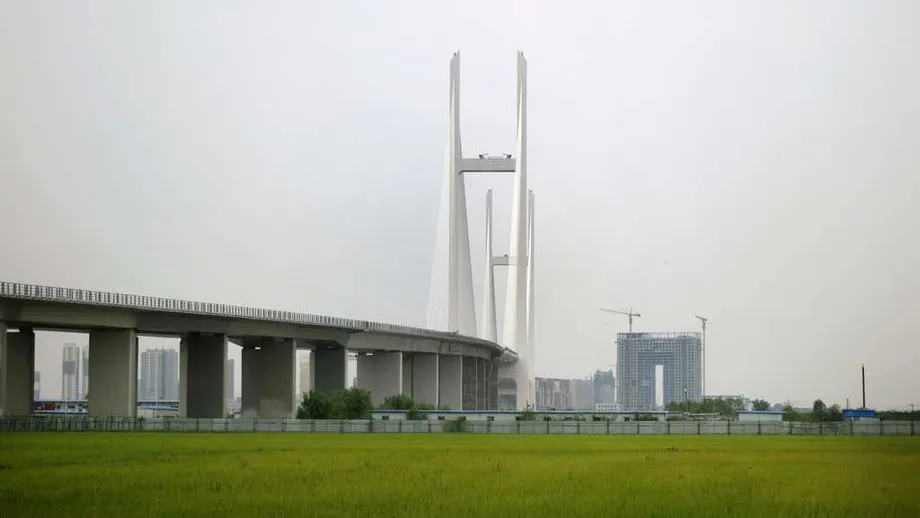
The planned railway from Bangkok to Nong Khai, on the Lao border, is one of the clearest examples of the partnership's ambitions and practical difficulties. It would connect with the China Laos railway, which opened in 2021, creating a route linking Thailand, Laos and China.
Freight could travel from Thai ports and warehouses through Laos into China with fewer delays. Passengers would gain a faster option for travel across the region. The target for the connection to become fully functional is near the end of this decade, with completion dependent on budget approvals, construction progress and the integration of railway systems.
The Thai cabinet approved the second phase, running from Nakhon Ratchasima to Nong Khai. That section would complete the domestic route to the Lao border. Engineers still face questions involving track standards and signaling, along with how to connect the project effectively to Thailand's existing logistics corridors.
Access to ports serving the Eastern Economic Corridor on the Gulf of Thailand is part of that challenge. A railway can carry more useful freight when it connects efficiently with the places where goods are produced, stored and shipped.
Paetongtarn Shinawatra, then Thailand's prime minister, described the expected commercial and social benefits while visiting China earlier in 2025:
This will boost trade between Thailand, Laos, and China, creating more opportunities for enterprises in all three countries. I am confident the railway will strengthen people to people exchanges and trade relations between Thailand and China.
The main milestones show how the transport and diplomatic agendas developed over time:
- 2021: The China Laos railway opened, providing the connection that Thailand's planned line would join.
- Early 2025: Thai and Chinese cabinets presided over the signing of 14 cooperation documents, and Paetongtarn discussed the railway during her visit to China.
- During 2025: Thailand's cabinet approved the railway's second phase from Nakhon Ratchasima to Nong Khai.
- A day before the royal visit: Thailand extradited She Zhijiang to China after years of legal battles.
- During the 50th anniversary year: King Maha Vajiralongkorn made the first state visit to China by a sitting Thai monarch.
- Near the end of this decade: The railway connection is targeted to become fully functional.
Tourism and space exchanges broaden the relationship
China was Thailand's largest source of visitors before the pandemic. Visitor numbers have recovered, but concerns about safety continue to affect confidence. Thai officials used recent meetings to seek help restoring travelers' trust and making group tour approvals easier.
Thailand has also worked to shut down scams and improve policing in popular destinations. Those efforts connect the tourism agenda with security cooperation: confidence in travel depends partly on whether visitors believe they will be safe.
Social media coverage of the royal visit generated interest in Thailand among Chinese internet users and travel agencies. Videos showing the monarchs speaking with Chinese astronauts were among the moments that attracted attention.
During the Beijing trip, the king and queen toured aerospace facilities and held a live conversation with the crew aboard Tiangong, China's space station. It was the first time a foreign head of state had spoken directly with a Chinese space mission in orbit.
Cultural and educational links extend well beyond the visit. Thailand hosts some of the largest Lunar New Year celebrations outside China and has legalized traditional Chinese medicine as an accepted health practice. Thai universities have strong Chinese language programs, while school partnerships send students in both directions.
Museums and scientific institutions also collaborate through exhibitions of lunar samples and joint space research. These activities give the relationship a presence in education, science and cultural life, alongside its commercial and security work.
The Thai royal family's longstanding interest in Chinese art, religion and education adds weight to official descriptions of close ties. That history also helps sustain the relationship through shifts in party politics and changes of cabinet in Bangkok.
King Maha Vajiralongkorn expressed the family theme directly during the Beijing events:
The cooperation between Thailand and China is cooperation between brothers.
Closer to Beijing while keeping Washington ties
Thailand's deepening engagement with China accompanies continuing ties with the United States. Thailand retains its status as a major ally outside NATO and hosts large annual exercises with American forces.
Thai officials have signaled that they intend to work with both powers where interests align. Their practical priorities are keeping trade open, attracting investment and avoiding choices that would force Thailand to gain access to one partner at the expense of the other.
ASEAN centrality is another recurring theme in Thai and Chinese diplomacy. In plain terms, it means Southeast Asian countries want their regional organization and existing mechanisms to remain central to managing regional affairs.
That approach applies to border flare ups, maritime friction and waves of cybercrime crossing national boundaries. The diplomatic language favors dialogue and regional processes, giving Southeast Asian governments a role in handling disputes that affect them.
Beijing's outreach to reduce tensions between neighbors and Bangkok's support for practical cooperation fit that approach. Both countries have an interest in limiting disruption to trade and tourism while addressing security problems.
Thailand's political changes during 2025 provide another measure of continuity. Paetongtarn signed a package of cooperation documents in Beijing earlier in the year. Later, Prime Minister Anutin Charnvirakul joined the honor delegation welcoming the king in China. The relationship maintained momentum across those leadership changes, indicating support across political factions in Bangkok.
Rights concerns and industrial competition remain
Civil society groups have criticized Thai decisions that aligned with Chinese preferences, including the deportation of Uyghur asylum seekers and the censorship of exhibitions featuring ethnic minority artists. These disputes accompany the expansion of economic and security cooperation.
Rights advocates warn that cooperation against crime must protect due process and avoid excessive influence by foreign police on Thai territory. Due process means legal safeguards governing how people are investigated, detained and brought before courts.
The Thai government argues that tighter action against fraud across borders protects citizens and tourists. It also says joint operations will respect Thai law. That position places domestic legal authority at the center of the government's response to concerns about sovereignty.
Chinese investment in electric vehicles brings a different set of pressures. Expanding Chinese manufacturers may disrupt established carmakers from Japan and elsewhere. Thai ministers say the new plants will create jobs and transfer knowledge, while analysts caution that supply chains can remain closely tied to decisions made in China.
Thailand's longer term industrial test is whether it can develop local suppliers and a wider cluster of parts, software and services that add value across the region. New factories are one part of that ambition; the growth of businesses around them is another.
Business groups on both sides see opportunities. Thai banks are developing services for Chinese investors establishing operations in the Eastern Economic Corridor. Trade officials are identifying openings in individual Chinese provinces for products ranging from fruit and seafood to environmentally friendly packaging, films and games.
Costs and delivery will test the agreements
Rail and energy projects require substantial spending, while their benefits arrive over time. For Thailand, financing and exposure to future costs remain concerns as cooperation moves from agreements to construction and operating businesses.
Bangkok officials say linking the railway with existing ports and industrial zones will help make the project financially workable. Their aim is to fill trains traveling in both directions with commodities, components and tourists, rather than relying on demand moving mainly one way.
Delays and cost overruns could push financial returns further into the future. Transparent contracting, clear milestones and early freight commitments from shippers are ways to reduce that risk. Completion of the railway connection still depends on funding decisions, construction and compatible systems.
Chinese planners say their emphasis on innovation and quality matches Thailand's goals. Private companies will test that proposition through actual projects and sales. The same applies to ambitions for local skills and suppliers: results will depend on how investments function within Thailand's economy.
By December 3, 2025, the royal visit had brought these strands together: a major extradition, 14 cooperation documents, a railway moving toward the Lao border, and expanding ties in technology, tourism and culture. Thailand was pursuing a closer relationship with China while continuing its American alliance and its commitment to regional diplomacy.
Key Points
- King Maha Vajiralongkorn made the first state visit to China by a sitting Thai monarch during the 50th anniversary of diplomatic relations.
- Thailand extradited She Zhijiang to China a day before the visit, following years of legal battles.
- Fourteen documents signed in early 2025 covered energy, investment, customs, agriculture, science, digital projects and media cooperation.
- Thailand approved the railway's second phase to Nong Khai, with the connection through Laos targeted to become fully functional near the end of this decade.
- Artificial intelligence, aerospace, electric vehicles and local supply chains are central areas of expanding cooperation.
- The king and queen spoke live with the Tiangong crew, the first such conversation between a foreign head of state and a Chinese space mission in orbit.
- Thailand continues its ties with the United States while working with China and supporting regional dialogue through ASEAN.
- Human rights, Thai authority over policing, industrial competition and the cost and delivery of infrastructure remain key concerns.