A new direct link across the Indian Ocean
Google announced TalayLink, a new subsea cable that will directly connect Australia and Thailand for the first time. The system is designed to add capacity, lower latency, and improve reliability for data traffic between Southeast Asia and Australia. It targets a clear need. Businesses and consumers in both regions are moving more workloads to the cloud, streaming more content, and adopting AI services that depend on fast, consistent networks. A direct cable between these markets reduces distance, eases congestion, and provides a fresh path when existing routes are disrupted.
- A new direct link across the Indian Ocean
- What Google is building in Western Australia and Thailand
- How TalayLink fits into Google’s regional network
- What it means for Thailand’s digital strategy
- Impact for Australia and Western Australia
- Technical basics of subsea cables
- Who the local partners are and what they do
- Timeline, costs, and what remains unknown
- Risks, security, and geopolitics
- What to Know
The route is central to the project. TalayLink will cross the Indian Ocean to the west of the Sunda Strait, a busy corridor near Indonesia that many cables currently use to reach Thailand and other parts of Southeast Asia. By avoiding a high traffic zone, the new path diversifies the region’s connectivity and reduces exposure to common chokepoints. The cable will tie into Google’s broader network, including a planned Google Cloud Region and a new Google data center in Thailand, so Thai users can reach global services with fewer hops and more consistent performance.
TalayLink extends the interlink cable initiative that Google announced under its Australia Connect program. That effort is creating new routes across Australia and into the Indian Ocean, with Christmas Island as a key node. As Google expands its subsea footprint, the company is adding flexibility to how traffic flows across the region. If one pathway has a fault or sees heavy demand, traffic can shift to another route with minimal disruption.
Google is pairing the cable with two new connectivity hubs, one in Mandurah in Western Australia and one in southern Thailand. These facilities are not full hyperscale data centers. They are smaller sites that handle tasks like cable switching, content caching, and colocation for network equipment. The Mandurah hub gives Western Australia an additional landing site beyond Perth, where most of the state’s subsea cables currently arrive. In southern Thailand, Google will work with AIS (Advanced Info Service) as the colocation partner, using existing infrastructure to speed deployment and improve regional resilience.
Why route diversity matters
Subsea cables carry the vast majority of the world’s international internet traffic. Redundant paths are essential because cable cuts and disruptions do happen. Fishing activity and ship anchors can damage systems. Seismic events and volcanic activity can also cause outages. The Sunda Strait sits near active geological zones and busy shipping lanes, so building a separate long-haul path across the open Indian Ocean adds insurance for carriers, cloud providers, and end users.
Latency performance matters for cloud and AI workloads. A more direct route reduces the number of network hops and the distance packets travel, which can help speed up time-sensitive services. Even small gains are valuable at scale. Direct Australia to Thailand connectivity allows traffic to bypass detours through third countries, easing congestion and spreading load across more available paths.
What Google is building in Western Australia and Thailand
The Mandurah connectivity hub, about 75 kilometers south of central Perth, will serve as a new landing location for subsea systems. A second landing point in Western Australia means traffic has more than one way to enter the state. That helps operators maintain service during maintenance windows or in the rare event of a fault. Hubs like Mandurah also position content closer to users through caching, which can reduce latency for streaming media and software updates.
In southern Thailand, Google is partnering with AIS to provide colocation services that support rapid rollout and efficient operations. International Gateway Company, a subsidiary of ALT Telecom, has been named a landing partner in Thailand, bringing experience in national network management and cable landing operations. Industry reports point to established infrastructure in the region, including a cable landing station in Satun and data center capacity around Hat Yai, that can be used to integrate TalayLink into Thailand’s terrestrial networks. The aim is to connect the new cable cleanly into domestic fiber routes and onward to the planned Google Cloud Region and data center.
How TalayLink fits into Google’s regional network
TalayLink is part of a broader expansion of subsea and edge infrastructure in and around the Indian and Pacific Oceans. Google has outlined multiple routes and hubs that together create more options to move data where it needs to go. The new Australia to Thailand link complements earlier announcements that set Christmas Island as a strategic node and extend connectivity across the Indian Ocean.
Several related systems frame the picture:
- Australia Connect interlink, a domestic and near-shore project that ties Australian capitals to new landing points, including Christmas Island, creating new east to west pathways across the continent.
- Bosun, planned to connect Darwin to Christmas Island, closing gaps between northern Australia and offshore nodes.
- Dhivaru, a Trans Indian Ocean system linking the Maldives, Christmas Island, and Oman, opening onward routes toward the Middle East and into Africa.
- Echo and other Pacific systems, adding capacity between Asia, Oceania, and the United States.
- Planned projects such as Honomoana, Humboldt, Bulikula, Taihei, Proa, and Umoja, which extend reach across the Pacific and around Africa, building a mesh of diverse paths.
Christmas Island is already a landing point for the Australia Singapore Cable operated by Vocus. Google has said its Australia Connect interlink and Bosun cables will connect the island to mainland Australia in 2027. With TalayLink also touching Christmas Island on its way to Thailand, the node gains even more importance as a switchyard for traffic crossing the Indian Ocean.
What it means for Thailand’s digital strategy
Thai policymakers have set goals to grow the digital economy, upgrade skills, and encourage AI adoption across industry and government. A direct cable to Australia supports those goals in two ways. First, it adds capacity and redundancy to a country that already serves as a crossroads for Southeast Asian subsea systems. Second, it aligns with Google’s plan to open a Cloud Region and a data center in Thailand so more compute and storage capacity sits closer to Thai users.
Officials at the Thailand Board of Investment have framed TalayLink as a key piece of national infrastructure. The project is expected to strengthen resilience and help the country act as a digital gateway for cloud and AI services in the region. Partnerships with AIS and ALT Telecom mean Thai operators are directly involved in the build and the long term operation of the landing and colocation environment. That spreads expertise locally and helps integrate the new cable into existing domestic fiber routes.
For Thai enterprises, a more diverse international connectivity mix reduces outage risk and can improve performance to cloud platforms. For startups and content providers, local caching and peering reduce round trips to faraway servers. For public sector projects, extra capacity and redundant paths support digital service delivery, disaster recovery strategies, and cross border research collaborations.
Impact for Australia and Western Australia
Australia has seen steady growth in cloud usage, with major providers operating regions in Sydney and Melbourne. New paths to Southeast Asia support export of digital services, gaming, video, and enterprise workloads. They also give Australian users more direct routes to partners and customers across the ASEAN market.
Mandurah gives Western Australia a second major landing point. Perth hosts many of the state’s existing cables, so an alternative landing enhances resilience for a region with long distances and resource industry operations that depend on reliable connectivity. Lower latency routes to Thailand can help with real time collaboration, remote operations, and data synchronization for energy and mining companies headquartered in Perth or operating in remote areas.
Australia’s emerging network map also benefits from the connection through Christmas Island. As interlink and Bosun come online, they will feed more capacity into the island and then into other Indian Ocean routes like Dhivaru. That gives carriers and cloud providers multiple ways to route traffic around outages or busy corridors, reducing single points of failure that have historically caused widespread slowdowns when a major cable was cut.
Technical basics of subsea cables
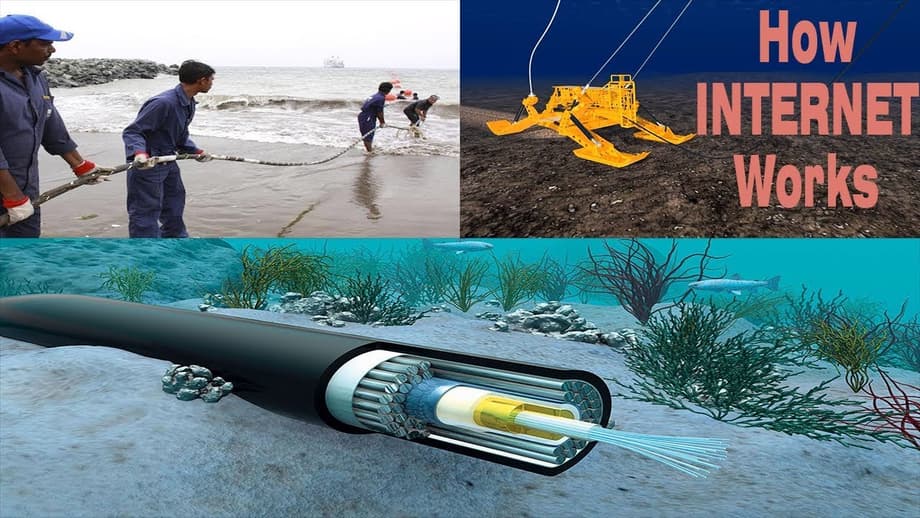
A modern subsea cable is a long strand of optical fiber bundled inside protective layers of steel and polyethylene. Light signals travel through pairs of fibers to carry internet traffic in each direction. Signals weaken as they move, so the cable includes optical repeaters at regular intervals along the seabed. These amplifiers are powered by a current that runs through the cable’s conductive layers. The system lands at cable landing stations onshore, where traffic is handed off to terrestrial fiber networks and internet exchange points.
Capacity on new systems is measured in terabits per second. Owners improve throughput over time by upgrading terminal equipment and by using advanced modulation and multiplexing techniques that pack more data into the light waves. The physical cable can last two decades or more with proper maintenance, and the greatest risk of damage is usually in shallow coastal waters. That is why cable protection, well planned landing sites, and smart routing are so important to reliability.
Connectivity hubs like those planned in Mandurah and southern Thailand play a different role than data centers. They are focused on routing and optimization. By placing caches and interconnection points closer to users and alternate cable routes, operators can keep more traffic local and move it more efficiently across oceans when needed. That reduces delays and provides more control when operators need to rebalance traffic quickly.
Who the local partners are and what they do
AIS, Thailand’s largest mobile and fixed operator, is Google’s colocation partner in southern Thailand. Its facilities and local network reach can accelerate deployment and simplify ongoing operations at the hub. ALT Telecom’s International Gateway Company brings experience in cable landing and international gateway operations. That expertise matters during marine surveys, permitting, construction, and the cutover period when the cable transitions from testing to live traffic.
On the Australian side, Mandurah’s local and state stakeholders will support landing, permitting, and power and backhaul connections. The site’s proximity to Perth, combined with a separate landing location, gives planners flexibility to design redundancy into backhaul routes between Mandurah, Perth, and onward to the national fiber backbone.
Timeline, costs, and what remains unknown
Google has not disclosed a completion date or system capacity details for TalayLink. Subsea projects typically move through marine surveys, environmental assessments, permits, manufacturing, cable laying, splicing, and testing before carrying live traffic. That process can take several years. The company has stated that interlink and Bosun will connect Christmas Island to Australia in 2027, which frames one part of the wider network timeline. TalayLink will fit into that evolving map as marine work progresses and as the new connectivity hubs come online.
Project budgets for long transoceanic cables often reach into the hundreds of millions of dollars. Actual figures vary with route length, number of landing points, seabed conditions, and local engineering requirements. While Google has not shared cost details, the company’s wider build program suggests a multi year investment plan across Oceania and the Indian Ocean that includes multiple cable systems and landing facilities.
Risks, security, and geopolitics
Subsea cables operate in a complex environment. Natural hazards, accidental damage from anchors or fishing, and security concerns all inform routing and protection choices. A more diverse set of paths helps operators keep services running even when one segment is affected. The western Indian Ocean route gives Thailand and Australia an extra long distance option that bypasses crowded straits near Singapore and Indonesia, easing risk concentration in a single corridor.
Regional geopolitics also shape infrastructure decisions. Countries and companies seek routes that avoid contested waters and that integrate smoothly into domestic networks. Hubs in Western Australia, southern Thailand, the Maldives, and Christmas Island create bridge points that can connect into multiple directions, including onward links to the Middle East and Africa through Oman. For businesses and public agencies, that mesh of options translates into more stable access to cloud services and cross border applications.
What to Know
- TalayLink is a new Google subsea cable that will create the first direct connection between Australia and Thailand.
- The route crosses the Indian Ocean west of the Sunda Strait, adding diversity beyond crowded Southeast Asian chokepoints.
- Google will build new connectivity hubs in Mandurah in Western Australia and in southern Thailand to support cable switching, caching, and colocation.
- AIS is Google’s colocation partner in southern Thailand, and ALT Telecom’s International Gateway Company is a landing partner.
- Christmas Island is a key node, with interlink and Bosun slated to connect it to mainland Australia in 2027.
- TalayLink aligns with Google’s planned Cloud Region and data center in Thailand, supporting the country’s goal to serve as a digital gateway for cloud and AI.
- The project’s completion date and technical specifications have not been disclosed.
- The wider build program, including Dhivaru linking to Oman, enhances onward connectivity across the Indian Ocean and toward the Middle East and Africa.