A new playbook for building cities around rails
Fifteen years ago, critics scoffed at metro stations planted in empty fields on the edges of Chinese cities. Those platforms, they said, would never see riders. Visit Lingang’s Dishui Lake today and the picture is different. Students spill out of campuses, cafés are busy, couriers zip through planned streets, and the station that once seemed isolated now anchors a complete neighborhood. Versions of this story have unfolded in Shenzhen’s Qianhai district and in Beijing’s Yizhuang new town. The stations did not simply meet demand, they helped create it.
- A new playbook for building cities around rails
- Why stations in empty fields can work
- Case studies across China
- The TOD science behind the boom
- How policy and finance knit rail to city growth
- Technology and speed in construction
- Culture and environment beyond transport
- Can other countries copy this approach
- Planning lessons for tomorrow’s stations
- Key Points
This strategy flipped the traditional order of growth. Instead of waiting for congestion and then building a line, Chinese planners combined early rail investment with land auctions, high density zoning, and tight delivery schedules. Developers followed the stations, public services arrived, and a network effect took hold as one line connected to another. Habits formed around fast, predictable service, and land near stations rose in value. The bet required patience. Many stations gained traction three to ten years after opening, faster when sidewalks, bus links, and bike access were in place.
Results are not uniform. Some sites still lag, especially where land use and transport were not aligned or where basic walkability was neglected. Even so, the broader trend is clear. Early rail can shape urban form and everyday life, if paired with the right policy mix. Time becomes a design material. Build for the city you expect to grow, not only for the trips visible today.
Why stations in empty fields can work
Transit oriented development, or TOD, is the foundation of the approach. At its core, TOD concentrates homes, jobs, services, and public space within a comfortable walk of stations. Chinese cities leaned into TOD during a rapid urbanization cycle that demanded new districts at scale. The policy toolkit included auctioning land near corridors, permitting higher floor area ratios near stations, and coordinating with education and health agencies so schools and clinics opened early. When stations arrived first, the land signal was strong and predictable, which drew investment that fit the transit spine.
Academic work helps explain why some stations took off faster than others. A comparative study across Beijing, Shanghai, Shenzhen, Wuhan, and Hangzhou advanced the classic node place model by adding a functionality dimension. The combined node functionality place lens shows TOD quality often declines from center to edge, and it identifies multiple station types with different needs. In that analysis, Shenzhen ranked high, reflecting strong integration of transport supply, land use, and daily services in many of its station areas.
Suburban stations can be especially powerful once a basic mix of jobs and services is present. Research using mobile phone data in Tianjin found the strongest clustering of population and employment roughly 10 kilometers from the center, with metro access boosting both. Employment density and the balance of residential and commercial land shaped the residential draw around stations. The lesson is practical. Do not put a station in a blank field and walk away. Seed the area with public facilities, line up employers, and make the walk safe and direct. The ridership will follow the jobs, and the jobs will follow access.
Case studies across China
Local contexts vary, yet the pattern is familiar. Stations open early, the public realm is built with them, and urban life catches up as the network matures and private projects fill in.
Lingang’s Dishui Lake, Shanghai
Lingang on Shanghai’s coast started as a bold extension of the city’s footprint. The metro connected the site to central jobs and universities long before the area felt complete. A study of Shanghai’s new towns found wide variation in TOD performance. Songjiang New City showed strong integration between stations and urban life, while Nanhui New City, which includes Lingang, trailed on some indicators. That gap narrowed as new campuses, research parks, and waterfront amenities opened and the metro made those assets reachable without a car. The change in street activity at Dishui Lake captures how early rail plus patient city building can flip a narrative.
Shenzhen’s Qianhai and Beijing’s Yizhuang
Qianhai, a finance and technology zone in western Shenzhen, was stitched early into the rail grid. Qianhaiwan, a major interchange, connected multiple lines and shortened trips to other job centers. High density zoning and an active public space network made the transit walk legible and attractive. In Beijing, the Yizhuang Line tied a planned industrial and research hub into the metro system and linked to a modern tram on local streets. Offices, housing, and services clustered within station walksheds, proving that transit supply and development policy can grow together rather than in sequence decades apart.
Suburban station pull in Tianjin
Evidence from Tianjin reinforces the suburban pull of rail when land use supports it. Analysis of population and employment densities around stations showed aggregation along the rail network and a sweet spot of impact in the outer urban ring. The factors most tied to higher residential density near stations were employment density and a healthy mix of residential and commercial land. When stations arrived with those ingredients in mind, the ridership and neighborhood vitality moved in step.
The TOD science behind the boom
The design of a station area is as important as the presence of tracks. Station catchment size, intersection density, block length, and ground floor activity all shape whether a station is a magnet or a waypoint. Chinese researchers have refined tools for diagnosing these traits. The node functionality place model distinguishes a well balanced station area from one that is transit adjacent without real integration. A separate approach, known as the butterfly model, evaluates both transport access and urban form using detailed indicators for metro, bus, and bicycle access, and for density, diversity, and design. Cluster analysis then sorts stations into types such as urban, balanced, specific, future, and unbalanced. Urban stations score high across measures. Future stations tend to be peripheral and need more access and development to reach their potential.
These typologies matter for action. A future station might need more bus coverage and a targeted land mix. An unbalanced station that has rail but weak surrounding activity might need incentives for offices or a campus and better street frontage rules to raise pedestrian interest. A balanced station can focus on public realm upgrades and last mile cycling. The point is not to chase a single template, but to give each station a diagnosis and a plan.
How policy and finance knit rail to city growth
Early rail builds worked best when transport agencies and urban planners moved in lockstep. Fare integration, synchronized timetables, and restructured bus routes turned the metro into a backbone rather than a stand alone investment. Kunming’s Line 3, built with support from an international lender, shows how this looks in practice. Travel times fell, ridership reached roughly 160,000 passengers on weekdays, and the rail corridor drew denser development. Stations were built with nearby bus and bicycle facilities, and a major interchange simplified transfers. The corridor’s floor area ratio rose well above the district average, a signal that policy steered growth to the right places. The project summary puts it plainly:
The World Bank, which financed the Kunming Line 3 project, described the approach this way before listing results and indicators.
provide high quality, integrated public transport with bus and rail operating as a single system
This level of coordination is resource intensive. It depends on compatible governance, predictable land policy, and the ability to finance big projects. China’s rail plus property model, which captures some of the uplift in land value near stations, helped underwrite expansion. Even when property markets dipped, the transport value endured. People kept using the metro for speed and reliability, and that permanence supported gradual build out around stations.
Technology and speed in construction
Rapid delivery also reflected a construction system that is getting smarter. On Wuxi Metro Line 6, builders introduced side wall intelligent vibration equipment to replace manual concrete work. The machine plans its vibration path, adjusts frequency and depth in real time, and can be monitored by a single operator. Project teams report that a device can replace several workers, run around the clock, and save roughly 500,000 yuan on the main structure of a single station while driving the acceptance rate for concrete quality above 99 percent. Automation boosts safety and consistency, and it helps keep ambitious timelines on track.
Culture and environment beyond transport
Rail investment ripples through public health and culture. Adding high capacity metro corridors cuts car trips and improves air quality over time. Beijing is a reference point. The city expanded rail, raised vehicle standards, tightened industrial emissions, and improved monitoring. Fine particulate levels fell sharply between 2013 and 2023. The number of cleaner air days increased, and the average air quality index improved, despite growth in total vehicles. Metro offers fast trips without tailpipe emissions, which compounds benefits as the power grid gets cleaner.
Heritage in the station
Preservation can live with progress. At Dongnanjiao Station on Tianjin Metro Line 4, construction teams uncovered the remains of an ancient city wall. Instead of relocating the find, engineers preserved the wall in place with vibration isolation, spring mounted supports, and careful phasing that alternated archaeological work with station building. The result is a living exhibit inside a transfer hub where commuters can see a cross section of the wall and learn how the site was protected. The station doubles as a museum, connecting daily travel to the city’s long history.
Can other countries copy this approach
Pieces of the model travel well, especially the focus on station area design, bus and bike integration, and data driven site selection. A study in Lanzhou used multi source spatial data and a random forest model to assess where stations make the most sense. The analysis, which weighed factors such as population density, points of interest, night lighting, road networks, and the presence of education and employment, achieved high predictive accuracy. Machine learning cannot replace planning judgment, but it can sharpen choices about which corridors to prioritize and where to place early stations.
Chinese cities are also exporting management lessons. Guangzhou Metro Group has offered to share know how with Ho Chi Minh City on planning, land development, finance, and the design of station areas as complete urban districts. At a meeting with city officials, the company framed the stakes simply.
In a statement shared during that meeting, Guangzhou Metro Group emphasized the role of transport in city building.
public transportation is a key driver in the sustainable development of Ho Chi Minh City
Context matters. Legal frameworks, financing tools, and taxpayer expectations vary widely. Large up front spending on rail may be difficult where fiscal rules or fragmented governance slow delivery. Property cycles can also complicate land value capture. Still, a measured version of the playbook can work. Build stations early in known growth corridors. Put schools, clinics, and public services within a short walk. Create temporary bike lanes and pop up markets to animate places while private projects queue up. Design bus networks to feed stations. Set clear street design rules so every front door faces the sidewalk. Track results, adjust, and be patient.
Planning lessons for tomorrow’s stations
The hardest part of early rail is timing benefits for people who move in first. A practical checklist helps. Plan for the city you want in 10 years, not only the trips you can count today. Place stations where daily needs will be, not only where they are now. Give walkers priority with direct, shaded paths and frequent crossings. Fund bus links that make stations reachable from day one. Avoid models that only fit current ridership. Test network effects, future transfers, and emerging job centers. Use data tools to inform where demand will grow, and then let design deliver safety and comfort.
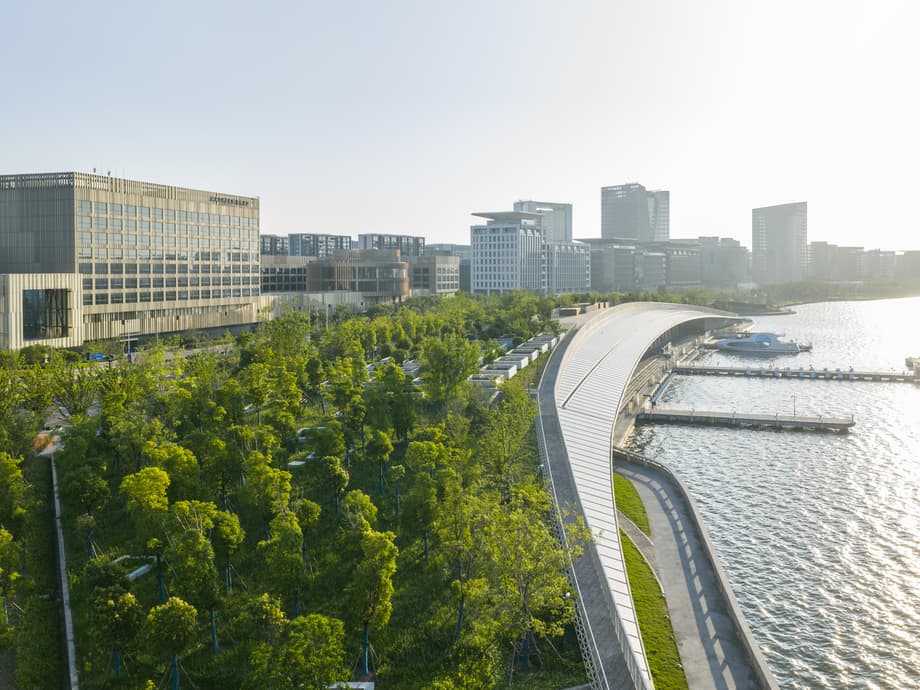
Design quality is not a luxury. Shanghai’s South Sanlin Station shows how a rail project can sit inside a landscape and welcome people with a park like setting. Station city integration is easier when the ground level is attractive and active. Keep the ground floor transparent and engaging, make cycling safe, and put essentials within a short walk. Measure what matters, from fare integration to floor area ratio near stations, and use those metrics to steer decisions.
Key Points
- China built some metro stations far from city centers, then used policy and design to grow communities around them.
- Lingang, Qianhai, and Yizhuang moved from quiet platforms to busy hubs once schools, jobs, and services arrived.
- Studies across megacities show TOD quality varies by station type, and suburban stations can draw strong population and job clusters.
- Kunming’s integrated bus rail system cut travel times, achieved high user satisfaction, and drew denser development along Line 3.
- Smart construction tools are improving quality, safety, and speed, saving costs on station builds.
- Preserving heritage within stations, like Tianjin’s ancient wall exhibit, shows culture and modern transit can coexist.
- Air quality gains in Beijing illustrate the health benefits of shifting trips from cars to metro.
- Other cities can adopt parts of the approach by pairing early stations with services, data driven site selection, and strong last mile links.