Heritage, sovereignty, and a new front in the South China Sea
China has opened a new chapter in the contest for the South China Sea by preserving historical sites on Woody Island, known as Yongxing in Chinese, in the Paracel archipelago. A team from the Hainan Provincial Institute of Cultural Relics and Archaeology recently reinforced a decaying 1946 monument that commemorates Chinese authority over the Paracels after World War II. The work is part of a broader campaign that pairs conservation science with statecraft, and it targets monuments, relics, and underwater artifacts that Beijing says reflect a long record of Chinese activity in these waters.
- Heritage, sovereignty, and a new front in the South China Sea
- What is being preserved on Woody Island
- How archaeology fits Beijing’s strategy
- What the law says about history and the sea
- How other claimants read the same history
- Administrative control, city building, and messaging
- Conservation and soft power around coral and culture
- Risks, reputations, and room for cooperation
- At a Glance
The effort is more than cosmetic. It speaks to a wider strategy that uses maps, archives, archaeology, and administration to reinforce claims that have been challenged by neighbors and by an international tribunal ruling in 2016. Beijing’s opponents, including Vietnam and the Philippines, view the same history differently and cite their own records of exploration and control. The result is a contest not only over reefs and maritime zones, but over whose story of the sea becomes the most visible on the ground.
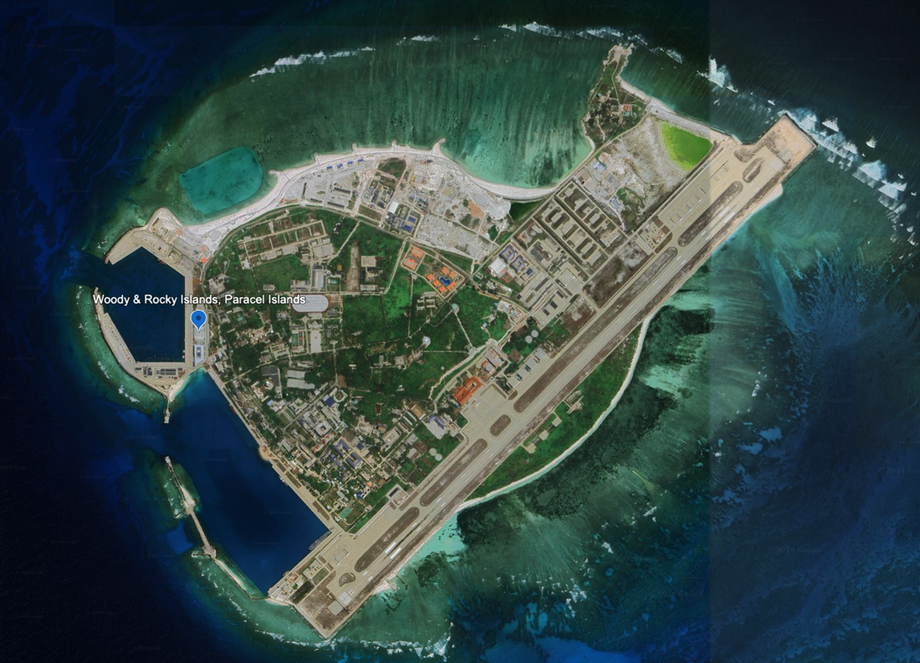
Woody Island holds special weight. China established the city of Sansha there in 2012 to administer wide claims in the South China Sea, and has since expanded civilian and military infrastructure on the island. The new preservation drive gives Sansha a cultural mission as well. It packages politics and heritage together, and it positions scientific conservation teams alongside coast guard cutters and administrative decrees.
What is being preserved on Woody Island
The 1946 monument, erected by the Kuomintang government after Japan’s surrender, marks the arrival of Chinese naval expeditions that asserted claims over the Paracels and Spratlys. The island was renamed Yongxing after a navy warship of the era. Decades of salty, humid air had eroded the stone. According to local authorities, specialists used tailored tools to stabilize the monument and clean its surface during a six day operation.
Conservation staff say the work will not be a one off. Zhao Yu of the Hainan Provincial Institute of Cultural Relics and Archaeology, which led the mission, said the team will return to counter the island’s harsh climate. Zhao said the plan is to implement scheduled maintenance that slows the sea air’s corrosive effects and extends the life of the site.
The Sansha city government cast the restoration in explicitly political terms, describing the monument as an emblem of sovereignty regained after wartime occupation. Officials called it a symbol of continuity in Chinese presence on the islands and said other historical sites on the island will be surveyed and stabilized in the coming months. In the city’s words:
The Xisha Recovery Monument stands as a powerful testament to China’s restoration of sovereignty over the South China Sea islands following the illegal occupation by Japan during World War II.
Woody Island is only one part of the story. The Paracels contain scattered markers, grave sites, and relics of fishing and maritime trade. Many have suffered from erosion, storms, and unregulated visits. The current campaign aims to catalog these sites, prioritize the most fragile, and embed them within Sansha’s public narrative through signage, exhibitions, and school curricula.
How archaeology fits Beijing’s strategy
China’s preservation push on land is matched by investment below the waves. Chinese research vessels and remote systems have intensified surveys across the South China Sea. In 2022, Chinese teams reported locating three ancient merchant shipwrecks in deep water and recovering more than 60 artifacts, including pottery, porcelain, and copper coins at depths that reached 3,000 meters. The finds are now part of a growing inventory that Chinese institutions present as evidence of sustained Chinese navigation and trade.
In 2023, a dedicated archaeology center was opened in Hainan to curate underwater finds from the region and to train technical teams. The facility’s mission is curatorial and political. It stores fragile artifacts but also feeds exhibitions, film content, and academic work that reinforce state messaging about history and sovereignty.
Chinese cultural authorities link this work to a larger program of technological conservation. The National Cultural Heritage Administration has expanded research bases that use tools such as satellite remote sensing, drone patrols, and customized lab analysis to protect artifacts and interpret their context. That agenda is national, but in the South China Sea it intersects with geopolitics. As the center in Hainan was launched, Li Qun, then director of the National Cultural Heritage Administration, framed the effort in national security terms. Li said the center would transmit culture while serving core state interests:
The center’s establishment is of special importance for passing on Chinese traditional culture and safeguarding national sovereignty, security and maritime rights, and interests.
Heritage preservation also supports soft power. Exhibitions and documentaries that highlight shipwrecks and maritime routes promote an image of historical continuity and scientific capability. That messaging is aimed at domestic audiences for legitimacy and at foreign audiences to demonstrate stewardship and presence.
What the law says about history and the sea
Questions about whether historical activity confers modern rights at sea sit at the heart of this contest. The United Nations Convention on the Law of the Sea (UNCLOS) sets the main legal framework. It gives coastal states a 12 nautical mile territorial sea and a 200 nautical mile exclusive economic zone (EEZ) from their coasts or from qualifying islands. UNCLOS does not grant broad “historic rights” to resources within the EEZs of other states. That principle shaped the 2016 decision in a case brought by the Philippines, in which an arbitral tribunal convened under UNCLOS Annex VII invalidated expansive historic rights claims within areas that fell inside the Philippines’ maritime zones.
Many headlines misattribute the 2016 decision to the Permanent Court of Arbitration. The PCA was the registry and provided administrative support, but the award was issued by an ad hoc UNCLOS tribunal created specifically for the case. The tribunal’s ruling did not decide sovereignty over any island or reef. It addressed maritime entitlements and found that no feature in the Spratlys generates a full EEZ, limiting potential zones to territorial seas or smaller zones around rocks.
China rejected the award and insists disputes must be settled by direct negotiation. In a formal position statement on the Philippines disputes, China argues that centuries of discovery, naming, exploration, and administration establish Chinese sovereignty over the South China Sea islands, grouped as the Dongsha, Xisha, Zhongsha, and Nansha. The statement sets out a consistent line about inherent territory. As the Ministry of Foreign Affairs put it:
The South China Sea Islands, including the Dongsha, Xisha, Zhongsha, and Nansha Islands, are China’s inherent territory based on historical discovery, naming, exploration, and continuous exercise of sovereignty.
Underwater cultural heritage law adds another layer. UNCLOS and the UNESCO framework on underwater cultural heritage offer tools to protect shipwrecks and artifacts from looting. Ownership claims, though, often depend on domestic law and on where a site lies relative to recognized maritime zones. That patchwork creates grey areas when claims overlap. Without cooperation, salvage and damage become real risks. Legal scholars have urged claimants to consider joint documentation and conservation so that artifacts are preserved even while sovereignty remains disputed.
How other claimants read the same history
Vietnam and the Philippines contest China’s narrative with their own historical records and modern administration. Vietnam claims both the Paracels and the Spratlys, which it calls the East Sea. Vietnamese dynastic chronicles describe expeditions to measure, map, and mark features as far back as the 17th and 18th centuries. Hanoi points to maps produced in Europe that labeled the Paracels as Vietnamese, and to records of taxes collected from fishermen on distant islets. Modern memory is shaped by costly clashes as well, including the 1974 battle in the Paracels and the 1988 skirmish at Johnson Reef.
The Philippines relies on UNCLOS entitlements from its main islands and on the 2016 arbitral award. Manila has increased patrols and publicized run ins with Chinese coast guard and maritime militia vessels near Second Thomas Shoal and elsewhere. Philippine officials argue that historical sailing and fishing do not override coastal states’ EEZ rights. The award bolstered that view by removing historic rights claims from zones that UNCLOS assigns to the Philippines.
These diverging accounts lead to one practical result. Each state curates and publicizes its own version of the past while fortifying outposts and increasing patrols in the present. Tension rises when these narratives are projected into the same reef or lagoon.
Administrative control, city building, and messaging
Beijing pairs heritage with administration. In 2012 it created Sansha to oversee an enormous swath of sea features and waters, with Woody Island as the hub. In 2020 it announced two new subordinate districts. Xisha district covers the Paracels and Macclesfield Bank, and Nansha district covers the Spratlys, with an office on Fiery Cross Reef. The reorganization concentrates civilian cadres, budget lines, and police powers in the disputed area. Vietnam denounced the changes and restated its claims.
On the water, China’s coast guard and maritime militia are active around these features, as are the vessels of other claimants. Incidents involving rammings, blocked resupply missions, and damaged fishing boats continue. Administrative expansion gives Beijing more tools to maintain a permanent presence. It also allows nonmilitary actions, such as monument restoration and museum work, to appear as routine local governance.
Heritage fits into this structure as a visible and low risk marker of administration. A restored monument, a preserved wreck site, and a newly built exhibit in Sansha’s museums all create a daily reminder of claims before any maritime incident or legal filing takes place.
Conservation and soft power around coral and culture
Chinese agencies are also leaning into environmental stewardship. Announcements of nature reserves, patrols against illegal fishing, and coral restoration projects serve scientific goals and carry political messages. Huangyan Island, known internationally as Scarborough Shoal, has been spotlighted for coral protection. Surveys have documented more than one hundred coral species in the area, with claims of heat tolerance that could help regional reef resilience as ocean temperatures rise. Chinese statements link this work to national ecological policy and to global environmental priorities.
On land, China is investing in cultural infrastructure that links maritime identity to tourism and science. The Sanya Cultural District planned by a major architecture firm aims to serve residents and millions of visitors on Hainan’s southern shore, facing the South China Sea. Across the country, research centers are applying advanced materials science, imaging, and risk management to conserve relics. Those capacities can be deployed to protect fragile artifacts in coastal museums and storage sites, including institutions that curate finds from the South China Sea.
Conservation projects are not inherently confrontational. They can open space for scientific exchange and joint monitoring even among states that quarrel at sea. The idea of marine peace parks has circulated for decades. A protected area in the Spratlys managed by multiple parties, with shared research and strict rules on salvage and fishing, would protect ecosystems and keep archeological sites intact while leaving sovereignty questions to one side. Political trust is thin, yet marine science and cultural heritage can be practical areas for limited cooperation.
Risks, reputations, and room for cooperation
The heritage turn presents a reputational opportunity and a risk. If preservation follows international best practices, invites responsible collaboration, and protects sites from looting, it can demonstrate stewardship. If it excludes neighbors and is paired with maritime coercion, it will be read as another tool of pressure. That balance will shape how others judge the intent behind restored monuments and excavated shipwrecks.
Regional stability still rests on familiar steps. Claimants can bring their laws and claims closer to UNCLOS. Coast guards need hotlines and standard rules to prevent incidents. Fisheries and environmental agencies can share data, including on coral health and illegal fishing. Institutions that specialize in underwater cultural heritage can design protocols for joint documentation of sites in disputed waters, with clear chains of custody and agreed limits on excavation. These measures will not resolve sovereignty. They can lower risks and protect resources while diplomacy continues.
At a Glance
- China reinforced a 1946 sovereignty monument on Woody Island in the Paracels and plans wider preservation across Sansha’s jurisdiction.
- Local authorities describe the monument as a symbol of restored sovereignty after World War II occupation by Japan.
- Underwater archaeology has expanded, with deepwater shipwrecks and dozens of artifacts recovered and curated in a new Hainan center.
- Beijing links heritage work to national interests; officials say preservation supports culture, sovereignty, and maritime rights.
- The 2016 UNCLOS arbitral award rejected expansive historic rights claims within another state’s EEZ, a ruling China rejects.
- Vietnam and the Philippines press their own historical claims and legal positions, adding to competing narratives and frequent encounters at sea.
- China created new South China Sea administrative districts under Sansha in 2020, which Vietnam protested as illegal.
- Environmental stewardship, including coral protection at Huangyan Island, features in China’s messaging alongside cultural projects.
- Practical cooperation on science, fisheries, and underwater heritage could reduce risks even as sovereignty disputes persist.