Rolling Through the Steppes: Kazakhstan’s Mobile Lifeline
Across the vast expanse of Central Asia, where winter temperatures plunge below freezing and distances between settlements can stretch for hundreds of kilometers, a remarkable medical facility moves along steel tracks. This is not a typical hospital with fixed walls and a permanent address. It is a fully functional clinic on wheels, bringing specialized healthcare to communities that would otherwise remain isolated from modern medical services. For eight months each year, doctors aboard Kazakhstan’s medical trains live, work, and sleep in specially converted railway carriages, traveling approximately 20,000 kilometers annually to reach more than 100 isolated stations scattered throughout the country.
The concept represents an innovative solution to one of geography’s oldest challenges: delivering expert care to populations living beyond the reach of traditional health infrastructure. While mobile medical clinics exist in many nations, few operate on the scale and consistency of Kazakhstan’s railway-based healthcare system. These trains do not merely transport patients to distant hospitals; they bring the entire diagnostic and treatment facility directly to remote villages, offering everything from dental work and minor surgery to complex cardiac diagnostics and legal consultation, all without charge to the patient.
Addressing the Rural Health Divide
The origins of this railway healthcare system trace back to a critical moment in Kazakhstan’s public health planning. In the early 2010s, the country faced stark disparities between urban and rural medical services that threatened to leave remote populations without adequate care. Health statistics from 2010 revealed severe inequities in physician distribution across the vast territory. The northern region of Kostanay employed just 266 physicians per 100,000 residents, significantly below the national average of 388 per 100,000. Such shortages reflected a broader pattern of health worker distribution that favored major cities while leaving vast rural territories with limited access to qualified medical professionals.
The government recognized that conventional solutions, building static clinics in sparsely populated regions, would prove economically inefficient and fail to address the mobility needs of scattered populations. Instead, policymakers looked to the country’s existing railway infrastructure, which already connected distant communities, as the foundation for a new approach to healthcare delivery. This strategy aligned with the State Health Care Development Programme for 2011-2015, known as “Salamatty Kazakhstan,” which prioritized population health and the modernization of medical services across all regions. The program emphasized that solutions for population health problems must be based in a strong understanding of current challenges and adapted to specific population and geographic contexts.
By using existing rail networks, the initiative avoided the massive capital expenditure required to construct hundreds of permanent facilities in remote areas. The trains could cover vast territories efficiently, serving multiple communities in a single journey while carrying sophisticated medical equipment that would be impractical to install in small village clinics. This approach also addressed the human resource challenge by creating attractive working conditions for medical professionals willing to serve rural populations, offering them secure housing and transportation as part of their deployment. Cross-sector cooperation between the Ministry of Health, the Ministry of Internal Affairs, and Kazakhstan Temir Zholy railway company enabled the rapid implementation of this transport medicine concept.
Three Trains, Three Regions
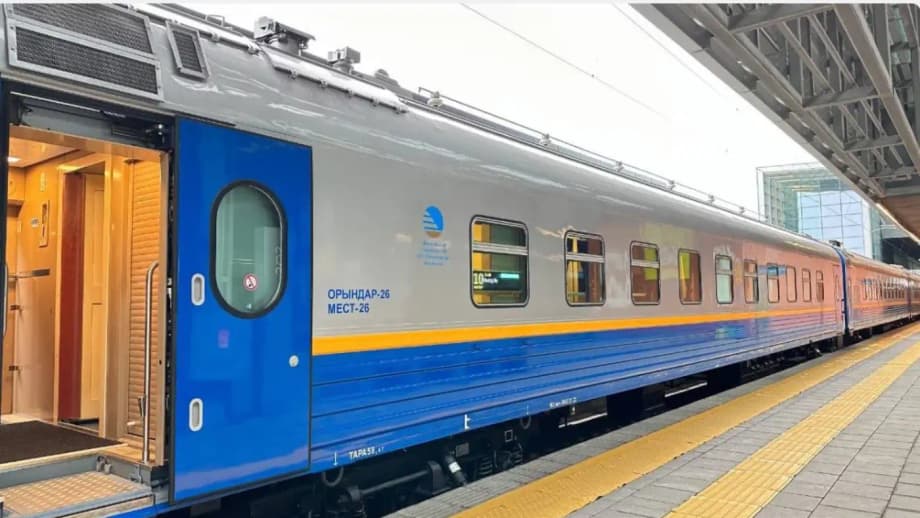
Kazakhstan operates not one but three distinct medical trains, each assigned to specific geographic regions to ensure comprehensive national coverage. The fleet includes “Densaulyk,” based in Almaty and serving southern territories; “Zhardem,” operating from Aktobe and covering eastern and western regions; and “Salamatty Kazakhstan,” headquartered in Karaganda and responsible for northern areas. Together, these three units create a mobile safety net that reaches communities inaccessible by road during harsh winters. Each train serves different territories, ensuring that no remote region remains beyond the reach of specialized medical care.
Each train consists of eight wagons staffed by approximately 80 personnel, with roughly half comprising medical providers. The teams include general practitioners, nurses, pediatricians, neurologists, gynecologists, cardiologists, and dentists. Beyond clinical staff, the trains carry managers responsible for maintaining strict itineraries and ensuring continuous resupply during month-long journeys. The carriages house modern clinical equipment, diagnostic machinery, and radiology suites that enable complex medical assessments far from urban centers. Advanced infrastructure on board allows for complex diagnosis and treatment, including minor outpatient surgery and dental care.
The operational schedule requires approximately 20 days to cover the full itinerary of 832 remote stations, with trains stopping according to predetermined timetables that communities anticipate annually. Residents of these isolated areas often mark their calendars for the train’s arrival, which represents their only opportunity for comprehensive health screenings and specialist consultations without undertaking arduous and expensive journeys to regional capitals. The consistency of these visits allows for longitudinal care, with medical records maintained for returning patients across multiple years. Real-time video communications link onboard providers with professionals in hospital settings, enabling consultations on cases that exceed the mobile unit’s immediate capabilities.
Living and Working on the Rails
For the medical professionals who staff these trains, the assignment demands significant personal sacrifice and adaptation. Doctors spend eight months annually living in compact quarters aboard the moving clinic, away from families and urban amenities. The working environment combines the technical challenges of medical practice with the logistical complexities of life on a train, including limited space, motion during procedures, and the need to secure all equipment against the vibrations of travel. Despite these constraints, the carriages are equipped to handle sophisticated medical interventions.
Onboard facilities include capabilities for fluorography, electrocardiography, ultrasound imaging, gastroscopy, and comprehensive blood analysis. Minor outpatient surgeries and dental procedures, which fall outside Kazakhstan’s standard list of guaranteed free medical care, are provided without charge to train patients. The trains operate regardless of weather conditions, including sub-zero temperatures that render road travel impossible. This resilience ensures continuous healthcare access during the harshest months, when respiratory illnesses and cardiac events often peak in severity. Medical teams must maintain sterility and precision while the train may be stationary in snowdrifts or high winds, demonstrating remarkable operational flexibility.
The conditions require medical staff to possess both clinical expertise and adaptability. Equipment must be secured against the train’s motion, and procedures must be planned around scheduled stops. For many doctors, the experience offers unique professional challenges and the satisfaction of serving populations who truly lack alternatives. The living quarters, while compact, provide the necessities for extended deployment, allowing teams to focus entirely on patient care without concerns about lodging or transportation in remote territories.
Beyond Clinical Care
Recent expansions of the medical train program have incorporated services beyond traditional healthcare. Since 2023, the “Salamatty Kazakhstan” train has included legal professionals and mediators who travel with the medical teams, offering consultation on labor disputes, government benefits, family law, and court proceedings. This addition recognizes that health and legal welfare are often intertwined, particularly for women and families in rural settings who may lack access to legal protection or advocacy. The Samruk-Kazyna Trust charity foundation coordinates these legal services, ensuring that rural residents receive comprehensive support addressing both medical and civil concerns.
The initiative also emphasizes preventive care and early detection. Special attention is paid to identifying cardiovascular diseases, diabetes, and pediatric conditions before they require emergency intervention. In one documented case at the Zhaksy station, a patient presenting with cardiac symptoms received immediate diagnosis of myocardial infarction aboard the train, enabling rapid hospitalization that saved the patient’s life. The onboard equipment allowed cardiologists to quickly identify the dangerous condition and provide emergency assistance. Such interventions demonstrate how mobile diagnostic capabilities can serve as emergency lifelines, not merely routine screening tools.
Children constitute a significant portion of the patient population, with approximately one in five patients being under the age of 18. Pediatric specialists provide developmental assessments, treat common childhood diseases, and identify conditions requiring specialized attention. For many rural families, the train represents the only opportunity for their children to receive specialist pediatric evaluation without traveling to distant cities. The project has proven particularly important for early diagnosis in children, with thousands of young patients identified for dynamic monitoring at their local polyclinics.
Measurable Impact on Public Health
The statistics surrounding Kazakhstan’s medical trains reveal substantial public health impact. Since the program’s inception in 2010, the three trains have collectively served more than 800,000 patients. In 2023 alone, the “Salamatty Kazakhstan” train provided assistance to approximately 104,000 people, while 2024 data indicates 32,000 examinations conducted in the first half of the year across six regions, delivering over 91,000 individual medical services. Between April and July 2023, the train visited 47 remote stations across nine regions, enabling approximately 27,000 people to undergo diagnostics and receive treatment.
Diagnostic success rates are particularly noteworthy. More than 30% of patients receive diagnoses during their initial appointment, with one in four of these cases involving serious diseases requiring immediate intervention. Almost all identified patients, including hundreds of children, are enrolled in dynamic monitoring programs at their local polyclinics, ensuring continuity of care after the train departs. The 2024 expansion plans include coverage of 123 remote villages across 11 regions, with projections to serve over 90,000 additional rural residents. By year end, the train planned to cover 44 additional stations.
Patient attendance rates remain remarkably high compared to traditional clinic appointments, primarily because the train arrives directly in patients’ home communities, eliminating transportation barriers that typically prevent rural residents from accessing specialist care. This geographic accessibility proves particularly crucial for elderly patients and those with mobility limitations who cannot endure long journeys to urban medical centers. The convenience of receiving care locally ensures that preventive screenings reach populations who might otherwise delay care until conditions become severe.
Integration with National Health Reform
The medical train initiative operates within a broader transformation of Kazakhstan’s rural healthcare infrastructure. The government’s “Modernization of Rural Health” national project aims to construct 655 new primary healthcare facilities and establish 32 multidisciplinary central district hospitals equipped with modern technology. These permanent installations will eventually complement the mobile units, creating a tiered system where trains handle remote outposts while fixed facilities serve larger rural centers. The project requires funding of 217.7 billion tenge and includes provisions for attracting medical personnel to rural areas through lifting allowances and compulsory rural service for graduates.
This approach aligns with international primary health care principles emphasized during the 2023 Astana conference commemorating the 45th anniversary of the Alma-Ata Declaration. The World Health Organization has recognized Kazakhstan’s district polyclinic in Enbekshikazakh as a demonstration site for primary health care best practices, validating the country’s patient-centered approach. Medical aviation services, comprising 33 aircraft, work alongside the trains to provide emergency transportation when immediate hospitalization is required. The trains also coordinate with 595 ambulance crews operating in rural areas.
Digital health initiatives further support the mobile medical model. Over 86% of rural health facilities now maintain internet connectivity, enabling telemedicine consultations that extend the reach of train-based specialists. The integration of real-time video communications aboard the trains connects onboard doctors with urban hospital specialists, creating a hybrid model that combines physical mobility with digital connectivity. As Kazakhstan continues to expand broadband access in rural territories, the coordination between mobile clinics and telemedicine promises to further reduce the distance between remote patients and expert care.
The Essentials
- Kazakhstan operates three medical trains: “Densaulyk” (south), “Zhardem” (east-west), and “Salamatty Kazakhstan” (north), covering over 100 remote communities annually
- Each train carries 80 staff members including 40 medical professionals across multiple specialties, operating eight months per year and traveling approximately 20,000 kilometers
- Since 2010, the program has served more than 800,000 patients, with over 30% receiving diagnoses during initial visits and one in four diagnoses identifying serious conditions requiring intervention
- Services include free diagnostics, dental care, minor surgery, pediatric care, and since 2023, legal and mediation assistance for rural residents
- The initiative addresses physician shortages in rural areas, where some regions previously had 30% fewer doctors per capita than urban centers
- Medical trains operate as part of broader rural health modernization including 655 planned new healthcare facilities and integration with medical aviation and telemedicine services