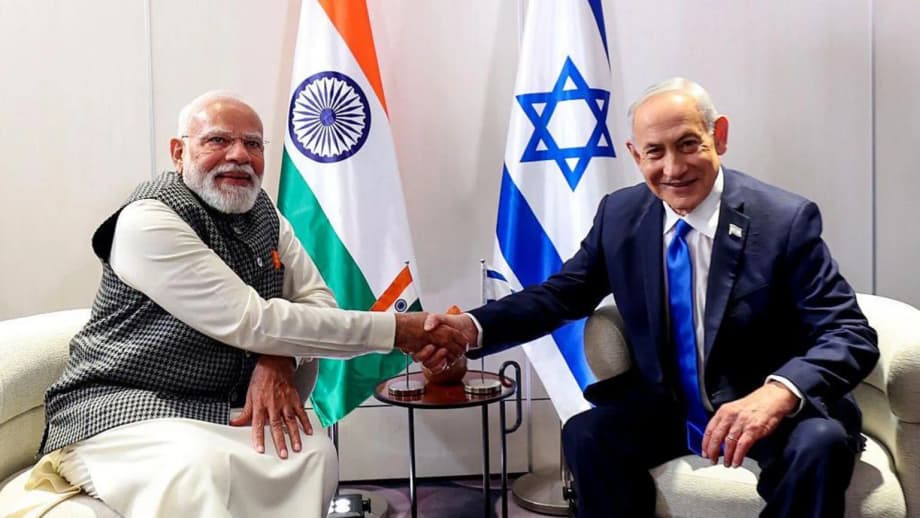
A Historic Upgrade in Bilateral Relations
Indian Prime Minister Narendra Modi concluded a landmark two-day visit to Israel on February 26, 2026, cementing a transformative era in bilateral relations through the elevation of ties to a “Special Strategic Partnership” and the signing of 16 to 17 comprehensive agreements spanning defense, artificial intelligence, cybersecurity, and economic cooperation. The visit, Modi’s second to the Jewish state since 2017, yielded an estimated $8 to $10 billion in potential defense procurement while establishing frameworks for technological collaboration that could reshape security dynamics across the Middle East and South Asia.
The diplomatic milestone comes at a critical juncture, with Israel seeking to break its relative international isolation amid the ongoing conflict in Gaza, and India navigating complex regional relationships while pursuing its strategic interests. During the visit, Modi addressed Israel’s parliament, the Knesset, toured the Yad Vashem Holocaust memorial, and held extensive discussions with Prime Minister Benjamin Netanyahu and President Isaac Herzog. The agreements signed cover sectors ranging from agriculture and space exploration to labor mobility and financial technology, signaling a broad institutionalization of cooperation that extends far beyond traditional defense sales.
Defense Cooperation Reaches New Heights
The defense component of the visit represents one of the most significant expansions of military ties between the two nations in recent history. According to estimates from Indian and Israeli media, potential deals being negotiated could reach between $8 and $10 billion, encompassing multi-layered missile defense systems, unmanned aerial vehicles, precision-guided munitions, and advanced artificial intelligence applications for military use. This surge in defense cooperation follows the May 2025 India-Pakistan conflict, which highlighted New Delhi’s vulnerabilities in drone, missile, and cyber warfare, and Israel’s 2023-2025 regional conflicts that demonstrated the effectiveness of its air defense systems.
Specific systems under discussion include Rafael’s SPICE 1000 guidance kits, Elbit Systems’ Rampage air-to-ground missiles, Israel Aerospace Industries’ supersonic Air LORA missiles, and the Ice Breaker naval cruise missiles. A significant deal is also expected for Elbit’s Hermes 900 drone, which would enhance India’s surveillance and strike capabilities. The cooperation extends to Israel’s multi-layered missile defense architecture, with attention focused on the Iron Dome and Iron Beam systems, though these particular platforms face export restrictions due to substantial American funding and co-production partnerships that require formal United States consent for transfer to third parties.
Perhaps more significant than simple procurement, the two countries agreed to pursue joint development, joint production, and technology transfer in defense manufacturing. This approach aligns with Modi’s “Make in India” initiative, which has shifted the relationship from pure buyer-seller dynamics to strategic industrial partnerships. From 2020 to 2024, India purchased approximately 34 percent of Israel’s total arms exports, valued at around $20.5 billion according to the Stockholm International Peace Research Institute (SIPRI), making New Delhi Jerusalem’s largest defense customer. The new framework would see Israeli defense companies establishing subsidiaries in India and co-producing systems locally, potentially including licensed manufacturing of certain weapons platforms previously restricted by confidentiality frameworks.
Technology, AI, and Cybersecurity Integration
Beyond conventional military hardware, the agreements establish India and Israel as partners in emerging and critical technologies. The two nations signed a dedicated memorandum of understanding on artificial intelligence cooperation, covering joint development, ethical AI frameworks, civilian applications, and public-private partnerships. Complementing this initiative is a “Declaration of Intent” on “horizon scanning,” a strategic foresight mechanism designed to identify emerging global trends in technology, economy, and society through data analysis and AI-driven tools. This capability would enhance India’s strategic planning through joint research and capacity building.
Cybersecurity cooperation was significantly expanded through a Letter of Intent to establish an India-Israel Centre of Excellence in Cybersecurity in India. The facility aims to showcase best practices, strengthen digital resilience, and foster collaboration among government agencies, industry, and academia. Both countries also agreed to develop a multi-year strategic program including joint exercises and capacity building, while increasing joint research funding from $1 million to $1.5 million under the India-Israel Joint Research Calls framework.
Cooperation extends into quantum computing, semiconductors, and space exploration. The two sides agreed to collaborate on civilian nuclear energy projects and advance space initiatives. In the financial technology sector, India announced that its landmark Unified Payments Interface (UPI) would extend to Israel, enabling cross-border remittances through a partnership between NPCI International and Israel’s MASAV system. This digital finance integration could streamline transactions for businesses, tourists, and startups operating between the countries, while a separate agreement between India’s International Financial Services Centres Authority and the Israel Securities Authority will promote cooperation in fintech innovation and regulatory technology.
Economic Integration and Labor Mobility
The visit catalyzed momentum toward a long-stalled Free Trade Agreement (FTA), with negotiations formally restarting on February 24, 2026, just days before Modi’s arrival. Previous talks had stalled after eight rounds held between 2017 and 2021, but both sides now express renewed commitment to expanding bilateral trade beyond its current structure dominated by diamonds, petroleum products, and chemicals. Bilateral trade stood at $3.62 billion in fiscal year 2025, making India Israel’s second-largest trading partner in Asia, though recent figures showed a decline from previous years, with Indian exports falling 52 percent to $2.14 billion and imports dropping 26.2 percent to $1.48 billion.
A significant component of the economic package addresses Israel’s severe labor shortages, exacerbated by restrictions on Palestinian workers imposed since October 2023. Israel pledged to allow up to 50,000 additional Indian workers into the country over the next five years, expanding beyond existing agreements in construction and caregiving to include commerce, manufacturing, restaurants, retail, logistics, warehousing, hospitality, food processing, textiles, electronics, and chemicals. Three implementation protocols were signed to enable regulated recruitment across these sectors, providing structured employment pathways for skilled and semi-skilled Indian professionals.
The countries also launched a dedicated Financial Dialogue to deepen regulatory coordination, and presented the report of the 4th India-Israel CEO Forum, which offered policy recommendations aimed at aligning public policy with industry trends. An agreement between the Israeli Institute of Commercial Arbitration and the Indian Council of Arbitration will promote knowledge exchange and joint training in dispute resolution mechanisms, potentially facilitating smoother commercial engagement between the business communities.
Diplomatic Significance and Regional Context
Modi’s visit carried substantial symbolic weight, occurring against the backdrop of Israel’s ongoing military operations in Gaza and the international scrutiny surrounding civilian casualties. The Indian Prime Minister received an unusually warm reception, with Netanyahu personally welcoming him at Ben Gurion Airport and accompanying him to address a special session of the Knesset, where lawmakers awarded Modi the “Knesset Medal,” a first for a visiting foreign leader. During his parliamentary address, Modi opened with greetings in Hebrew and Hindi, condemned the October 7, 2023 Hamas attack as “barbaric terrorism,” and declared that India stands with Israel “firmly, with full conviction, in this moment and and beyond.”
However, Modi’s diplomatic positioning maintained careful balance. While offering condolences to Israeli victims and condemning terrorism unequivocally, he also voiced support for the Gaza peace plan proposed by United States President Donald Trump, stating that “humanity must never become a victim of conflict.” India reiterated its traditional support for a two-state solution and expressed concern over civilian casualties in Gaza, attempting to navigate between deepening strategic ties with Israel and maintaining relationships with Arab partners in the Middle East.
The visit also advanced discussions on the India-Middle East-Europe Economic Corridor (IMEC) and cooperation under the I2U2 grouping (India, Israel, United Arab Emirates, and the United States), both seen as emerging pillars of economic and strategic connectivity across the region. President Herzog emphasized that India is “a vital part of the great future of the Middle East,” while Modi invited Herzog for an official return visit to India, underscoring centuries-old Jewish-Indian ties that predate modern diplomatic relations established in 1992.
Domestic Criticism and Political Controversy
Despite the official celebration of expanded cooperation, Modi’s visit generated significant criticism within India. Opposition leaders, particularly from the Congress party, condemned the trip as a betrayal of India’s historic foreign policy principles and a display of “moral cowardice” at a moment of intense global scrutiny of Israeli military actions in Gaza. Jairam Ramesh, spokesperson for the Congress party, accused the Modi government of abandoning the Palestinian cause, while Priyanka Gandhi urged the Prime Minister to mention the killing of civilians in Gaza during his Knesset address, a specific reference that was notably absent from his speech.
Under Modi’s leadership since 2014, India has gradually shifted its approach to the Israel-Palestine conflict, moving from traditional solidarity with Palestinian statehood toward a pragmatic “delinking” strategy that treats relationships with Israel and Palestine as separate tracks. This shift has manifested in India’s abstention from several United Nations resolutions critical of Israel during the Gaza conflict, including a 2024 General Assembly vote calling for an immediate ceasefire. India has also reportedly supplied ammunition and drones to Israel during the recent conflict, and Indian companies have been linked to AI weapons systems used in Gaza, co-produced with Israeli firms.
Foreign policy analysts suggest this alignment reflects not merely strategic interests but ideological affinities between the current governments. Both Modi and Netanyahu lead nationalist movements that emphasize strong security postures against jihadist terrorism and prioritize ethno-national identity in their respective state architectures. This “nationalist international” alignment, as some observers describe it, prioritizes counterterrorism cooperation and technological partnership over traditional solidarity with Palestinian self-determination.
What Was Excluded from the Deals
Despite intense speculation in Indian media, the landmark agreements notably excluded the transfer of Israel’s Iron Dome or Iron Beam missile defense systems. While discussions explored broader air defense technology cooperation, the Iron Dome and its laser-based successor Iron Beam cannot be freely exported due to substantial American financial support and co-production partnerships. These systems require explicit United States approval under American export-control laws before transfer to third parties such as India can proceed.
Instead, Israel may assist India with detection systems and coordination mechanisms for multi-layered air defense networks, helping integrate existing Indian systems including the Russian S-400, Akash, Barak, and QRSAM platforms. This consultative approach would provide India with enhanced capabilities against long-range ballistic missiles, medium-range rockets and cruise missiles, and short-range threats, without requiring direct transfer of the specific American-involved Israeli platforms. The focus remains on joint development of new systems rather than off-the-shelf transfers of existing restricted technology.
The Essentials
- India and Israel elevated bilateral ties to a “Special Strategic Partnership” during Modi’s February 2026 visit, the second such visit by the Indian Prime Minister since 2017
- The two countries signed 16 to 17 agreements covering defense, artificial intelligence, cybersecurity, agriculture, fintech, labor mobility, and education
- Defense deals potentially worth $8 to $10 billion are under discussion, including missiles, drones, and AI systems, with emphasis on joint production and technology transfer
- Israel will allow up to 50,000 Indian workers into the country over five years across construction, manufacturing, caregiving, and service sectors
- India’s Unified Payments Interface (UPI) will extend to Israel, facilitating cross-border digital transactions
- Negotiations for a Free Trade Agreement restarted after being stalled since 2021, with current bilateral trade standing at $3.62 billion
- The Iron Dome and Iron Beam missile defense systems were excluded from deals due to American export restrictions and co-production agreements
- Modi addressed the Knesset, condemned the October 7 attack, and supported Trump’s Gaza peace plan, while maintaining India’s support for a two-state solution
- The visit drew criticism from Indian opposition parties regarding Israel’s military actions in Gaza and the perceived abandonment of Palestinian solidarity
- Cooperation frameworks were established for the India-Middle East-Europe Economic Corridor and the I2U2 quadrilateral grouping with the United States and United Arab Emirates