Malacca, a UNESCO World Heritage site known in Malaysia as Melaka, stands as one of the most important historical cities in Southeast Asia. Before British colonial rule, it was a possession of the Dutch and previously the Portuguese. But Malacca’s story began long before European colonization, emerging as a thriving cosmopolitan port at the heart of the Malacca Sultanate (around 1400-1511). Merchants from China, India, the Arab world, and the Indonesian archipelago crowded its harbor, exchanging spices, textiles, ceramics, and precious metals. Backed by patronage from China’s Ming dynasty (1368-1644), Malacca enjoyed relative security and regional influence, functioning as an entrepôt where goods, languages, and cultures met and mingled.
- The Princess in the Malaysian Imagination
- The Traditional Story of Diplomatic Marriage
- Historical Evidence: Absence and Contradictions
- Portuguese Accounts and Different Narratives
- The Zheng He Connection
- Cultural Significance Beyond History
- Modern Reinterpretations
- Historical Context of Malacca-China Relations
- The Peranakan Legacy
- Historical Accuracy and National Identity
- Key Points
From this Sino-Malay connection emerged one of Malacca’s most enduring stories: that of Princess Hang Li Po. Her narrative, familiar to generations of Malaysians, is often presented as a textbook example of early diplomacy between China and the Malay world. According to traditional Malay accounts, Hang Li Po was a Ming-dynasty princess sent to Malacca in the mid-15th century to marry Sultan Mansur Shah, who reigned from 1456 to 1477. The marriage supposedly sealed friendly relations between Malacca and its Chinese patron through matrimony, establishing a royal connection that has fascinated historians and locals alike for centuries.
The Princess in the Malaysian Imagination
Hang Li Po has become deeply embedded in Malaysia’s national consciousness. As a person of Chinese ancestry who lived among Malay Muslims, she is often cited as a prototype for the lived experience of many modern-day Malaysians. The story of her arrival in Malacca is not merely a historical anecdote but a cultural touchstone that speaks to Malaysia’s multicultural identity.
The princess’s vast entourage was recorded to be 500 followers, and Sultan Mansur Shah provided a hill for their settlement, now known as Bukit Cina (China Hill), as a gift to his new Chinese bride in the mid-15th century. Today, Bukit Cina contains more than 12,000 graves, with the oldest dating back to 1622. This site has become one of Malacca’s most significant historical landmarks, a tangible connection to the princess’s legendary presence.
The story of Hang Li Po represents an early example of transculturation and interracial marriage in the history of the Malay Archipelago. Her cultural and genealogical heritage is seen in the Peranakan culture, whose descendants are found particularly in Penang and Malacca, characterized by a hybridization of ancient Chinese culture with the local cultures of Maritime Southeast Asia. With the Islamization of the Malay Archipelago from the 15th century onwards, the trend of inter-ethnic marriage went into decline in the region, making Hang Li Po’s story even more remarkable in retrospect.
The Traditional Story of Diplomatic Marriage
According to the Malay Annals (Sejarah Melayu), Hang Li Po’s story begins with diplomatic exchanges between the Ming Emperor and Sultan Mansur Shah. The tale describes how the Emperor of China sought to establish friendly relations with the Malaccan Sultan, not merely through tribute but through a royal marriage alliance.
Traditional accounts narrate that the Chinese Emperor, impressed by Sultan Mansur Shah’s character and Malacca’s growing importance, decided to offer his daughter’s hand in marriage. The princess was described as beautiful and noble, sent to Malacca as a diplomatic gesture that would cement the friendship between the two kingdoms. Upon her arrival, she embraced the local culture, converted to Islam, and married Sultan Mansur Shah, becoming an integral part of the royal court.
The Malay Annals further elaborate that Hang Li Po bore the Sultan a son named Paduka Mimat, continuing the royal lineage. Her Chinese attendants married local men, establishing a community that would eventually contribute to the development of Malacca’s Chinese-Malay mixed culture. The story includes rich details about her settlement at Bukit Cina and the establishment of wells and other infrastructure that benefited the growing community.
More dramatically, the Annals recount that the Chinese Emperor developed a disfiguring skin disease and could only be cured by drinking and bathing in water that Sultan Mansur Shah used to wash his feet. This led the Emperor to take an oath that never again would he accept “obeisance” from the Raja of Ujong Tanah (Singapore, then under control of Melaka), a promise that was said to hold through the ages. The Emperor further declared that anyone who ruled after him would “never demand ‘obeisance’ from the Raja of Melaka or those that come after him, but only friendship on equal terms.”
Historical Evidence: Absence and Contradictions
Despite the rich narrative preserved in Malay historical sources, the story of Hang Li Po faces significant challenges when examined through historical evidence. The most glaring omission is the complete absence of any reference to Hang Li Po in Chinese Ming dynasty records. Chinese court scholars were meticulous in keeping records, and China being a country full of scholars, would surely have documented the marriage of an imperial princess to a foreign ruler.
Historian Khoo Kay Kim, who researched the matter several decades ago, claimed that Hang Li Po was essentially a myth. His conclusion was based on the fact that the Ming imperial records (Ming shi-lu) contained no mention of either her or her marriage. He further pointed out that she is not listed as a princess to any Ming Emperor, including the Yongle Emperor, who reigned during the time when such a marriage might have occurred.
The doubts extend beyond Chinese records. The 16th-century Portuguese account Suma Oriental by Tomé Pires, written between 1512 and 1515 shortly after the Portuguese conquest of Malacca, does not mention a Chinese princess married to Sultan Mansur Shah. Instead, it refers to an unnamed Chinese girl who married Malacca’s second ruler, Sultan Megat Iskandar Shah (r. 1414-1424), with three decades between the two rulers.
This chronological discrepancy is significant. The Portuguese account places the Chinese marriage during Megat Iskandar Shah’s reign, not Mansur Shah’s, suggesting there may have been confusion or deliberate alteration in the Malay chronicles about which sultan received the Chinese bride. The absence of Hang Li Po from what should be a contemporary Portuguese record raises further questions about the historical accuracy of the traditional narrative.
Hang Li Po has been known to not exist, at least not in the way the Malay fables say so. But was it written into the Sejarah Melayu to enhance the status of the Malacca Sultanate to discourage Siam the other competitor in the Straits that Melaka had to pay yearly tributes for ‘Protection’?
Portuguese Accounts and Different Narratives
The Portuguese account Suma Oriental provides an alternative perspective on the relationship between China and Malacca that differs significantly from the traditional Malay narrative. According to Pires, at the beginning of his reign, Sultan Megat Iskandar Shah decided to visit China to pay allegiance to the emperor. After being received with great honor, when the time came for him to return home, the sultan was entrusted to the care of a “Great Captain,” with whom he traveled back to Malacca.
The narrative continues: “The captain brought with him a beautiful Chinese daughter, and when the said Xaquem Darxa (Iskandar Shah) reached Malacca, in order to do honour to the said captain, he married her although she was not a woman of rank.” Later, this girl bore Sultan Megat Iskandar Shah a son with the title Paduka Raja.
While this account differs from Sejarah Melayu in several key respects—it refers to a regular Muslim girl rather than a non-Muslim princess, involves a different sultan, and describes a Malaccan ruler’s visit to China (unmentioned in the Malay Annals)—the two narratives share a common core. In both accounts, a Chinese girl is escorted to Malacca by a Chinese official before marrying a Malaccan ruler, with whom she has a son bearing the title Paduka. This suggests that despite the variations, the stories may be rooted in the same historical event or events, albeit filtered through different cultural and historical perspectives.
The discrepancies between the Malay and Portuguese accounts highlight the challenges of reconstructing history from fragmentary and sometimes contradictory sources. The Malay Annals, produced in Johor around 1612, was written nearly two centuries after the events it describes, while the Suma Oriental, written shortly after the Portuguese conquest in Malacca itself, was based primarily on Javanese chronicles that the Portuguese considered more reliable at the time.
The Zheng He Connection
One element that potentially bridges the different narratives is the figure of Zheng He (1371-1433/5), the famous Chinese admiral and explorer who led seven treasure voyages throughout Southeast Asia and the Indian Ocean. Both before and after Sultan Megat Iskandar Shah’s reign, Malacca acted as Zheng He’s Southeast Asian base of operations, intimately connecting him to the city.
Significantly, in 1419, Sultan Megat Iskandar Shah visited China in the company of Zheng He. This strongly suggests that Pires’s “Great Captain” is a memory of Zheng He; no other historical figure tallies so well with the Suma Oriental‘s account. Moreover, in the Malay Annals, the Chinese official who sends Hang Li Po to Malacca is named “Ling Ho,” which appears to be an obvious corruption of “Zheng He.”
If both officials are indeed representations of Zheng He, then the probability arises that Pires’s unnamed Chinese Muslim girl is an earlier version of Hang Li Po. The author of the Malay Annals, writing nearly two centuries after the events in question, may have mistakenly associated the story with Sultan Mansur Shah rather than Sultan Megat Iskandar Shah.
This explanation helps reconcile the different accounts while acknowledging the historical complexity. Whether Hang Li Po was a real figure is not merely a question of historical curiosity. As a person of Chinese ancestry who lived among Malay Muslims, she represents a prototype for the lived experience of many modern-day Malaysians. To seek out her historical veracity is therefore an inherently important task within the context of contemporary Malaysia’s nation-building efforts, helping to firmly root an important modern identity.
In the historical context of Sejarah Melayu, a person may be infected with chloasma, an unsightly and uncomfortable skin disease, upon skin contact with a person of royal blood, suggesting an unhealthy union between that royal figure and common person.
Cultural Significance Beyond History
The academic analysis of Hang Li Po’s story reveals layers of meaning that extend beyond historical authenticity. In the Malay Annals, the narrative about the Chinese emperor’s skin disease serves an important symbolic function. Researchers explain that “in the historical context of Sejarah Melayu, a person may be infected with chloasma, an unsightly and uncomfortable skin disease, upon skin contact with a person of royal blood, suggesting an unhealthy union between that royal figure and common person.”
This narrative episode goes beyond simply recounting a diplomatic exchange; it uses storytelling to restore Sultan Mansur Shah’s daulat (sovereignty) and assert Malay supremacy to the listening audience. The traditional view of marriage transactions would seem to grant the Chinese emperor a higher social rank, because “wife-giving affords a superior position to wife-taking.” In sending a potential wife to Sultan Mansur Shah, the emperor would have “calculated to coerce Melaka into indebtedness because Princess Hang Li Po, being a direct and abiding link to her father, binds Sultan Mansur Shah into submission.”
However, the Malay Annals invert this relationship through the emperor’s disease and subsequent cure. As researchers argue, “Hang Li Po is the medium to cement alliances and to add royal aura to a Malay monarch whose wife is a daughter of a great emperor. The blend of international migration, skin disease and magic cure add to the mystic of the Sultan himself.”
This analysis suggests that the story’s cultural and political significance may be more important than its historical accuracy. Hang Li Po becomes a symbolic figure who embodies the complex power dynamics between China and Malacca while ultimately affirming Malay sovereignty and prestige.
Modern Reinterpretations
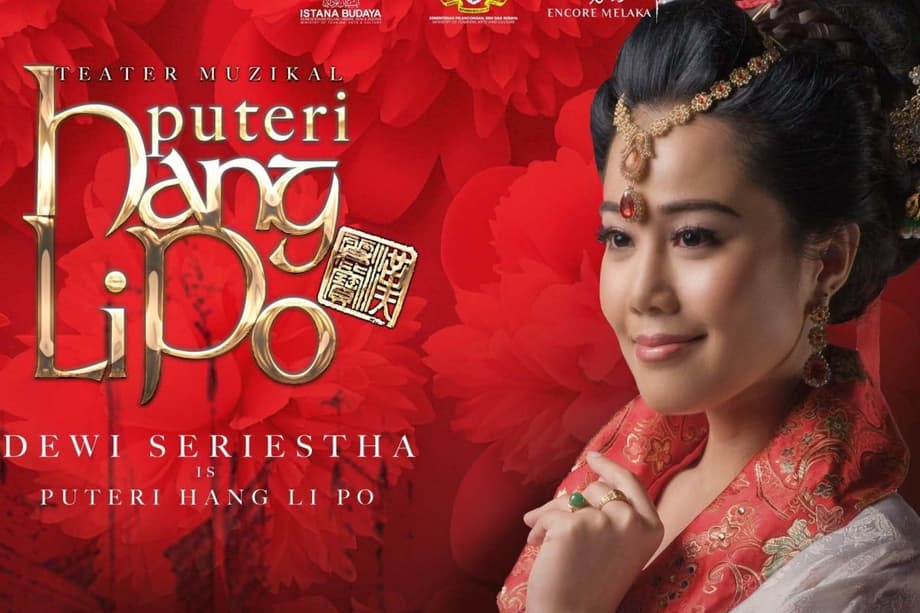
The ambiguity surrounding Hang Li Po’s historical existence has allowed for creative reinterpretations in contemporary Malaysian culture. In recent years, the figure of Hang Li Po has been reimagined through various artistic mediums, reflecting both the uncertainties of her historical reality and the enduring appeal of her story.
The National Academy of Arts, Culture and Heritage (Aswara) presented a dance drama production centered on the controversial historical character of Hang Li Po. The production, developed by students in the dance, theatre, and management faculties, features rarely seen traditional folk and classical Chinese dance styles. Aswara’s head of dance Dr Joseph Gonzales explained that “in the last few years, Aswara has become famous for its Malay and Indian dance repertoires, and we have received support and recognition from the entire industry for it. But our Chinese repertoire has been sorely lacking, and it has taken us a while to collect enough pieces to stage a full-length show.”
The production intentionally plays up the historical ambiguity surrounding Hang Li Po, creating an “interesting, fun and appealing piece of dance theatre instead of merely revisiting history.” Gonzales noted that “the tag line of our show is ‘not based on a true story’—we wanted to be very clear that we were being playful and whimsical with a character that wasn’t real.”
Aswara’s version of the story begins in Malacca as Hang Li Po pines for her father’s company at the annual Spring Festival in Beijing. Moved by his wife’s homesickness, the Sultan agrees to bring her with him to China to assuage her distress. The narrative unfolds with scenes depicting the bustling atmosphere of Chinese ports, including farmers selling fresh produce, traders peddling wares from all over China, and travelers from various provinces using the harbor as a meeting point.
Such reinterpretations demonstrate how the story of Hang Li Po continues to evolve, serving as a canvas for artistic expression and cultural exploration. While historical questions may remain unanswered, the figure’s cultural life and relevance continue to flourish in contemporary Malaysia.
Historical Context of Malacca-China Relations
To understand the significance of the Hang Li Po story, it’s essential to consider the broader historical context of relations between Malacca and China during the 15th century. Before Malacca’s founding, Chinese maritime trade focused on ports in Java and Sumatra. However, Parameswara’s establishment of Malacca around 1400 coincided with China’s renewed interest in maritime expansion under the Ming Dynasty.
Under the Yongle Emperor Zhu Di (r. 1402-1424), China initiated the “Treasure Voyages,” naval expeditions designed to establish Chinese influence throughout the maritime world. The first of these voyages, led by the eunuch admiral Zheng He, reached Malacca in 1405. This initial encounter marked the beginning of a formal relationship between Malacca and China.
Malacca’s strategic location made it an important stopping point for Zheng He’s fleets, facilitating the growth of trade throughout Southeast Asia. In exchange for recognizing Chinese suzerainty, Malacca received protection against its enemies, particularly Siam (Thailand) and the Majapahit Empire of Java. This relationship was not merely one of tribute but involved genuine strategic cooperation and mutual benefit.
Chinese records document numerous diplomatic missions between Malacca and China during this period. Between 1405 and 1435, Malacca sent as many as twenty missions to China, with several led by the Sultan himself. These exchanges strengthened diplomatic ties and facilitated the growth of Malacca as a commercial hub.
The relationship was further cemented during Sultan Mansur Shah’s reign (1456-1477). The Sultan sent a delegation headed by his bendahara (prime minister) to China with a letter for the emperor. The delegation successfully impressed the emperor with the Sultan’s achievements, leading to the diplomatic exchange that supposedly resulted in Hang Li Po’s marriage to the Sultan.
When the Portuguese conquered Malacca in 1511, they found evidence of this close relationship. The Malaccans informed the Portuguese that their territory had been “protected by the great Emperor of China,” demonstrating how the China-Malacca alliance was well-established and recognized throughout the region.
The Peranakan Legacy
Regardless of whether Hang Li Po was a princess or a court maiden, her story is often cited as the beginning of the Baba Nyonya community (Straits Chinese) in the Malay Peninsula. The intermarriage between Chinese traders and local Malay women resulted in a unique hybrid culture that blended Chinese traditions with Malay customs.
Many Malaysians of Straits Chinese descent trace their ancestry to the popular legend of Hang Li Po’s marriage to Sultan Mansur Shah. This narrative functions as a “memorial dream of intermarriage and cultural fluidity,” paying homage to a time when the term “Chinese” had not hardened as a racialized category imposed by British colonial authorities and later by the independent nations of Malaysia and Singapore.
The Peranakan community that emerged from these early Chinese-Malay connections developed distinct cultural characteristics. They maintained Chinese language, religious practices, and cuisine while adopting Malay clothing, language, and social customs. This cultural synthesis created a unique identity that has persisted for centuries, particularly in Malacca, Penang, and Singapore.
The term “Straits Chinese” itself stands out as a fully Anglophone construct in scope and origin. From 1852, the British colonial administration used it as a legal identification category, and the community adopted it as a marker of status, wealth, and the continuity of their traditions. Unlike later Chinese immigrants who arrived as laborers in the late 19th century, the Straits Chinese differentiated themselves through their long-standing roots in the region, their wealth, and their command of English.
Unlike Baba and Peranakan, “Straits Chinese” emphasizes their distinctiveness within the broader Chinese diaspora. The Straits Chinese chose to identify as “King’s Chinese,” professing a strong sense of belonging to Malaya while maintaining loyalty to Britain as subjects. They established the Straits Chinese British Association and advocated for representation in the Straits Settlements Legislative Council, demonstrating their unique position in colonial society.
Hang Li Po is the medium to cement alliances and to add royal aura to a Malay monarch whose wife is a daughter of a great emperor. The blend of international migration, skin disease and magic cure add to the mystic of the Sultan himself.
Historical Accuracy and National Identity
The debate over Hang Li Po’s existence touches on broader questions about historical accuracy and national identity in Malaysia. The questioning of traditional narratives often sparks intense debate, as these stories are deeply intertwined with how Malaysians understand their past and national identity.
Historical discussions about figures like Hang Li Po, Hang Tuah, and Hang Jebat reveal tensions between scholarly rigor and cultural tradition. In 2014, when Professor Khoo Kay Kim suggested that these figures might be myths rather than historical personalities, it generated considerable public debate. Critics argued that such claims undermined Malaysia’s rich historical heritage and questioned the basis of national identity.
These discussions often intersect with political and ethnic considerations. The figure of Hang Li Po, as a Chinese princess who married into Malay royalty, represents an early example of Sino-Malay integration that resonates with contemporary multicultural Malaysia. However, when historical authenticity is questioned, it can sometimes be perceived as challenging the legitimacy of these cultural narratives.
The tourism industry also plays a role in perpetuating certain historical narratives. Malacca’s status as a UNESCO World Heritage site and popular tourist destination means that stories like Hang Li Po’s are often presented to visitors without the same historical nuance that academic scholarship might provide. This can lead to simplified or romanticized versions of history that emphasize cultural legends over historical accuracy.
Malaysiakini reported criticism of a Malacca Tourism Promotion Board guidebook that contained historical inaccuracies, including an incorrect date for the Portuguese arrival in Malacca (claiming 15th century rather than the correct 1511) and potentially misleading information about Hang Li Po. Such incidents highlight the challenges of balancing educational accuracy with engaging tourism narratives.
The debate over Hang Li Po’s existence also touches on theories about other historical figures. Some have suggested that the warrior Hang Tuah and his companions might have been Chinese rather than Malay, based on the similarity of their names to Hang Li Po. However, this theory faces significant challenges, as “Hang” was actually a common name prefix in classical Malay society, used by numerous individuals including Hang Tuah’s father, Hang Mahmud.
Free Malaysia Today addressed these claims, pointing out the prevalence of the “Hang” prefix in historical records and noting that Chinese Wikipedia lists variations in Hang Li Po’s name, suggesting transliterations rather than a consistent historical identity. The article also dismissed DNA tests supposedly proving Hang Tuah’s Chinese origin, noting that such tests cannot definitively determine race and that the testing process described seems implausible given the site’s location and historical significance.
Key Points
- Hang Li Po is traditionally described as a Ming dynasty princess sent to marry Sultan Mansur Shah of Malacca in the mid-15th century as part of diplomatic relations
- No Chinese Ming dynasty records mention Hang Li Po or her marriage, raising questions about historical authenticity
- 16th-century Portuguese accounts refer to an unnamed Chinese girl who married Sultan Megat Iskandar Shah (not Mansur Shah), suggesting possible confusion in Malay chronicles
- The Chinese official in both the Malay Annals and Portuguese accounts appears to be Zheng He, with “Ling Ho” in Malay texts being a corruption of his name
- Hang Li Po represents transculturation and early interracial marriage in Southeast Asia, contributing to the development of Peranakan culture
- Her story has deep cultural significance in Malaysia, symbolizing early Sino-Malay relations and multicultural identity
- The narrative includes symbolic elements that assert Malay sovereignty over Chinese imperial power
- Modern artistic reinterpretations continue to explore the ambiguity of Hang Li Po’s historical existence
- Whether she was a princess or court maiden, her story remains an important part of Malaysia’s cultural heritage
- The debate over historical figures like Hang Li Po reflects broader questions about historical accuracy and national identity