Record Maritime Presence Sparks Diplomatic Crisis
The waters surrounding the disputed Diaoyu Dao islands have witnessed an unprecedented level of Chinese maritime activity, with China Coast Guard vessels patrolling the area on 356 days by the end of 2025, surpassing the previous record of 355 days set in 2024. This intensifying presence comes at a time of heightened diplomatic tension between Beijing and Tokyo, triggered by controversial statements from Japanese Prime Minister Sanae Takaichi regarding potential military intervention in Taiwan. The combination of record maritime patrols and sharp rhetoric has raised concerns about potential escalation in one of East Asia’s most volatile territorial disputes.
- Record Maritime Presence Sparks Diplomatic Crisis
- Historical Claims Compete in East China Sea
- From Sovereignty Dispute to Taiwan Crisis
- Military and Coastguard Confrontations Intensify
- The United States: Strategic Ambiguity in a Complex Alliance
- Strategic Significance Beyond Small Islands
- Regional Implications and Future Risks
- Pathways to De-escalation and Resolution
- Key Points
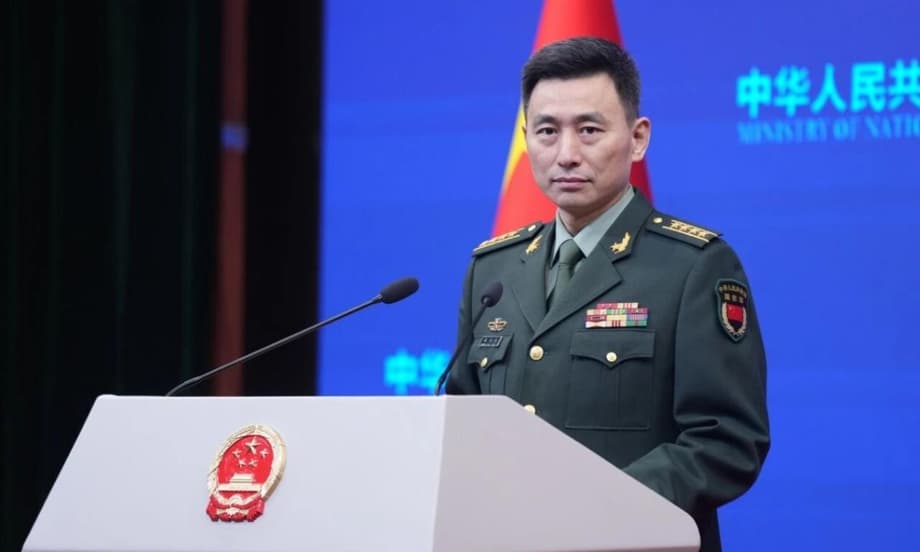
Chinese Ministry of National Defense Spokesperson Zhang Xiaogang defended the patrols, stating the Diaoyu Dao and affiliated islets are China’s inherent territory. He emphasized that China Coast Guard operations in these waters are legitimate and lawful measures to safeguard maritime rights and territorial integrity. Zhang warned Japan against actions that could escalate the situation, using stark language about consequences.
We urge the Japanese side to exercise restraint in both words and actions and refrain from taking any steps that could escalate the situation. Otherwise, it will only end up lifting a rock to drop it on its own foot, said Zhang.
The Diaoyu Dao islands, known as the Senkaku Islands in Japan, consist of five small islands and three rocks located in the East China Sea, roughly 120 miles northeast of Taiwan and 200 miles from China’s coast. Despite their small total land area of approximately 5.69 square kilometers, these uninhabited features have become a flashpoint in Sino-Japanese relations, with both nations asserting historical and legal claims to sovereignty.
Historical Claims Compete in East China Sea
China’s official position, detailed in a 2012 white paper, asserts that Diaoyu Dao has been China’s inherent territory since ancient times. Beijing cites historical records dating back to the Ming Dynasty (1368-1644), including the 1403 publication “Voyage with a Tail Wind” which contains the earliest known records of the islands’ names. Chinese officials point to maps and documents from subsequent centuries that placed the islands under Chinese jurisdiction, particularly as part of Taiwan’s administrative territory during the Qing Dynasty.
According to Chinese documentation, imperial envoys traveling to Ryukyu (modern-day Okinawa) routinely used Diaoyu Dao as a navigational marker. The boundary between Chinese territory and Ryukyu was recorded as Hei Shui Gou (today’s Okinawa Trough), located between Chiwei Yu and Kume Island. This maritime boundary, China argues, clearly demarcated Chinese sovereign territory from foreign lands.
Japan’s Perspective on Territorial Sovereignty
Japan presents a markedly different historical narrative. The Japanese Ministry of Foreign Affairs maintains that the Senkaku Islands were terra nullius—unclaimed territory under international law—when Japan incorporated them in January 1895. Tokyo argues that a careful survey found no trace of control by any other state prior to that period, making Japan’s incorporation lawful under the international legal framework existing at that time.
Following World War II, the San Francisco Peace Treaty placed the Senkaku Islands under U.S. administration as part of Okinawa. Japan views this as reaffirmation of the islands’ status as part of Japanese territory. The 1972 Okinawa Reversion Agreement between the United States and Japan returned administrative rights over the islands to Japan, which Tokyo cites as further evidence of consistent Japanese sovereignty in the post-war international order.
Japanese officials also point to the fact that China did not contest Japan’s sovereignty over the islands for approximately 75 years following their incorporation in 1895. Japan asserts that Chinese interest in the islands only emerged in the 1970s when surveys suggested potential oil and natural gas reserves in the surrounding seabed, suggesting an economically motivated claim rather than one based on historical rights.
From Sovereignty Dispute to Taiwan Crisis
The current escalation extends beyond the islands themselves, becoming intertwined with broader regional security dynamics, particularly regarding Taiwan. On November 7, 2025, Japanese Prime Minister Sanae Takaichi told a parliamentary committee that a military attack by China against Taiwan could constitute a “survival-threatening situation” for Japan, potentially triggering Japan’s right to exercise collective self-defense alongside its ally, the United States.
These remarks represented a significant departure from Japan’s traditional strategic ambiguity regarding Taiwan. Beijing interpreted them as direct interference in China’s internal affairs and a violation of the one-China principle. The response from Chinese authorities was swift and severe, with the Foreign Ministry expressing “firm opposition” and lodging stern representations with Japan.
Chinese Vice Foreign Minister Sun Weidong summoned Japanese Ambassador to China Kenji Kanasugi to deliver serious demarches, emphasizing that the Taiwan question lies at the core of China’s core interests. Sun stated that Taiwan is China’s sacred territory and how to resolve the Taiwan question is for the Chinese people alone to decide, with no interference by any external force.
The Taiwan question lies at the core of China’s core interests and is an untouchable red line and bottom line, Sun told the Japanese ambassador during the protest.
Military and Coastguard Confrontations Intensify
The diplomatic friction has manifested in increased maritime and aerial activity around the disputed islands. Recent incidents have involved both coastguard vessels and military assets from both nations, raising concerns about potential accidental escalation. According to Japanese sources, Chinese Coast Guard ships established a presence in waters around the Senkaku Islands for a record 158 consecutive days in 2024, with the streak continuing into 2025.
Recent confrontations have become more frequent and dangerous. In one incident, Chinese and Japanese coastguard vessels engaged in a standoff near the disputed islands. The Chinese coastguard stated it had driven a Japanese fishing boat away from the area and taken “necessary control measures,” while Japan claimed it had intercepted and expelled two Chinese vessels that had approached a Japanese fishing boat.
More alarmingly, airspace violations have added a new dimension to the confrontations. A high-stakes incident occurred when a Chinese helicopter and a Japanese civilian aircraft both entered disputed airspace near the islands. China accused Japan of provoking the clash when a Japanese civilian aircraft “illegally intruded” into Chinese airspace, prompting a helicopter launched from a China Coast Guard vessel to chase it out. Japan, however, claimed a Chinese coastguard helicopter violated Japanese airspace, marking the fourth such intrusion by China.
The United States: Strategic Ambiguity in a Complex Alliance
The United States occupies a delicate position in this dispute, balancing its security alliance with Japan against its complex relationship with China. Since the Nixon Administration, U.S. policy has maintained neutrality regarding the question of sovereignty over the islands, consistently stating that the United States takes no position on which country has the stronger legal claim.
However, U.S. policy since 1972 has held that the 1960 U.S.-Japan Security Treaty covers the islands. Article 5 of the treaty commits the United States to “meet the common danger” of an armed attack on “the territories under the Administration of Japan.” This distinction between sovereignty and administration allows Washington to avoid taking sides on the legal dispute while reassuring Japan of security commitments.
Recent U.S. administrations have increasingly emphasized this security commitment. In 2014, President Obama became the first U.S. president to publicly state that Article 5 covers the Senkaku Islands. Both the Trump and Biden Administrations have reiterated this position, with President Biden affirming the “unwavering commitment to the defense of Japan under Article 5 of our security treaty, which includes the Senkaku Islands.”
This U.S. position creates a complex dynamic, as China’s patrols appear designed to exploit the distinction between sovereignty and administrative control by demonstrating Beijing’s own administrative presence in the waters. The possibility of an incident drawing in the United States due to its treaty commitment with Japan adds a dangerous layer to an already volatile situation.
Strategic Significance Beyond Small Islands
Analysts note that the Senkaku/Diaoyu dispute has taken on importance far beyond the inherent value of the islands themselves. The features are small, uninhabited, and offer limited confirmed economic resources. However, their significance has grown due to three interconnected dimensions: symbolic import, domestic political utility, and competitive dynamics between China and Japan.
Symbolically, the islands have become a proxy for deeper historical grievances and national pride. For China, the dispute represents resistance to Japanese expansionism dating back to the late 19th century and a test of China’s ability to assert its interests against historical rivals. For Japan, maintaining control over the islands is seen as crucial for preserving territorial integrity against what Tokyo views as Chinese coercion.
Domestically, the dispute serves political purposes on both sides. Hardline positions on sovereignty appeal to nationalist constituencies and can be used to demonstrate strength in international affairs. In China, the Communist Party uses the issue to bolster its nationalist credentials and deflect from domestic challenges. In Japan, tough responses to Chinese incursions play well with voters concerned about regional security.
The islands also function as the focal point for competitive maneuvers in military, diplomatic, and legal domains. Each patrol, protest, and statement becomes part of an ongoing contest for relative advantage. This “security dilemma” dynamic, where one side’s defensive measures are perceived as offensive by the other, creates pressure for continued escalation despite the limited inherent value of the territory in dispute.
Regional Implications and Future Risks
The Diaoyu/Senkaku dispute does not exist in isolation but is part of a broader pattern of maritime tensions in East Asia. Similar disputes exist between Japan and South Korea over Takeshima/Dokdo, between Japan and Russia over the Northern Territories, and between China and several Southeast Asian nations over islands in the South China Sea. These overlapping disputes create a complex security environment where local incidents could trigger broader regional confrontations.
The Taiwan connection adds another layer of complexity. As Beijing intensifies pressure on Taiwan, including regular military exercises near the island, Japan’s proximity—just 110 kilometers from Taiwan—makes it a potential front in any conflict. Takaichi’s remarks about potential Japanese intervention in a Taiwan crisis have brought this scenario into sharper focus, increasing the perceived stakes in the Diaoyu/Senkaku dispute.
China’s recent warnings to its citizens about travel to Japan, including advisories against studying there, represent an unusual escalation into the economic and social realms. These measures could significantly impact Japanese universities and businesses, demonstrating Beijing’s willingness to use leverage beyond military and diplomatic channels.
Analysts warn that the combination of increased maritime presence, more assertive rhetoric, and expanded military activities creates dangerous conditions for accidental escalation. With both sides deploying increasingly sophisticated vessels and aircraft to the area, the risk of collision or miscalculation grows. The limited success of China and Japan in developing effective crisis management mechanisms for incidents at sea or in the air leaves both sides vulnerable to rapid escalation from tactical incidents to strategic crises.
Pathways to De-escalation and Resolution
Despite the tense current situation, experts suggest several pathways for managing the dispute. Confidence-building measures could include hotlines between maritime forces, agreed rules of engagement for encounters in disputed waters, and joint disaster response exercises to build practical cooperation. Such measures would not resolve the underlying sovereignty dispute but could reduce the risk of accidental escalation.
Joint development of resources in the surrounding waters represents another potential avenue for cooperation. In 2008, China and Japan reached an agreement in principle on joint exploration for gas and oil in disputed fields, though implementation stalled following domestic criticism in China. Reviving such arrangements could create economic incentives for cooperation while setting aside the difficult sovereignty question.
Legal dispute resolution through international arbitration or adjudication remains theoretically possible but politically difficult. Japan has generally resisted third-party adjudication, likely concerned that an unfavorable ruling could undermine its position. China’s rejection of the 2016 arbitral award in the South China Sea suggests limited enthusiasm for international legal mechanisms in its territorial disputes.
Ultimately, meaningful progress will require political leadership in both Beijing and Tokyo willing to balance nationalist narratives against regional stability and economic cooperation. Given current domestic pressures in both countries, such leadership appears unlikely in the near term, suggesting that the Diaoyu/Senkaku dispute will remain a persistent source of tension in East Asia for the foreseeable future.
Key Points
- China Coast Guard vessels patrolled the Diaoyu Dao waters on 356 days in 2025, setting a new record for maritime presence around the disputed islands
- Chinese Defense Ministry Spokesperson Zhang Xiaogang defended the patrols as legitimate and lawful, urging Japan to exercise restraint
- Tensions escalated following Japanese Prime Minister Sanae Takaichi’s remarks about potential military intervention in a Taiwan contingency
- China claims historical sovereignty dating to the Ming Dynasty, while Japan argues the islands were terra nullius when incorporated in 1895
- The United States maintains neutrality on sovereignty but affirms that its security treaty with Japan covers the islands under Japanese administration
- Recent incidents include coastguard confrontations, airspace violations, and a record 158 consecutive days of Chinese maritime presence in 2024
- The dispute involves symbolic, domestic political, and competitive dimensions beyond the inherent economic value of the uninhabited islands
- China has issued travel and study advisories warning citizens about visiting Japan, signaling economic pressure alongside diplomatic and maritime measures
- Analysts warn of increased risks for accidental escalation despite limited success in developing crisis management mechanisms
- The dispute is interconnected with broader regional security dynamics including Taiwan, the South China Sea, and other territorial conflicts