A Landmark Agreement in Semiconductor Diplomacy
The United States and Taiwan have signed a historic trade agreement that promises to reshape the global semiconductor landscape. The deal commits Taiwanese companies to invest at least $250 billion directly in U.S. semiconductor, energy, and artificial intelligence production facilities. Additionally, Taiwan’s government will provide up to $250 billion in credit guarantees to support these investments. In exchange, Washington has agreed to lower reciprocal tariffs on most Taiwanese goods from 20 percent to 15 percent, while implementing zero tariffs on generic pharmaceuticals, aircraft components, and certain natural resources unavailable domestically.
- A Landmark Agreement in Semiconductor Diplomacy
- The Ambitious 40 Percent Reshoring Goal
- Taiwan’s N-2 Rule and Technological Gap
- Structural Challenges to US Onshoring
- Geopolitical Implications and Regional Perspectives
- TSMC’s Expanding US Presence
- Strategic AI Partnership and Broader Implications
- The Path Forward for Semiconductor Supply Chains
- The Bottom Line
The agreement represents one of the most significant economic alignments between the two nations in recent history. It comes at a time when semiconductors have become central to geopolitical competition, with the United States seeking to reduce its dependence on foreign chip manufacturing and Taiwan looking to secure its economic position amid rising regional tensions.
Taiwan aims to build a “democratic” high-tech supply chain with the United States and form a strategic AI partnership under the new tariffs deal it sealed with Washington last week, Taipei’s top negotiator in the talks said.
Vice Premier Cheng Li-chiun emphasized that the deal is not about hollowing out Taiwan’s chip industry, which she referred to as the “sacred mountain protecting the country.” Instead, she framed it as support for Taiwan’s high-tech industries to extend their strength abroad through expansion.
The Ambitious 40 Percent Reshoring Goal
Commerce Secretary Howard Lutnick has stated that the goal of this agreement is to bring 40 percent of Taiwan’s entire semiconductor supply chain to the United States. This would represent a dramatic shift in the global distribution of chip manufacturing capacity, which currently sees Taiwan dominate the production of the world’s most advanced semiconductors.
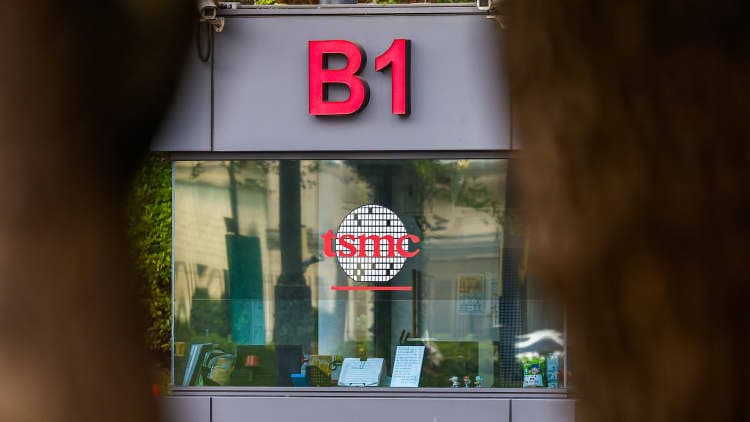
Taiwan currently produces nearly one-third of global demand for new computing power. The Taiwan Semiconductor Manufacturing Company (TSMC) alone fabricates most of the world’s advanced chips, making the island’s central role in the semiconductor supply chain strategically vital for both economic and military applications.
The concept of the “Silicon Shield” has emerged to describe Taiwan’s strategic position. The theory suggests that Taiwan’s indispensable role in producing advanced semiconductors acts as a deterrent against potential Chinese aggression, as any conflict would disrupt global supply chains and cause massive economic disruption.
However, experts have raised serious doubts about the feasibility of achieving the 40 percent reshoring target within the timeframe suggested by U.S. officials. Tech industry analyst Bob O’Donnell described Washington’s claims as “exaggerations” aimed at boosting confidence in the momentum toward U.S. manufacturing.
“Most people don’t really understand how complicated the supply chains in semiconductors are, and so they make unrealistic estimates as to how quickly they can be moved and changed,” said O’Donnell, founder of TECHnalysis Research. “The logistics and complexity of the industry mean such a goal could take years, if not decades, to achieve.”
Taiwan’s N-2 Rule and Technological Gap
Taiwanese authorities have implemented strict policies to maintain their technological edge. Under what is known as the N-2 rule, Taiwan restricts TSMC’s overseas fabrication plants from operating technologies that are at least two generations behind those developed domestically.
This policy ensures that Taiwan retains its advantage in the most advanced semiconductor manufacturing processes. While TSMC produces its most advanced chips using 2-nanometer technology at home, its Arizona plant has only recently begun producing advanced 4-nanometer chips for U.S. customers. The company plans to scale up to 2-nanometer and A16 nodes by 2030, but this creates a significant technological lag.
In semiconductor manufacturing, smaller nanometer sizes indicate denser transistors, which boost processing speed and improve energy efficiency. The four to five-year lag between Taiwan’s domestic capabilities and U.S. production ensures Taiwan retains its competitive advantage for the foreseeable future.
Sravan Kundojjala, an analyst at SemiAnalysis, said Taiwan’s “silicon shield” will remain strong through the end of the decade, with the world’s most critical advanced capacity concentrated on the island.
TSMC Chief Financial Officer Wendell Huang emphasized that the company will continue developing its most advanced technologies in Taiwan due to the need for “very intensive collaboration” between domestic research and development teams and manufacturing operations.
“We’ll be sending hundreds of engineers back and forth different sites in Taiwan. Therefore, it will stay in Taiwan when we ramp up the most leading-edge technology,” Huang explained.
Structural Challenges to US Onshoring
Shifting chip production away from Taiwan faces significant structural challenges that go beyond policy agreements. Taiwan has developed a highly specialized semiconductor ecosystem that includes engineering talent, production capabilities, and supply chain networks that analysts say are “not replicable at scale anywhere else.”
William Reinsch, a senior adviser at the Center for Strategic and International Studies, noted that the lack of trained workers and higher production costs have already led to delays in TSMC’s U.S. plant openings. He expects fulfillment of the pledged investment commitments to take longer than expected and is unlikely to reach the promised levels.
The semiconductor manufacturing process is remarkably complex, taking four to six months and involving more than 500 discrete stages. It requires specialized design software, fabrication plants, and dedicated test facilities. The various inputs to a typical integrated circuit chip must cross more than 70 international borders before a final product can be delivered to consumers.
The United States has seen its share of global wafer fabrication decline sharply from 37 percent in 1990 to less than 10 percent in 2024. Rebuilding this capacity requires not just financial investment but also the development of specialized human capital and supply chain networks.
Building a single advanced fabrication facility, or fab, requires massive capital investment. TSMC estimates that a 3-nanometer fab costs more than $20 billion. These facilities house billions of dollars worth of manufacturing equipment and reflect years of investment and iterative learning before operating at full capacity.
Geopolitical Implications and Regional Perspectives
The semiconductor agreement has significant geopolitical implications beyond economics. Beijing has firmly opposed the deal, with a spokesperson for China’s foreign ministry stating at a news conference that Beijing “firmly opposed any agreements signed between Taiwan and countries that have diplomatic relations with China.” China urged the United States to stick to the “one-China principle.” under which Beijing claims sovereignty over Taiwan.
Chinese state media has been particularly critical of the deal. Peng Qing’en, spokesman for the State Council Taiwan Affairs Office, denounced the agreement as a “complete capitulation” that he claimed sacrifices the interests of Taiwan residents and undermines the island’s industrial development under economic coercion.
Peng warned that relocating about 40 percent of Taiwan’s semiconductor supply chain to the United States would severely weaken Taiwan’s industrial competitiveness and turn the island into a “hollow island.” He characterized the deal as a “sellout pact” and accused Taiwan’s ruling party of misleading the public.
Despite these objections, Taiwan’s government has defended the agreement as a strategic move to build a “democratic” high-tech supply chain with the United States. The deal places Taiwan on equal footing with Japan and South Korea, both of which secured similar trade terms with the United States last year.
Dennis Lu-Chung Weng, an associate professor of political science at Sam Houston State University, noted that the semiconductor ecosystem cannot be relocated overnight, so the silicon shield may weaken but still exist in the near term. He raised an important question about the future of these efforts.
“The bigger question is what happens after Trump: if future U.S. administrations keep pushing for large-scale relocation, Taiwan losing its exclusive advantage becomes less a question of if and more a question of when,” Weng cautioned.
TSMC’s Expanding US Presence
The world’s largest contract chipmaker has already pledged to invest $165 billion into chip fabrication and processing facilities in the United States, along with a research and development lab. These facilities supply major customers including Nvidia and Apple.
TSMC’s Arizona expansion represents the most visible aspect of this broader shift. The company has announced plans to construct three new fabrication facilities featuring its most advanced process nodes, two advanced packaging plants, and a research and development center in Arizona. The total investment has been described as reaching $100 billion on top of the company’s existing commitments.
However, this expansion has not been without challenges. Reports indicate difficulties in finding qualified engineers and adapting to different labor practices in the United States. These challenges highlight the broader difficulty of transferring highly specialized manufacturing capabilities across different regulatory and cultural environments.
The agreement includes specific provisions to support this expansion. Taiwanese companies building new U.S. semiconductor capacity may import up to 2.5 times that planned capacity without paying Section 232 duties during the approved construction period. After completion, companies can import 1.5 times their new U.S. production capacity without paying duties.
Strategic AI Partnership and Broader Implications
Beyond semiconductors, the agreement aims to form a strategic partnership in artificial intelligence. Taiwan and the United States have agreed to collaborate on building world-class industrial parks in the United States to strengthen America’s industrial infrastructure and position it as the global center for next-generation technology.
The deal also facilitates U.S. investment in Taiwan’s semiconductor, AI, defense technology, telecommunications, and biotechnology industries. This two-way flow of investment and technology cooperation represents an attempt to create deeper economic integration between the two economies.
Ava Shen, a Taiwan and Chinese foreign policy expert at Eurasia Group, noted that a Chinese invasion of Taiwan remains a low-possibility event, and the trade deal is unlikely to change Beijing’s calculus. She suggested that mainland authorities would focus more on their military balance vis-a-vis the United States and the level of American defense support for Taipei.
The broader concern for policymakers is how to balance economic integration with security considerations. The semiconductor industry has become so strategically important that it is now treated as a matter of national security by major powers, complicating traditional trade relationships.
Wu Cheng-wen, who oversees Taiwan’s National Science and Technology Council, has stressed that it is crucial for Taiwan to keep its cutting-edge research and development at home and ensure that the domestic industry would not be “hollowed out.”
“If we move our R&D overseas, it’ll be dangerous for us,” Wu said in an interview with the Financial Times last year.
The Path Forward for Semiconductor Supply Chains
The U.S.-Taiwan agreement represents one of the most ambitious attempts to reshape global semiconductor supply chains in decades. However, the success of this effort will depend on multiple factors beyond simple investment commitments.
Brookings Institution researchers have emphasized that successful U.S.-Taiwan tech collaboration requires attention to talent pipeline cultivation and retention. The industry foresees a great global shortage of engineering talent from upstream to downstream, and both countries face challenges in attracting enough students to science, technology, engineering, and mathematics fields.
Federal funding must be allocated to create training programs and scholarships to attract more students to study in this field. Exchange programs and on-the-job training and research projects must be established between the United States and Taiwan to address this gap.
The semiconductor supply chain is remarkably complex, segmented, and international. Individual integrated circuit chips with millions or even billions of transistors squeezed onto a square inch or less of silicon underpin nearly all facets of contemporary technology. The intricacy extends to their production process, which takes months and involves hundreds of discrete stages.
Given this complexity, some experts argue that policy should aim to grow a healthy and resilient semiconductor ecosystem in which allies and partners continue to play a key role, rather than seeking complete self-sufficiency.
The Bottom Line
- The United States and Taiwan signed a trade agreement committing $250 billion in direct Taiwanese investments and $250 billion in credit guarantees for U.S. semiconductor, energy, and AI production.
- Tariffs on most Taiwanese exports to the U.S. will decrease from 20% to 15%, with zero tariffs on generic pharmaceuticals, aircraft components, and certain natural resources.
- Commerce Secretary Howard Lutnick stated the goal is to bring 40% of Taiwan’s semiconductor supply chain to the U.S., though experts call this timeline unrealistic.
- Taiwan’s N-2 rule requires overseas plants to remain at least two generations behind domestic technology, preserving the island’s technological advantage.
- TSMC has pledged $165 billion in U.S. investments, including an Arizona “gigafab cluster” with multiple plants and a research center.
- Analysts emphasize that Taiwan’s semiconductor ecosystem and engineering talent cannot be replicated at scale elsewhere in the near term.
- China opposes the deal as a violation of the “one-China principle” and has criticized it as a “sellout” that weakens Taiwan’s industrial base.
- The semiconductor manufacturing process involves more than 500 stages and can take four to six months, making rapid supply chain shifts difficult.
- Taiwan currently produces nearly one-third of global demand for new computing power, with TSMC fabricating most advanced chips.
- Experts predict Taiwan’s “silicon shield” will remain strong through the end of the decade despite increased U.S. investment.