A Nation in Transformation
Japan is moving toward a 10 percent foreign population far faster than official projections predicted, with dozens of municipalities already crossing the threshold and one village reporting that more than a third of its residents are foreign nationals. A national research institute has estimated that foreigners will account for 10.8 percent of Japan’s population by 2070. But an analysis of Basic Resident Register data shows the shift is already well under way at the local level. As of January 2025, 27 municipalities had foreign resident ratios above 10 percent, led by the village of Shimukappu in Hokkaido at 36.6 percent.
- A Nation in Transformation
- The Local Reality: Where Foreigners Are Concentrated
- The Labor Market: Why Foreign Workers Are Essential
- Policy Evolution: From Training to Employment
- Political Tensions: National Identity vs. Economic Reality
- Integration Challenges: Beyond Numbers
- Technology vs. Immigration: Competing Solutions
- The Path Forward: What Japan Must Decide
- Key Points
This demographic transformation represents a profound change for a country long defined by ethnic and cultural homogeneity. The trend suggests the nationwide transition could arrive much earlier than forecast, raising fundamental questions about how daily life will change in communities across Japan. The accelerating foreign population growth is not merely a statistical curiosity but a reflection of deeper economic and social forces reshaping the nation.
According to statistics, the number of foreign residents nationwide stood at 3.76 million at the end of 2024, up 350,000 from the previous year, marking the largest annual increase on record. This growth trajectory has put Japan on pace to reach the 10 percent foreign population threshold around 2040, roughly 30 years earlier than official government estimates.
The current surge represents Japan’s third major expansionary phase in foreign population growth. Until the 1960s, Japan’s foreign population generally hovered around 600,000. Numbers rose more clearly after a 1990 revision of the Immigration and Refugee Act allowed people of Japanese descent to live in Japan as permanent residents. After falling following the global financial crisis and again during the COVID-19 pandemic, the foreign population is now entering what demographers call its third expansionary phase, characterized by unprecedented growth rates and diversification of national origins.
The Local Reality: Where Foreigners Are Concentrated
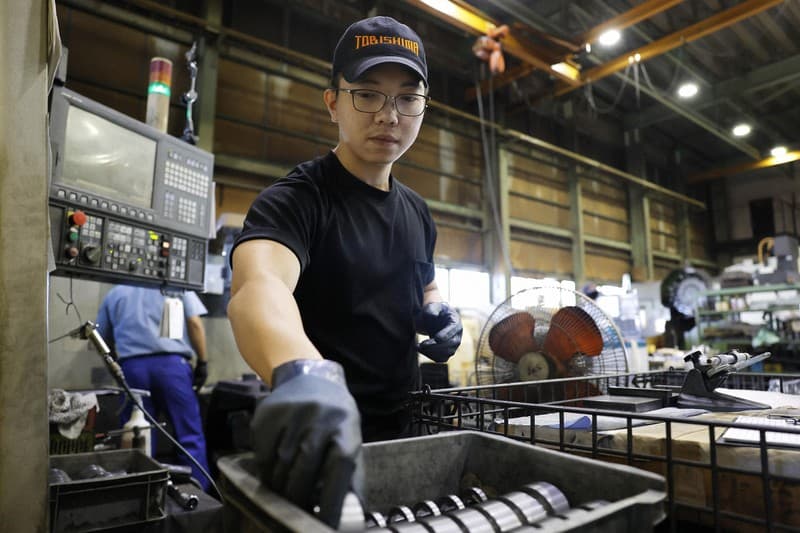
The distribution of foreign residents across Japan reveals a pattern shaped by economic opportunity rather than random settlement. High concentrations of foreign residents are clustered in industrial and tourist areas, as well as communities with long-established foreign populations. In Tobishima in central Japan’s Aichi Prefecture, a community of 4,713 overlooking Ise Bay, foreign residents numbered 501 as of January last year, accounting for 10.6 percent of the population.
On weekday evenings, foreign workers in uniforms cycle through the village. On weekends, nearly half the passengers on local buses are foreign nationals. Residents say the increase has accelerated over the past few years. Many foreign workers are employed at factories under Japan’s technical intern training or specified skills programs, filling labor shortages at small and midsize businesses. Others work in used car sales.
Reactions among residents vary significantly. A 54-year-old female farmer said foreign residents cheerfully help with garden work and work hard, while a 78-year-old male farmer said he has noticed no particular problems despite their rapid increase. Others remain cautious. Some residents complain that foreign drivers ignore traffic rules. A 75-year-old self-employed woman said she appreciates their labor but worries the number of people unfamiliar with Japanese customs will grow, while an 83-year-old woman said the sudden changes in her surroundings leave her feeling uneasy.
Shimukappu, home to the Tomamu resort area, recorded 582 foreign residents out of a population of 1,590. Five other municipalities had foreign resident ratios above 20 percent, including the Hokkaido village of Akaigawa, the town of Kutchan in Hokkaido, Ikuno Ward in Osaka, and the town of Oizumi in Gunma Prefecture. In contrast, two villages, including Nishimeya in Aomori Prefecture, reported zero foreign residents, highlighting the uneven nature of this demographic shift.
The Corporate Perspective
Near Nagoya Port, beyond a stretch of warehouses and factories, the Tobishima Seisakusho manufacturing plant operates amid quiet farmland. The company produces parts for refrigeration and cooling equipment. Four of its 21 employees are Vietnamese nationals working under technical internship or specified skills visas. Company president Hideki Ito, 73, said their presence is essential.
“They’re a valuable asset, a treasure,” Ito said. “If they were to quit, the company couldn’t survive.”
Ito said younger Japanese residents have moved to cities, leaving local employers struggling to recruit. Even when Japanese workers are hired, some leave within a year. “Considering the company’s future, having young Japanese workers would be much more preferable, but that’s simply not feasible. We had no choice,” said Ito. The company began accepting Vietnamese workers in 2017 after hearing of their diligence through word of mouth and gradually increased their numbers. Pay and bonuses are almost the same as for Japanese employees, he said.
The four workers live together on company premises. Nguyen Manh Ha, 28, has worked at the company for about six years. He sends 120,000 to 150,000 yen a month to his family in Vietnam, spending about 20,000 to 30,000 yen on himself.
“I enjoy my work,” Ha said. “If possible, I would like to work in Japan forever.”
The Labor Market: Why Foreign Workers Are Essential
Japan’s accelerating foreign population growth is fundamentally driven by economic necessity. Japan’s labor shortage is expected to intensify dramatically in the coming decades. The working-age population aged 15 to 64 is projected to decline by 15 million between 2020 and 2040. Even a sudden reversal in the falling birthrate would not be sufficient to offset this shortfall.
According to research by the Japan International Cooperation Agency, Japan will need 4.19 million migrant workers in 2030 to sustain economic growth. However, at the current rate of increase in migrant workers, the country will still face a shortfall of 770,000 workers. Worldwide, labor shortages cost the 30 largest economies an estimated $1.3 trillion in lost GDP yearly.
Japan has historically been among the OECD countries with the lowest migration flows relative to its population. However, the situation has changed significantly in the past few years. To counteract the impact of rapid population ageing on the labour market, Japan has introduced major policy changes in the governance of recruitment from abroad.
Favourable conditions in the Japanese labour market explain a large part of the increase in labour migration. The unemployment rate has remained low for the past 15 years, and vacancies per applicant hit a 45-year high in fiscal year 2018. Moreover, to address the challenge of a rapidly ageing population, labour migration is now considered one of the policy options, together with long-standing efforts to increase productivity growth and the labour supply of domestic residents.
The World Economic Forum’s Future of Jobs Report 2023 finds that only 35% of companies prioritize workers aged over 55. Japan is getting ever greyer. More than 1 in 10 people in the country are now aged 80 or older, according to the latest national data. Almost a third of its population is over 65, an estimated 36.23 million. And there are more people than ever blowing out 100 birthday candles. Japan consistently has the oldest population in the world.
The Economic Stakes
The implications of Japan’s demographic shift extend far beyond factory floors and construction sites. In 2020, the International Monetary Fund predicted that “the ageing and shrinking population will strain Japan’s public finances, as age-related spending such as on healthcare and pensions rises while the tax base shrinks.” Despite its ageing population, Japan still has the second-largest GDP of the G7 countries. But Prime Minister Fumio Kishida said in January 2023 that “Japan is standing on the verge of whether we can continue to function as a society,” facing as it does the twin threats of falling birth rates and an ever-increasing elderly population.
Japan is already facing a labour shortage, and by 2040 it could be short of 11 million workers, a recent study found. This led the government to introduce the Guideline of Measures for Ageing Society in 2018, to encourage older people to continue in the workforce. In 2022, almost half of Japanese firms relied on workers over the age of 70. Globally, meanwhile, only 35% of companies prioritize workers aged over 55.
With technology and digitalization also in the mix, Prime Minister Kishida pledged $7.6 billion earlier in 2023 to train workers for more high-skilled jobs in the next five years. But some experts say that, without relaxing the country’s strict immigration laws, filling that labour gap will be a slow burn.
Policy Evolution: From Training to Employment
Japan’s approach to foreign labor has evolved significantly over the decades, moving from restrictive policies to increasingly open frameworks that acknowledge the country’s dependence on foreign workers. Modern Japanese immigration policy traces its roots to the Immigration Control and Refugee Act of 1952, implemented following the U.S. occupation, and a subsequent revision in 1990.
The immigration system permits a variety of work-related visas, including categories such as professor, journalist, specialist in the humanities, and entertainer. There are also a number of family-related categories, including dependent, spouse of a Japanese national, and spouse of a permanent resident. Most visa categories are uncapped, allowing for some flexibility in the number of foreign nationals admitted in a given year.
Japan’s migration policy has historically focussed on accepting skilled migrants and attracting international students. Most skilled immigrants migrate to Japan under a single programme, Engineers/Specialists in Humanities/International Services, which encompasses a wide range of eligible occupations, such as engineers, architects or translators.
For lower skilled occupations, Japan historically had no labour migration channels. The Technical Intern Training Programme (TITP), first created in the 1960s for skills development and transfer back to developing countries, expanded over time and became the main programme through which firms could employ low and medium skilled foreign workers. Trainees are primarily employed in manufacturing, construction and agriculture, and their stay in Japan is limited to five years at most.
The Training and Employment System
On 14 June 2024, the National Diet passed a law renaming the Technical Intern Training Program to the Training and Employment System (TES), following domestic and international criticism. Under the previous system, technical intern trainees signed contracts before coming to Japan but were prohibited from changing employers once they arrived. This restriction, while intended to support training, was widely criticised as a violation of the ‘freedom of occupational choice’.
The Ministry of Health, Labour and Welfare reported that 70 per cent of the 9,829 workplaces inspected, following consultations and reports from interns, violated labour standards. The Japanese government has since redefined the new TES to focus on both cultivating skilled workers and ensuring their long-term retention. The revised system relaxes restrictions, allowing workers to switch employers within the same field after one to two years of employment.
The Specified Skilled Worker Programme (SSWP) was introduced in 2019 to create a potentially long-term pathway for migrants with trades qualifications in specific sectors, including those most affected by demographic structural changes, such as nursing care. The programme has two tiers, with the second tier open to workers with a higher skill level and offering family reunification and a pathway to permanent residency.
Foreign workers who advance to the ‘Specified Skilled Worker (Type Two)’ program can bring their families to Japan, with unlimited residency renewals and the possibility of permanent residency. But as of March 2024, this program applies to only 15 designated fields, such as electronics, information, construction and agriculture. Most of these are unviable for trainees, with caps on foreign workers in each field under the TES.
Political Tensions: National Identity vs. Economic Reality
The rapid demographic shift is fueling intense political debate in Japan. Prime Minister Sanae Takaichi’s coalition government with the Japan Innovation Party has called for tighter controls on foreigners. In a policy speech, she said illegal activity and rule-breaking by some of them had created public anxiety and a sense of unfairness.
Takaichi advocates for foreign workers in specified fields where the country has labour shortages, albeit under strict criteria such as Japanese language ability, training and oversight. And she opposes the mass settlement of immigrants, or the large-scale granting of political rights to foreign residents. While her policies have so far been short on detail, she has framed foreigners as a danger to national cohesion that needs to be strictly controlled.
This political tension reflects deeper contradictions in Japanese society. Japan retains a strong perception of ethnic and cultural homogeneity, and immigration remains resoundingly unpopular according to public opinion polls. Yet demographic realities are forcing policymakers to court immigrants as potential solutions, or at the very least mitigating factors, to address some of the economic problems resulting from aging.
In July last year, then Justice Minister Keisuke Suzuki said Japan should assume the foreign population will exceed 10 percent by around 2040, roughly 30 years earlier than the institute’s estimate. The Japanese government plans to conduct a comprehensive review of its immigration policies, including the potential implementation of caps. This move comes as the nation observes a rapid increase in its foreign resident population.
A newly established task force will undertake surveys to assess the societal impacts of this demographic shift, with the findings intended to inform future policy decisions. The report highlights concerns about preventing social divisions between foreign nationals and citizens, drawing parallels to issues observed in other developed Group of Seven nations. The possibility of imposing limits on foreign immigration will be considered if signs emerge of social friction exceeding acceptable levels.
Public Attitudes and Perceptions
Academic research reveals complex patterns in Japanese public attitudes toward immigration. In a survey experiment with 1,000 Japanese voters, researchers evaluated the impact of exposing participants to demographic data on aging and its implications. The prime results in a 10-percentage-point increase in immigration support for the treatment group. Younger, urban respondents responded positively and elderly and rural respondents reacted less positively.
Follow-up interview-based fieldwork reveals that restrictionist subgroups view a shrinking population as vulnerable to increased immigration, whereas other participants are less concerned with identity issues and more concerned with economic competitiveness. Taken together, this research provides a new understanding of Japan’s unique perceptions of immigration policy relative to peer countries.
While previous governments have acknowledged the declining population is a significant problem, they have done little to address the issue. Various initiatives have brought foreign residents or workers into the country, but there has been a reluctance under LDP governments to introduce programs with the scale and commitment, in terms of integrating immigrants into Japanese society, to make a significant difference. This means these programs have had only modest success.
Japan’s number of foreign-born residents reached a record high of 3.6 million this year, representing around 3% of the population. But this is far lower than many other developed economies. This increased foreign population has resulted in a record number of “foreign” babies being born in Japan, with Chinese, Filipino and Brazilian mothers topping the list. This has somewhat offset the declining figures for newborns from Japanese parents.
Integration Challenges: Beyond Numbers
As more municipalities pass the 10 percent mark, questions about how Japan accepts and integrates foreign residents are shifting from long-term projections to immediate policy choices. The Japanese government has struggled to provide a clear path to long-term employment for foreign workers, prompting some municipalities to adopt their own integration measures.
Integrating into Japanese society remains a challenge for migrants. Japan has only recently started developing an integration policy to support labour migrants. However, high-skilled migrants who choose to migrate to Japan tend to stay in the country long term. International students are a key resource targeted by Japan’s strategy to attract and retain global talent. Most skilled labour migrants in Japan first entered the country as international students.
Without strong national support or regulation, some municipalities, like Kawasaki and Hamamatsu, are leading efforts in developing policies to address the growing number of long-term non-citizen residents. These cities are working to resolve issues including cultural friction, ethnic discrimination and job discrimination.
Municipal Leadership in Integration
Kawasaki highlights how Japan’s colonial past has shaped postwar ethno-racial inequalities experienced by Korean residents. Many younger Japan-born Koreans have settled permanently and engage in grassroots politics to address their experiences of discrimination. Immigrants from other countries have also continued to make Kawasaki their home.
As of March 2024, the city’s foreign population is about 50,000, including 17,000 Chinese nationals, 5900 Vietnamese, 5400 Filipinos and 7600 Koreans. The Kawasaki City Representative Assembly for Foreign Residents (KCRA) was established in 1996, shifting non-citizen activism from mere community membership to active participation in decision-making. In 2019, the KCRA revised its appointment and recruitment rules to reflect the changing composition of the foreign resident population.
The forum serves to advise the mayor on foreign residents’ perspectives on issues. The KCRA has proposed 49 policy measures addressing concerns like housing discrimination, hate speech regulations, restrictions on welfare pensions for non-citizen elderly, limited university access and insufficient public information in foreign languages.
Hamamatsu, a major manufacturing hub, has a growing population of foreign residents. As of September 2024, the city’s foreign resident population is around 30,000, including Brazilian, Vietnamese, Filipino, Chinese and Korean nationals among others. Nearly half of these foreign residents have lived in Hamamatsu for over 15 years.
One initiative that sets Hamamatsu apart is the Council of Municipalities with Large Migrant Populations (CMLMP), established in 2001. This inter-city network, which expanded to 15 municipalities by 2021, creates a bridge between national ministries and local actions, fostering cooperation information sharing between municipalities. The CMLMP has lobbied business leaders and national agencies to protect foreign residents’ rights, while also functioning as a hub for policy innovation and collaboration among its members.
Technology vs. Immigration: Competing Solutions
While Japan has increasingly turned to foreign labor to address demographic challenges, the country is also pursuing technological solutions that could reduce reliance on immigration. Japan’s extreme demographic aging and shrinking is an economic and societal challenge, but also a technological opportunity for global leadership.
Technological trajectories of worker automation and worker skill augmentation within Japan are already being shaped by the country’s demographics. Software, robotics, and other technology deployments are transforming the nature of work in a wide range of sectors in Japan’s economy, and across types of work such as blue-collar, white-collar, agriculture, manufacturing, and services.
The demographically driven technological trajectories cluster around two contrasting paradigms: automation of work and augmentation of worker skills. Automation is typically framed in most global discussions as removing workers from tasks and jobs, which can risk eliminating far more jobs than job seekers, but in Japan’s case, automation is more an answer to labor shortages. There are no longer sufficient people to perform needed work.
Augmentation is about enhancing the capabilities of people, whether through increasing efficiency or upskilling, allowing workers without specialized skills to perform specialized tasks. Artificial intelligence (AI)-driven software technologies, coupled with hardware, human assistive robotics, and automated systems of all manner, are being developed and implemented across all types of work.
The Limits of Technological Solutions
While automation and robotics offer some relief, experts caution that technology cannot fully replace human labor in all sectors. The International Monetary Fund notes that while automation will eliminate very few occupations entirely in the coming decades, it is likely to have an impact on portions of almost all jobs to some degree, depending on the type of work and the tasks involved.
Set to move beyond routine and repetitive manufacturing activities, automation has the potential to appear in a much broader range of activities than seen until now, and to redefine human labor and work style in services and other sectors. In Japan, the rapid decline in the labor force and the limited influx of immigrants create a powerful incentive for automation, which makes the country a particularly useful laboratory for the study of the future landscape of work.
Empirical evidence suggests that contrary to fears for the worst, automation and increased use of robotics have had an overall positive impact on domestic employment and income growth in Japan. IMF staff calculations found increased robot density in manufacturing to be associated not only with greater productivity, but also with local gains in employment and wages. Notably, these findings, which exclude crisis periods, are the opposite of results of a similar exercise based on US data.
It appears that Japan’s experience may differ significantly from that of other advanced economies. Japan’s progress in automation, use of robots, and integration of artificial intelligence with daily living is likely to move at a faster pace than in many other advanced economies for several reasons: a shrinking population and the more rapidly shrinking workforce, an aging population creating substantial labor needs in health and eldercare that cannot be met by native workforce entrants, and declining quality of services as labor shortages erode quality.
The Path Forward: What Japan Must Decide
Japan stands at a crossroads, facing difficult choices about how to manage its demographic future. While automation and artificial intelligence offer some relief, reliance on foreign labor is expected to continue as no single solution can address the full scope of Japan’s demographic challenges.
Others argue coexistence is unavoidable. Tsukasa Sasai, a demography professor at Fukui Prefectural University, said Japan can no longer function without foreign residents.
“Japan is already a society that cannot survive without coexistence with foreigners,” Sasai said. “Creating an environment where foreigners can successfully establish themselves as part of the workforce would offer significant benefits to Japanese society.”
The Japanese government must adopt a strategic immigration policy that addresses labour market needs and also aligns with the nation’s demographic goals in response to its declining population. Equally important, it must implement measures to better integrate foreign residents into society, in accordance with international norms and treaties.
The state’s failure to effectively manage international migration has left local authorities to act as immediate responders, providing security and support to both local and foreign residents. Despite this, successive prime ministers have stated they have ‘no intention of adopting what is commonly referred to as an immigration policy’.
Toward a Comprehensive Strategy
What appears to be happening instead of explicit immigration policy is a concerted effort to improve immigrant retention and boost recruitment incrementally under existing immigration policy, resulting in a gradual increase in numbers while avoiding a potentially contentious public referendum. However, this incremental approach may no longer be sufficient given the pace of demographic change.
To serve as a viable solution for Japan’s aging, immigrants would need to make up at least 10 percent of the overall population by some estimates, an unfeasibly large number by most accounts given the strong preference that remains for ethnic and cultural homogeneity and the public backlash that would likely ensue.
Should the government continue working to gradually increase the foreign population without explicitly saying so, there will likely come a tipping point where the public takes note and holds the government accountable. If increased immigration to Japan is indeed a foregone conclusion, the government will need to make its case to the Japanese public.
The broader question is not whether Japan’s foreign population will grow, but how the country will adapt to this new reality. The municipalities that have already passed the 10 percent threshold offer valuable lessons in both the challenges and opportunities of integration. Their experiences suggest that successful integration requires not just policy changes but a fundamental shift in social attitudes and community structures.
Japan’s demographic trajectory is fixed for the coming decades. The only variable is how the country responds. The choice is not between immigration and maintaining homogeneity, but between managed integration and social friction. The villages and cities already navigating this transition are showing that coexistence is not only possible but potentially beneficial, provided it is approached with careful planning and cultural sensitivity.
Key Points
- 27 Japanese municipalities now have foreign resident ratios above 10%, with Shimukappu village in Hokkaido leading at 36.6%
- Foreign population reached 3.76 million at end of 2024, up 350,000 from previous year, marking largest annual increase on record
- Japan’s working-age population (15-64) projected to decline by 15 million between 2020 and 2040
- Foreign population expected to reach 10% of national total by 2040, 30 years earlier than official projections
- Technical Intern Training Program renamed to Training and Employment System in 2024 following criticism
- Specified Skilled Worker Program offers pathway to permanent residency for qualified workers in 15 designated fields
- Cities like Kawasaki and Hamamatsu developing their own integration policies amid limited national support
- Prime Minister Takaichi’s government advocating for tighter controls while businesses demand more foreign workers
- Japan will need 4.19 million migrant workers by 2030 to sustain economic growth according to research estimates