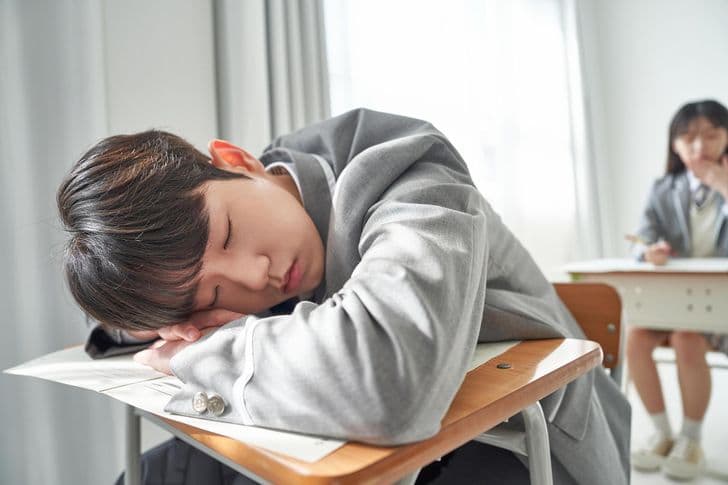
A Nation of Exhausted Students
A recent report by the National Youth Policy Institute paints a stark picture of life for high school students in South Korea. The study reveals that nearly half of all high schoolers sleep less than six hours a day. This statistic highlights a growing crisis where the drive for academic success comes at the expense of basic physiological needs. The survey, which included 2,258 high school students across the country, found that the average sleep duration is just six hours. This figure stands in sharp contrast to the eight to ten hours recommended by medical professionals for adolescents.
The data indicates that 46.7 percent of students at general high schools sleep fewer than six hours daily. Breaking down the numbers further, 29.7 percent get between five and six hours, while 17 percent survive on less than five hours of rest. Only 5.5 percent of respondents reported achieving the recommended eight hours or more. The sleep deficit is not a minor inconvenience but a widespread systemic issue affecting the majority of the student population.
The consequences of this chronic sleep deprivation extend far beyond simple fatigue. The report draws a direct line between the lack of rest and severe mental health struggles, including high rates of suicidal ideation and depression. As the country grapples with the implications of these findings, questions arise about the sustainability of an education system that demands such extreme sacrifices from its youth.
The Driving Force Behind Sleep Loss
While many factors can contribute to poor sleep, the primary driver for South Korean students is unequivocally academic pressure. The survey asked students to identify the reasons for their lack of sleep, and the overwhelming response centered on studying. Studying at home, which includes watching online lectures and completing homework, was cited by 25.5 percent of students as the main reason they stay up late. This was followed by attendance at private academies and tutoring, known locally as hagwons, at 19.3 percent. Another 13.4 percent pointed to late-night self-study sessions held at school.
These findings are supported by broader academic research into the lifestyle of South Korean adolescents. Studies published in peer-reviewed journals confirm that academic demands and late-night studying play a predominant role in sleep deprivation. Unlike in many Western countries where social activities or screen time might be the primary disruptors, students in South Kong face a unique environment where the school day effectively extends well into the evening.
reliance on private education is a key component of this phenomenon. Research indicates that the complex and frequently changing college admissions policies in South Korea make it difficult for public schools to adequately prepare students. Consequently, families feel compelled to invest heavily in private tutoring. This creates a cycle where students spend hours in regular school, followed by hours in private academies, only to return home for more homework and independent study.
The Financial and Familial Toll
The commitment to academic excellence imposes a significant financial burden on households. Data shows that families allocate a substantial portion of their income to private education. In some cases, this spending accounts for nearly one-third of household disposable income. This financial stress adds another layer of pressure on students, who may feel a crushing weight of expectation to succeed and justify the expense.
Mental Health at a Breaking Point
The physical toll of sleep deprivation is serious, but the psychological impact is even more alarming. The National Youth Policy Institute report found that 30.5 percent of general high school students had experienced suicidal thoughts. Among those who contemplated suicide, 46.4 percent cited grades and academic pressure as the primary reason. Anxiety about their future career path was the second most common factor, mentioned by 25.2 percent of respondents.
These rates are disturbingly high compared to the general adult population. When comparing students to adults, the rates of suicidal ideation among students are nearly ten times higher. The survey also revealed that nearly one in five students, 19.5 percent, described themselves as “not happy.” Again, academic stress was the leading cause of this unhappiness. More than half of the respondents, 54.9 percent, pointed to grades and studying as the biggest source of their distress.
“A lack of sleep makes it more difficult to regulate emotions, particularly among adolescents whose brains are still developing,” said Suh Soo-yeon, a professor of psychology at Sungshin Women’s University. “Sleep is directly related to cognitive function. Insufficient sleep can impair concentration and memory, affecting the students’ abilities to make decisions.”
The mental health strain is leading some students to disengage entirely. The survey found that 38.7 percent of general high school students had considered dropping out of school. The reasons given paint a picture of profound burnout. The most common response was feeling too tired or unmotivated, cited by 25.1 percent of students. This was followed by a lack of desire to study and poor grades.
A Tale of Two School Systems
The report highlights a significant disparity between general high schools and vocational high schools. Students at vocational schools, who often face less intense academic pressure, reported markedly better mental health outcomes. The rate of suicidal ideation among vocational students was 23.3 percent, which is 6.2 percentage points lower than their peers in general high schools.
Even more telling is the difference in why these students contemplate suicide. Among vocational students, only 23.6 percent cited academic pressure as the reason, compared to 46.4 percent for general high school students. This 22.8 percentage point gap suggests that the intense focus on college entrance exams and grades in general high schools is a specific and damaging stressor. The data implies that the educational environment itself, rather than adolescence in general, is a major determinant of mental well-being.
The Biological Battle: Circadian Rhythms and Technology
Part of the challenge lies in the biological reality of adolescence. Medical experts explain that teenagers experience a shift in their circadian rhythm, often referred to as a sleep-phase delay. This biological change makes it difficult for teens to fall asleep before 11 p.m. However, the South Korean education system often requires students to start their day early, compounding the sleep deficit.
Research from sleep medicine experts indicates that when teens are forced to wake up early, they lose out on critical dream-rich, rapid-eye-movement sleep. This stage of sleep is vital for emotional regulation and cognitive processing. The conflict between a student’s biological clock and their school schedule creates a state of chronic sleep debt that is difficult to recover from.
Technology serves as a compounding factor. Nearly 30 percent of adolescents in South Korea are classified as high-risk or at-risk smartphone users. The blue light emitted by screens can delay sleep onset further, while the constant connectivity provides endless distractions that keep students awake. The combination of late-night study sessions and high smartphone dependency creates a perfect storm for sleep deprivation.
Systemic Causes and Policy Challenges
The root of the problem is deeply embedded in the structure of the education system and the college admissions process. South Korea is often described as an “exam republic,” where a degree from a top university is seen as the primary path to social mobility. This fierce competition drives the demand for private education and late-night study sessions.
Efforts by the government to reform the system have sometimes had unintended consequences. Policies intended to reduce the role of private education or make admissions fairer have often resulted in more complex requirements. Students now face multiple admission tracks, each demanding different preparation. This complexity forces students to prepare for every possible scenario, increasing their workload rather than decreasing it.
Frequent changes in educational policy have also created confusion. Without a stable and predictable system, students and parents feel they must cover all bases, leading to an overload of academic activities. The public school system is often viewed as insufficient for navigating these complex admissions requirements, further driving students into the private education market.
Seeking Solutions and a Path Forward
Addressing this crisis will require more than minor adjustments. Experts suggest that a multi-faceted approach is necessary. One potential structural change involves school start times. Research shows that delaying school start times can improve sleep duration and lead to better academic and mental health outcomes. Some schools in other countries that have shifted start times later have seen reduced rates of depression and improved attendance.
In South Korea, authorities pushed back school start times in 2015 to encourage family interaction and combat sleep deprivation. However, the persistence of high sleep deprivation rates suggests that later start times alone are not enough. The sheer volume of study required, both at school and in private academies, continues to encroach on sleep time regardless of when the morning bell rings.
True change may require a cultural shift regarding the value of sleep and the definition of success. Parents and educators play a crucial role in setting expectations and helping students manage their time. Reducing the stigma around mental health struggles and ensuring students have access to support services are also critical steps.
Experts emphasize that sleep is not a luxury but a biological necessity. Prioritizing rest is essential for cognitive function, emotional stability, and long-term health. As the country continues to excel in international academic rankings, the challenge remains to balance this achievement with the well-being of the students driving it.
The Bottom Line
- Nearly half of South Korean high school students sleep less than six hours a day.
- The average sleep duration for students is six hours, significantly below the recommended eight to ten hours.
- Academic pressure, including homework, private tutoring, and late-night study, is the primary cause of sleep loss.
- Over 30 percent of students have reported experiencing suicidal thoughts.
- Grades and academic stress are the leading reasons cited for unhappiness and suicidal ideation.
- Vocational high school students report better mental health outcomes than those in general high schools.
- Families spend a large portion of their income on private education to support academic goals.
- Biological changes in adolescence make it difficult for teens to fall asleep early, conflicting with early school schedules.
- Smartphone overdependence affects nearly 30 percent of adolescents, further disrupting sleep.
- Complex college admissions policies drive the high workload and reliance on private tutoring.