A $192.2 Billion Shift in China's Global Role
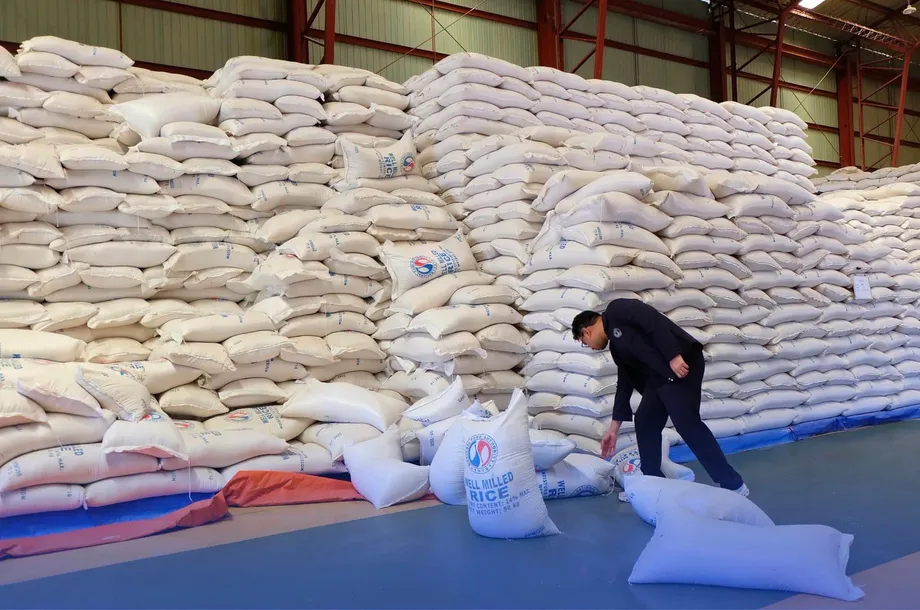
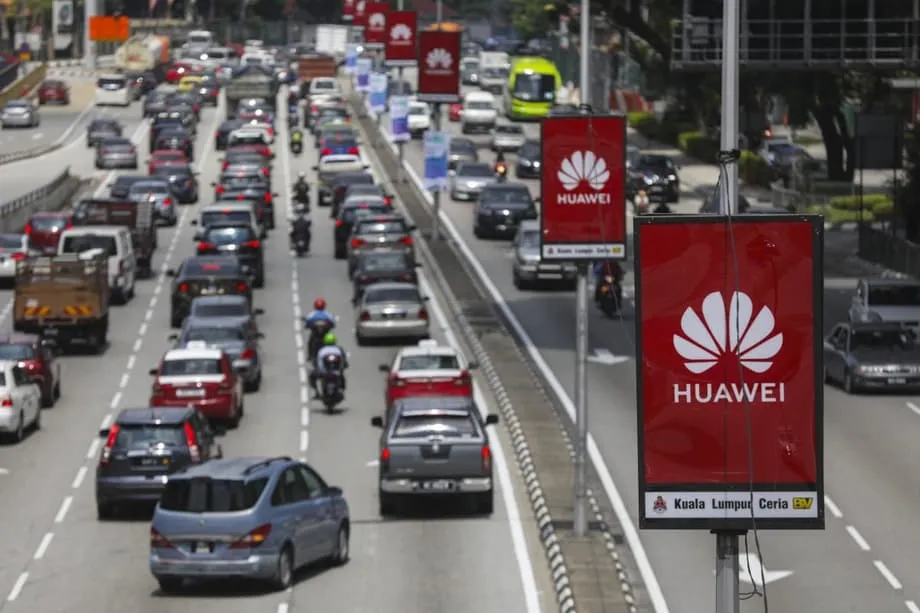
China's overseas direct investment reached US$192.2 billion in 2024, rising 8.4 percent from the previous year and approaching the peaks recorded in 2016. Investment in Southeast Asia climbed 36.8 percent. Chinese companies were increasingly building factories, acquiring resources and financing infrastructure abroad, extending the reach of an economy long known mainly for producing goods for other countries.
Contents
- A $192.2 Billion Shift in China's Global Role
- Why Chinese Companies Are Looking Overseas
- Beijing Backs Investment in Both Directions
- Where China's Overseas Money Goes
- Southeast Asia's Factories and Financial Gateways
- How Overseas Investment Can Expand Yuan Use
- Trade Payments, Lending and the Digital Yuan
- The Dollar's Lead and China's Financial Constraints
- The Policy Tradeoff Behind Capital Controls
- Clean Energy Expands China's Industrial Reach
- What Could Shape the Next Phase
- Key Points
As of January 13, 2026, China had become one of the world's largest exporters of investment capital, with outbound investment exceeding incoming investment in recent years. It had consistently ranked among the top three global investors, following the United States and Japan. Overseas investment remained substantial through 2025, although its growth had moderated compared with previous years.
China's transformation began more than four decades earlier, when opening its economy attracted foreign direct investment, or FDI. Foreign companies brought money, technology and expertise that helped turn an agrarian society into a manufacturing powerhouse and the world's second largest economy. Trillions of dollars of foreign investment supported an export industry that reshaped global supply chains.
Chinese businesses now increasingly make the reverse journey. Outbound direct investment, or ODI, means investing in businesses and operations overseas, such as establishing a factory or buying a company. Expansion across Southeast Asia, Africa and Latin America gives Chinese firms access to customers, resources and production locations beyond their home market.
Beijing's economic ambitions also extend to the currency used in those transactions. More overseas business creates more opportunities to use the yuan, also called the renminbi, for payments and financing. Slower domestic growth, trade tensions and the search for markets are driving investment outward, while capital controls and financial risks shape how far the currency can follow.
Why Chinese Companies Are Looking Overseas
Chinese companies face weaker consumer demand, slower economic growth and fierce competition at home. Growth has fallen from the double digit rates of earlier decades, while crowded markets and price competition have squeezed profits. Businesses facing fewer opportunities and lower returns domestically are seeking new sources of income abroad.
Moody's Ratings said in a June report that this expansion was likely to continue over the next few years as companies diversified their income amid weak domestic demand. It described ODI moving close to the records reached in 2016, with government support adding momentum.
Beijing supports overseas expansion through financial aid, tax subsidies and advisory services. Financial institutions provide preferential lending for overseas projects, while government agencies help companies understand foreign regulations, identify opportunities and manage risks across borders. Lower financing and operating costs make foreign investment more accessible to companies of different sizes.
Trade tensions provide another reason to move production abroad. Tariffs and restrictions in the United States and other Western economies have exposed Chinese exporters to higher costs and uncertainty. Establishing factories in third countries gives manufacturers another route to customers in North America and Europe, with the aim of avoiding barriers affecting exports directly from China. This strategy is often called tariff jumping.
Southeast Asia's 36.8 percent increase in Chinese investment in 2024 reflected that search for alternative production locations. Much of the activity was concentrated in manufacturing serving Western markets. Geographic proximity, cultural connections and expanding local markets also made the region attractive.
Beijing Backs Investment in Both Directions
The Communist Party's Central Committee reinforced overseas investment as a policy priority at its fourth plenum in October 2025. The gathering set the direction for economic policy over the following five years, pledging to safeguard the multilateral trade system and expand investment cooperation in both directions.
Beijing's approach combines support for Chinese companies going abroad with efforts to attract foreign investment into China. Financial assistance, tax incentives, advice and diplomatic backing form part of that approach. Companies gain help with both the cost of establishing operations and the practical difficulties of working under another country's rules.
The Belt and Road Initiative, or BRI, has also supported China's overseas expansion. It began with large infrastructure ambitions and substantial loans to developing countries. Since 2017, annual BRI disbursements have declined considerably, with financing now consisting almost exclusively of lightly subsidized loans supporting Chinese companies building infrastructure overseas.
This change reduces China's financial exposure while continuing to support its companies and economic relationships with partner countries. The emphasis has moved toward helping businesses carry out foreign projects rather than maintaining the earlier scale of lending.
Several dates help explain how investment policy and currency policy developed together:
- 2015 and 2016: A speculative attack on the yuan prompted much tighter controls on money moving across China's borders.
- 2016: The International Monetary Fund added the yuan to its Special Drawing Rights basket, while outbound investment approached historic peaks.
- Since 2017: Annual Belt and Road disbursements declined and shifted toward lightly subsidized support for Chinese infrastructure companies abroad.
- 2023: China's accumulated ODI reached 189 countries and regions, while ASEAN received about US$25.12 billion in new investment.
- 2024: Outbound investment reached US$192.2 billion, up 8.4 percent, and investment in Southeast Asia rose 36.8 percent.
- October 2025: The Communist Party's fourth plenum backed expanded investment cooperation in both directions.
Where China's Overseas Money Goes
China's accumulated outbound investment covered 189 countries and regions by the end of 2023, representing 80.8 percent of the globe. The geographic balance had shifted away from traditional destinations such as the United States, the European Union and Australia toward emerging markets, especially Southeast Asia and Africa.
Developing economies held US$2,645.69 billion of China's ODI stock in 2023, nearly 90 percent of the total. Investment stock is the accumulated value of investment at a particular date; investment flows measure new investment during a period. China's emphasis on developing economies matched its diplomatic efforts to build partnerships beyond traditional Western powers.
Asia accounted for US$2,014.84 billion, or 68.2 percent of China's global investment stock. Hong Kong held 87 percent of that Asian total, reflecting its role as a financial gateway. Other major destinations included Singapore, Indonesia, Macao, Vietnam, Malaysia, Thailand and Laos.
Latin America accounted for US$600.8 billion, or 20.3 percent. The British Virgin Islands and Cayman Islands together held 96.7 percent of that regional investment, reflecting their use as financial centers for structuring international business. Brazil, Mexico, Peru, Chile, the Bahamas, Jamaica, Panama and Argentina were other important destinations, with resources and infrastructure prominent areas of investment.
Europe held US$147.68 billion, or 5 percent of China's ODI stock. The Netherlands, the United Kingdom, Germany, Sweden, Luxembourg and Russia were principal destinations. France, Switzerland, Italy, Spain and several countries in Central and Eastern Europe also received Chinese capital.
North America accounted for US$110.11 billion, or 3.7 percent, mostly in the United States and Canada. Investment flows to those markets had diminished amid greater regulatory scrutiny and geopolitical tensions. Avoiding confrontation with Western governments and seeking stronger growth opportunities in developing economies both contributed to the broader geographic shift.
Africa held US$42.11 billion, or 1.4 percent. South Africa, the Democratic Republic of Congo, Nigeria, Ethiopia and Angola were leading destinations. Oceania accounted for US$39.85 billion, also 1.4 percent, with Australia and New Zealand the main recipients.
Southeast Asia's Factories and Financial Gateways
ASEAN, the Association of Southeast Asian Nations, received approximately US$25.12 billion in Chinese direct investment in 2023, up 34.7 percent from 2022. That represented 14.2 percent of China's worldwide investment flows and 17.7 percent of its investment flows into Asia.
Manufacturing attracted US$9.15 billion, increasing 11.4 percent and accounting for 36.4 percent of Chinese investment in ASEAN. Vietnam, Indonesia, Thailand and Singapore were primary destinations for factories serving local buyers and export markets. Wholesale and retail received US$4.81 billion, up 14.6 percent, representing 19.2 percent of the regional total.
Agriculture, forestry, animal husbandry and fishing attracted US$1.14 billion, a rise of 1,387.3 percent, with Singapore and Laos the main beneficiaries. The expansion reflected efforts to secure food supplies and agricultural resources overseas.
Financial services investment fell 37.7 percent to US$580 million, or 2.3 percent of the ASEAN total. Residential services and repairs rose 185.5 percent to US$570 million, while mining investment declined 73 percent. The sector figures show expansion in production, commerce and food related activities alongside declines elsewhere.
Singapore received US$13.1 billion in new Chinese ODI in 2023, up 57.9 percent. Its 52.1 percent share meant it attracted more than half of the ASEAN total, mainly in wholesale and retail, leasing and business services, and manufacturing.
Indonesia ranked second, receiving US$3.13 billion despite a decline of 31.1 percent. Vietnam followed with US$2.59 billion, increasing 52.3 percent. Singapore's role as a financial and business center sits alongside the manufacturing opportunities offered by neighboring economies.
How Overseas Investment Can Expand Yuan Use
Chinese companies operating abroad create more occasions to pay suppliers, collect revenue and arrange financing in yuan. Beijing has promoted wider use of the currency to reduce exposure to US financial sanctions and increase China's influence in global finance. Expanding investment provides additional channels through which international transactions could rely less on the dollar.
The International Monetary Fund recognized the yuan's growing role in 2016 by adding it to the Special Drawing Rights basket. SDRs are an international reserve asset based on a basket of currencies. The yuan joined the US dollar, euro, Japanese yen and British pound as one of five currencies in that basket.
China's currency ambitions encountered a major setback during the speculative attack of 2015 and 2016. Almost US$1 trillion left the economy in 2016 as investors sought protection against an expected fall in the yuan's value. State owned companies also bought foreign businesses totaling US$200 billion.
Chinese authorities responded by sharply tightening capital controls, the rules limiting how money enters and leaves the country. The episode exposed the tension between encouraging international currency use and protecting domestic financial stability.
An analysis published in Georgetown University's Journal of International Affairs described a change in China's approach following those outflows:
China no longer seeks a global yuan due to the actions of state-owned companies and Chinese individuals moving money abroad,
The analysis described the revised emphasis on payment systems:
Instead of a full-blown de-dollarization strategy and Belt and Road Initiative, China now focuses on developing cross-border yuan-denominated trade settlement systems.
Beijing consequently focused on targeted measures rather than unrestricted international movement of money and full currency convertibility. These included yuan payments for trade, bilateral currency swaps between central banks and offshore yuan centers in Hong Kong, London and Singapore. Currency swaps let central banks exchange currencies to support transactions; offshore centers provide services outside mainland China's financial system.
Trade Payments, Lending and the Digital Yuan
China's trade settlement strategy focuses on paying for goods and services without always passing through the dollar. Under the approach described, Chinese importers pay foreign exporters in their local currencies, while Chinese exporters receive yuan. An Argentine exporter, for example, could receive pesos for goods sold to China, while a Chinese exporter selling to Argentina receives yuan.
Businesses can use this arrangement for bilateral transactions while the yuan's wider roles as a store of value and a unit for setting prices develop more slowly. Beijing's immediate emphasis is trade settlement rather than replacing the dollar as the leading reserve currency.
Chinese banks lending to emerging economies have increasingly switched from dollars to yuan, partly because yuan lending can cost less. Analysis published by the US Federal Reserve described that trend. Such borrowing can offer cheaper finance while reducing reliance on the dollar system.
China also promoted bilateral trade settlement in yuan and announced $100 billion in February 2025 to help businesses in Hong Kong access financing denominated in the currency. Financing gives firms another practical reason to hold and use yuan alongside their commercial payments.
People's Bank of China Governor Pan Gongsheng announced plans for a center in Shanghai dedicated to international use of the digital yuan, as well as plans to promote trading in yuan foreign exchange futures. Futures are contracts linked to exchange rates that businesses and investors can use to manage currency risk.
China had already introduced a digital version of its currency domestically to replace some cash and coins in circulation. International digital infrastructure could make payments across borders faster and cheaper, giving the yuan another route into foreign transactions. No timetable was given for the Shanghai center or the proposed futures measures.
The Dollar's Lead and China's Financial Constraints
Swift's RMB Tracker put the yuan's share of global payments by value at 2.89 percent in May 2025, making it the sixth most active currency. The dollar accounted for 48.46 percent and the euro for 23.56 percent. Those figures show the scale of the gap between China's expanding overseas business and the currency's position in international payments.
The dollar benefits from deep financial markets, assets that can be bought and sold readily, strong legal institutions and broad acceptance among central banks holding reserves. Foreign businesses also need reliable ways to invest cash, obtain financing and manage currency risk.
China has the world's second largest economy and its largest banking system by assets, but its capital markets are less developed, more tightly regulated and less accessible to foreign investors than those of the United States. Those limits reduce the yuan's convenience for international businesses and its appeal as a reserve currency.
Capital controls help China protect domestic stability and resist speculative pressure, but they also create friction for foreign companies. Routine activities such as receiving payments from Chinese customers or paying dividends and royalties to Chinese stakeholders can encounter difficulties. Restrictions make markets more resistant to crises while reducing their efficiency and appeal to international investors.
Matt Gertken, chief geopolitical strategist at BCA Research, pointed to legal institutions, market access and political risk as obstacles:
China's rule of law is inferior to the US, it does not offer a large and deep pool of liquid assets that is open to foreign investors like the US,
Gertken also described Beijing's response to geopolitical concerns:
Beijing has not been sufficiently addressing the geopolitical risks tied to its markets.
China's assertive foreign policy and disputes with Western countries over trade, technology and human rights add political resistance to dependence on its financial system. Countries seeking diverse economic relationships may hesitate to move too closely into China's currency sphere. The threat of US sanctions against entities conducting certain business with China creates further risks, adding pressures different from those surrounding the dollar's rise.
The Policy Tradeoff Behind Capital Controls
China's choices also reflect the economic principle known as the impossible trinity, or trilemma. A country can fully pursue at most two of three goals: independent monetary policy, a fixed exchange rate and freely moving capital.
Monetary independence means setting interest rates and other policies to suit domestic conditions. A fixed exchange rate aims to keep a currency stable against another currency. Free capital flows allow investors to move money across borders with few restrictions. Combining all three leaves a government unable to control the pressures created by international money movements.
The United States combines monetary independence with free capital flows and allows its exchange rate to move. Countries in the eurozone gave up their own monetary autonomy to combine fixed exchange rates between members with freely moving capital. China has traditionally prioritized monetary independence and exchange rate stability, maintaining capital controls to support those choices.
Full yuan internationalization would require China to reconsider that balance. Freer capital movement would force a choice between independent monetary policy and a stable exchange rate. Domestic economic stability matters to the Communist Party's legitimacy, and authorities have shown little willingness to make that tradeoff. Wider yuan use has therefore advanced gradually within existing controls.
Clean Energy Expands China's Industrial Reach
Chinese companies committed more than US$100 billion to overseas clean energy investment since 2023. Described as a "green tsunami," the expansion marked a change in how China directed its green investment and extended its position in clean technology manufacturing and supply chains.
China's role covered more than 80 percent of global solar manufacturing equipment. As other countries pursued energy transitions, Chinese firms could serve them through equipment exports and direct investment in renewable energy projects.
Automotive manufacturing and renewable energy illustrate how overseas investment changes competition. Chinese companies establish or acquire foreign operations, becoming competitors to established Western and Japanese businesses while opening possibilities for partnerships. Host countries can gain infrastructure, technology and jobs, alongside concerns about debt sustainability, environmental effects and political influence.
Chinese technology and capital can make renewable energy more affordable and speed efforts to reduce carbon emissions. Western governments, meanwhile, have expressed concern about depending heavily on Chinese supplies of critical technologies and have launched efforts to build domestic clean energy industries.
Climate goals and economic security can pull policy in different directions. Competition over industrial production may bring further trade tensions and government support for domestic industries, influencing where companies place their next factories and investments.
What Could Shape the Next Phase
China's domestic economy will influence both overseas investment and currency policy. Further slowdown or financial stress could encourage money to leave the country, or prompt authorities to tighten controls. Relations with the United States will also matter: worsening tensions could increase Beijing's incentive to reduce dollar reliance while making foreign partners more cautious about financial ties with China.
Digital currencies and financial technology offer another possible route for wider yuan use. China's experience with digital payments and its early adoption of a central bank digital currency give it advantages in developing international payment systems. Privacy concerns, regulation and agreement between countries on technical standards will affect adoption.
China's financial institutions will also shape the pace of change. Deeper capital markets, more mature regulation and stronger legal systems could make the yuan more attractive internationally. Financial reform has proceeded steadily but slowly in a system that places stability ahead of rapid opening. The balance between access and government control will continue to guide integration with global finance.
Businesses operating in Asia, Africa and Latin America may increasingly encounter yuan financing and payment services. Financial institutions in those regions will need the skills to support clients using the currency and managing exchange rate risk. Greater regional yuan use could produce a monetary system with several centers of influence as emerging economies gain economic weight.
China's overseas investment is likely to remain supported by commercial needs and government priorities, with emerging markets and strategic industries central to expansion. Yuan use may grow gradually in trade with China and regional transactions, while the dollar retains its dominant position for the foreseeable future. The adjustment is expected to unfold over years and decades, creating a more complex financial system rather than a rapid replacement of the existing currency order.
Key Points
- China's outbound direct investment reached US$192.2 billion in 2024, up 8.4 percent and close to the peaks of 2016.
- China ranks among the top three global investors, with overseas investment exceeding incoming investment in recent years.
- Investment in Southeast Asia rose 36.8 percent in 2024; ASEAN received US$25.12 billion in 2023.
- By the end of 2023, Chinese ODI covered 189 countries and regions, with nearly 90 percent of accumulated investment in developing economies.
- Beijing supports overseas expansion through financing, tax assistance, advice and diplomatic backing.
- Yuan promotion centers on trade payments, lending, currency swaps and digital infrastructure within continuing capital controls.
- The yuan represented 2.89 percent of global payments by value in May 2025, compared with 48.46 percent for the dollar.
- Chinese companies committed more than US$100 billion to overseas clean energy investment since 2023.
- Financial market access, legal concerns, geopolitical tensions and the balance between stability and free capital movement constrain wider yuan adoption.