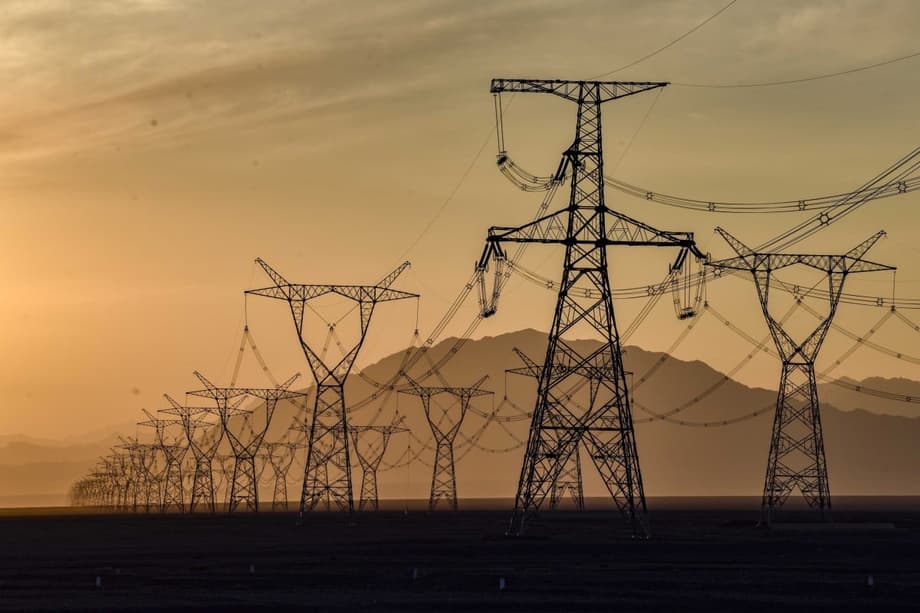
A New Era for Power Grid Stability
Electricity is the lifeblood of modern society, powering everything from hospitals and financial markets to personal smartphones and electric vehicles. When the power grid fails, the consequences can be catastrophic, bringing daily life to a grinding halt and causing billions of dollars in economic damage. For decades, restoring power after a major blackout has been a slow, arduous process often taking hours or even days. However, a breakthrough from China is reshaping the landscape of energy security. Scientists and engineers have developed a smart power grid technology capable of recovering from blackouts in a fraction of a second, specifically within a 100-millisecond window. This advancement represents a quantum leap in grid resilience, promising not only to stabilize China’s massive domestic network but also to aid nations worldwide in securing their energy infrastructure.
The scale of this innovation cannot be overstated. Traditional recovery methods, which often rely on manual intervention and sequential restarting of power plants, leave populations vulnerable for extended periods. By contrast, this new technology isolates faults and restores electricity almost instantaneously. It effectively solves the problem of identifying micro-current faults at the hundred-milliampere level, a precision that was previously unattainable in large-scale grid operations. As countries grapple with aging infrastructure, extreme weather events, and the complexities of integrating renewable energy, this Chinese development offers a glimpse into a future where power interruptions are barely noticeable.
The Science Behind 0.1-Second Recovery
The core of this technological leap lies in advanced grid protection systems developed by the China Electric Power Research Institute, an affiliate of the State Grid Corporation of China. Unlike traditional grids that act like a single chain breaking under stress, this smart system functions more like a sophisticated, self-healing network. When a fault occurs, such as a tree falling on a transmission line or a sudden surge in demand, the technology can pinpoint the exact location of the problem.
Once identified, the system isolates the faulty section instantly, preventing the disturbance from cascading into a wider blackout. Simultaneously, it reroutes power through healthy lines to restore supply to affected areas. This entire process happens in less than the blink of an eye. To put this into perspective, a human takes roughly 300 to 400 milliseconds to blink. This system acts ten times faster than that.
The development was not an overnight success but the result of a decade-long collaboration involving researchers from Tianjin and Shandong universities, State Grid Beijing Electric Power, and leading automation companies like NR Electric and Beijing Sifang Automation. The team built upon previous initiatives, including an artificial intelligence system deployed in 2022 that could resume power supply in three seconds. While three seconds is fast compared to traditional methods, the evolving nature of power grids—with the addition of intermittent renewable sources like wind and solar—demanded an even faster response. The ability to balance unpredictable power sources and divert electricity through diverse grids at high speed is crucial for maintaining stability in a modern energy mix.
According to a report in Science and Technology Daily, this achievement is a key technological support for the safe operation of modern power systems. It not only ensures the reliability of power supply for the capital and the country but also promotes the intelligent manufacturing upgrade of power equipment. The technology is already in use across various sectors in China, including heavy industries like power generation, steel production, and rail transport, where even momentary losses of power can be dangerous or costly.
Addressing the Complexity of Renewable Energy
The push for such rapid recovery technology is driven by the changing composition of the global energy grid. Historically, power grids relied heavily on large, centralized coal, gas, or nuclear plants that provided a steady, controllable stream of electricity. As the world transitions to green energy, grids are incorporating a higher percentage of distributed power sources, such as wind farms and solar plants. These sources are intermittent by nature—the wind does not always blow, and the sun does not always shine—which introduces volatility into the system.
Managing this volatility requires a grid that is incredibly agile. Traditional grids struggle to handle the rapid fluctuations in frequency and voltage caused by the sudden loss of wind or solar input. If the grid frequency drops below a certain threshold, power stations automatically shut down to protect their equipment, potentially triggering a domino effect that leads to a blackout. The new Chinese technology addresses this by detecting micro-imbalances and correcting them before they escalate. This capability is essential as China, currently the world’s largest electricity consumer, aggressively expands its renewable capacity. In 2025, China’s total electricity consumption was projected to exceed 10 trillion kilowatt-hours, surpassing the combined consumption of the European Union, Russia, Japan, and India.
Global Grid Vulnerabilities and the Need for Resilience
The importance of grid resilience has been highlighted recently by several high-profile blackouts around the world. These events serve as stark reminders of the fragility of even the most advanced economies when the lights go out. In April 2025, a massive power cut swept across the Iberian Peninsula, affecting millions of people in Spain and Portugal. Major cities like Madrid, Barcelona, and Lisbon came to a standstill as trains stopped, traffic lights failed, and communication networks went down.
The outage, described by Spanish grid operator Red Eléctrica as “exceptional and extraordinary,” was caused by a strong oscillation in the European grid frequency. Restoration was a slow process, taking several hours to bring the grid back to full capacity. Georg Zachmann, a senior fellow at the Brussels think tank Bruegel, noted that the system suffered “cascading disconnections of power plants.” This incident underscored a fundamental challenge of modern grids: interconnection. While connecting countries allows them to share clean energy and provide backup, it also creates new pathways for failures to spread rapidly across borders.
Similarly, in Berlin, thousands of households were left without electricity in freezing temperatures for four days following a suspected far-left attack on high-voltage cables. The intentional damage to infrastructure caused a prolonged outage that required extensive physical repairs. This event highlighted the vulnerability of physical grid assets to sabotage and the difficulty of recovering from deliberate attacks on critical infrastructure. In these scenarios, the ability to isolate faults and restore power quickly is not just a matter of convenience but of public safety and security.
The economic impact of these outages is staggering. Analysis of historical data shows that direct economic losses from major power outages can reach into the hundreds of billions of dollars. For instance, the 2021 power outages caused by extreme weather in Texas were estimated to cost more than $200 billion. In South Africa, a chronic electricity crisis in 2023 was costing the economy as much as $51 million per day. As reliance on electricity grows, particularly with the rise of data centers and electric vehicles, the cost of instability increases exponentially. Goldman Sachs has warned that almost all United States power grids will lack critical spare capacity by 2030 as demand surges to supply data centers, a bottleneck that could hinder economic growth and technological advancement.
Natural Disasters as a Primary Threat
Beyond technical glitches and human attacks, natural disasters remain the most significant threat to grid stability. Research analyzing 285 historical big power outage events in China caused by natural disasters reveals the immense challenge posed by extreme weather. The study found that electricity systems recover quickest from hail, taking an average of 23.05 hours, but restore slowest from snowstorms, which can take up to 117.31 hours. Earthquakes were identified as the disaster type to which city electricity systems are least resilient.
China is particularly vulnerable due to its vast land area and diverse topography, making it one of the countries with a higher frequency of natural disasters. The overlap of a massive, complex electricity system with frequent environmental hazards makes the grid inherently vulnerable. In 2020, the System Average Interruption Duration Index (SAIDI) in China was 11.87 hours, much higher than in developed countries where it is typically less than one hour. This disparity drives the urgency behind technological improvements. Enhancing power system resilience significantly reduces the requirements for emergency rescue resources. The research indicates that a 1% reduction in initial inoperability can save between 0.57 million yuan and 12.08 million yuan in emergency rescue costs.
Typhoon-Proofing the Infrastructure
While the 0.1-second recovery technology focuses on rapid response, other initiatives in China are focusing on prevention and physical hardening of the grid. A notable example is the typhoon-proof power grid project in Zhejiang Province, a region frequently battered by severe typhoons. This project, implemented by the State Grid Wenzhou Electric Power Company, serves as a model for resilience against extreme weather.
The initiative involved building a resilient grid through structural improvements, better equipment, enhanced maintenance protocols, and superior emergency management. The team established a full life-cycle assessment system based on coefficients for economic development and disaster risk. By identifying the weakest spots in typhoon resistance and applying the 80/20 Rule—focusing on the 20% of components that cause 80% of the failures—they were able to target investments effectively.
The results have been dramatic. Historical data comparing recent typhoons to past events shows a sharp decrease in the number of citizens affected by power outages and a significant reduction in recovery time. For example, Typhoon Saomai in 2006 caused blackouts in over 2,700 villages, and power supply was not fully restored for 20 days. In contrast, after the implementation of the new resilience measures, Typhoon Hagupit in 2020 affected over 1 million households but the power distribution network was back in operation in only 45 hours. This shift from weeks to days illustrates the profound impact of strategic infrastructure investment.
“As a key technological support for the safe operation of modern power systems, this achievement not only ensures the reliability of power supply in the capital and the country, but also promotes the intelligent manufacturing upgrade of power equipment.”
The success in Wenzhou has prompted plans for wider implementation across Zhejiang province and potentially nationwide. The project demonstrates that resilience is not just about high-tech gadgets but also about intelligent planning, data-driven decision-making, and robust construction standards. By combining rapid recovery software with physically hardened infrastructure, China is creating a multi-layered defense against power failures.
International Implications and Exports
The implications of China’s advancements in grid technology extend far beyond its borders. The rapid blackout recovery technology has already been exported to 12 nations, signaling a growing market for Chinese energy expertise. As countries worldwide face the dual challenge of decarbonizing their grids and maintaining reliability, Chinese solutions offer a compelling value proposition. This is particularly relevant for developing nations that are leapfrogging traditional centralized grid models in favor of more distributed systems that require advanced control mechanisms.
Cuba serves as a poignant case study for the international application of these technologies. The Caribbean nation is currently facing a severe energy crisis, with its power grid on the verge of systemic failure. Decades of neglect, underfunding, and a US embargo have left Cuba’s infrastructure weak and unable to meet demand. The country has suffered multiple nationwide blackouts recently, leaving millions in the dark. The situation is so dire that on an average day, the government can only meet 50 to 70% of the country’s electricity needs. Recovery from these collapses can take days, crippling economic activity and reducing the quality of life.
China has stepped in to assist, donating equipment and expertise to help restore Cuba’s electric system. In late 2024, China donated almost 70 tons of power generator parts and accessories to Cuba, aiming to restore generation capacity by around 400 megawatts. Furthermore, the two countries have launched a crash program to install solar power, reflecting a broader cooperation agreement. The deployment of advanced grid technologies, such as the rapid fault isolation systems, could theoretically help Cuba manage its fragile grid more effectively, preventing localized faults from spiraling into nationwide collapses. While the immediate focus is on generating capacity through solar and thermal plants, the underlying control systems provided by China will be vital for stabilizing the network.
Geopolitics of Energy Technology
The export of grid technology is not merely a commercial transaction but carries significant geopolitical weight. Control over critical infrastructure standards and technology is becoming a key arena of strategic competition. As Goldman Sachs analysts noted, constraints in power capacity could hand China an edge in the artificial intelligence boom, as data centers require massive amounts of reliable electricity. By selling and implementing advanced grid technologies globally, China establishes dependencies and relationships that extend into the digital and economic realms.
Europe, traditionally a leader in energy technology, is also looking to upgrade its grids to handle the renewable transition. The blackout in Spain and Portugal has prompted calls for greater investment in grid resilience and flexibility. European officials have emphasized the need for tools to keep the system running as the share of intermittent renewables grows. Chinese technology, with its proven ability to handle complex fluctuations and restore power instantly, presents a viable option. However, Western nations may approach these imports with caution due to security concerns regarding foreign control over critical infrastructure. The balance between efficiency and security will likely dictate the extent of Chinese technology adoption in Western markets.
Challenges and Future Directions
Despite the impressive capabilities of the new technology, experts caution that there is no single silver bullet for grid resilience. A truly robust power system requires a combination of advanced software, physical hardening, diversified generation sources, and effective regulatory frameworks. The integration of renewables, while necessary for climate goals, introduces complexity that no single technology can fully resolve on its own.
One challenge is the sheer scale of investment required. Upgrading a national grid is a multi-decade, multi-trillion-dollar endeavor. While the technology for rapid recovery exists, retrofitting thousands of miles of transmission lines and millions of transformers with the necessary sensors and actuators is a logistical and financial mountain. Furthermore, the cybersecurity risks associated with a more connected, automated grid are substantial. As grids become “smarter,” they also become more attractive targets for cyberattacks. The Spain-Portugal outage initially raised fears of a cyberattack, highlighting the paranoia surrounding digital infrastructure security.
Looking ahead, the focus will likely shift toward creating “self-healing” grids that can predict failures before they happen. By utilizing big data and artificial intelligence, grid operators hope to move from reactive measures to predictive maintenance. The 0.1-second recovery technology is a crucial step in this direction, acting as the ultimate safety net when preventive measures fail. As the global population grows and electrification expands into transportation and heating, the tolerance for outages will decrease. The pressure on grid operators to ensure 99.999% reliability will only intensify.
China’s domestic adoption of these technologies provides a vast testing ground. With the largest electricity system in the world, accounting for 29% of global consumption in 2020, China offers a unique environment to stress-test new innovations. The lessons learned from managing this massive, complex grid will be invaluable for the rest of the world. As other nations embark on their own grid modernization journeys, the data and experience coming out of China will likely inform global standards and best practices.
The Bottom Line
The development of ultra-fast blackout recovery technology marks a pivotal moment in the history of electrical engineering. By reducing recovery times from hours to milliseconds, China has set a new benchmark for grid resilience. This technology addresses the critical weaknesses of modern power systems, particularly the instability caused by the integration of renewable energy and the vulnerability to extreme weather events. As demonstrated by recent blackouts in Europe and the chronic crisis in Cuba, the need for such solutions is urgent and universal.
- China’s new grid technology can isolate faults and restore power within 100 milliseconds.
- The system identifies micro-current faults at the hundred-milliampere level.
- It was developed over a decade by universities, the national grid, and automation companies.
- The technology is already deployed in China’s power, steel, and rail transport sectors.
- It has been exported to 12 nations to help improve their grid stability.
- The innovation supports the integration of intermittent renewable energy sources like wind and solar.
- Recent blackouts in Spain and Portugal highlight the global need for rapid recovery solutions.
- Cuba’s energy crisis illustrates the devastating impact of grid failure and the potential role of Chinese technology.
- China’s massive domestic grid serves as a critical testing ground for these advanced systems.
- Global grid demand is rising, increasing the importance of resilience for economic stability.