Reviving a trade artery between Kazakhstan and China
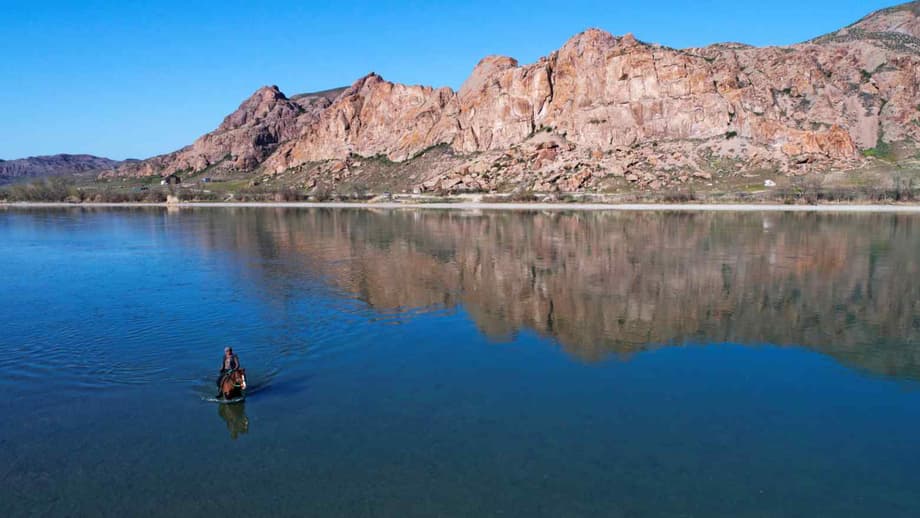
On the shore of the Kapchagay Reservoir near the city of Qonayev, Kazakhstan is preparing an inland port designed to reconnect the Ili River with China and turn a quiet stretch of water into a cross border trade corridor. The plan centers on a new logistics hub and cargo terminal about 90 kilometers north of Almaty that would receive barges and river craft arriving from the Chinese city of Yining, then distribute goods across Central Asia by road and rail. Officials and project partners describe a timetable that targets initial operations in 2027, with a staging yard, cranes, warehouses, customs facilities, and service depots forming the backbone of what they hope will become one of the country’s largest inland logistics platforms.
The Ili River, which begins in the Tien Shan and flows west into Kazakhstan, was once a practical route for moving goods. Navigation faded after the Soviet era as water levels fell and road and rail became dominant. Today, congestion on land corridors has spurred renewed interest in rivers as cost efficient alternatives. Waterways can carry heavy or oversize cargo that either strains or cannot use rail and road, they use less fuel per ton of freight, and they open options for connecting new industrial zones to export routes. Kazakhstan has built its reputation as a bridge for Eurasian trade, with the bulk of rail freight between China and Europe crossing its territory. River transport would not replace those lines, but it could ease pressure on them and create new niches for bulk and project cargo.
Under current plans, a roughly 100 hectare site on the Kapchagay shoreline is reserved for a port and intermodal hub. A Kazakh company, Ili River Port LLP, is leading the project with Chinese partners developing the upstream segment from Yining to the Kazakh border. Project documents envision a navigable section of about 450 kilometers, with an initial throughput goal around one million tons a year and a pathway to as much as three million as channels are improved and fleets expand. Barges could carry construction materials, agricultural goods, and equipment, including oversize components for energy and industrial projects in the Almaty and Balkhash regions. The port would also serve as a consolidation point for cargo feeding the Trans Caspian route and other Central Asian markets.
Water scarcity is the hard limit
The business case depends on a resource that is under stress. The Ili is a transboundary river, with most of its flow originating in China before entering Kazakhstan and feeding Lake Balkhash. Kazakhstan relies heavily on water that comes from beyond its borders, and upstream use has grown alongside development in China’s Xinjiang region. Climate change compounds the pressure by shrinking glaciers and altering seasonal runoff patterns. All of this narrows the margin for navigation and increases the stakes for downstream communities that depend on the river for farming, fisheries, and drinking water.
In a report to the US Congress, the US State Department described how upstream withdrawals affect shared rivers that matter to Kazakhstan. The report stated,
China diverts water from the Irtysh and Ili rivers shared with Kazakhstan to promote economic growth in Xinjiang.
Growing irrigation in the Chinese Ili Valley, together with higher temperatures and erratic precipitation, has already reduced flows at times, according to academic assessments of the Ili Balkhash basin. Modeling work shows the basin is historically vulnerable to environmental water shortages and that further increases in consumption upstream accelerate shortages downstream. Some climate scenarios could offer relief, but planners find that water saving measures, improved irrigation efficiency, and coordinated releases are the most robust ways to protect the river’s reliability for both ecosystems and economic use.
Lake Balkhash at stake
Lake Balkhash is an endorheic lake, a closed basin with no outlet to the sea. The majority of its inflow comes from the Ili. When inflows decline, lake levels fall, salinity can rise, and the shape and health of the delta change. The Ili delta supports wetlands, bird habitats, and fisheries that have cultural and economic value in southeastern Kazakhstan. Lower flows also reduce the depth of channels, strand small craft, and increase siltation that chokes navigation. Experts in the region often point to the Aral Sea disaster as a cautionary tale. The ecological and social costs of mismanaging a closed basin can be huge, and those costs would be magnified if any development around Lake Balkhash, including industrial expansion, were to proceed without secure water balances.
Engineering a shallow river into a freight corridor
Turning the Ili into a dependable shipping lane will require more than docks and warehouses. Engineers are drawing up plans for dredging, bank stabilization, and channel training works to guide the current along a predictable course. The river meanders and deposits sandbars, which means dredging would not be a one time job. It would be a recurring expense that depends on sediment loads and seasonal peaks. Navigation buoys, lights, and digital charts will be needed to help pilots thread narrow passages. Safety and environmental assessments will have to show that any works avoid damaging sensitive wetlands and fish spawning grounds.
What a workable navigation season looks like
The Ili and the Kapchagay Reservoir experience a cold season that limits shipping. Ice conditions and low temperatures can close the river for months. High water usually arrives in late spring and early summer with snowmelt, which is when depths are more favorable for barge convoys. Late summer and early autumn can bring lower flows if irrigation drawdowns are heavy upstream. Operators would likely concentrate heavy lift and bulk movements into higher water windows, then run lighter loads when depths fall. Shallow draft barges pushed by river towboats could handle most traffic, but loads would need to be planned around water levels and channel conditions. Even with improvements, there will be weeks or months when draft limits reduce capacity or force pauses, a risk shippers will weigh when comparing river service with rail.
Port operations must be matched by a fleet and skills base that Kazakhstan does not yet have in abundance. Much of the inland fleet is old, spare parts are scarce, and repair yards are limited. The project team has set out plans for a full service logistics hub that includes maintenance facilities, storage yards, and passenger services. Training for pilots, deck crews, and port workers will be essential. So will modern aids to navigation and dispatch systems that give cargo owners real time information on water levels, transit times, and berth availability. Without these building blocks, the port could be ready before the river is ready.
Diplomacy will decide whether the river stays navigable
Kazakhstan and China already have a framework for cooperation on shared rivers, and they run a bilateral commission that meets to discuss flows, water quality, and new projects. What they do not have is a binding allocation of the Ili’s waters or a set of operational rules that guarantee certain flows at the border throughout the year. For navigation to be viable, both sides would need to agree on seasonal targets, transparent data sharing from upstream gauges, real time alerts during droughts and floods, and mechanisms to balance releases for ecosystems, farms, power stations, and shipping. On the Chinese side, water saving upgrades such as drip irrigation, canal lining, and crop shifts in the Ili Valley could reduce pressure. On the Kazakh side, closer coordination between water, energy, environment, and transport agencies would help align reservoir operations at Kapchagay with ecological needs and freight timetables.
The same US State Department report underscored policy steps that reduce risk in water stressed basins. It concluded,
Sustainable water management, pollution control, and international cooperation are essential for mitigating the risks associated with water scarcity in China.
China’s wider water challenges reinforce the need for clear rules on the Ili. The country has 20 percent of the world’s population and a far smaller share of its freshwater. Its north is drier and more heavily farmed, so large diversion projects have tried to move water from south to north. Heat waves and drought have strained that system in recent years, while reservoirs and irrigation compete with downstream needs. Those domestic realities make upstream concessions difficult. They also show why an Ili agreement that delivers predictable data and workable seasonal targets would be valuable for both economies. Kazakhstan and China have a strong record of cooperating on trade and infrastructure. River flows that are predictable enough for shipping schedules would turn that cooperation into daily practice on the water.
The economics under uncertainty
Backers of the Ili project point to low unit costs on rivers, the ability to move heavy cargo that rail struggles to handle, and the network effects that come from linking a new port to Central Asia’s roads and rails. The volume targets, one million tons at the start and up to three million with upgrades, are modest compared with rail flows between China and Kazakhstan that run into tens of millions of tons a year. That is the point. The Ili corridor is meant to complement, not displace, the lines that already carry most trade. It could carve out a niche in bulk, construction materials, and oversize cargo for major projects around Almaty and Lake Balkhash. It could also feed cargo into the Trans Caspian route through Aktau and connect to depots that Kazakhstan and its partners are building from Xi an to the Caspian region.
Investors will focus on reliability and cost. They will look for guaranteed minimum channel depths, a defined navigation season, and funding for recurring dredging. They will ask for transparent rules that protect environmental flows to the Ili delta and Lake Balkhash. Customs integration, predictable port handling times, and enough shallow draft vessels and crews to keep schedules matter just as much as hydrology. Cargo commitments from anchor shippers would reduce revenue risk. In parallel, Kazakhstan is advancing other river projects on the Irtysh and the Ural Caspian basin to diversify its inland transport options. Building a portfolio of routes spreads risk across different hydrologies and partners. If the Ili is to claim its place in that portfolio, a dependable river is the first requirement.
Key Points
- Kazakhstan plans a new inland port on the Kapchagay Reservoir at Qonayev to revive shipping on the Ili River between Yining in China and southeastern Kazakhstan.
- Project scope includes a 100 hectare logistics hub, an initial throughput target around one million tons a year, and a potential rise to three million as channels and fleets improve.
- The Ili is a transboundary river, most of its flow originates in China, and water scarcity is driven by upstream use, climate change, and shrinking glaciers.
- Lake Balkhash depends on the Ili for most of its inflow, making environmental flows and delta health central to any navigation plan.
- Engineering would require dredging, channel training, and modern navigation aids, along with new fleets and trained crews.
- A workable navigation season will likely cluster heavy movements in higher water months, with load limits or pauses during low water.
- Diplomacy is decisive. Seasonal flow targets, transparent data sharing, and water saving measures upstream would underpin reliable navigation.
- Economically, the route is a niche complement to rail, suited to bulk and oversize cargo, but investors will demand clear hydrological guarantees and operational reliability.