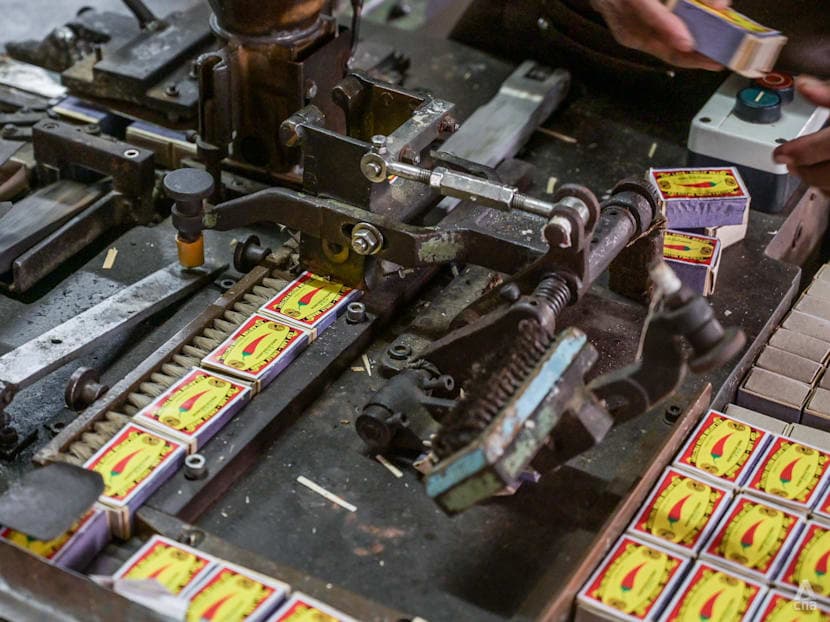
A factory from another era, still at work
In a low slung complex on the fringes of Kota Bharu, a steady clatter of conveyors and the faint scent of sulfur mark a routine that has barely changed in decades. The Kelantan Match Factory, established in 1933, still turns thin sticks and paperboard into the small boxes that once sat in every Malaysian kitchen. It is widely regarded as the last match manufacturer still operating in the country. Output has slowed and the workforce has shrunk, yet the line keeps moving, box after box, day after day.
- A factory from another era, still at work
- From 1933 beginnings to a national outlier
- What keeps the flame alive
- Inside the factory, step by step
- Timber scarcity and tighter rules reshape supply
- Brands and the art on small boxes
- A visitor attraction without a tourism plan
- Can it survive the next five years
- Key Points
The factory manager, a 76 year old who colleagues call Matchstick Wee, has spent more than thirty years on this floor. A few decades ago the factory ran three shifts and employed roughly 1,000 people. Today only about 25 to 30 workers remain. Disposable lighters displaced everyday match use, and local timber shortages, together with tighter rules on logging and processing, forced the company to import most raw materials from China. By the manager’s estimate, sales have fallen by roughly 50 to 70 percent compared with thirty years ago.
Wee still guides the operation with a calm, matter of fact style that comes from long practice. He remembers the days when the yard was crowded at every hour.
We used to have three shifts of workers, now look at us, only 30 workers left.
Despite the decline, the factory has found unlikely attention from visitors. Buses and cars pull up without appointments. People ask to peek inside, pose for photos and pick up a few boxes to take home. Matches still move in rural areas where gas hobs, charcoal stoves and mosquito coils are common, and hotels continue to place boxes in rooms.
From 1933 beginnings to a national outlier
The Kelantan Match Factory began life in 1933 in Sungai Keladi, near Kota Bharu. Accounts trace its origins to a trader from Mumbai who saw an opportunity to make matches locally at a time when Malaya imported most boxes from Sweden, Britain, Japan and China. Ownership changed hands several times before businessman Tan Chon San took over in 1995. Through war, independence and rapid urban growth, the factory endured, expanding and contracting as the market shifted.
Malaysia once had a handful of match plants. Perak Match Factory opened in 1936 and a small operation in Sarawak ran after the war, but both closed in the twentieth century. Kelantan carried on, producing familiar labels that Malaysians grew up with. Its catalogue has included Tiger Head and Two Tigers, joined by a line up such as Cap Lada (Chilli Brand), Cap Helang (Eagle), Cap Keris (Dagger), Cap 99 and Cap Bintang (Star). Hotels remain regular customers and the boxes still reach stores nationwide.
At its peak the plant employed around 1,000 people and ran three shifts. Today the complex houses three main lines, one for the matchsticks, one for the boxes and one for packing. Supervisors say output still reaches about 96,000 boxes a day when orders require it.
What keeps the flame alive
Matches survive because they solve small, everyday tasks where a simple flame is enough. A box costs little, never runs out of fuel and works on damp mornings when a cheap lighter sputters. Rural households use them to light charcoal, kerosene stoves and mosquito coils. Cooks across towns and villages still keep a supply near the hob. Hotels stock branded packs for guests who want to light candles or incense.
Many of the people who make these boxes have spent their adult lives here. One of the longest serving employees, 55 year old Siti Mazenah, labels and sorts matchboxes and works regular hours from Monday to Friday.
I like working here, they allow us to change job scope if we want to and I learn a lot about the processes.
Younger hands are rare but they exist. A 26 year old worker, Fakhrul Syahmi, joined after getting married and was surprised to find the plant still open.
Even my friends were shocked when I told them I was working at this match factory. They thought it had closed down.
Veterans say the product still earns its place. Factory supervisor Mahmod Mohd Nor has seen tastes change for decades, yet he hears steady requests from loyal customers.
Matches remain relevant. People use them to light fires and, for some, cigarettes. The quality is consistent and that is why customers keep buying.
Inside the factory, step by step
The process begins with wood delivered as sheets or slats, today imported mainly from China because suitable local timber is scarce. Machines slice the slats into thin splints, dry them and sort them into racks for dipping. Paperboard for boxes is cut and folded, then labels are pasted and the striking strip is added along one side. Workers check cartons by hand and feed finished boxes into a tall storage silo where they rest to avoid damage before shipment.
Each matchstick receives a thin coat of wax so the flame can travel, then the tip is dipped in a paste that burns hot and bright. A typical safety head combines an oxidizer, fillers and binders so it catches quickly once drawn across the friction surface on the box. Consistency matters. If the paste is too wet the head crumbles, if it is too dry it will not ignite. Workers test samples constantly and remove any weak batches.
Hours are predictable, a rarity in many factories. Employees like Siti work roughly 9am to 4pm on weekdays, while the plant itself can run six days a week depending on orders. When demand peaks, the lines are capable of producing close to 96,000 boxes per day, each 20 millimeters high and packed with roughly 50 matchsticks.
Timber scarcity and tighter rules reshape supply
Wood once came from forests not far from Kota Bharu. Decades of development, coupled with stricter rules on logging and processing, have changed that landscape. Matchstick wood needs to be straight grained and uniform so it does not split during dipping and drying. Suitable species are less available locally and are often reserved for higher value uses. Importing wood from China has kept the plant running, but it exposes the smallest details to global costs, from freight rates to currency swings.
Those pressures show up in the arithmetic of a small box. Chemical inputs, energy and packaging have all risen in price. A company that sells an everyday item at a low price has little room to absorb increases. Managers say that raising prices too far would drive away the rural customers who still buy by the carton.
Brands and the art on small boxes
Part of the factory’s appeal rests in the labels. Collectors, known as phillumenists, trade and archive designs from every era. In Malaya and then Malaysia, tigers, eagles and daggers became familiar motifs. Kelantan’s plant is associated with tiger themed labels such as Tiger Head and Two Tigers, while the current portfolio includes Cap Lada, Cap Helang, Cap Keris, Cap 99 and Cap Bintang. The small rectangles of paper say something about place and time, printed in vivid reds and yellows that still catch the eye on a shop shelf.
The company even produced souvenir runs for special occasions, including matches made for the 1998 Commonwealth Games in Kuala Lumpur. For many Malaysians, opening a box marked Cap Lada or Cap Helang is a memory as much as a purchase. That connection, though intangible, helps sustain the business when a lighter can be bought for roughly the price of a single carton.
A visitor attraction without a tourism plan
The plant has quietly become a stop for travelers exploring Kelantan. Employees are used to visitors peering through doorways or asking how the machines work. The company never turned the site into a formal museum.
Wee says the drop ins come in waves, often without warning.
They just show up out of nowhere. Every day they come. So many of them sometimes.
Kota Bharu lends itself to that kind of curiosity. The city is a center for batik and songket weaving, wood carving and wau kite making, as well as wayang kulit shadow puppetry. The match factory sits within this wider craft map, a working piece of everyday industry that connects tangible products with the people who rely on them.
Can it survive the next five years
Market trends are hard to ignore. By the manager’s count, sales are half or less of what they were a generation ago. Reports about the factory have warned that if demand keeps shrinking, it could be forced to close within three to five years. A small workforce and aging equipment limit flexibility, and the cost of imported wood adds risk to every order.
There are paths that could help. Niche sales to hotels and traditional markets can keep volumes steady. Specialty runs for collectors and tourism partners can lift margins without large capital spending. Skills transfer programs, apprenticeships and recognition as a heritage craft could help bring younger workers into a trade that rewards patience and precision.
For now, the man who keeps the lines moving plans to keep going.
I do not know how long this will last. For now, I will just keep working.
Key Points
- Kelantan Match Factory in Kota Bharu is widely regarded as the last match manufacturer still operating in Malaysia
- Founded in 1933, the plant once employed about 1,000 people and now runs with roughly 25 to 30 workers
- Sales have fallen by 50 to 70 percent compared with thirty years ago, according to the factory manager
- Most raw materials are imported from China due to local timber scarcity and tighter regulations
- The factory can produce about 96,000 boxes a day when orders require it
- Brand portfolio includes Cap Lada, Cap Helang, Cap Keris, Cap 99 and Cap Bintang, and the factory has also made tiger themed labels
- Matches still sell in rural areas and to hotels, and tourist visits to the factory are frequent
- Reports warn that closure is possible within three to five years if demand continues to decline