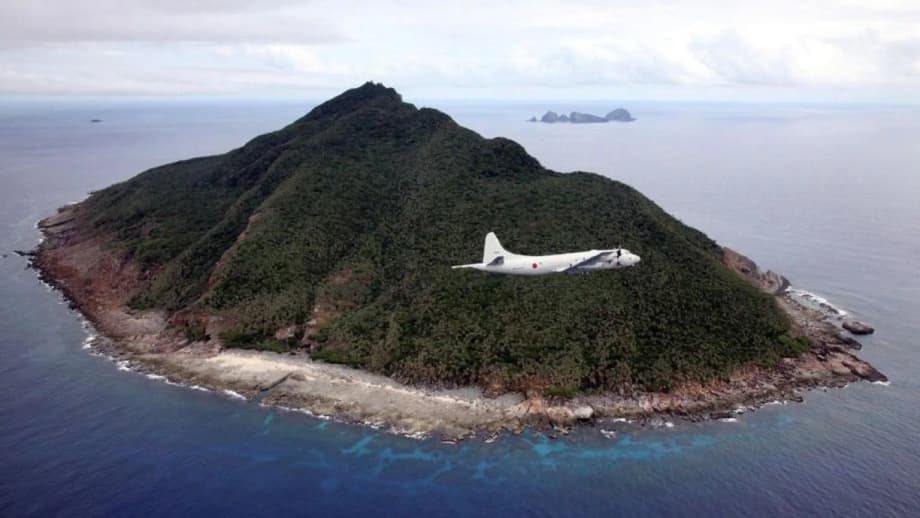
A tense standoff in the East China Sea
Chinese and Japanese coast guard vessels staged a tense confrontation near a disputed island chain in the East China Sea, reviving one of Asia’s most sensitive flashpoints. Early Tuesday, ships from both sides maneuvered around a Japanese fishing boat close to the uninhabited islands known as the Senkaku in Japan and the Diaoyu in China. Tokyo administers the islands. Beijing claims them as its territory. Each government accused the other of intruding into its waters.
The clash unfolded as political relations sour after Japanese Prime Minister Sanae Takaichi suggested in November that Tokyo could consider military action if China attacked Taiwan. Beijing views self governed Taiwan as part of China. Tensions linked to the Taiwan issue are now bleeding into the East China Sea, where China has steadily increased patrols around the disputed islands over the past decade. The islands sit near key shipping lanes and rich fishing grounds. They lie north of Taiwan and southwest of Japan’s Okinawa Prefecture, close enough that maritime incidents can escalate quickly if mismanaged.
While no injuries were reported and both sides eventually pulled back, the episode reinforced an uneasy pattern. China continues to send coast guard vessels into waters Japan says are its territorial sea. Japan responds with its own patrols and protests. Regional analysts warn that repeated encounters at close range raise the risk of a collision or a miscalculation that could draw in militaries, and potentially involve allies.
What each side says happened
China’s Coast Guard said a Japanese fishing vessel illegally entered what it calls the territorial waters of Diaoyu Dao. It said Chinese maritime law enforcement ships approached the boat, issued warnings, and took control measures. Japan’s Coast Guard gave a different account. It said two Chinese coast guard ships entered the territorial sea around the Senkaku Islands in the early hours, moved toward a Japanese fishing vessel, and then left after Japanese patrol ships intervened. Both sides framed their actions as lawful and defensive.
China Coast Guard spokesperson Liu Dejun described the operation as routine law enforcement within Chinese waters and urged Tokyo to stop what Beijing calls provocations in the area. After Chinese vessels drew near the fishing boat, Japan said its patrol ship remained on scene until the Chinese vessels withdrew and the fishermen were safe.
Liu Dejun underscored China’s position in a statement carried on official channels.
China Coast Guard vessels took necessary law enforcement measures, and the Diaoyu Islands are Chinese territory. We urge Japan to immediately stop all acts of infringement and provocation in these waters.
Japan’s Coast Guard, in a public statement, said the Chinese ships had no legal basis to assert authority in the area. It accused the Chinese vessels of violating Japan’s territorial sea and insisted they leave. The statement warned that the approach toward the fishing boat was unacceptable.
The activities of Chinese coast guard vessels navigating within Japan’s territorial waters around the Senkaku Islands while asserting their own claims fundamentally violate international law.
Why these islands matter
The Senkaku or Diaoyu Islands consist of five small islands and three rocky outcrops with a combined area of about seven square kilometers. No one lives there. On maps they appear minor, yet their location is anything but trivial. They sit astride busy sea routes, surrounded by productive fishing grounds, and near areas that decades of surveys have suggested may hold oil and natural gas. Their position also places them in the middle of great power competition as China expands maritime activities and the United States strengthens security ties with Japan.
History and legal claims
Japan says it surveyed the islands in the 19th century and incorporated them into Japanese territory in 1895, concluding they were uninhabited and unclaimed at the time. After World War Two, the United States administered the islands along with the Ryukyu chain. In 1972, Washington returned administrative control to Japan as part of the Okinawa reversion. Tokyo argues that neither China nor Taiwan protested this arrangement at the time, and that Japan’s consistent administration since then supports its claim.
China and Taiwan counter that historical records from the Ming and Qing periods show the islands were used and administered by China long before 1895. Beijing argues that the islands should have been returned with Taiwan under postwar settlements. The issue gained urgency in the late 1960s after a United Nations survey pointed to potential hydrocarbon reserves nearby. Diplomatic back and forth intensified as energy prospects, fisheries, and maritime boundaries came into focus.
Strategic location and resources
The islands sit near sea lanes vital to the Japanese economy, and any disruption would ripple across trade in Northeast Asia. Fishermen from the region rely on these waters. The seabed could hold oil and natural gas, although the scale remains uncertain without extensive drilling and joint surveys. Control of air and sea space in this area provides tactical advantage for surveillance, anti submarine operations, and resupply routes. The chain also lies not far from Taiwan, with the smallest gap between Japanese territory and Taiwan measured around Yonaguni Island, which adds to the area’s military relevance. Geography, commerce, and national pride fuse in a dispute that is bigger than the islands themselves.
How the dispute escalated since 2010
Maritime frictions intensified fifteen years ago. In 2010, a Chinese fishing trawler collided with Japanese Coast Guard vessels near the islands. The ship’s captain was detained, sparking an angry response from Beijing and a sharp downturn in relations. In 2012, Japan bought three of the islands from a private Japanese owner, saying the move would prevent a more provocative purchase plan by local politicians. China saw a challenge to its claim, and large street protests erupted across Chinese cities. Beijing began increasing the tempo of law enforcement patrols around the islands, with Chinese vessels regularly entering waters Japan considers its territorial sea.
In 2013, China declared an air defense identification zone over parts of the East China Sea that included the islands. Tokyo rejected the move. The United States, which does not recognize sovereignty claims, said it would not alter flight operations and confirmed that the US Japan security treaty applies to territories administered by Japan. Patrols and protests became a rhythm. In recent years, Chinese coast guard and other government ships have set records for the number of days they were seen near the islands. A Chinese Coast Guard law enacted in 2021 authorizes the use of weapons in certain situations, adding to concern in Tokyo that routine confrontations could turn dangerous.
Taiwan tensions sharpen rhetoric and spill into daily life
Prime Minister Sanae Takaichi told parliament on 7 November that a Chinese attack on Taiwan could trigger a Japanese response under scenarios tied to Japan’s security laws. Beijing reacted strongly. Chinese officials warned Tokyo to retract the remarks. Diplomatic ties deteriorated, with China summoning Japan’s ambassador and sharp exchanges in official statements. Chinese authorities issued a travel advisory cautioning citizens against travel to Japan. Airlines offered changes and refunds on Japan bound tickets. Reports from travel analysts described large numbers of flight cancellations on routes between the two countries for December. Cultural exchanges took a hit, with events featuring Japanese artists paused in Chinese cities. Chinese students considering study in Japan faced new guidance to think carefully about plans amid what Beijing described as an unstable security environment.
On the military front, Taiwan’s defense ministry tracked a surge of Chinese aircraft and naval activity around the island during the period of heightened rhetoric, and also noted drones flying close to Japan’s westernmost islands near Taiwan. Although transits in those areas are not uncommon, the timing underscored how frictions over Taiwan can intersect with Japan’s outer islands and the East China Sea.
China’s foreign ministry reiterated Beijing’s stance on the disputed islands in recent days. Spokesperson Lin Jian framed the claim in historical and legal terms.
Diaoyu Dao and its affiliated islands have been China’s territory since ancient times, supported by clear history and solid legal basis.
The China Coast Guard also emphasized a continued presence around the islands in official statements.
The China Coast Guard will continue to conduct rights protection and law enforcement activities in the waters around the Diaoyu Islands, resolutely safeguarding national territorial sovereignty and maritime rights.
Japan has been just as firm. Tokyo says the islands are an inherent part of its territory under international law, and that Japan exercises valid control. Officials have protested what they call dangerous approaches by Chinese ships toward Japanese fishing boats. The two governments reached a basic agreement in 2008 to explore joint development of resources in parts of the East China Sea, but that framework has not produced sustained cooperation. Recent incidents show how political tension over Taiwan and domestic pressure on leaders can close space for compromise.
How close calls happen at sea
Understanding the rules at sea helps explain the pattern near the islands. A coastal state has a territorial sea out to 12 nautical miles where it exercises sovereignty. Beyond that, there is a contiguous zone out to 24 nautical miles where a state can enforce customs and security rules. Farther out, the exclusive economic zone (EEZ) can extend to 200 nautical miles. Countries have rights to resources in the EEZ, but foreign ships enjoy freedom of navigation. These boundaries often overlap in semi enclosed seas like the East China Sea, setting up disputes over lines on maps as well as control on the water.
China often uses large coast guard cutters and other state vessels to operate near the islands, pressing its claim without deploying the navy. Japan’s Coast Guard responds with patrol boats and warnings. This pattern is known as gray zone activity, where states employ law enforcement and civilian vessels to advance interests without triggering a full military response. The proximity of fishing boats adds complexity. Fishermen seek catches in waters claimed by both sides. Coast guards feel compelled to intervene. Bridge to bridge radio calls and maneuvers at short distance increase the risk of a collision.
Definitions that shape the standoffs
An air defense identification zone (ADIZ) is not sovereign airspace. It is a buffer where aircraft are asked to identify themselves. China’s ADIZ declaration over the East China Sea included the islands and overlapped with Japan’s ADIZ. Neither side accepts the other’s rules in contested zones. At sea, the difference between a ship in the contiguous zone and one in the territorial sea can be a matter of miles. That small margin can be decisive if a patrol vessel seeks to assert the right to order a foreign craft to leave. Add in language barriers, nationalist sentiments, and public scrutiny at home, and each captain knows that tactical decisions carry political weight.
Fisheries agreements between the two sides, including frameworks reached in 1997 and 2013, aimed to manage access and prevent clashes. Enforcement and interpretation have been uneven. Recent years brought more large Chinese Coast Guard patrols and more Japanese protests. Even with careful seamanship, the risk of a near miss remains high.
Allies and law shape the limits
The United States does not take a position on the underlying sovereignty of the islands, but it recognizes Japan’s administration. Washington has confirmed that the US Japan security treaty applies to territories under Japanese administration, which includes the Senkaku Islands. That means if a state attacks Japanese personnel or territory there, the alliance could be triggered. It does not mean Washington will back any unilateral move to change the status quo. The gap between sovereignty and administration is a central feature of the dispute, and both sides understand it well.
International maritime law provides a framework for rights and limits, but it does not settle the sovereignty question. In practice, control is established by presence, administration, and the ability to enforce laws over time. Beijing’s strategy around the islands has focused on a regularized presence by coast guard and other state ships, a pattern that, if unchallenged, can erode the perception of Japan’s effective control. Tokyo tries to counter this with persistent patrols, diplomatic protests, and outreach to partners. It has also increased defense budgets and capabilities to respond to what it sees as persistent pressure in the East China Sea.
There are tools for stability. Hotlines and communication channels between China and Japan exist, and both sides have engaged in talks about preventing incidents at sea. Joint resource development talks, first floated in 2008, could reduce incentives for risky patrols if the political will returns. Regional navies follow the Code for Unplanned Encounters at Sea, which sets communication protocols to lower risk during unexpected meetings. Coast guard services are not always covered by those navy rules, which creates a gap. Closing that gap with agreed procedures could prevent the next dangerous bow to bow moment.
Possible de-escalation steps
Practical risk reduction does not require a full resolution of the sovereignty dispute. Leaders could restart working groups on fisheries management to separate commercial activity from sovereignty arguments. A scheduling mechanism for patrols, with notification rules and a shared radio protocol in the disputed area, would help bridge language and legal differences. Coast guard leaders could hold regular face to face meetings to review incidents and refine procedures. Public messaging that emphasizes safety of life at sea could lower nationalist pressure while preserving each side’s legal stance.
Technical cooperation can also proceed in areas where interests overlap. Maritime search and rescue, environmental protection, and deterring illegal fishing by third party vessels are shared concerns. Local communities, including fishermen, would benefit from predictable rules. The more consistent the playbook on both sides, the less likely a single tense morning around a fishing boat will cascade into a crisis with regional consequences.
Highlights
- China and Japan reported a confrontation between their coast guards near the Senkaku or Diaoyu Islands, with each side accusing the other of intruding into its waters.
- China said a Japanese fishing vessel entered Chinese territorial waters and was warned off. Japan said two Chinese ships entered its territorial sea and left after warnings.
- The incident followed comments by Japan’s Prime Minister Sanae Takaichi suggesting Japan could respond militarily to a Chinese attack on Taiwan.
- China reiterated that Diaoyu Dao is Chinese territory, while Japan said Chinese patrols in its territorial sea violate international law.
- The islands are uninhabited but sit near vital sea lanes, rich fishing grounds, and possible oil and gas reserves.
- Chinese coast guard patrols near the islands have reached record highs in recent years. A 2021 Chinese law authorizes weapons use in certain situations.
- Travel and cultural exchanges have been affected, with Chinese travel advisories, refunds for Japan bound tickets, and event cancellations reported.
- The United States recognizes Japan’s administration and says the US Japan security treaty covers the islands, while taking no position on sovereignty.