Safety concerns overtake support for foreign recruitment
Japan's debate over foreign workers has shifted toward greater caution, even as employers struggle to fill jobs. A nationwide survey conducted by Yomiuri Shimbun and Waseda University's Institute for Advanced Social Sciences found that 59 percent of respondents oppose or somewhat oppose actively accepting more foreign workers. The result reverses the balance in late 2024, when supporters of a more open intake outnumbered opponents.
Contents
- Safety concerns overtake support for foreign recruitment
- What the survey measured
- Younger respondents express greater anxiety
- Safety fears and the evidence on crime
- Employers still face a shortage of workers
- Foreign workers and foreign residents are different totals
- How the 2018 reform changed recruitment
- Stricter compliance alongside continued recruitment
- Local governments want clearer responsibilities
- Political dissatisfaction strengthens demands for control
- Trust, working conditions and daily cooperation
- Key Points
Public safety was the strongest concern: 68 percent believe safety will deteriorate if the number of foreigners living in Japan increases. Another 63 percent expect problems arising from differences in language, culture and customs. At the same time, 61 percent say accepting foreign workers helps ease persistent labor shortages.
Japan therefore faces two pressures at once. Many respondents recognize that foreign workers help keep businesses operating, while also worrying about changes in their communities. Those concerns have become politically powerful amid pressure on household budgets, dissatisfaction with national leadership and a sharper debate over borders and identity.
The foreign resident population reached a record 3.77 million at the end of 2024. Employers continue recruiting abroad as Japan's population of working age shrinks. Unemployment remains low, and vacancies still outnumber job seekers despite some cooling in the labor market.
The survey followed the July 2025 House of Councillors election and covered the transition between cabinets. Its findings, considered alongside employment figures and recent policy changes, show why the government faces pressure both to maintain access to foreign labor and to demonstrate stronger control over rules affecting foreign residents.
What the survey measured
The nationwide survey was conducted by mail from September 24 to October 31, 2025. Questionnaires went to 3,000 voters, and 2,004 responses were returned. The period spanned the end of one cabinet and the formation of another, following a summer election campaign in which opposition parties pressed for clearer positions on foreigners and public order.
The 59 percent opposition figure concerns a policy of actively accepting foreign workers. Responses to the other questions reveal why that policy has become harder to promote: safety and social friction were the two leading concerns about a larger foreign presence, while easing labor shortages ranked third and attracted majority agreement.
Respondents could therefore see an economic benefit and still favor caution about recruitment. The results describe a public weighing the need for workers against concerns about how a growing foreign population would be managed.
The survey also recorded a broader turn toward putting national priorities first. Seventy percent agreed or somewhat agreed that national interests should take precedence over international cooperation, the highest share since that question was introduced in 2017. Support for strengthening defense capabilities stood at 67 percent, slightly below the 2024 level.
Younger respondents express greater anxiety
Respondents aged 18 to 39 were the most concerned about public safety. Among them, 79 percent believed safety would deteriorate if foreign resident numbers increased. The figure was 72 percent among people aged 40 to 59 and 59 percent among those aged 60 and over.
The gap between the youngest and oldest groups was 20 percentage points, calculated from 79 percent and 59 percent. Older respondents were also more likely to recognize the employment benefit: 67 percent of those aged 60 and over said foreign workers help ease shortages, compared with 60 percent among people aged 40 to 59 and 53 percent among those aged 18 to 39.
Younger respondents showed greater sympathy for a country first stance associated with America's former president. Fifty four percent of those aged 18 to 39 expressed sympathy for an America First style position, compared with 28 percent across all respondents.
A recent nationally representative academic study found that perceived economic threats, including competition for jobs and pressure on wages, and cultural threats, including concerns about social norms and crime, were associated with negative feelings toward foreign workers. Concern about population aging softened resistance only slightly.
The study also found differences in attitudes toward different kinds of workers. Some respondents expressed warmer views of workers with fewer formal skills, who are particularly visible in industries facing severe shortages. That finding fits the national survey's combination of concern about social change and recognition that foreign employees fill needed roles.
Safety fears and the evidence on crime
Public safety concerns dominate the survey, while official statistics and independent analyses have not shown a surge in crime by foreign residents in recent years. Researchers examining government data point to a decline in reported crimes involving foreign nationals.
Researchers also put the foreign share of welfare recipients at roughly 3.2 percent, close to foreigners' share of the population. The figures sit alongside a public debate in which worries about crime and access to benefits have become prominent.
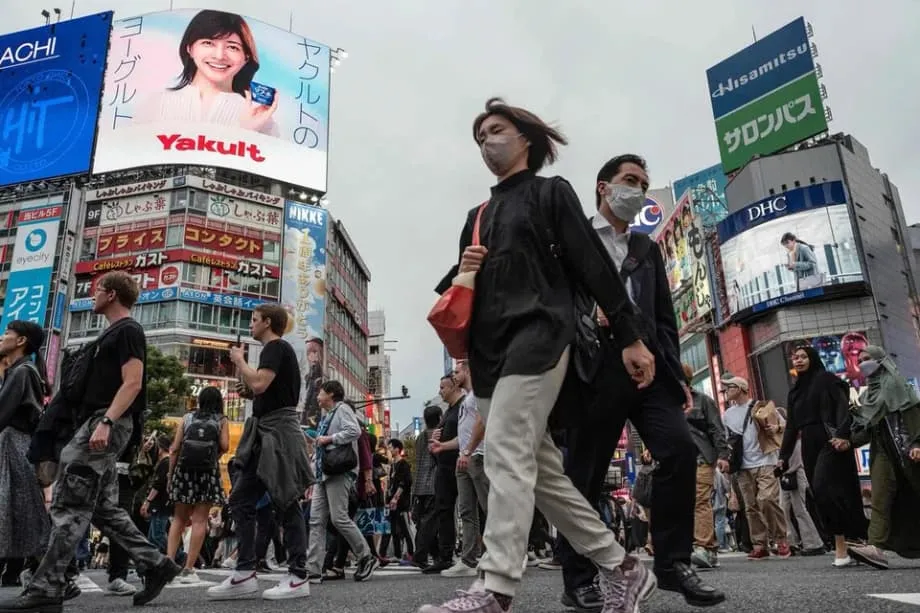
Japan's tourism boom after the pandemic has made foreigners more visible in popular destinations and on crowded transport routes. Social media can turn isolated incidents and breaches of local norms into national talking points. Crowding, visitors' behavior and questions about residents' conduct have consequently become part of the same political conversation.
A recent public broadcaster poll found that a majority agreed with the statement that foreigners are favored in Japanese society. Combined with tight household budgets and a sense of national risk, that perception gives policies centered on enforcement greater political appeal.
Closing genuine loopholes is one response. Making residents' everyday contributions more visible is another: most foreign residents work, pay taxes, send children to school and follow the rules. The practical challenge is to address specific violations while giving the public a fuller picture of life in their communities.
Employers still face a shortage of workers
Japan's unemployment rate rose to 2.6 percent in August 2025. The ratio of job openings to applicants eased to 1.20, its lowest level since 2022. A ratio above one means there are more available jobs than people seeking them through the measured system, so employers still face a tight market despite the slowdown.
Labor shortages remain widespread, especially outside large cities and in physically demanding or lower wage industries. From January through August 2025, 237 companies filed for bankruptcy citing a lack of labor, about 22 percent more than a year earlier.
Employers have raised wages, and minimum wages are increasing, but some businesses cannot keep pace with rising costs. A company may need more staff while lacking the money to offer enough pay to attract them.
The central bank has signaled that expanding the workforce through greater participation by women and older people is approaching its ceiling. With those domestic sources of additional workers nearing their limits, employers increasingly depend on foreign recruitment to operate factories, staff care homes and harvest crops.
Masato Koike, senior economist at Sompo Institute Plus, expects demand for foreign labor to continue even if hiring weakens at the margins. He described the tension between a cooling but still constrained labor market and growing public caution:
The strong labor market might be starting to lose some steam. Public opinion may make it difficult to actively open the door to more foreign workers, but there is also strong demand from industry.
Foreign workers and foreign residents are different totals
Government figures put the number of foreign workers at a record 2.3 million as of October 2024. Employers in care, construction, food processing, manufacturing, agriculture, logistics and hospitality rely heavily on foreign staff.
The worker total counts people in employment. The broader foreign resident population of 3.77 million at the end of 2024 also includes family members, students and people with long term residence who are not employed. Understanding the two totals helps explain why policies affecting residents reach beyond workplaces.
Companies are responding to recruitment difficulties with more training, higher pay and better housing intended to attract international employees and persuade them to stay. Many nevertheless continue to struggle to fill shifts.
Japan's foreign population is also becoming more varied, with more people from Southeast and South Asia and a mixture of students, trainees and highly skilled professionals. Naturalization remains strict, and many residents who stay for the long term choose permanent residency instead of citizenship.
How the 2018 reform changed recruitment
Lawmakers made a major change to Japan's immigration framework in 2018 by creating the Specified Skilled Worker categories, commonly called SSW. These categories opened defined routes for workers with fewer formal qualifications to take jobs in industries facing shortages.
The reform broke decades of deadlock by centralizing decisions in the prime minister's office. Employers gained a more systematic way to recruit from abroad, while the framework retained strict caps and screening.
Services helping newcomers settle into communities developed more slowly than admission policy. Municipal offices, schools and employers have had to improvise responses to language barriers and other practical needs.
Political language reflects the government's caution. Leaders rarely use the word immigration, instead referring to foreign human resources, trainees and highly skilled specialists. The approach stresses temporary labor even as population aging and decline point toward a lasting foreign resident presence.
Several dates mark the development of the current debate:
- 2018: Lawmakers created the Specified Skilled Worker categories, opening recruitment routes in fields with labor shortages.
- October 2024: The foreign workforce reached a record 2.3 million.
- End of 2024: Foreign residents numbered a record 3.77 million, while supporters of active foreign recruitment outnumbered opponents in the earlier survey.
- July 2025: The House of Councillors election brought immigration control and public order closer to the center of party politics.
- September 24 to October 31, 2025: The nationwide mail survey recorded majority opposition to actively accepting foreign workers.
- October 1, 2025: Tougher rules for converting foreign driver licenses took effect.
Stricter compliance alongside continued recruitment
Since 2024, policy has moved toward tighter compliance while preserving foreign workers' economic role. The Liberal Democratic Party promoted a Zero Illegal Foreign Residents initiative, and authorities have pursued closer checks on several areas of daily life.
Rules for converting foreign driver licenses were tightened from October 1, 2025, with a new knowledge test containing 50 questions and a higher passing mark. Temporary visitors can no longer convert their licenses.
Officials have also proposed restrictions on certain property purchases by foreign buyers and moved toward sharing information between welfare and immigration agencies to identify residents behind on taxes or health insurance premiums.
The government established the Office for the Promotion of an Orderly and Cooperative Society with Foreigners to coordinate work across ministries. Its remit covers problems arising from a larger foreign resident population, including traffic, neighborhood disputes and hospital access.
The property restrictions remain proposals. No implementation date was given for those measures or for the information sharing arrangements. The policy direction nevertheless reflects the government's attempt to reassure voters about compliance while businesses continue to seek foreign employees.
Local governments want clearer responsibilities
All 47 prefectural governors have called for a Basic Law on Intercultural Coexistence. Their request is for national recognition that foreign residents are members of local communities and for clearer responsibilities in helping people live together.
Mayors and governors oversee many of the services that make daily coexistence work: language classes, school counseling, community orientation and help desks at city halls. They have asked Tokyo to look beyond enforcement.
National messaging tends to stress control. Local authorities must also manage the practical work of serving residents, from helping families understand school procedures to making public services accessible across language barriers.
The difference matters because admission rules and community services solve different problems. Screening determines who can enter and work. Language support, counseling and accessible offices help people manage daily life after arrival. Municipalities have been carrying out that second task while national integration policy has lagged behind recruitment reforms.
Political dissatisfaction strengthens demands for control
Eighty eight percent of survey respondents described themselves as dissatisfied or somewhat dissatisfied with national politics. Fifty two percent preferred change over stability in national leadership, the first majority for change since tracking began in 2018.
The Liberal Democratic Party nevertheless remained the party that the largest share wanted to form a government, followed by centrist and reformist rivals. Dissatisfaction with politics therefore coexists with continuing support for the ruling party as the leading choice to govern.
New conservative forces surged in the July 2025 upper house election by drawing on frustration with living costs and public order. The ruling party also stressed tighter rules for foreigners, while its leadership contenders toughened their language on compliance and promised to keep the economy moving.
Scholars warn that making immigration a dividing line between parties can encourage punitive policies that affect legal residents as well as people without authorized status. Strict attitudes toward unauthorized migration have a longer history: a government survey two decades ago found majority support for deporting people without status.
Economic strain and the greater visibility of migration internationally give tougher approaches more traction. The political risk is that immediate gains from restrictive messaging could come at the expense of labor supply, relationships within communities and Japan's international standing.
Trust, working conditions and daily cooperation
Trust is central to the gap between fears of worsening safety and the crime trends cited by researchers. Timely, transparent information on crime, welfare use, tax compliance and school attendance among foreign residents can give the public a firmer basis for judging policy. Consistent and fair enforcement against genuine violations can also reassure residents that rules matter.
Language access in hospitals and city offices can reduce misunderstandings. Community policing can address practical concerns such as noise around garbage disposal areas and cycling rules. Managing tourism so that visitors spread beyond a few crowded destinations can ease pressure on places where resentment has grown.
Companies have a role through training managers and employees to work across cultural differences and setting clear workplace standards. Better conditions can also help international employees remain in jobs rather than repeatedly moving between employers.
International labor research finds strong public support for preventing violence and exploitation affecting migrant women and improving conditions in domestic and care work. Protecting workers and raising standards can help Japan attract needed staff while responding to concerns about disorder. Clearer routes for developing skills and recognizing qualifications can reduce turnover and help workers and employers plan.
Japan's population is aging and shrinking. Higher wages and more flexible work can help, but domestic labor is insufficient in many sectors. The survey captures the challenge facing the country as of December 3, 2025: a majority recognizes the contribution of foreign workers, while an even larger share fears the consequences of a growing foreign population. Recruitment, fair enforcement and effective local services now have to be addressed together.
Key Points
- 59 percent oppose or somewhat oppose actively accepting foreign workers, reversing the balance in late 2024.
- 68 percent expect worsening public safety and 63 percent anticipate friction over language, culture and customs; 61 percent recognize labor shortage benefits.
- Safety concerns reach 79 percent among respondents aged 18 to 39, compared with 59 percent among those aged 60 and over.
- 70 percent prioritize national interests over international cooperation, the highest share since 2017.
- 88 percent are dissatisfied with national politics, and 52 percent favor leadership change over stability.
- Japan had 2.3 million foreign workers in October 2024 and 3.77 million foreign residents at the end of that year.
- August 2025 unemployment was 2.6 percent, while the job openings to applicants ratio remained above one at 1.20.
- 237 companies cited labor shortages when filing for bankruptcy from January through August 2025, about 22 percent more than a year earlier.
- Researchers cite declining reported crimes involving foreign nationals and a foreign welfare recipient share of roughly 3.2 percent.
- Tougher driver license conversion rules began on October 1, 2025, while all 47 prefectural governors have called for a Basic Law on Intercultural Coexistence.