A purge collides with a global arms boom
China’s largest defense contractors stumbled in a year when the global arms business set a new revenue record. Fresh data from the Stockholm International Peace Research Institute (SIPRI) shows revenues for China’s top military firms fell about 10 percent, even as the world’s 100 biggest arms makers climbed 5.9 percent to a record 679 billion dollars. That divergence reflects a domestic anti corruption drive that slowed contract approvals and deliveries, while demand elsewhere surged on wars in Ukraine and Gaza and a broader buildup in many regions.
- A purge collides with a global arms boom
- What the numbers show and why they matter
- Which companies were hit the hardest
- How a corruption purge slows procurement
- Rocket Force turbulence and high end weapons timelines
- Why global peers are growing while China stalled
- What this means for regional security and industry competition
- Scenarios to watch through 2027
- Key Points
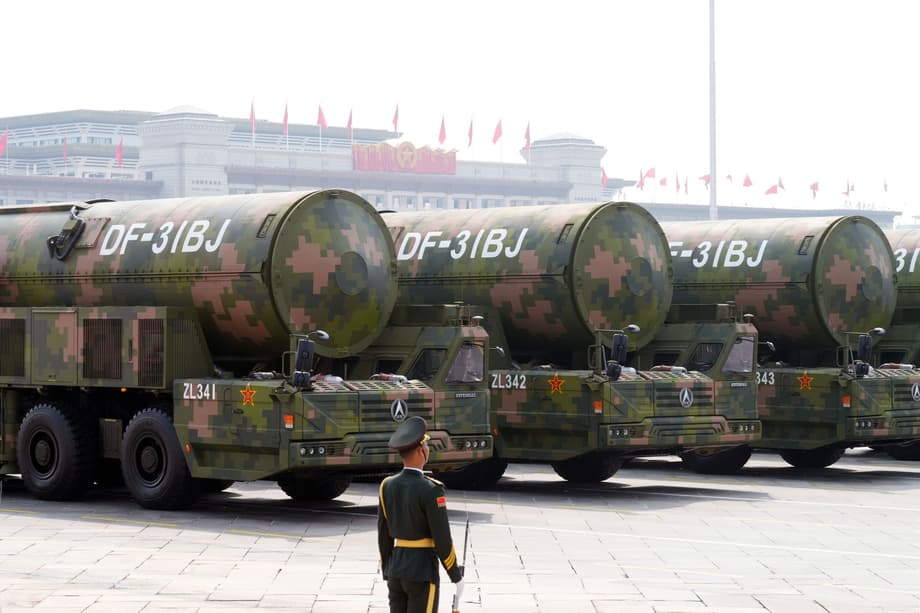
The purge has moved deep into the People’s Liberation Army after years of scrutiny under President Xi Jinping’s anti graft campaign. The Rocket Force, which operates ballistic, cruise and hypersonic missiles, became a focus in 2023. In October, eight senior generals were expelled from the Communist Party on graft charges, including He Weidong, the country’s number two general who served on the Central Military Commission. Investigations and personnel changes triggered reviews across procurement chains and introduced new layers of oversight that paused deals and pushed schedules to the right.
The fallout is visible in regional league tables. While Japan’s arms firms rose about 40 percent, Germany’s gained 36 percent and United States companies grew 3.8 percent, China’s decline was enough to make Asia Oceania the only region where top firms posted a revenue drop. The picture is striking because China’s defense budget has risen for three decades. The slump does not signal a collapse in demand. It points to interrupted workflows, slower paperwork and delayed acceptance of equipment amid a campaign to police corruption inside the military and its suppliers.
What the numbers show and why they matter
SIPRI’s ranking aggregates the largest global manufacturers of weapons and military services, from aircraft and missiles to naval vessels and battlefield electronics. In the latest assessment, the combined take of the top 100 companies reached 679 billion dollars. By contrast, the eight Chinese firms in the list saw their combined revenue fall about 10 percent, to roughly 88.3 billion dollars. In a market buoyed by orders tied to active conflicts and replenishment of stockpiles, a double digit drop for a single major producer stands out.
China’s revenue losses came despite ongoing modernization and rising budgets. The reason is timing. Contracts pushed into review or renegotiation are not recognized as sales until deliveries or milestones are met. If auditing expands, risk tolerance falls and managers demand more documentation, programs can slip a quarter or more. That effect stacks across a portfolio, depressing headline revenue and weakening cash flows even if future demand remains intact.
Which companies were hit the hardest
SIPRI’s analysis highlights declines at Aviation Industry Corporation of China (AVIC), the country’s largest arms maker; China North Industries Group Corporation, widely known as Norinco, which is a major supplier of land systems; and China Aerospace Science and Technology Corporation (CASC), a key developer of missiles and space systems. Norinco posted the steepest drop, down about 31 percent to 14 billion dollars. AVIC’s deliveries of military aircraft slowed. CASC saw project delays and added scrutiny after leadership changes.
Inside Norinco and CASC disruptions
Norinco’s slide tracks to a year of internal upheaval. The removal of the board chairman and the head of its military division during an anti corruption probe led to government reviews of contracts, postponements and cancellations. Such reviews ripple through the firm’s extensive supplier network for armored vehicles, artillery systems, rockets and munitions. Even a short pause in contract execution can push revenue recognition into the following year, compounding the hit when multiple programs are affected at once.
CASC, which anchors a large share of China’s missile and space work, also experienced senior level changes in recent years and program delays. When leadership churn mixes with heightened procurement oversight, agencies often recheck requirements, documentation and testing protocols. For a portfolio that spans ballistic, cruise and hypersonic systems, that can mean postponing trials or stretching out delivery cadences to meet refreshed compliance targets.
Aircraft and shipbuilding still advance, but at a tempered pace
AVIC, which includes major aircraft factories in Chengdu, Xi’an and Shenyang, had expanded batch production in 2023 as the PLA replaced older platforms. The following year, according to SIPRI’s reporting, deliveries slowed while oversight tightened. Aircraft programs are complex. A delay in a subsystem supplier’s certification can hold up entire lots, shifting revenue into later quarters even when assembly lines are busy.
China’s naval shipbuilding, concentrated in China State Shipbuilding Corporation, has been a bright spot in recent years, and the PLA Navy continues to introduce new surface combatants and the advanced aircraft carrier Fujian. The fleet’s expansion remains a priority, but any pause in final approvals or acceptance trials during a review cycle can change when shipyards book milestones and when suppliers get paid. That affects top line results even if output at the yard level looks steady.
How a corruption purge slows procurement
China’s military acquisition system is centralized under the Central Military Commission, with the Equipment Development Department responsible for major purchases. A corruption probe at the apex of that system introduces friction at every level. When senior officers or executives face investigation, their signatures on past contracts, waivers and testing approvals are rechecked. New sign offs are withheld until successors are named and teams verify compliance with fresh directives.
That process delays the life cycle of a typical contract. Programs may require re bidding or supplemental vetting of prime contractors and key subsuppliers. Contract language is rewritten to include stronger anti graft clauses and stricter payment triggers. Auditors demand deeper documentation of cost structures and delivery schedules. Risk officers set lower thresholds for tolerating schedule slips or quality issues. Each step aims to prevent abuse, but the cumulative effect is to push revenue and deliveries to the right.
Financially, a slowdown in acceptance and milestone payments can squeeze cash flow at big firms and their suppliers. Subcontractors often depend on prompt payments to fund materials, labor and testing. If money is held up by reviews, companies may defer investments in new tooling or scale back overtime, which then slows production further. Engineering teams can be pulled from development tasks to prepare audit responses, delaying upgrades and innovation that underpin long term competitiveness.
Rocket Force turbulence and high end weapons timelines
The Rocket Force sits at the core of China’s deterrent and war fighting concepts, fielding medium and intermediate range ballistic missiles, anti ship ballistic missiles and emerging hypersonic glide vehicles. SIPRI researchers warn that disruption inside this branch, combined with supplier reviews, could expose timelines for advanced systems. That risk is not about technology alone. It is also about the pace of testing, certification and acceptance, all of which depend on stable leadership and predictable procurement processes.
The PLA has set milestones for modernization, including a goal to have key capabilities and war fighting readiness in place for the 2027 centenary of the force’s forerunner, the Red Army. A procurement pause can shift test events, slow deliveries to operational units and complicate training pipelines. Budgets remain on an upward track, but schedule certainty matters when forces plan to introduce complex systems that require new tactics, logistics and maintenance regimes.
Why global peers are growing while China stalled
China’s downturn unfolded in a year when other producers accelerated. Japan’s defense contractors rose about 40 percent, helped by a policy shift that opened more room for exporting certain lethal equipment and by a larger push to expand the country’s defense industrial base. Five Japan based firms featured in SIPRI’s ranking lifted their combined arms revenue to roughly 13.3 billion dollars. In Europe, Germany’s firms climbed 36 percent as orders tied to support for Ukraine and national rearmament plans flowed through to books.
United States companies increased revenues by 3.8 percent, aided by replenishment orders and multi year contracts. Even where revenue growth appears modest, large backlogs and steady demand for munitions, air defenses and armored vehicles support continued hiring and capital spending. Asia Oceania as a whole would have risen if not for China’s slump, with several regional producers benefiting from stronger domestic budgets and export demand.
What this means for regional security and industry competition
China still fields the world’s largest naval and coast guard fleets and has introduced a range of advanced capabilities, including new aircraft carriers, hypersonic systems and a growing inventory of drones for air and sea. A revenue dip does not erase those achievements. The central question is whether delays at prime contractors and their suppliers will slow the pace at which new units receive equipment in the next one to two years. If schedules stretch, competitors that are racing to expand capacity could gain ground in select technologies and export markets.
For suppliers in China’s defense ecosystem, tighter oversight raises the cost of compliance and increases the importance of transparency in pricing and quality control. SIPRI researchers expect procurement will continue under stronger controls, with some programs facing higher costs and measured timelines. That approach can yield cleaner processes, but companies will need to manage cash cycles and subcontractor health to avoid cascading slowdowns in production.
Scenarios to watch through 2027
Several signals will indicate whether the slump is a temporary dip or the start of a longer period of subdued revenue. If investigations wind down and leadership teams settle, contract awards to AVIC, Norinco and CASC should accelerate. Watching for fresh production lots of combat aircraft, artillery and missile systems, and tracking acceptance ceremonies for major platforms, will show whether schedules are normalizing.
Another marker is the Rocket Force’s testing tempo. Regular flight tests and fielding of new variants suggest that procurement and certification are on track. Shipyard activity and sea trials will indicate whether naval programs are meeting milestones. At the policy level, any additional changes to procurement rules or to oversight of the Equipment Development Department would also influence how fast the sector can translate rising budgets into booked revenue.
Key Points
- SIPRI reports a 10 percent revenue drop for China’s top military firms, while global arms sales hit a record 679 billion dollars.
- Anti corruption probes paused or canceled contracts in 2024, after the Rocket Force and senior commanders came under investigation.
- Norinco suffered the largest hit, down about 31 percent to 14 billion dollars, with AVIC and CASC also facing slower deliveries and project delays.
- China’s decline made Asia Oceania the only region in SIPRI’s ranking with lower top tier arms revenue.
- Japan’s firms rose about 40 percent, Germany’s 36 percent and United States companies 3.8 percent on war driven demand and rearmament.
- SIPRI researchers caution that advanced missile, aerospace and cyber programs may see timelines stretched, adding uncertainty ahead of the PLA’s 2027 milestone.
- Budsgets in China keep rising, but tighter oversight likely means higher costs, stricter controls and a measured pace of modernization.
- Key indicators to watch include new contract awards, Rocket Force testing activity, and acceptance milestones for aircraft, missiles and naval platforms.