Two interrupted shows bring a diplomatic dispute into the spotlight
Japanese singer Maki Otsuki was reaching the chorus of a One Piece theme song in Shanghai when the music stopped and the stage went dark. Two crew members hurried to her side and escorted her away. The audience at Bandai Namco Festival 2025 watched in confusion as a celebration of Japanese entertainment became the latest visible casualty of worsening relations between China and Japan.
Contents
- Two interrupted shows bring a diplomatic dispute into the spotlight
- What happened at Bandai Namco Festival?
- Hamasaki performs for an empty arena
- How the shutdowns unfolded
- Other artists, festivals and films lose dates
- What force majeure means for ticket holders
- Why Taiwan is central to the dispute
- Why approved concerts can still disappear
- Chinese fans react to losing their shows
- The costs reach beyond the performers
- Key Points
The interruption happened on Friday evening, just after the festival had begun. Within hours, organizers scrapped the remaining stage program for the weekend. The following night, Japanese pop star Ayumi Hamasaki performed a full set at Shanghai Oriental Sports Center before 14,000 empty seats after her concert was canceled.
By December 1, 2025, the disruption had spread beyond those two performances. Japanese artists had lost shows in Shanghai, Beijing and Guangzhou, while screenings of Japanese films faced delays. Some events scheduled for December and early the following year had also been pulled.
The cancellations followed remarks by Japanese Prime Minister Sanae Takaichi that a Chinese attack on Taiwan could amount to a situation threatening Japan's survival. That assessment could allow military action under Japan's security laws. Beijing, which regards Taiwan as part of its territory, denounced her comments and warned Chinese citizens about traveling to Japan.
Concert notices offered much less detail than the diplomatic exchanges. Organizers cited unavoidable circumstances, various factors or force majeure, leaving fans with canceled plans and limited explanations. The effects reached Chinese audiences and workers as well as Japanese performers: Hamasaki's stage had taken a joint crew of roughly 200 people five days to build.
What happened at Bandai Namco Festival?
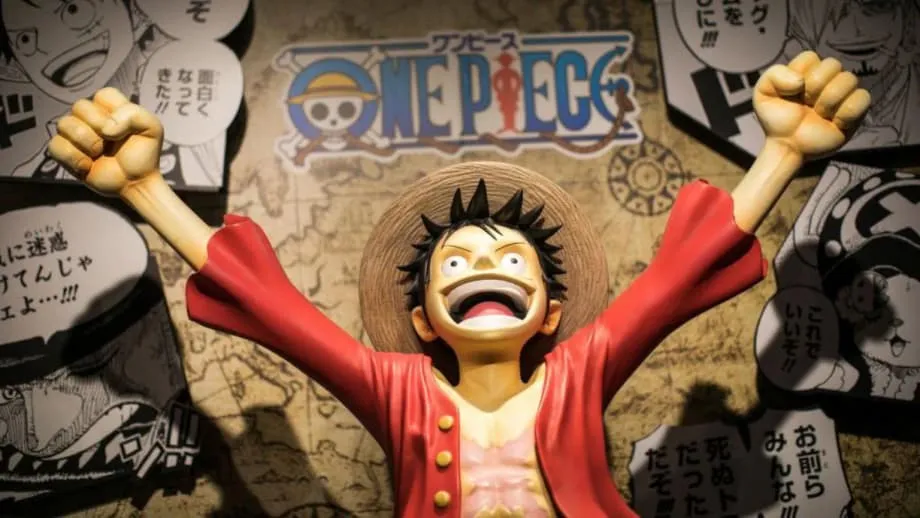
Bandai Namco Festival 2025 was planned as a celebration lasting three days, combining Japanese anime, music and activities. Experience booths featured One Piece and Mobile Suit Gundam, while the live program brought together artists from across Japan.
Otsuki's performance stopped during a One Piece theme song on the festival's opening evening. Video clips of the sudden blackout and her departure spread quickly online. Her management said the performance had been halted because of unavoidable circumstances and added that staff at the venue had been kind and helpful.
Festival organizers subsequently announced that all stage shows were canceled after comprehensively taking into consideration various factors. Otsuki's next set was among the performances lost. Popular Japanese idol group Momoiro Clover Z, scheduled to appear on Saturday, did not take the stage.
The cancellation covered the festival's stage program for the rest of the weekend. Fans who had expected several days of performances instead faced an abrupt shutdown almost as soon as the event had started. Performers were also left dealing with a schedule that had changed without a detailed public explanation.
A spokesperson for China's foreign ministry was asked about the stoppage at a daily news briefing. The spokesperson declined to discuss the specifics and directed questions to the organizers in Shanghai:
I suggest you chat with the Chinese organisers.
The ministry's response left the explanation with the people running the event. Their public notice described a decision based on various factors, without identifying the particular factor that had caused Otsuki's performance to end.
Hamasaki performs for an empty arena
Ayumi Hamasaki faced a different version of the same disruption the following night. Her concert at Shanghai Oriental Sports Center was canceled under a force majeure notice, and fans could not enter the arena. She nevertheless delivered a full set before its 14,000 empty seats.
Hamasaki described being asked suddenly to cancel after a joint production crew of roughly 200 people had spent five days constructing the elaborate stage. Many of those workers were Chinese. Her decision to perform was a tribute to their work and a message to supporters who could no longer attend.
The empty arena was an unusual setting for a performer whose career has filled stadiums across Asia. The stage, crew and performance remained, while the audience that the production had been built to welcome was absent.
Hamasaki said in a public statement that she would not comment on politics. Instead, she focused on gratitude to her team and the fans she could not meet, describing the performance as an act of appreciation and a reminder of why she performs. Explaining her view of entertainment's role, she said:
I still strongly believe that entertainment should be a bridge that connects people, and I want to be on the side of creating that bridge.
Her message spread through fan communities in China and Japan, where shared interests in anime and music have helped people form friendships across borders and languages. The canceled concert put those personal connections alongside a dispute between governments.
How the shutdowns unfolded
The weekend's events moved quickly from a single interrupted song to the loss of entire programs. The sequence matters because audiences and crews had already gathered, or completed substantial preparations, before some cancellations became public.
- Friday evening: Otsuki's One Piece theme performance stopped at Bandai Namco Festival 2025 in Shanghai, and two crew members escorted her off the darkened stage.
- Within hours: Organizers canceled all remaining festival stage shows for the weekend, including Otsuki's next set.
- Saturday: Momoiro Clover Z's scheduled festival appearance did not take place. Hamasaki's Shanghai concert was also canceled, and she performed a full set before 14,000 empty seats.
- By December 1, 2025: Cancellations had affected other Japanese artists and events, including some performances scheduled for December and early the following year.
Organizers often gave only short explanations despite the scale of the changes. Similar language appeared across notices, including references to various factors, force majeure and technical problems. Some events were canceled or postponed only hours before doors were due to open.
The uncertainty extended to what would happen next. Some Japanese linked shows continued under heightened security, while others ended abruptly without a path to rescheduling. The uneven treatment made it harder for audiences and promoters to judge whether a planned performance would proceed.
Other artists, festivals and films lose dates
LisAni! Live Shanghai 2025, an event devoted to anime music, was canceled, with ticket refunds promised. Other artists whose shows in Shanghai or Beijing were called off included KAF, SID, Shuka Saito and KOKIA.
Shanghai promoters also pulled a comedy festival featuring Japanese performers. In Guangzhou, an event involving members of the boy group JO1 was canceled. Beijing concerts, including performances by KOKIA, were called off with little advance notice.
The affected events covered several kinds of entertainment, from idol appearances and anime songs to comedy and individual concerts. Their shared link was Japan, even though they involved different organizers, venues and audiences.
Cinema schedules also changed. At least two Japanese films faced reported delays: a new Crayon Shin chan installment and a live action Cells at Work title that had been scheduled for December. Ticket platforms removed listings, and no replacement dates had been announced by December 1.
The loss of events scheduled for December and early the following year extended the disruption beyond the immediate weekend. Fans planning future outings faced uncertainty alongside those whose concerts had already been canceled.
What force majeure means for ticket holders
Force majeure is a standard term in event contracts for circumstances beyond the control of the parties that make an event impossible to deliver. It can cover disruptions that could not reasonably be anticipated or prevented, including natural disasters, venue closures, public health emergencies or sudden regulatory orders.
In the concert notices, the phrase signaled that organizers regarded the circumstances as outside their control. Safety orders or regulatory constraints are examples of the kinds of disruption such a clause may cover.
Invoking force majeure typically allows a promoter to cancel without paying contractual penalties and triggers obligations to refund ticket holders. It does not require organizers to describe the underlying cause in detail, which helps explain why a cancellation notice can have major consequences while offering very little information.
LisAni! Live Shanghai 2025 explicitly promised refunds. Across the wider wave of cancellations, however, the brief public explanations left audiences with little detail about why particular events had been stopped.
Refunds address the ticket purchase, while the production faces a broader set of expenses. Performers, promoters and crews may already have committed money and time to travel, equipment, transport and construction before a force majeure notice arrives.
Why Taiwan is central to the dispute
Prime Minister Sanae Takaichi's remarks in Japan's parliament placed a possible conflict over Taiwan within Japan's own security framework. She said a Chinese attack on Taiwan could present a situation threatening Japan's survival.
Japan's constitution, adopted after the war, constrains the use of military force. Security reforms in 2015 nevertheless gave the government limited scope to exercise collective self defense under strict conditions. In simple terms, that means Japan can consider helping defend another country in certain circumstances connected to its own security.
A judgment that a situation threatens Japan's survival can allow the government to consider a wider range of military support. Takaichi's comments framed a Taiwan conflict as potentially meeting that threshold, bringing the question of Japanese military involvement into the diplomatic dispute.
Beijing regards Taiwan as part of its territory and denounced the remarks. China summoned Japan's ambassador and issued warnings to Chinese nationals about travel to Japan. The response spread into areas where people from the two countries meet through tourism, commerce and entertainment.
Chinese authorities issued guidance discouraging trips to Japan, and several Chinese airlines offered free refunds for flights between the two countries. Travelers from China and Hong Kong make up a large share of Japan's visitors each year, and millions had already visited during 2025 through September. A slowdown would affect businesses and travelers in both countries.
Why approved concerts can still disappear
Foreign artists performing in China typically need approvals months before a show. Concert planning also involves cultural regulators, public security authorities and venue operators. A promoter must coordinate across those bodies as well as manage the artist, production and ticket sales.
Final checks can continue until the day of the performance, even after earlier approvals have been obtained. During periods of political tension, local authorities sometimes ask promoters to postpone or cancel. A short notice citing unavoidable circumstances or force majeure may then be the only public explanation.
Political risk can therefore affect a concert at several points. Permissions may be withheld or withdrawn, and the event depends on continuing cooperation among regulators, security officials and the venue. A stage that has already been built can still be left without an audience.
Brief cancellation language protects organizers and venues from having to give a detailed public account, while leaving fans and artists uncertain about the cause. The lack of consistent treatment adds another difficulty: some Japanese linked shows have gone ahead under increased security, while others have stopped suddenly.
Promoters planning a tour must arrange venues, staffing and transport well in advance. When permission or operating conditions can change near showtime, those commitments become harder to manage, particularly across several cities.
Chinese fans react to losing their shows
Chinese social media responses reflected sharply different views of the cancellations. Many fans were angry that cultural events had been paused with little warning. Others argued that Japanese events should not have proceeded during a period of heightened national anger toward Japan.
Otsuki's removal from the stage also drew comparisons with the widely circulated scene in 2022 when former Chinese leader Hu Jintao was escorted out of a Communist Party meeting. Some commenters described the singer's treatment through that comparison, and the meme spread quickly online.
Other commenters focused on who was bearing the cost. Some accused authorities of directing the dispute toward their own citizens. One asked why the audience, whose members were Chinese, should have to pay the price for a diplomatic quarrel.
Those reactions placed Chinese audiences at the center of the story. Japanese artists lost performances, while their fans in China lost access to music and cultural events they had chosen to attend. Local workers also saw productions disrupted after days of preparation.
The episode drew attention outside China. The United States ambassador to Japan posted on X that it was regrettable some people could not feel the power of music and urged Otsuki to keep believing. Fans of Japanese pop culture widely shared the post.
The costs reach beyond the performers
A touring production can involve hundreds of workers, rented equipment and weeks of logistical preparation. A concert canceled shortly before it begins leaves costs for flights, trucking, labor, stage construction and promotion, even though the planned performance cannot earn ticket revenue as expected.
Hamasaki's production gives those costs a concrete scale: roughly 200 people worked for five days to build a stage for a concert whose 14,000 seats ultimately stayed empty. Her decision to perform recognized the crew's effort, while the audience remained unable to attend.
Insurance can reduce the financial loss if a force majeure claim is accepted, but collecting payment often takes time. Expenses also spread beyond the main promoter to the businesses and workers supplying the show.
For Japan's entertainment industry, the disruption comes as cultural exports, including anime and music, are a growing focus of overseas expansion. China is a key market, with substantial fan communities in Shanghai, Beijing, Guangzhou and other cities.
Unreliable schedules can influence where managers take future tours. They may avoid mainland dates, move performances to Macau or Southeast Asia, or use online shows instead. Chinese fans lose access to local appearances in the process, helping explain the frustration within anime and Japanese pop communities.
The region has seen a prolonged cultural freeze before. After the 2016 dispute over a missile defense system in South Korea, many South Korean shows in China were quietly shelved, and television dramas largely disappeared from major Chinese platforms for a long period.
The causes and scope of that dispute differed from the current tensions with Japan. Its course nevertheless illustrates how quickly cultural exchange can cool during a political quarrel and how long a recovery can take. In Shanghai, the immediate consequences were already visible: an interrupted song, a canceled festival program and a completed concert performed without its fans.
Key Points
- Maki Otsuki's One Piece theme performance in Shanghai stopped during the song, and two crew members escorted her off the darkened stage.
- Bandai Namco Festival 2025 canceled all remaining weekend stage shows, including appearances by Otsuki and Momoiro Clover Z.
- Ayumi Hamasaki performed a full set before 14,000 empty seats after her Shanghai concert was canceled. Roughly 200 crew members had spent five days building the stage.
- Cancellations affected LisAni! Live Shanghai 2025, other Japanese artists, a Shanghai comedy festival and an event involving JO1 members in Guangzhou.
- A new Crayon Shin chan film and a live action Cells at Work title faced delays, with no replacement dates announced by December 1, 2025.
- The cultural disruption followed Prime Minister Sanae Takaichi's comments that a Chinese attack on Taiwan could threaten Japan's survival.
- China denounced the comments, summoned Japan's ambassador and discouraged travel to Japan. Several Chinese airlines offered free flight refunds.
- Fans in China expressed both anger at the cancellations and support for stopping Japanese events during the diplomatic dispute.