A sudden shutdown on stage shocks fans in Shanghai
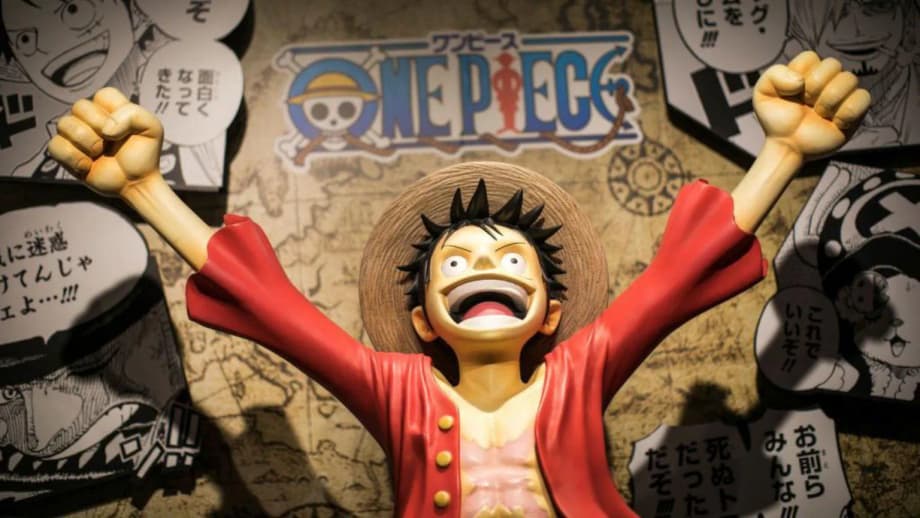
The lights went out in an instant as Japanese singer Maki Otsuki reached the chorus of a One Piece theme song in Shanghai. Music cut, stage dark, two crew members hurried to her side and led her away. The crowd, gathered for the Bandai Namco Festival 2025, looked on in confusion. It was Friday evening and the festival had only just begun. Within hours, the rest of the weekend program was scrapped.
Otsuki’s management posted that the performance was halted due to unavoidable circumstances. Staff at the venue, they added, were kind and helpful. Organizers later announced that all stage shows were canceled after comprehensively taking into consideration various factors. Clips of the stoppage spread quickly online, and the incident became the newest flashpoint at the intersection of pop culture and geopolitics.
The following night, J pop icon Ayumi Hamasaki arrived at Shanghai Oriental Sports Center to find her concert canceled. She went ahead and delivered a full set to 14,000 empty seats, a tribute to the crews, many of them Chinese, who had spent days building the stage, and a message to fans who could not enter the arena.
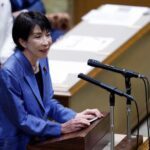
These scenes unfolded as tensions between Beijing and Tokyo escalated. Japan’s prime minister, Sanae Takaichi, recently told parliament that a Chinese attack on Taiwan could amount to a situation threatening Japan’s survival, an assessment that could permit military action under Japan’s security laws. China, which regards Taiwan as part of its territory, denounced the remarks and has warned its citizens about travel to Japan. The fallout has now spilled into entertainment.
Asked about the stoppage at a daily news briefing, a spokesperson for China’s foreign ministry declined to discuss the specifics and pointed questions back to Shanghai.
I suggest you chat with the Chinese organisers.
What exactly happened at the festival
Bandai Namco Festival 2025 was planned as a three day celebration of Japanese anime and music, with experience booths for One Piece and Mobile Suit Gundam and a schedule of live performances by artists from across Japan. After Otsuki was pulled mid song on Friday, organizers called off all stage events for the weekend. Popular idol group Momoiro Clover Z, set to perform on Saturday, did not take the stage. The abrupt shift left fans and performers stunned.
- All stage shows at the Bandai Namco Festival 2025 in Shanghai were canceled after Friday night.
- Maki Otsuki was escorted off stage during a One Piece theme performance. Her next set was canceled.
- The LisAni! Live Shanghai 2025 anime music event was canceled, with tickets promised for refund.
- Ayumi Hamasaki’s Shanghai show was halted under a force majeure notice. She performed to empty seats as a gesture to staff and supporters.
- Other acts canceled shows in Shanghai or Beijing, including KAF, SID, Shuka Saito, and KOKIA. Some events scheduled for December and early next year were also pulled.
Public statements from organizers used identical language, citing various factors or force majeure. In practice, that phrase signals that circumstances beyond the control of the parties have made the event impossible to deliver, such as safety orders or regulatory constraints.
What does force majeure mean in practice
Force majeure is a standard clause in event contracts. It covers disruptions that cannot be reasonably anticipated or prevented, such as natural disasters, venue closures, public health emergencies, or sudden regulatory orders. When invoked, it typically allows promoters to cancel without paying penalties, and it triggers refund obligations to ticket holders. It does not require organizers to explain the underlying cause in detail, which is why fans often receive very little information when these notices appear.
Ayumi Hamasaki’s silent show and her message
Hamasaki described being asked suddenly to cancel her Shanghai concert, even after a joint crew of roughly 200 people had spent five days constructing the elaborate stage. Unable to welcome fans, she decided to sing to an empty arena, a rare scene in a career that has filled stadiums across Asia.
In a public statement, Hamasaki said she would not comment on politics and focused on gratitude to her team and the audience she could not meet. She described the empty house as an act of appreciation and a reminder of why she performs.
I still strongly believe that entertainment should be a bridge that connects people, and I want to be on the side of creating that bridge.
Her message resonated across fan communities in China and Japan, where many have built friendships around anime and music that cross language and borders.
Fans in China caught in the middle
Reactions online in China were deeply mixed. Many were angry that cultural events were paused with little warning. The sudden blackout of Otsuki’s set was compared to the widely shared moment in 2022 when former Chinese leader Hu Jintao was escorted out of a Communist Party meeting. Some commenters described the shutdown as giving Otsuki the Hu Jintao treatment, a meme that spread swiftly.
Others accused authorities of turning the spearhead toward their own citizens. One commenter asked why the audience, who are after all Chinese, should pay the price for a diplomatic dispute. A different chorus on social media argued the events should never have gone ahead at a time of heightened national anger toward Japan.
Even outside China, the episode drew notice. The United States ambassador to Japan posted on X that it was regrettable some people could not feel the power of music, and urged Otsuki to keep believing. The post was widely shared by fans of Japanese pop culture.
How cancellations spread across China
The shutdowns stretched beyond a single festival. A string of Japan themed or Japan linked events in multiple cities were canceled or postponed, often hours before doors were set to open. Organizers frequently cited force majeure or technical problems. In Shanghai, promoters also pulled a comedy festival with a roster of Japanese performers. In Guangzhou, an event featuring members of the boy group JO1 was canceled. In Beijing, concerts by artists including KOKIA were called off with little advance notice.
The chill reached movie screens. Chinese media outlets reported delays for at least two Japanese films, including a new Crayon Shin chan installment and a live action Cells at Work title that had been slated for December. Ticket platforms removed listings and no new dates were announced at the time of writing.
Travel and commerce felt ripples too. Chinese authorities issued guidance discouraging trips to Japan, and several Chinese airlines offered free refunds for flights between the two countries. Travelers from China and Hong Kong form a large share of visitors to Japan each year, and millions had already visited this year through September, so a slowdown would be felt in both directions.
Why politics intervened
At the core of the cultural freeze is a sharp diplomatic dispute. In Japan’s parliament, Prime Minister Sanae Takaichi said that an attack on Taiwan could present a situation threatening Japan’s survival. Under Japan’s post war constitution, military force is constrained, but reforms in 2015 gave Tokyo limited scope to exercise collective self defense under strict conditions. When a situation is judged to threaten Japan’s survival, the government can consider a wider range of military support. Takaichi’s remarks framed a Taiwan conflict as potentially meeting that threshold.
Beijing denounced the comments, summoned Japan’s ambassador, and warned Chinese nationals about travel to Japan. In disputed periods, cultural events often become an early barometer of strain because they require permits from cultural regulators, approvals from public security, and close coordination with venue operators. When political risk rises, any of those players can withhold or withdraw permissions.
Why events vanish hours before showtime
Foreign artist concerts in China typically require approvals months in advance. Even then, final checks can run until show day. In times of tension, local authorities sometimes ask promoters to postpone or cancel, and the public explanation is a short notice citing unavoidable circumstances or force majeure. The lack of detailed reasoning protects organizers and venues but leaves fans and artists in the dark.
The uneven application has added to the confusion. Some Japanese linked shows have still gone ahead under heightened security. Others were halted abruptly with no path to reschedule. For promoters, that unpredictability makes planning far more complex.
What it means for the industry
For artists, crews, and promoters, last minute cancellations are punishing. A touring production can involve hundreds of workers, rented equipment, and weeks of logistics. A one night halt means sunk costs on flights, trucking, labor, stage builds, and promotion. Insurance can blunt the financial blow if force majeure clauses are accepted, but collecting often takes time, and losses still spill across the supply chain.
For the Japanese entertainment business, the timing stings. Cultural exports, from anime to music, are a growing focus for overseas expansion. China has been a key market, with deep fanbases in Shanghai, Beijing, Guangzhou, and beyond. When schedules turn unreliable, managers may avoid mainland dates, shift to Macau or Southeast Asia, or move shows online. Chinese fans lose access in the process, which is why frustration has been vocal on local platforms where anime and J pop communities are active.
There is a recent regional echo. After the 2016 dispute over a missile defense system in South Korea, many South Korean shows in China were quietly shelved and TV dramas all but vanished from major Chinese platforms for a long stretch. The current situation is different in its causes and scope, but it shows how quickly cultural exchange can cool during a political quarrel, and how long it can take to thaw.
Key Points
- Maki Otsuki’s One Piece performance in Shanghai was cut mid song, and she was escorted off stage.
- Organizers canceled all stage events at Bandai Namco Festival 2025 after the stoppage.
- Ayumi Hamasaki’s Shanghai concert was canceled under a force majeure notice. She performed to 14,000 empty seats for her team and fans.
- A wave of cancellations hit other Japanese artists and events in Shanghai, Beijing, and Guangzhou.
- Chinese media reported delays for Japanese films including a Crayon Shin chan movie and a live action Cells at Work title.
- Tensions rose after Japanese Prime Minister Sanae Takaichi said a Taiwan conflict could threaten Japan’s survival, prompting a hard response from Beijing.
- Permitting and security approvals make concerts vulnerable to short notice shutdowns when politics turns tense.
- Fans in China expressed both anger and support online, highlighting the human cost of a cultural freeze.