Why this missile proposal matters now
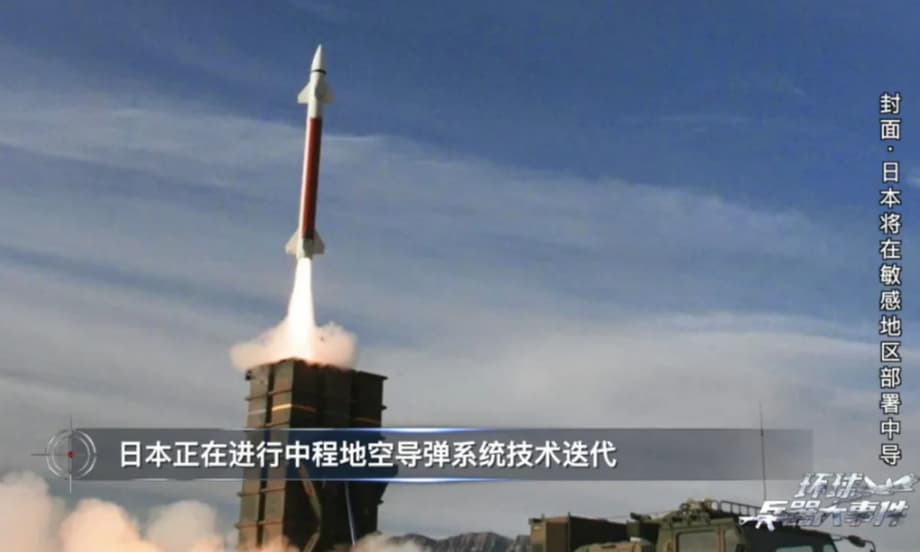
Japan and the Philippines are exploring the transfer of Japan’s Type 03 Chu SAM, a truck mounted medium range surface to air missile system. The talks come as Tokyo prepares a major change to its defense export guidelines, which for a decade have limited transfers to noncombat roles. If this deal advances, it would be among Japan’s first exports of a complete lethal weapons system and a clear sign that Tokyo intends to act as a security contributor across the Indo Pacific, not only as a buyer of allied equipment.
- Why this missile proposal matters now
- What is the Type 03 Chu SAM?
- Why the Philippines is building air defense now
- Tokyo’s rule change and the debate at home
- China’s response and the risk of miscalculation
- Allied network, exercises and interoperability
- Industry, costs and timelines
- What else is on the table between Tokyo and Manila
- What to watch next
- Key Points
At the center is a plan to scrap the long standing “five category” rule that confines exports to rescue, transport, patrol, surveillance, and minesweeping. The revision does not require new legislation because the guidelines rest on cabinet decisions. The National Security Council chaired by Prime Minister Sanae Takaichi can adopt changes that the cabinet then approves. The ruling Liberal Democratic Party and the Japan Innovation Party set the removal of the five category cap as a coalition goal for next year. Supporters say the change would align policy with a tougher regional environment and help sustain Japan’s defense industry. Critics warn it blurs the line with the postwar pacifist stance and deserves deeper parliamentary scrutiny.
For Manila, a medium range ground based air defense layer would mark another step in a pivot from internal security to territorial defense in the West Philippine Sea. It would complement recent acquisitions such as the BrahMos anti ship missile and strengthen protection of airfields, ports, and energy sites exposed to pressure from China. The transfer would also deepen fast growing Japan Philippines security ties, which already include a Reciprocal Access Agreement that enables the two countries’ forces to train and operate on each other’s territory.
What is the Type 03 Chu SAM?
Developed by Mitsubishi Electric in the 1990s to replace the aging MIM 23 Hawk, the Type 03 is a road mobile surface to air missile used by the Japan Ground Self Defense Force. A typical launcher carries six missiles. A separate radar and command element rides on its own 8×8 trucks, allowing batteries to disperse on roads and hide off base, then quickly shift firing positions.
Open sources give the missile an engagement range of roughly 50 kilometers and intercepts up to about 10 kilometers in altitude. The missile uses inertial navigation with in flight updates by radio link, and then an active radar seeker for the terminal phase. That guidance mix supports engagements in poor weather and in cluttered or jammed environments. The fire control radar is an active electronically scanned array that can track on the order of one hundred targets and manage engagements against multiple aircraft or cruise missiles at once. Reported missile speed is around Mach 2.5.
Within Japan’s layered air defense, Chu SAM fills the middle tier. It sits above short range systems such as Tan SAM that protect units and facilities at close range, and below long range Patriot interceptors that guard large urban areas and critical bases. An upgraded Chu SAM variant designed to intercept some ballistic missiles and hypersonic glide vehicles is under development with a target of fiscal 2028 for completion, but the baseline system in current service already covers the aircraft and cruise missile threat that worries many Southeast Asian states.
How a battery would work in the Philippines
A Philippine battery would likely deploy its radar, command truck, and several launchers to shield a high value site such as a coastal air base or an energy hub. The 50 kilometer envelope can cover air approaches and sea lanes out to the horizon, especially when the radar sits on high ground. To be effective, the system would need integration with the national air picture, including military and civil radars, and timely information from allies. Road mobility complicates adversary planning, since the launchers can move, fire, then reposition and keep operating even if a base runway is closed.
Why the Philippines is building air defense now
The Philippines is shifting from a counterinsurgency posture toward external defense after years of confrontations at sea. Manila has invested in anti ship missiles, coastal radars, and new patrol vessels to raise the cost of coercion. The Marine Corps recently unveiled the first BrahMos missile battery, and leaders have stated plans to buy more. A medium range air defense system adds a different kind of protection. It complicates any adversary plan to overfly Luzon or approach military sites with fast jets or low flying cruise missiles.
Japan and the Philippines are already training more closely. A Reciprocal Access Agreement signed in 2024 and entering into force in 2025 allows both sides to conduct exercises on each other’s soil, easing logistics and practice for combined operations. Japanese troops fired the Type 03 during a multinational exercise in Australia in July, demonstrating that the system can deploy abroad alongside partners. If Manila acquires Chu SAM, Philippine crews would likely train with Japanese instructors and operate within a growing web of information sharing with the United States and other partners.
Geography makes coverage valuable. Batteries on Luzon could watch key northern approaches and protect bases that support patrols in the West Philippine Sea. Philippines territory sits in the first island chain, and the northernmost Philippine island lies roughly 140 kilometers from Taiwan. Japanese coastal surveillance radars and patrol craft already provided through official security assistance would help feed cuing to any future air defense batteries.
Tokyo’s rule change and the debate at home
Japan began easing its export posture in 2014 when it lifted a blanket embargo in favor of the Three Principles on Transfer of Defense Equipment and Technology. Even after that step, the implementing guidelines still barred complete lethal weapon systems, allowing only equipment in the five noncombat categories and certain co produced items. In 2023, Japan shipped domestically produced Patriot interceptors to the United States, a sign that the guidelines were already bending. The next phase, now under consideration, removes the category filter altogether. The cabinet can do so following deliberation by the National Security Council, without a Diet vote, because the principles are executive policy rather than statute.
The coalition with the Japan Innovation Party has accelerated change after the Liberal Democratic Party parted ways with longtime partner Komeito, which had served as a brake on defense policy. Prime Minister Takaichi has taken a hard line on the regional threat picture, arguing for faster buildup. Opponents warn that the process sidelines parliamentary debate and that exporting missiles risks drawing Japan into crises. Supporters counter that sending clearly defensive systems to partners deters conflict and raises the cost of aggression. The argument will intensify once the government unveils draft revisions and names early export candidates.
China’s response and the risk of miscalculation
Beijing has already criticized new Japanese deployments in the Nansei Islands chain, including Type 03 units positioned to watch the Taiwan Strait. China is likely to protest if a Japanese made battery takes up duty in the Philippines. Chinese officials and state media have said that placing more missiles near Taiwan is dangerous and accuse Tokyo of abandoning restraint. They also argue that exports to Manila will embolden Philippine moves in disputed waters.
Japanese officials maintain that air defense systems are inherently defensive. The Philippines frames new missiles as protection for its own territory and forces. The reality is that these batteries change military calculations. They do not alter claims on reefs or rocks, yet they force any air planner to account for defended zones. That can improve deterrence by raising the risk to aircraft and cruise missiles. It can also produce more frequent patrols or exercises by others to probe new defenses. The narrow distances in Northeast and Southeast Asia, from Yonaguni Island roughly 110 kilometers from Taiwan to Philippine waters in the Luzon Strait, leave little room for error.
Allied network, exercises and interoperability
A Chu SAM sale would plug into a wider network of partner capabilities stretching from the East China Sea to the South China Sea. The United States continues to operate with Philippine forces under the Enhanced Defense Cooperation Agreement, while Japan trains with Manila under the new access pact. Australia, South Korea, and Singapore have taken part in large exercises where Japanese air defense units fired live missiles. The message from these events is that partners intend to build overlapping sensors, communications, and shooters.
Interoperability is the hard part. Integrating a Japanese battery into the Philippine and allied air picture calls for common data formats, reliable identification friend or foe procedures, and a clear command relationship in a crisis. Training, spares, and maintenance pipelines must be in place before the first missiles arrive. Manila would need to align concepts and communications with partners so that the system contributes to a fused picture rather than a stand alone bubble.
Industry, costs and timelines
Japan’s defense industry is growing. Research from an international institute shows the world’s top 100 arms firms reached record sales in 2024, and Japanese companies’ combined arms revenue rose about 40 percent year on year to roughly 13.3 billion dollars. Tokyo’s effort to expand exports is tied to sustaining production lines and skills at home. A Chu SAM export would support the radar and missile manufacturing base, which also supplies Japan’s own forces.
Delivery timelines depend on contracts, production capacity, and training. Seeker and component bottlenecks across the global missile sector can slow output. Financing tools such as official security assistance grants, soft loans, and joint training packages will be important for Manila. The Philippines is working through the latest phase of its armed forces modernization and has begun fielding advanced coastal defenses. If a contract is signed after Japan revises its rules, initial deliveries would likely take a few years, with crews training in parallel. The upgraded Chu SAM capable of engaging some ballistic threats remains in development to the fiscal 2028 target, so any early Philippine batteries would be the current version focused on aircraft and cruise missiles.
What else is on the table between Tokyo and Manila
Beyond missiles, Tokyo and Manila have discussed the transfer of retired Maritime Self Defense Force destroyers. Japan has also been providing coastal surveillance radars, patrol boats, and other equipment to Southeast Asian partners through a new official security assistance framework. These tools improve maritime domain awareness and law enforcement without tying recipients into formal alliances. Training and maintenance support are just as vital as hardware. Manila’s challenge is to build crews, logistics, and information sharing mechanisms that keep new systems patrol ready.
What to watch next
The immediate milestones to track are in Tokyo. The National Security Council will consider revisions to defense transfer guidelines, followed by cabinet approval. Once that step is taken, agencies can launch a full study of a Type 03 export and begin formal talks with the Philippines. Negotiators would then define quantities, training, integration, and financing. In Manila, defense planners will weigh how many batteries to buy and where to deploy them. Reactions from Beijing will follow. Domestic debate in Japan will continue as the change tests the balance between deterrence and constitutional restraint. Allied coordination on exercises and data sharing will be an early indicator of how quickly a Philippine battery can plug into a regional air picture.
Key Points
- Japan and the Philippines are in informal talks on a transfer of the Type 03 Chu SAM medium range air defense system.
- Tokyo plans to remove the “five category” export limit through a National Security Council decision and cabinet approval, without new legislation.
- The Type 03 has an engagement range of about 50 kilometers, uses an active radar seeker, and is paired with an AESA radar on 8×8 trucks.
- An upgraded Chu SAM variant aimed at intercepting some ballistic and hypersonic threats is targeted for fiscal 2028.
- Manila is shifting to external defense, fielding BrahMos anti ship missiles and seeking ground based air defense to protect bases and infrastructure.
- Japan and the Philippines now have a Reciprocal Access Agreement that enables training and deployments on each other’s territory.
- China criticizes Japanese missile deployments near Taiwan and is likely to protest a sale to Manila, raising the risk of sharper friction.
- Japanese defense firms’ arms sales grew by about 40 percent in 2024, and exports help sustain domestic production lines.
- Talks also include possible transfers of retired Japanese destroyers and continued delivery of radars and patrol assets to Manila.
- If rules change in early 2026, a contract could follow, with deliveries and training likely taking several years before full operational use.