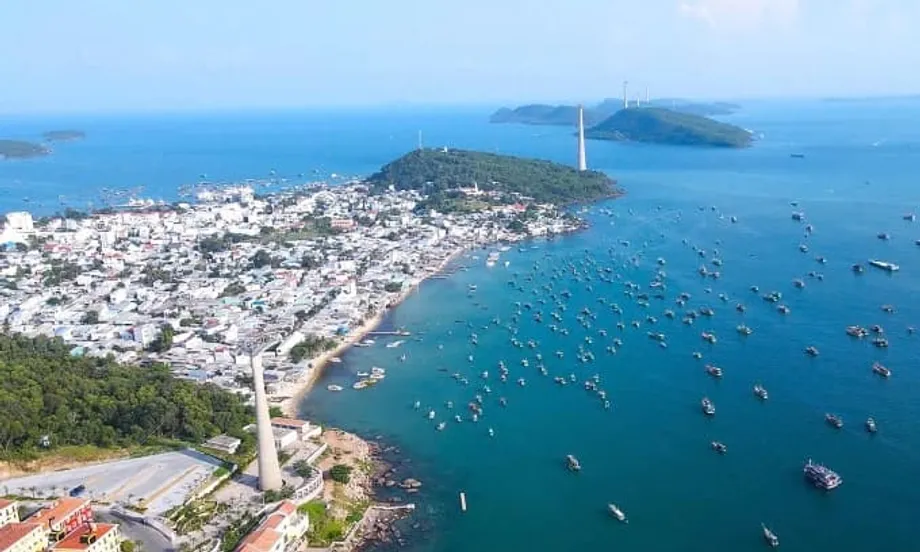
Thousands still without power as tourism season begins
More than 12,000 households on Vietnam's resort island of Phu Quoc remained without electricity on Sunday after a submarine power cable broke near the mainland on Saturday afternoon. An Giang Power Company said the 110 kV Ha Tien to Phu Quoc line failed at about 1:15 pm after a coastal road contractor reportedly drove piles inside the electricity safety corridor.
Contents
- Thousands still without power as tourism season begins
- How construction near Ha Tien damaged a vital link
- Hospitals and water systems received priority
- Why a second mainland connection was not enough
- The submarine cable that changed island electricity
- Repairing the break requires specialist work
- Businesses and families face different pressures
- Grid expansion depends on unfinished connections
- Protecting the corridor is part of protecting supply
- What to Know
The break cut one of the island's two main electricity supply routes, triggering a sweeping blackout that affected tens of thousands of residents and visitors. Engineers redirected electricity from the Nam Phu Quoc 110/22 kV substation, restoring supply to about 17,400 customers by Sunday while keeping essential services operating.
Phu Quoc, home to nearly 160,000 people, is entering its busiest tourism period. The island received about 6.5 million visitors in the first nine months of the year and generated more than 31 trillion dong in tourism revenue, about $1.17 billion. Hotels, restaurants and households now face disruption just as demand for electricity is rising.
The island has two high voltage connections to the mainland, but its network does not yet form a complete ring that can carry electricity around a failed section. That leaves some communities dependent on repairs, temporary generators or changes to the way power moves through the local grid.
As of December 1, 2025, the exact cause was still being checked with local authorities, and no firm completion date for repairs had been given. The restoration schedule depends on the damage and the technical solution chosen, along with the practical challenges of working on a cable beneath the sea.
How construction near Ha Tien damaged a vital link
Power officials said their initial assessment pointed to pile driving by a contractor building a coastal road near Ha Tien. The work reportedly entered the protected corridor around the high voltage cable near its mainland end.
A safety corridor is a buffer around electricity infrastructure where construction and other potentially damaging activities are restricted. Its purpose is to keep heavy equipment far enough away to protect workers and prevent damage to cables and other equipment.
The impact tore the cable containing three electrical cores. At this point on its route, the cable passes through shallow water before continuing into deeper seabed toward Phu Quoc. An Giang Power Company is working with local authorities to confirm precisely what happened and accelerate repairs.
Sections close to shore are usually among the most exposed parts of a submarine electricity connection. Cables may be buried and armored, while route maps help dredgers, construction crews and vessels avoid them. Those protections can be overcome when heavy work enters the protected area, especially in soft seabeds where piles can penetrate deeply.
The immediate sequence of the outage and recovery was:
- Saturday, about 1:15 pm: The 110 kV Ha Tien to Phu Quoc submarine line failed near the mainland, causing a widespread blackout.
- After the failure: Engineers redirected electricity from the Nam Phu Quoc 110/22 kV substation to essential facilities and parts of the island.
- By Sunday: About 17,400 customers had regained electricity, while more than 12,000 households remained without supply, many in the north.
Hospitals and water systems received priority
The Nam Phu Quoc substation became central to the emergency response. Crews used its 22 kV distribution network to supply Party and government offices, military units, hospitals, water supply systems, major telecommunications facilities and selected neighborhoods.
A substation changes voltage so electricity can move from a transmission line into local distribution networks. Here, engineers used the available connection and local lines to keep essential services running while restoring power to pockets of the island.
Residents reported that water supplies and mobile signals continued working in many central areas because of this priority routing. Hospitals and clinics stayed open. Some resorts and businesses switched to their own generators to bridge the interruption.
Conditions were harder across large parts of the northern half of Phu Quoc. Areas experiencing extended outages included parts of Duong Dong, Cua Can, Cua Duong and Ham Ninh. An Giang Power Company said roughly 12,000 customers in the north were still without grid electricity on Sunday.
Limited areas received rotating supply, meaning electricity was provided to different places at different times. Demand, however, was far greater than temporary generation could meet. Families charged phones in public offices, while some communities shared generators to operate water pumps and freezers.
Local officials asked residents for patience as engineers worked through electrical testing and the arrangements needed for repairs at sea. Restoring a neighborhood also depends on whether the available local lines can carry electricity to it from an alternative source.
Why a second mainland connection was not enough
Phu Quoc receives mainland electricity through the damaged 110 kV submarine cable from Ha Tien and the 220 kV Kien Binh to Phu Quoc transmission line. The presence of two connections gives the island more supply options, but the lines are not yet joined into a complete ring.
In a radial network, electricity follows branching routes toward the places that use it. If a critical section breaks, communities beyond that point can lose their connection until crews change the network arrangement or repair the damaged equipment.
A ring provides another route. Operators can isolate a failed section and send electricity around the other side, reducing the area left without power. This extra route is particularly valuable on an island where homes, public services and tourist facilities are spread over long distances.
Phu Quoc's engineers can switch feeders, the lines distributing power to particular areas, and draw on available substations to reconnect some customers. The current network still limits how much electricity they can move into places cut off by the cable failure.
The submarine cable that changed island electricity
The Ha Tien to Phu Quoc submarine link entered service in early 2014, ending years of reliance on diesel power plants on the island. Its arrival brought mainland electricity to Phu Quoc at a much larger scale.
The project cost more than 2.3 trillion dong and involved nearly 58 kilometers of 110 kV alternating current cable across the Gulf of Thailand. An experienced international contractor installed the link under the supervision of Vietnam's Southern Power Corporation. Alternating current is electricity whose direction changes repeatedly as it flows through the system.
Engineers chose a seamless copper cable containing three cores to improve reliability and carrying capacity. Surveys of the seabed helped determine the route, while burial and protective armor reduced exposure to anchors, currents and the movement of sand near shore.
PECC2, the Vietnamese consultant involved in the project, describes the engineering choices and installation methods in its submarine cable project account. Those measures reduced the risk of mechanical damage in most conditions, while heavy construction near the points where the cable reaches land remains a hazard requiring strict corridor protection.
Repairing the break requires specialist work
Repair crews must first locate the fault precisely. Electrical tests can help, including time domain reflectometry, a technique that sends a signal along a cable and uses its reflection to estimate where damage has occurred. A seabed survey then helps confirm the location.
A cable vessel or barge must be brought in with the equipment needed to reconnect the line. Divers or remotely operated tools expose the cable, allowing workers to remove the damaged section and bring replacement cable into position.
Specialists then reconnect all three electrical cores and the protective covering. These joints require tightly controlled working conditions and careful quality checks. Calm seas are needed for the work to proceed safely and accurately.
Power officials said the repair period depends on the extent of the damage and the method selected. Suitable weather, vessel availability and permits for work near the shoreline can also lengthen the process.
Southern Power units are deploying diesel generators to provide rotating electricity wherever the local network can accept it. The island's distribution lines extend more than 40 kilometers in some directions, making it difficult to supply every affected area from temporary equipment.
Strong demand during the tourism season adds to that constraint. Generators can support selected communities and services, but their available capacity and the distances involved prevent full coverage of the island's needs.
Businesses and families face different pressures
Phu Quoc's tourism businesses depend on electricity for air conditioning, food refrigeration and water pumps. Resorts, villas and restaurants need those systems throughout the day, while telecommunications networks require steady power to keep mobile and data services working.
The blackout has arrived as holiday occupancy climbs and visitors expect services to run smoothly. Many larger hotels have backup generators, giving them a way to continue operating during a grid failure.
Generator use brings its own limits. Fuel must be supplied, engines create noise, and the equipment may not have enough capacity to run every electrical system at once. Businesses must decide which equipment receives priority.
Smaller accommodation providers and street businesses face harder choices about opening hours and the services they can maintain. Households in northern neighborhoods have also endured longer interruptions and intermittent supply, even as central areas benefited from the emergency routing.
The contrast between functioning hospitals and water systems and prolonged neighborhood outages reflects the priorities of the emergency response. Essential services received the available electricity first, while crews worked to extend restoration to other customers.
Grid expansion depends on unfinished connections
Southern Power Corporation has been developing new 110 kV lines to connect North Phu Quoc and South Phu Quoc, together with a 220 kV substation on the island. These projects are intended to strengthen the main electricity network.
Once completed and connected, the new assets would give operators more routes for electricity during a failure. They would also allow crews to isolate smaller areas when equipment is damaged, reducing the number of customers affected by a single incident.
Land clearance and compensation problems have slowed progress and delayed bringing the projects into service. Completing the equipment and securing the land needed for its connections are both part of making the wider network usable.
The present outage shows why those connections matter to an island with a growing population of electricity users and a large tourism economy. Another mainland supply route is most useful when the island's own lines and substations can deliver its electricity to the areas that need it.
Until the projects are connected, emergency switching and generators remain central tools during a major fault. Their reach depends on the existing distribution network and the amount of power available at each location.
Protecting the corridor is part of protecting supply
Electricity safety corridors set minimum separation distances around lines, substations and submarine cables. They reduce the risks of fire, electric shock and physical damage from nearby activity.
Near the coast, a corridor usually covers land and a defined strip of seabed containing the buried cable and the area where it may move. Keeping piles and anchors outside that buffer helps prevent force from reaching the cable's outer jacket and copper cores.
Clear maps of buried utilities, coordination between builders and electricity operators, and enforcement of protected areas can reduce the chance of another construction incident. Contractors working near critical infrastructure are typically expected to survey, mark and monitor those areas and notify the utility before driving piles.
Most countries require permits, supervision at the work site and a temporary work plan for construction near energized infrastructure. Vietnam's power sector has expanded such requirements as its network has grown. For a rapidly growing coastal city such as Ha Tien, these precautions protect both construction workers and the public services that depend on electricity.
Liability rules and penalties can give contractors a stronger reason to avoid damaging infrastructure. Insurance can help cover repair costs without slowing restoration. Incidents of this kind also tend to prompt audits, refresher training and closer coordination over upcoming road projects.
Phu Quoc's immediate priorities remain repairing the cable and extending electricity to affected communities. The longer task is to complete the connections that let power move around a fault while protecting the existing routes from construction damage.
What to Know
- The 110 kV Ha Tien to Phu Quoc submarine cable failed near the mainland at about 1:15 pm on Saturday.
- Officials suspect pile driving by a coastal road contractor inside the electricity safety corridor; the exact cause was still being checked.
- About 17,400 customers had electricity restored by Sunday, while more than 12,000 households remained without power, many in the north.
- Emergency supply from the Nam Phu Quoc substation kept hospitals, water systems, telecommunications facilities and other essential services operating.
- Phu Quoc has two mainland supply routes, but its grid lacks a complete ring that can route electricity around a failed section.
- The damaged submarine link entered service in early 2014, stretches nearly 58 kilometers and cost more than 2.3 trillion dong.
- Repair timing depends on the damage, technical approach, weather, vessels and permits. Temporary generators cannot meet all demand.
- New 110 kV connections and a 220 kV substation are intended to strengthen the network, but land clearance and compensation problems have delayed progress.