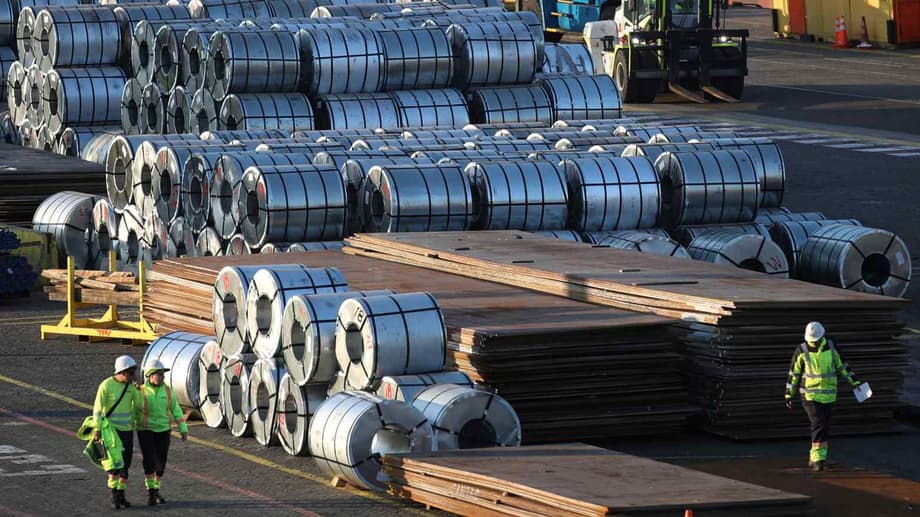
A new outward push for Chinese steel
What unsettled China’s steel sector this year was not a modest cut in output. It was the speed of the demand drop at home. Weaker property construction, tighter local government budgets for infrastructure, and a slower industrial cycle left mills with too much capacity and thinning margins. Exports surged, prices came under pressure, and producers began to accelerate a strategy many had already tested in the last decade, building and buying assets abroad to find growth and reduce exposure to trade barriers.
That external push is now broader and more sophisticated. Companies are lining up projects that combine new technology with access to cheaper energy or better raw materials. The Middle East and Southeast Asia stand out, along with select projects in Africa and eastern Europe. This shift is happening as a fresh global glut takes shape. The OECD Steel Committee has warned that steelmaking capacity could reach about 2.55 billion metric tons by the end of 2025, with excess capacity above 680 million tons. China’s exports exceeded 118 million tons in 2024 and grew again this year, a sign of the imbalance between domestic supply and demand.
Policy is pushing the change as well. China has maintained strict controls on building new capacity at home and set output ceilings to manage emissions. Its national carbon market expanded to include the steel sector this year, bringing compliance costs for mills that rely on coal fired blast furnaces. At the same time, trade rules are getting tougher in key destinations. The European Union’s Carbon Border Adjustment Mechanism (CBAM) enters a pay phase in 2026, and several economies have widened anti dumping and safeguard measures. For many Chinese steelmakers, the answer is to place capital where energy, ore quality, or market access can deliver cleaner and more profitable steel.
Why demand at home is shrinking
China’s steel consumption is dominated by construction, followed by machinery, autos, and appliances. The prolonged property downturn continues to drag on orders for beams, rebar, and flat steel used in building frames and cladding. Infrastructure investment has not offset the gap. Net exports rose back above 100 million tons last year, but that reflects weak domestic demand more than a structural rise in global consumption. Many mills trimmed prices to keep utilization high, which squeezed profits and pushed management teams to look overseas for relief.
Property and construction slump
New housing starts remain far below levels seen in the late 2010s, and developers have struggled to complete projects. Local government finances are strained, limiting the scope for large new projects beyond targeted priorities like energy and transport. That leaves factories, machinery makers, and auto suppliers to pick up some slack, but not enough to balance the books at heavy mills oriented to the building trade. Export growth has helped shift product mix toward higher value sheets for autos and appliances, yet competition is intense and price gaps with rivals have narrowed.
Emissions and policy backdrop
China’s carbon dioxide emissions were flat or falling for much of the last 18 months, helped by record additions of solar and wind power and lower output in cement and metals. Steel still accounts for a large share of national industrial emissions, around 15 percent by several estimates, so regulators are tightening the screws on older technology. The expansion of the national emissions trading system to cover steel forces mills to measure and report emissions and to buy allowances if they exceed benchmarks. That raises operating costs for the blast furnace route and strengthens the case for electric arc furnaces that recycle scrap or for direct reduced iron (DRI) paired with electric arc furnaces, especially if producers can cut the carbon content of their electricity or hydrogen supply.
Trade barriers and the search for market access
Chinese steel has faced multiple layers of trade defense for years. The United States keeps tariff rate measures on many steel products. The European Union and several Asian economies use anti dumping and countervailing duties to protect domestic mills. More of these measures now apply to downstream products like steel structures or components. Producers have responded by changing what they sell. Shipments of semi finished steel such as billets grew rapidly in early 2025 because they are often subject to fewer trade remedies than coated or cold rolled flat products. Some suppliers shifted toward indirect steel exports by selling machinery and equipment that embed steel.
The other response is to shift the point of production. Chinese companies have revived and upgraded old mills abroad, or built new plants in locations where tariffs bite less and energy costs favor modern methods. A Serbian steel plant, for example, was rescued in the last decade by new Chinese owners, showing how overseas facilities can win local political support and easier access to nearby markets. The next wave goes further. It prioritizes regions where the product can meet future carbon rules, not just bypass import tariffs. CBAM will charge based on the embedded emissions of the steel, regardless of who owns the plant. That is one reason so many new plans focus on DRI and electric arc routes outside China.
Where Chinese steelmakers are building and why
Two regions are drawing the most capital. The Middle East offers relatively cheap natural gas, growing industrial demand, and rising investments in ore processing. Southeast Asia offers proximity to end users, lower logistics costs, and government support for industrial parks. Africa features selective opportunities, often tied to existing plants or access to specific markets. The common thread is a move away from coal based blast furnaces toward processes that can run on gas, electricity, and eventually hydrogen.
Middle East energy and ore advantages
Jinnan Iron and Steel Group is investing in an iron ore concentration plant at Sohar in Oman, in partnership with Vale. The plan involves more than 600 million dollars in total commitments, with Jinnan building, owning, and operating the new facility and Vale upgrading connections to its existing site. Once running, the plant is expected to deliver about 12.6 million tons a year of high grade concentrate that can be turned into pellets and hot briquetted iron, key inputs for DRI and electric arc steelmaking. Operations are targeted to begin by mid 2027. Vale is also developing large briquette hubs in Oman, Saudi Arabia, and the United Arab Emirates. The combination of high grade ore and a gas rich energy system suits producers trying to cut emissions from the iron making step.
China Baowu has been developing hydrogen assisted DRI technology at home and is backing a DRI plus electric arc project in Saudi Arabia that can use local gas at the start and more hydrogen later. Shougang, which gained experience building electric arc furnaces in Algeria, is now advancing a DRI and electric arc plant in Kazakhstan to tap high grade ore. These projects target a structural advantage. They locate iron making where ore and energy are favorable, then supply regional mills or export semi finished iron to sheet mills near end users.
Southeast Asia and Africa proximity to markets
In Southeast Asia, Chinese groups have spent years building capacity to serve local growth and to reduce the impact of tariffs in destination markets. A large example is Dexin Steel in Indonesia, which has become a key regional supplier. Shipments to markets such as Malaysia and Myanmar have grown, while Vietnam’s share of Chinese steel shipments has shrunk as duties rose. Several countries have encouraged local production to replace imports, so joint ventures and park based projects have gained traction.
In Africa, Chinese companies used early projects as learning labs for electric arc furnaces and product upgrades, with an eye to serving North African and Mediterranean buyers. Plants in Algeria and the western Balkans feed nearby demand for construction steel and flats. As these facilities modernize, their owners aim to qualify for more demanding applications, including auto sheet, appliances, and energy projects.
The green steel play
Moving production closer to ore and gas is only part of the story. Many of the projects are designed to make cleaner iron and steel for decarbonization minded buyers. Chinese mills have started selling lower emission steel to European clients, including auto and machinery customers. One Hebei based producer reported a shipment of hydrogen processed steel to an Italian buyer in July, a sign that early trials are finding customers. The scale is still small compared with China’s vast coal based fleet, and the share of electric arc steel in China has not risen as fast as planners hoped. Even so, overseas plants are giving Chinese firms a platform to master greener processes and to learn how to certify and sell low carbon products under CBAM rules.
HBIS Group, one of China’s largest steelmakers, offers a window into this shift. The company has built a hydrogen metallurgy chain in Hebei that links a shaft furnace for direct reduced iron with an electric arc furnace and a continuous casting line for auto sheet. Company leaders have framed the hydrogen route as a way to cut dependence on fossil carbon in iron making.
Yu Yong, the chairman of HBIS, said hydrogen energy is the ultimate energy source of the 21st century and that using hydrogen instead of carbon in steel production can remove the need for fossil fuels.
Technically, the route is straightforward. DRI removes oxygen from iron ore without melting it, producing solid iron that is then melted in an electric arc furnace and cast into slabs or billets. The key variables are the price and carbon intensity of the reducing gas or hydrogen and the cost of electricity. When those inputs are clean and affordable, the DRI plus electric arc route can slash emissions compared with a blast furnace. Yet hydrogen supply at scale remains limited and expensive, and grid power is not always green in host countries. That is why project developers emphasize flexible designs that can start on natural gas and blend in more hydrogen over time.
China’s government has encouraged greener investments abroad and the alignment of corporate practices with global climate standards. Automakers and appliance brands are starting to sign supply chain agreements for certified green steel. HBIS, for instance, has cooperation deals with international carmakers to test and source lower emission sheet. These arrangements are early stage, and the commercial benefits still depend on premiums that buyers are willing to pay. If CBAM adds cost to high emission imports, cleaner DRI based material could compete on price once logistics and certification are in place.
Risks, costs and politics
The global glut is the central risk. The OECD warns that surging capacity, sustained by subsidies and other non market practices in several regions, is depressing prices and eroding returns. Officials note that one fifth of planned low emission steel projects through 2027 is on hold because margins have shrunk. If too much new supply arrives at once, it could slow the very investments in green technology that industry and governments say they want. Overseas plants reduce direct pressure on China’s domestic market, but they still add to world capacity.
Trade friction is another hazard. CBAM will levy charges based on embedded emissions at the point of production, so moving a blast furnace to a different jurisdiction will not avoid the levy. The United States retains steel measures that can be tightened. Some ASEAN members are raising barriers on specific steel categories to protect new domestic mills. Host governments can change energy subsidies or tax rules, altering project economics. Gas price spikes or water constraints could complicate DRI and hydrogen plans in the Middle East. Many destinations also face limited scrap supply, an essential input for electric arc furnaces, which could lift costs.
Financing and working capital are in focus as exporters pivot. New trading models, including buy and export deals through port hubs, create liquidity and counterparty risks if prices swing. Rising compliance costs from emissions reporting and product certification require new systems and skills at mills that historically competed on scale and cost alone.
Some companies are hedging by moving into higher value metallic materials. China Oriental Group, for example, has launched joint ventures with ArcelorMittal to produce soft magnetic steel used in electric vehicles and power equipment. Local governments have supported these projects with land and energy connections. The bet is that specialty products will bring more stable margins and a customer base less sensitive to commodity price swings than construction steel.
What to watch next
Several milestones will show whether the overseas push delivers. In Oman, Jinnan and Vale plan to start the new concentration plant by mid 2027. Vale’s iron briquette hubs across the Gulf could anchor a regional ecosystem for low emission iron, with exports to global sheet mills. In Saudi Arabia and Kazakhstan, DRI plus electric arc projects backed by Chinese groups will test the feasibility of running initially on gas and then on hydrogen as supply grows. Watch the premium for DR grade pellets and the index for high grade fines, since ore quality will remain central to costs.
On the policy front, CBAM begins its pay phase in 2026 and will scale up through the decade. China’s carbon market is expected to deepen its coverage and tighten benchmarks, raising the value of cleaner routes inside the country. Trade measures will keep shifting, especially for semi finished products and fabricated steel structures. The key industry variable inside China is the share of electric arc steel, which will depend on scrap availability, power pricing, and the pace of industrial electrification. Abroad, the critical inputs are low carbon energy, reliable ore supply, and long term offtake from automakers and builders. If those pieces align, Chinese steelmakers could turn overseas projects into a durable complement to a slower home market.
Key Points
- Domestic demand in China fell faster than production, pushing mills to seek growth abroad.
- The OECD warns global excess capacity could surpass 680 million tons by late 2025.
- China’s exports exceeded 118 million tons in 2024 and grew again in 2025.
- China’s carbon market now covers steel, adding compliance costs for coal based blast furnaces.
- EU CBAM will charge for embedded emissions from 2026, raising the bar for exporters.
- Chinese groups are building DRI and electric arc projects in Saudi Arabia, Kazakhstan, and across the Gulf.
- Jinnan and Vale are investing in an iron ore concentration plant in Oman, targeting mid 2027 start and 12.6 million tons per year of output.
- Southeast Asia remains a focus, with Indonesian capacity and shipments to Malaysia and Myanmar rising.
- HBIS has developed a hydrogen metallurgy chain for auto sheet and has begun selling lower emission steel to European clients.
- Overcapacity, trade friction, energy price swings, and limited scrap supply remain key risks.