A milestone in a 50 year partnership
The day before King Maha Vajiralongkorn set foot in Beijing for the first state visit to China by a sitting Thai monarch, Bangkok put a powerful signal on the table. After years of legal battles, Thai authorities extradited She Zhijiang, a Chinese national accused of running large online gambling and fraud operations in Myanmar. The timing underscored a new phase of cooperation with Beijing on security and law enforcement just as the two countries mark the 50th anniversary of diplomatic ties.
- A milestone in a 50 year partnership
- Why Thailand is leaning toward China
- Security first, a joint crackdown on scams
- Trade, tech and the 14 agreements
- Rails, roads and regional connectivity
- Tourism, culture and soft power
- Balancing ties with Washington and the region
- Risks, sensitivities and what to watch
- Key Points
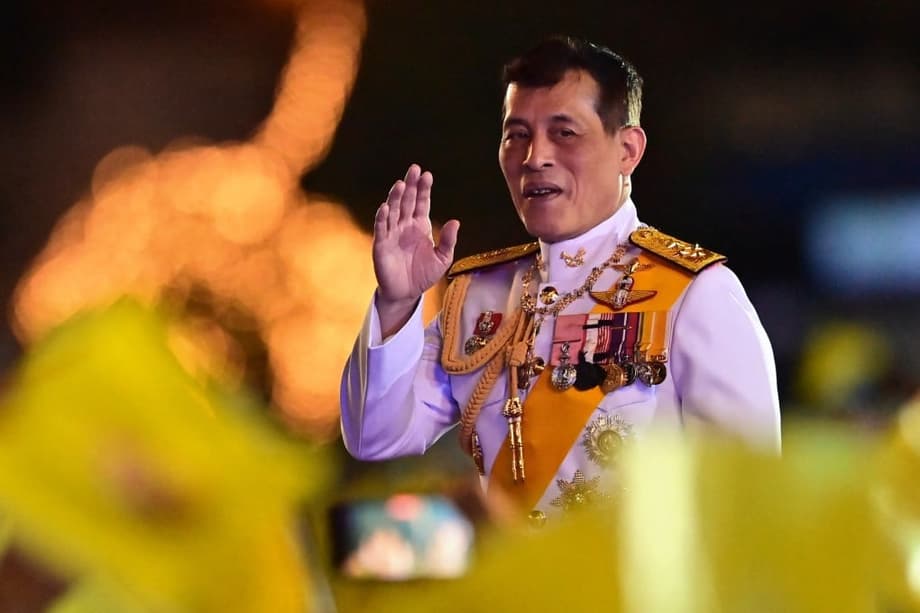
The royal visit carried high symbolism and practical goals. China is Thailand’s largest trading partner and a growing supplier of military equipment. For Beijing, hosting Thailand’s king and queen during a year of celebratory diplomacy reinforced the message that the two countries view each other as close partners. President Xi Jinping welcomed the monarchs at the Great Hall of the People with full honors and framed the relationship as family level closeness, a theme that Chinese leaders have repeated for years.
Beyond pageantry, leaders spotlighted concrete areas for joint work. Plans include expanding cooperation on a China Thailand railway link that would connect to the Laos line, and deepening ties in fields that will define regional growth, such as artificial intelligence, aerospace, and the digital economy. Both sides also highlighted a joint push against cross border crime, a problem that has grown in border zones hosting scam centers that target victims across Asia.
Why Thailand is leaning toward China
Thailand has long balanced between great powers. It is one of America’s oldest allies in Asia, yet in daily commerce and investment the center of gravity now tilts toward China. Most Thai consumers encounter Chinese brands in phones, cars, and online platforms. Many Thai families share Chinese ancestry, and the two governments often describe ties as a brotherly relationship. In that context, a royal state visit that coincides with the Golden Jubilee of diplomatic relations sent a clear message about the trajectory of the partnership.
Beijing’s economic plans and Bangkok’s development priorities line up in several areas. China is pushing high quality growth through innovation in its next five year plan. Thailand is seeking to upgrade industry, digitize public services, modernize logistics, and draw advanced manufacturing to the Eastern Economic Corridor on its eastern seaboard. Both governments see shared interests in green energy, electric vehicles, advanced agriculture, and digital trade.
During the Beijing meeting, China’s head of state framed the moment as a strategic reset. He stressed the importance of linking national plans, moving major projects forward, and expanding cooperation in emerging sectors. He also praised the Thai royal family’s long record of engagement with China.
Introducing the speaker, President Xi Jinping met the king in Beijing and stressed the family like nature of the relationship as well as the historic character of the trip. He said the Thai monarch chose China as his first major destination since taking the throne and presented the visit as the start of a new chapter. Xi said:
King Vajiralongkorn makes China the first major country for his state visit and becomes the first king of Thailand to visit China since the establishment of diplomatic relations, which shows the high importance he attaches to our friendship.
Security first, a joint crackdown on scams
The extradition of She Zhijiang encapsulates a priority that both capitals have placed near the top of the agenda. Scam syndicates and illegal gambling rings based in parts of Myanmar and other border areas have victimized tens of thousands of people, many of them Chinese citizens. Thai officials have stepped up operations at the frontier, including moves to cut electricity and disrupt the networks that sustain these crime zones. Chinese leaders, in turn, have publicly thanked Thai authorities and called for tighter cooperation between police, prosecutors, and courts.
Veteran observers caution that dismantling transnational crime requires coordination among many governments, since the groups move across borders and exploit gaps in jurisdiction. There is also a delicate balance to maintain. Thai leaders want support, but they do not want to invite any erosion of sovereignty from foreign police operations on their soil. Diplomats in Bangkok say the safest path is to expand information sharing and joint investigations while keeping the ultimate authority for arrests and prosecutions in Thai hands. Thailand’s early extradition treaty with China, signed years ago, gives the legal basis to execute requests case by case, including high profile figures such as She.
Security cooperation also extends to regional stability. Chinese and Thai officials discuss border risks and crisis management with neighbors, while backing the principle that Southeast Asian disputes should be handled through regional mechanisms. The intent is to prevent isolated incidents from spiraling and to keep trade corridors and tourist flows open.
Trade, tech and the 14 agreements
Economic ties gathered speed well before the royal visit. In early 2025, Thai and Chinese cabinets presided over the signing of 14 documents that provide a roadmap for cooperation across the economy. One was a joint statement, the rest were memoranda of understanding that cover energy policy coordination, investment facilitation, digital economy projects, scientific research, customs procedures, and agricultural trade.
Several Thai agencies took the lead, among them the National Economic and Social Development Council, the Ministry of Energy, and the Eastern Economic Corridor Office. The agreements aim to smooth cross border commerce, including inspections and customs clearance for fruit and other produce, and to open the door for more Chinese purchases of Thai agricultural goods. On the tech front, deals between the Ministry of Higher Education, Science, Research and Innovation and the Ministry of Digital Economy and Society set the stage for joint research and training in artificial intelligence and next generation digital services.
Information cooperation also featured in the package. Thailand’s Public Relations Department and Thai PBS agreed on content exchanges and methods to counter disinformation with Chinese partners. The Thai side has pressed cyber security as a core public concern, pointing to the damage from fraudulent call centers and online financial scams that have targeted citizens and tourists.
Industrial cooperation is just as ambitious. Chinese carmakers and battery firms have already invested in Thai plants, betting that the country can serve as a regional hub for electric vehicles. Thai banks and agencies are building cross border finance services to help those projects integrate into local supply chains. Bangkok’s goal is clear: attract advanced manufacturing, develop local skills, and grow an ecosystem that can export across ASEAN and into South Asia.
Rails, roads and regional connectivity
Few projects capture the promise and the challenge of China Thailand cooperation like rail. A planned line from Bangkok to the Lao border at Nong Khai would plug directly into the China Laos railway that opened in 2021. Freight could move from Thai ports and warehouses through Laos and into China with fewer delays, while passengers would gain a faster option for travel across the region. The target date for the link to be fully functional is near the end of this decade, though completion depends on budget approvals, construction pace, and system integration.
The Thai government has taken steps to speed the work. The cabinet approved phase two of the rail line linking Nakhon Ratchasima to Nong Khai, which would complete the domestic stretch to the Lao border. Engineers still face technical hurdles on track standards and signaling, and the question of how to align the project with existing Thai logistics corridors, including access to the Eastern Economic Corridor’s ports on the Gulf of Thailand.
Introducing the speaker, Prime Minister Paetongtarn Shinawatra discussed the railway while visiting China earlier in the year. She described the benefits for commerce and people exchanges. Paetongtarn said:
This will boost trade between Thailand, Laos, and China, creating more opportunities for enterprises in all three countries. I am confident the railway will strengthen people to people exchanges and trade relations between Thailand and China.
Tourism, culture and soft power
Tourism is a natural bridge. Before the pandemic, China was Thailand’s largest source of visitors. Numbers have recovered, but safety perceptions still matter. Thai officials used recent meetings to ask for help restoring traveler confidence and to smooth group tour approvals, while they worked at home to shut down scams and improve policing in popular destinations. Social media coverage of the royal visit, including videos of the monarchs speaking with Chinese astronauts, stirred interest in Thailand among Chinese netizens and travel agencies.
Cultural and educational links are deep. Thailand hosts some of the largest Lunar New Year celebrations outside China. It legalized traditional Chinese medicine as an accepted health practice. Thai universities run strong Chinese language programs, and school partnerships send students in both directions. Museums and science institutions also collaborate, from exhibitions of lunar samples to joint space research. During the Beijing trip, the king and queen toured aerospace facilities and held a live conversation with the Tiangong crew, the first time a foreign head of state has spoken directly with China’s space mission in orbit.
Royal diplomacy has its own influence. The personal interest of Thai royals in Chinese art, religion, and education is long standing. That history lends weight when today’s leaders talk about closer ties. It also helps insulate the relationship from swings in party politics or cabinet reshuffles in Bangkok.
Introducing the speaker, King Maha Vajiralongkorn expressed his view of the partnership during the Beijing events, echoing the family theme that has defined recent dialogue. The king said:
The cooperation between Thailand and China is cooperation between brothers.
Balancing ties with Washington and the region
Deepening engagement with China does not mean a break with the United States. Thailand retains the status of a major ally outside NATO and hosts large annual exercises with U.S. forces. Thai officials have signaled they will continue to work with both powers where interests align. The practical aim is to keep trade open, attract investment, and avoid getting pulled into zero sum choices that would limit economic options.
At the regional level, Thai and Chinese diplomats often emphasize ASEAN centrality. The language is cautious by design. The message is that Southeast Asian countries want to manage their own disputes through dialogue and existing mechanisms, whether the challenge is a flare up along a border, maritime friction, or a cyber crime wave that crosses jurisdictions. Beijing’s outreach to help lower tensions between neighbors, and Bangkok’s support for pragmatic cooperation, fit that pattern.
Risks, sensitivities and what to watch
A closer embrace brings benefits and friction. Civil society groups have criticized Thai decisions that aligned with Chinese preferences, including the deportation of Uyghur asylum seekers and the censorship of exhibitions featuring ethnic minority artists. Rights advocates warn that expanded cooperation against crime must avoid any erosion of due process or excessive influence by foreign police on Thai territory. The government argues that tighter controls on cross border fraud protect citizens and tourists, and that any joint operations will respect Thai law.
Economically, the promise of advanced manufacturing is paired with tough competition. Chinese electric vehicle makers are expanding in Thailand, which may disrupt incumbents from Japan and elsewhere. Thai ministers say new plants will create jobs and transfer know how, while analysts caution that supply chains can remain tightly linked to decisions made in China. The long term test is whether Thailand can develop local suppliers and a broader cluster of parts, software, and services that add value across the region.
Financing and fiscal exposure are other concerns. Rail and energy projects are expensive, and the benefits arrive over time. Officials in Bangkok say integrating the rail line with existing ports and industrial zones will help the numbers work by filling trains both ways with commodities, parts, and tourists. The risk is delay or cost overruns that push returns further into the future. Transparent contracting, clear milestones, and early freight commitments from shippers can mitigate that risk.
The political calendar also matters. Thailand saw leadership changes this year, yet ties with China kept momentum. Earlier in 2025, Prime Minister Paetongtarn Shinawatra signed a stack of cooperation documents in Beijing. Later in the year, Prime Minister Anutin Charnvirakul joined the honor delegation that welcomed the king in China. The continuity signals that the relationship has support across factions in Bangkok.
Business groups on both sides sense opportunity. Thai banks are developing cross border services for Chinese investors that set up in the Eastern Economic Corridor. Trade officials are mapping product by product openings in Chinese provinces, from fruit and seafood to eco friendly packaging, films, and games. Chinese planners say their focus on innovation and quality matches Thailand’s goals. Private firms will ultimately test that proposition through real projects and sales.
Key Points
- King Maha Vajiralongkorn made the first state visit to China by a sitting Thai monarch, coinciding with the 50th anniversary of diplomatic ties.
- Thailand extradited alleged crime boss She Zhijiang to China a day before the visit, underscoring joint efforts against scam syndicates.
- Leaders highlighted cooperation on the China Thailand railway, artificial intelligence, aerospace, and the digital economy.
- In early 2025, the two countries signed 14 documents covering energy, investment, customs, agriculture trade, science, and media cooperation.
- Thailand approved phase two of the rail link to Nong Khai, a step toward connecting with the China Laos railway by the end of the decade.
- Tourism and culture remain pillars, with efforts to restore traveler confidence and expand education and space science exchanges.
- Bangkok aims to attract Chinese investment in electric vehicles and green tech while growing local supply chains.
- Thai leaders say the country will maintain strong ties with both China and the United States.
- Risk areas include human rights concerns, sovereignty in law enforcement cooperation, and the cost and timing of big infrastructure projects.
- Officials on both sides frame relations as family like, expecting closer economic and security cooperation in the years ahead.