The Daily Reality for Working Parents
For a mother in her 40s living in Tokyo, the bicycle is not a choice but a necessity. Working part-time while caring for her second-grade son who attends special needs classes, she faces a daily transportation dilemma. The appropriate school is not within walking distance, leaving her with two options: a 40-minute bus ride each way that costs significantly more, or a 10 to 15-minute bicycle journey. She chooses the bicycle, fully aware that technically, carrying an elementary school-aged child violates Japan’s Road Traffic Act.
Her situation is not unique. Outside after-school childcare facilities across Japan, rows of electric-assist bicycles equipped with child seats line the pavement, evidence of working parents who depend on two wheels to manage busy schedules. When fever strikes her third-grade daughter, this same mother loads the child onto her bike for hospital visits, unwilling to make a sick child walk or risk letting her ride independently.
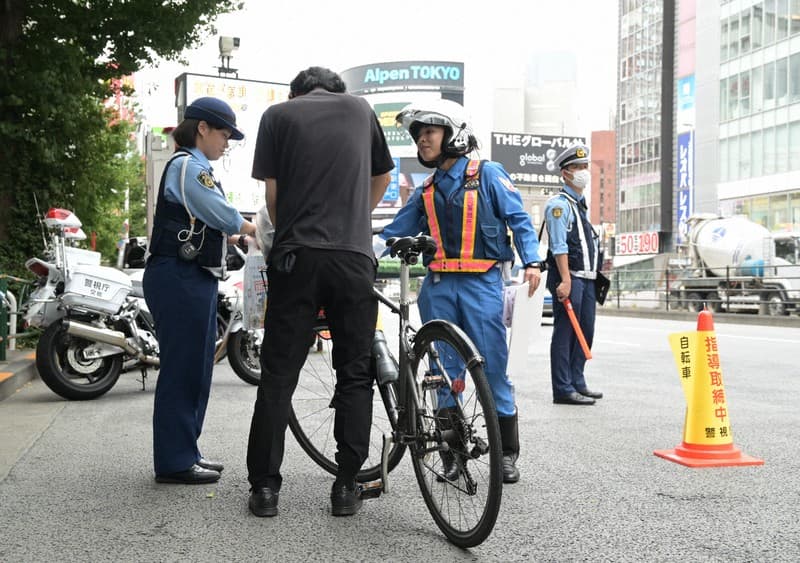
Starting April 1, 2026, her anxiety will intensify. Japan is expanding the “blue ticket” system, previously reserved for minor traffic violations by cars and motorcycles, to include bicycles. This administrative fine structure allows police to issue immediate monetary penalties for 113 different cycling infractions, including “double riding” violations that many parents commit daily.
The mother understands the legal constraints, yet she struggles with the practical reality of her family circumstances.
If (politicians) tried to take every family’s individual circumstances into account, I suppose they would not be able to make laws in the first place. But I want people to understand that some families simply cannot manage their daily lives unless they can transport their elementary school children by bicycle.
How the Blue Ticket System Works
The blue ticket represents a middle ground in Japanese traffic enforcement. Unlike the “red ticket” system for serious offenses such as drunk cycling, which can result in criminal prosecution and imprisonment, blue tickets offer an administrative path. Cyclists aged 16 and older who receive these citations can pay a fixed penalty to avoid indictment and criminal records. However, ignoring the fine triggers a court summons and potential criminal proceedings.
This system has long operated for motor vehicles and mopeds, but its extension to bicycles marks a significant shift. Previously, minor cycling violations typically resulted in warnings without financial penalties. The National Police Agency (NPA) published the complete rule book in September 2025, detailing fines ranging from 3,000 yen for side-by-side riding to 12,000 yen for smartphone use while cycling.
The change arrives amid troubling safety statistics. In 2024, Japan recorded over 67,000 bicycle-related traffic accidents, with more than 80% of fatal cases involving cyclists who violated traffic laws. Smartphone-related cycling accidents have surged by over 50% in recent years, prompting particular concern from authorities.
The Child-Carrying Conundrum
At the heart of parental anxiety lies the prohibition against carrying elementary school children. Current regulations permit passengers only when the child is of preschool age or younger and seated in an approved child seat. Once children enter elementary school, transporting them on a bicycle becomes classified as a “light vehicle passenger/cargo restriction violation,” subject to a 3,000 yen fine under the new system.
A 2024 online survey conducted by Futago Jitensha, a bicycle development company based in Amagasaki, Hyogo Prefecture, revealed overwhelming demand for change. Among 264 respondents, 87% expressed a desire or need to carry elementary school-age children on bicycles. The data suggests that despite legal restrictions, the practice is widespread and functionally necessary for many families.
Satoshi Hikita, a 59-year-old director at the nonprofit Bicycle Usage Promotion Study Group, explains the technical basis for the current cutoff.
Under the Road Traffic Act, riding a bicycle with two people is basically prohibited. However, regulations set by local public safety commissions make an exception only when a child seat is attached. As a result, in practice, carrying a passenger is allowed only until the child reaches school age.
Hikita questions whether the elementary school threshold truly reflects physical reality. Children naturally vary in weight and body size. He notes that authorities probably set the cutoff at under elementary school age as a benchmark, but he is not sure whether it is truly reasonable.
When Enforcement Actually Happens
Despite the new penalties, experts suggest that immediate ticketing for child-carrying alone remains unlikely. According to Hikita, police typically issue blue tickets on the spot only in six specific scenarios: entering a railroad crossing when the barrier is down, operating a bicycle with defective brakes, using a mobile phone while riding, causing a pedestrian to stop or another vehicle to brake suddenly, continuing violations after police guidance or warnings, and committing two violations simultaneously.
Hikita emphasizes that police will especially crack down on smartphone use while riding. The NPA received nearly 6,000 public comments regarding the proposed rules, with particular confusion about sidewalk cycling. In response, authorities clarified that simple child-carrying does not automatically trigger a blue ticket. However, combining this violation with others, such as running a red light, or ignoring police warnings, likely will.
Commissioner Yoshinobu Kusumoto of the National Police Agency emphasized selective enforcement.
Bicycles, like automobiles, are vehicles that must comply with basic traffic rules. However, we will focus on malicious and dangerous acts that lead directly to traffic accidents.
This suggests that parents riding cautiously on sidewalks to avoid dangerous roads may receive warnings rather than fines, provided they comply with specific sidewalk rules: riding closest to the road, maintaining slow speeds, and yielding immediately to pedestrians.
Infrastructure Gaps Fuel the Conflict
The new fines have intensified criticism regarding Japan’s cycling infrastructure. Many cyclists argue that enforcement cannot precede adequate safety measures. Painted bicycle lanes, common in urban areas, frequently end up blocked by parked delivery trucks and taxis, forcing riders into traffic lanes or onto sidewalks. Unlike protected lanes found in cities like Copenhagen or Amsterdam, most Japanese bike infrastructure consists merely of paint markings that offer no physical protection from vehicles.
One cyclist expressed frustration on social media, posting images of blocked lanes in Tokyo’s Yotsuya district and asking where riders are expected to go. The dilemma highlights a fundamental conflict: roads feel dangerous to many cyclists, yet sidewalks are technically restricted and now subject to fines when used recklessly.
The government has acknowledged these concerns by introducing simultaneous penalties for drivers. Motorists who fail to maintain safe distance and speed when passing bicycles now face fines of 5,000 to 9,000 yen, similar to road-sharing rules in European countries. The NPA hopes this will encourage cyclists to use roads rather than sidewalks, reducing pedestrian conflicts.
Michiko Nakahara, 54, president of Futago Jitensha, argues for structural solutions beyond fines. Based on her experience developing bicycles capable of safely carrying twins, she believes manufacturers could create tricycles or four-wheeled models suitable for transporting school-aged children.
If there is a certain level of demand for transporting children of elementary school age and older, both bicycles that ensure sufficient safety and legal frameworks that allow such riding are necessary.
She notes that police, manufacturers, and retailers all recognize this need, suggesting systemic change is possible. She adds that it would be better if society as a whole could offer a wider variety of transportation options, while also ensuring the safety of pedestrians, drivers and everyone else.
Understanding the Penalty Structure
The 113 violations subject to blue tickets cover diverse behaviors. The steepest fine, 12,000 yen, targets smartphone use while cycling, reflecting recent accidents including a 2024 case where a college student collided with and killed a pedestrian while distracted by a phone. Railroad crossing violations carry 7,000 yen penalties, while ignoring traffic signals or riding against traffic flow costs 6,000 yen.
Safety equipment violations also carry significant costs. Cycling without functioning brakes, riding at night without front lights or rear reflectors, or wearing headphones all trigger 5,000 yen fines. The same amount applies to carrying umbrellas while riding, a common practice during Japan’s rainy seasons. Riding side-by-side with another cyclist or carrying a passenger where prohibited both result in 3,000 yen penalties.
For those who receive tickets, the payment process requires prompt attention. Violators must pay within eight days at post offices or banks using cash. While contesting a ticket is possible, it requires appearing in court with no guarantee of waiver, making prompt payment the safer option for most. Repeated violations within three years may trigger mandatory cyclist training courses, and offenders holding motor vehicle licenses risk suspension for serious bicycle offenses.
Navigating the New Reality
For parents like the Tokyo mother transporting her special needs son, the coming months require careful navigation. Legal experts recommend transitioning children to their own bicycles as early as possible to avoid violations. However, this solution does not address the needs of families with children who have disabilities, medical conditions, or routes involving dangerous roads unsuitable for young riders.
Beyond the fine system, cyclists must remember existing requirements. Bicycle registration with local police stations remains mandatory, costing 500 yen and providing a unique frame number sticker. Since April 2020, Tokyo Metropolitan Government requires all bicycle riders, including children, to carry liability insurance to cover damages or injuries caused to others. Policies typically cost under 5,000 yen annually and are available through mobile carriers, convenience stores, or online platforms.
As April approaches, the tension between traffic safety goals and family logistics intensifies. The blue ticket system aims to reduce the 67,000 annual bicycle accidents through clearer consequences, yet it risks penalizing parents who lack alternatives. Whether police exercise the discretion experts predict, or whether infrastructure improvements follow enforcement changes, will determine whether this policy achieves its safety goals without unduly burdening working families.
What to Know
- Japan’s blue ticket administrative fine system for bicycles takes effect April 1, 2026, covering 113 violations including carrying elementary school passengers (3,000 yen) and smartphone use (12,000 yen).
- Current law permits carrying only preschool children in approved seats; elementary school children technically violate passenger restrictions.
- A 2024 survey found 87% of parents want or need to transport elementary school-age children by bicycle, citing distance, cost, and safety concerns.
- Experts say immediate ticketing is unlikely for child-carrying alone; police will prioritize six high-risk scenarios including railroad crossing violations, brake defects, and combined infractions.
- Cyclists must pay fines within eight days at banks or post offices; ignoring tickets leads to criminal court summons.
- Drivers face new fines of 5,000 to 9,000 yen for passing bicycles too closely, part of efforts to make roads safer for cyclists.
- Advocates call for infrastructure improvements and specialized multi-wheeled bikes to safely accommodate older children, rather than relying solely on penalties.