Seventy Recognized Victims Put Protection Gaps in Focus
South Korea formally recognized just 70 people as trafficking victims between 2023 and March 2026, including 58 foreign nationals. Against that small tally, the government unveiled a broad policy overhaul on Friday aimed at finding exploitation earlier, recognizing victims faster and providing help before administrative procedures leave them waiting.
Contents
- Seventy Recognized Victims Put Protection Gaps in Focus
- Why Protection and Prosecution Follow Different Rules
- Seasonal Workers Face Recruitment and Housing Risks
- Long Voyages Leave Fishing Crews Hard to Reach
- Investigations Have Produced Few Labor Trafficking Convictions
- Inspectors Will Receive Tools Designed for Maritime Coercion
- Emergency Help Will Begin Before Paperwork Is Complete
- A Larger Civilian Role in National Coordination
- Migration Support Extends Beyond Trafficking Policy
- Key Points
The Ministry of Gender Equality and Family announced measures focused particularly on foreign seasonal agricultural workers and maritime crew members. The Ministry of Employment and Labor, the Ministry of Oceans and Fisheries and the Korean National Police Agency will take part in a coordinated response intended to close gaps between inspections, investigations and victim services.
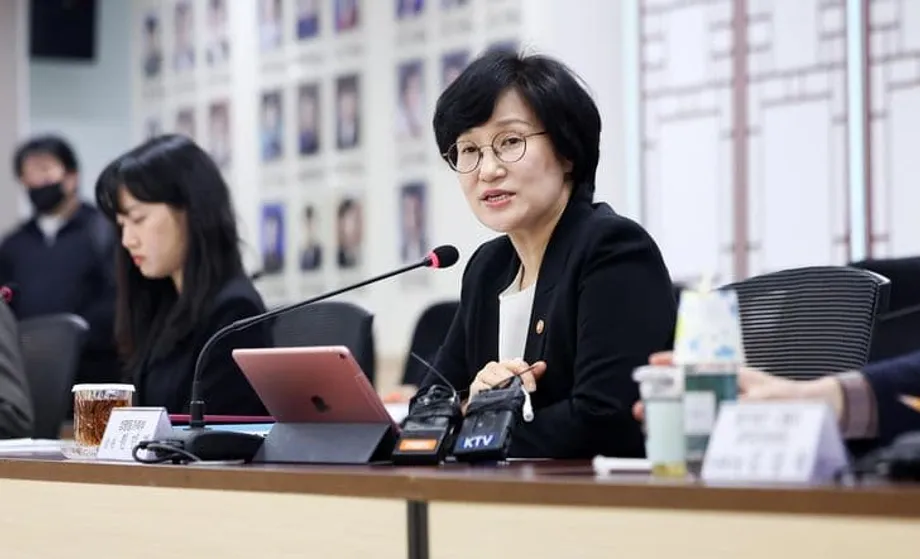
Minister Won Min-kyong affirmed the government's commitment to closing blind spots in protection and making support more effective. A senior ministry official described the package's central aim as detecting cases earlier, speeding up recognition and delivering assistance without delay. The change moves the focus toward finding people at risk before they have to navigate the system themselves.
Previously, ministries maintained separate databases and referral procedures. A worker encountered by one agency could struggle to reach the institution responsible for protection. Rights advocates have consistently argued that the official victim count vastly understates abuse in sectors where migrants face recruitment debts, confiscated passports and excessive working hours.
The announcement comes amid growing international attention to labor conditions in South Korea's manufacturing, agricultural and maritime industries. Foreign workers fill critical shortages in an aging workforce, while the systems intended to protect them have struggled to detect coercion and connect victims with assistance.
The figures show the scale of the recognition challenge: foreign nationals accounted for 58 of the 70 recognized victims, or about 83 percent. The government's response combines new reporting duties, specialized inspection tools, insurance requirements and emergency accommodation with proposed changes to the institutions overseeing trafficking policy.
Why Protection and Prosecution Follow Different Rules
South Korea's legal framework has contributed to the low number of recognized victims. A strict interpretation of trafficking requires proof of movement of the person, including transportation across borders. Article 289 of the Criminal Act prohibits trading in persons, but requires evidence of buying or selling without explicitly incorporating force, fraud or coercion as essential elements.
The 2000 UN TIP Protocol, the international framework against trafficking, centers on those coercive mechanisms. Coercion can include pressure that makes leaving a job feel impossible, such as a large recruitment debt or threats tied to a worker's circumstances. Under a narrow domestic interpretation, debt bondage and psychological pressure can fall outside the threshold for trafficking charges and instead be handled as lesser labor violations or administrative infractions.
The Prevention of Trafficking in Persons, Etc. and Victim Protection Act took effect in 2023 and improved definitions used for protection. It did not amend the Criminal Act provisions used for prosecution. Consequently, the rules for helping someone as a victim and the rules for bringing a trafficking charge remain different.
The U.S. State Department's 2025 Trafficking in Persons Report identified this legal gap as a problem for police and prosecutors. The department described its effect on their understanding of the offense:
The absence of a criminal offense that defined trafficking in a manner fully consistent with international law resulted in varying understanding of the crime among law enforcement and prosecutors.
Officials have historically conflated trafficking with related offenses, including commercial sex violations, kidnapping and domestic violence. That confusion makes accurate identification harder. Most confirmed victims have been noncitizens, while domestic cases may slip through the recognition process.
The reforms seek to improve identification and referrals through changes to the protection law. The package does not specify a corresponding revision to Article 289 or a reform of longer residency options for foreign victims, leaving those issues unresolved.
Seasonal Workers Face Recruitment and Housing Risks
Foreign workers in the Seasonal Worker Program (SWP) and Employment Permit System (EPS) have experienced conditions indicative of forced labor in agriculture, manufacturing and fishing. Approximately 303,000 migrants from 16 countries work under the EPS in fishing, agriculture, livestock, restaurants and manufacturing.
Many workers live in inadequate accommodation, including greenhouses and shipping containers, especially in agricultural areas. The Ministry of Employment and Labor surveyed these conditions in 2023, publicly released findings in March 2024 and issued corrective orders for violations. Nongovernmental organizations say enforcement remains inconsistent and workers continue to live in housing that breaches basic health and safety standards.
The SWP relies on broker arrangements between Korean municipalities and foreign local governments. These arrangements create gaps in oversight that unscrupulous recruiters can exploit. A worker who pays excessive fees before departure can arrive already owing money, making it harder to leave an abusive employer without losing the income needed to repay the debt.
The National Human Rights Commission of Korea has documented trafficking within the SWP. It concluded that the program lacked a solid legal operating basis and that some local officials relied on brokers who charged excessive fees and confiscated passports. Taking a passport can restrict a worker's ability to travel or seek help.
In February 2024, the Philippine government temporarily banned sending workers to South Korea after reports of unsafe conditions and abuse involving Filipino seasonal workers. That intervention underscored how recruitment arrangements and working conditions in Korea also affect the governments sending workers abroad.
The new package makes staff at institutions involved in seasonal labor programs mandatory trafficking reporters. They will be required to complete training, giving people who administer these programs a formal responsibility to recognize warning signs and alert the authorities.
Long Voyages Leave Fishing Crews Hard to Reach
Nearly 4,000 migrant workers, primarily from Indonesia, serve on South Korean distant water fishing vessels. Their workplace presents particular difficulties for protection: ships frequently transfer catches to other vessels at sea and can remain offshore for a year or longer without visiting a port.
Transferring catches at sea allows fishing operations to continue without returning to land. For crew members facing abuse, those long voyages also limit opportunities to contact authorities, leave a vessel or report what is happening.
Workers frequently face days of work lasting 18 hours, verbal and physical abuse, and withheld wages. Recruitment agencies often charge between $5,500 and $15,000, creating debts that bind workers to exploitative contracts. Employers also often hold the first three months of wages as a deposit, payable only when the contract is completed.
The combination of debt and delayed pay increases the financial cost of leaving. A worker who wants to escape an abusive situation may still owe a recruiter money while being unable to collect wages already earned.
The 2024 Enhanced Plan for migrant fishers mandated annual port calls and required fishing companies to pay all recruitment fees. Civil society groups nevertheless noted that the measures lacked legally binding status, weakening enforcement. Despite documented abuse risks, South Korea has never prosecuted a human trafficking case involving distant water fishing operations.
Unless vessels needed maintenance, they could avoid returning to port, and many remained at sea for more than a year at a time. Observers also noted that fishing vessels flagged for forced labor by foreign governments were able to enter Korean territorial waters without inspection. Both practices reduce opportunities for officials to identify workers in need of help.
Investigations Have Produced Few Labor Trafficking Convictions
South Korea retained Tier 1 status in the U.S. State Department's trafficking reports from 2023 through 2025. During the same period, international monitors identified persistent weaknesses in enforcement, particularly in cases involving adult victims and forced labor.
Authorities investigated 1,061 cases in 2024, including 708 involving sex trafficking and 98 involving forced labor. Prosecutors initiated only four labor trafficking prosecutions, while courts delivered six labor trafficking convictions under Article 7 of the Labor Standards Act.
The six convictions represented a decline from 33 the previous year, a fall of 27, or about 82 percent. Approximately 95 percent of trafficking convictions involved child sex trafficking under the Act on the Protection of Children and Youth, rather than exploitation of adults or labor trafficking.
The 2024 trafficking report similarly noted that, despite increasing investigations and prosecutions, the vast majority of convictions concerned child sex trafficking. The enforcement record therefore remained heavily concentrated in that category while labor exploitation produced few convictions.
Courts sentenced most traffickers to less than one year in prison, fines or suspended terms. A suspended prison term allows a convicted person to avoid immediate imprisonment under the conditions set by the court. Such penalties weakened deterrence against exploitation.
Only 22 percent of convicted traffickers received prison sentences of at least one year in 2024, compared with 35 percent in 2023. By comparison, 39 percent of people convicted of rape received sentences of one year or longer. The figures show a substantial difference in the penalties imposed for trafficking and another serious offense.
Labor inspections also struggled to identify violations. In 2024, the Ministry of Employment and Labor investigated 80 forced labor cases but closed 77 after finding no legal violations. Those closures accounted for more than 96 percent of the cases it investigated.
Inspectors Will Receive Tools Designed for Maritime Coercion
Maritime labor inspectors conducted limited inspections aboard distant water vessels. Civil society groups expressed concern that their training and resources were insufficient to monitor approximately 60,000 crew members adequately. Reaching workers at sea and recognizing coercion once aboard remained major practical problems.
A revised victim identification index introduced in December 2024 included labor trafficking indicators. Nongovernmental organizations nevertheless said it still lacked adequate measures for screening foreign migrants in the fishing industry for forced labor.
The new policy package provides public officials, including maritime labor inspectors, with identification tools specifically designed to detect forced labor among foreign crew members. These tools are intended to address earlier shortcomings, when inspectors lacked specific guidance for recognizing coercion in maritime workplaces.
Police, labor authorities and other ministries will tighten cooperation and share relevant information when frontline officials encounter possible victims during inspections or investigations. Officials who identify someone potentially being exploited should immediately connect that person with the Ministry of Gender Equality and Family and victim protection institutions.
The practical aim is to make an inspection or police encounter the starting point for assistance. A worker showing signs of coercion would be referred for protection through a coordinated process, with the information needed to act shared across the agencies involved.
Emergency Help Will Begin Before Paperwork Is Complete
Victims will be able to receive urgent assistance before formal paperwork is completed. Previous application processes sometimes lasted four to six months, leaving people without resources and exposing them to further distress as they sought recognition and support.
The Central Victim Rights Protection Agency, established under the 2023 law, issued 12 certificates to foreign trafficking victims in 2024, up from three in 2023. Those certificates allowed recipients to obtain financial and immigration benefits before judicial proceedings. The increase was fourfold, although the number of recipients remained small.
The government plans emergency housing for foreign victims and dedicated facilities providing accommodation, meals and comprehensive assistance. These measures respond to criticism from international monitors and domestic rights groups about the shortage of specialized services for male victims, people with disabilities and foreign nationals.
Seasonal employers will also be required to enroll workers in accident insurance, wage guarantee insurance, and agricultural and fisheries safety insurance. The requirement seeks to reduce the financial risks associated with injuries and unpaid wages. Wage guarantee insurance provides a form of protection when an employer fails to pay wages owed.
In 2024, the government allocated approximately 67.41 billion KRW ($45.7 million) to the Ministry of Gender Equality and Family for victim protection efforts. That amount included 160 million KRW for the Central Victim Rights Protection Agency. Another 88.6 billion KRW went to the Ministry of Justice, and 658 million KRW to the Ministry of Oceans and Fisheries for protection and assistance programs.
Foreign victims currently receive G-1 humanitarian stay visas that allow work authorization for up to one year while they cooperate with investigations. Shelter stays, however, are limited to three months, with extensions available only when victims serve as witnesses in ongoing trials. The lack of longer residency options reportedly discourages people from reporting exploitation or testifying against traffickers.
A Larger Civilian Role in National Coordination
Proposed legislation will transfer leadership of the Policy Coordination Council on Human Trafficking from the deputy prime minister and education minister to the minister of gender equality and family. The change is intended to put victim protection and restoration of rights at the center of national policy.
The council's civilian expert membership will increase from four to ten. That adds six members and makes the civilian representation two and a half times its previous size, expanding the role of policy expertise and civil society in coordination.
The government also plans to revise the Act on Prevention of Human Trafficking and Protection of Victims to make the new identification and referral procedures mandatory. Giving these procedures a legal foundation is intended to address inconsistent use of earlier guidelines, under which some authorities reportedly referred victims to services only in extreme cases.
The sequence of earlier measures shows how the new package builds on several years of legal and administrative changes:
- 2023: The victim protection law took effect, the Central Victim Rights Protection Agency was established, and the labor ministry surveyed migrant housing conditions.
- February 2024: The Philippine government temporarily banned sending workers to South Korea following reports of unsafe conditions and abuse.
- March 2024: The labor ministry publicly reported its housing survey findings and issued corrective orders.
- 2024: The Enhanced Plan for migrant fishers introduced annual port calls and requirements for companies to pay recruitment fees.
- December 2024: A revised victim identification index included labor trafficking indicators.
- 2025: The U.S. State Department's trafficking report highlighted the gap between South Korea's criminal law and the international trafficking definition.
- March 2026: The recognized victim count reached 70 for the period beginning in 2023, and the government announced its new protection package on Friday.
Migration Support Extends Beyond Trafficking Policy
South Korea's dependence on migrant labor forms the backdrop to the reforms. As one of the world's fastest aging societies, it faces acute workforce shortages, making foreign workers increasingly important to industries struggling to recruit enough staff.
Lee Sung-ah, deputy director general for management and reform at the International Organization for Migration, addressed that relationship during a recent visit to Seoul. She stressed that safe, orderly and regular migration pathways benefit both receiving countries and migrants, and that expanding labor migration needs to be accompanied by approaches centered on protection.
Lee also highlighted how narratives driven by fear and misinformation can undermine policymaking based on evidence. She called for robust data collection and protocols centered on victims, connecting the need for reliable information with the ability to identify and protect people experiencing abuse.
The Seoul Metropolitan Government has expanded support infrastructure for foreign residents through medical interpretation services and diplomatic cooperation forums. The city recently hosted diplomats from 60 countries, including 40 sitting ambassadors, to brief them on its support policies.
Those policies include Medical Support for International Citizens, which offers hospital interpretation in 12 languages. Access to interpretation can help foreign residents communicate with medical staff, while diplomatic cooperation provides another channel for governments to discuss support for their nationals.
Seoul's municipal initiatives complement the national trafficking reforms by building a broader safety net for the international community. Together, the measures reflect a shift toward integrating protection into migration governance as labor migration continues to help meet immediate workforce needs.
Key Points
- South Korea recognized 70 trafficking victims between 2023 and March 2026, including 58 foreign nationals.
- The new package requires seasonal labor program staff to report suspected trafficking and complete compulsory training.
- Maritime inspectors will receive specialized tools to identify forced labor among foreign crew members.
- Authorities investigated 1,061 cases in 2024, while courts delivered six labor trafficking convictions, down from 33 the previous year.
- Victims will receive urgent assistance before paperwork is complete, alongside planned emergency housing and dedicated support facilities.
- Seasonal employers will be required to enroll workers in insurance covering accidents, unpaid wages and agricultural and fisheries safety.
- Proposed legislation will move the trafficking council's leadership to the gender equality and family minister and increase civilian experts from four to ten.
- The gap between protection and prosecution rules, along with limited shelter stays and residency options for foreign victims, remains part of the challenge.