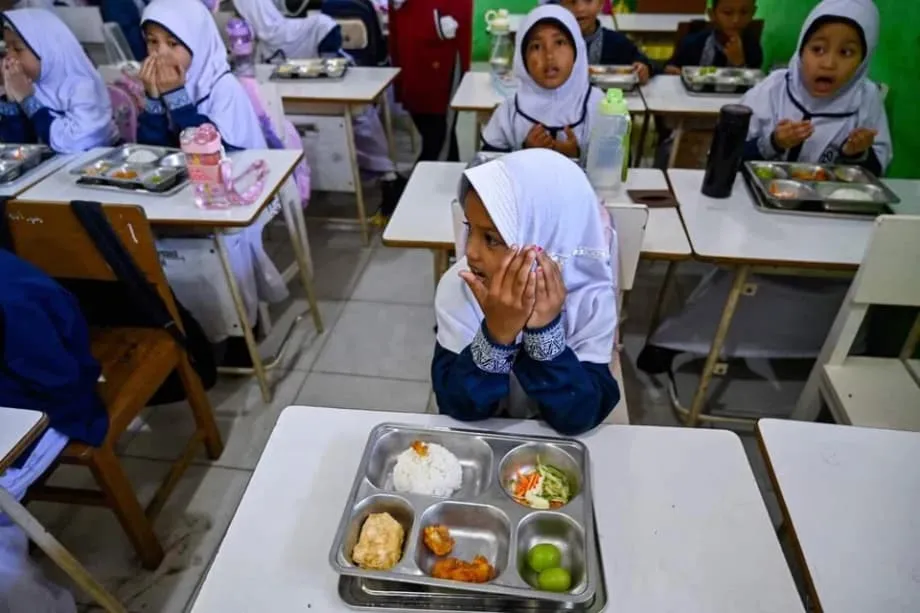
Millions Face One Fewer Day of Free Meals
Indonesia is reducing its free nutritious meals programme from six days to five days a week starting March 31, 2026, seeking annual savings of about 40 trillion rupiah ($2.3 billion to $3 billion) as the Middle East war drives up energy costs. The change affects a programme serving 61 million people, including schoolchildren, toddlers, pregnant women and breastfeeding mothers.
Contents
- Millions Face One Fewer Day of Free Meals
- Who Keeps Saturday Meals?
- How Oil Prices Threaten the Budget
- A Reversal for Prabowo's Signature Policy
- How the Programme Reached This Point
- Investors Watch the Deficit Ceiling
- Travel Cuts and Remote Work Plans
- Fuel Subsidies Remain Politically Sensitive
- Other Asian Countries Cut Energy Demand
- Key Points
The National Nutrition Agency announced the adjustment on March 29. Nanik Sudaryati Deyang, its deputy head, confirmed the savings estimate and said the new schedule aligns distribution with the standard school week of five days. Remote areas and regions with high rates of stunting will continue receiving meals six days a week.
President Prabowo Subianto's signature programme has a 2026 allocation of 335 trillion rupiah ($19.7 billion), nearly one tenth of the state budget. Removing one distribution day reduces its effective coverage by approximately 16 percent, while retaining additional support for vulnerable communities.
Indonesia, Southeast Asia's largest economy, is trying to absorb an oil shock while keeping its budget deficit within the legal ceiling of 3 percent of gross domestic product (GDP). A deficit is the gap between government spending and revenue. GDP measures the value of goods and services produced in the economy.
Brent crude has climbed to nearly $100 a barrel, far above the $70 assumption used to prepare the 2026 budget. Higher oil prices increase the cost of imported energy and the government spending needed to keep subsidised fuel affordable. The meal reduction is the first concrete austerity measure responding to the mounting fiscal pressure from the conflict.
Who Keeps Saturday Meals?
National Nutrition Agency head Dadan Hindayana said Saturday distribution would continue in places where children face a high risk of stunting. Stunting means a child has not grown as expected because of inadequate nutrition over time, making consistent access to nutritious food especially important.
Hindayana explained the reason for maintaining the additional day in these regions:
The provision of the free nutritious meals on Saturdays for regions with a high risk of stunting is a strategic step to ensure that children receive adequate nutrition every day.
The programme began in January 2025 and remains central to the administration's poverty reduction strategy. Prabowo promoted it during his election campaign and early presidency as a way to combat stunting and improve human capital, meaning people's health, knowledge and ability to work. Its eventual target is 83 million beneficiaries across a country of 284 million people.
The initiative is one of the largest social programmes in Indonesia's history. Its reach also makes changes politically sensitive: millions of families depend on the nutritional support, and removing a distribution day changes what they receive each week.
Food safety problems have complicated its expansion. Multiple cases of food poisoning among recipients since the launch prompted opposition figures and health advocates to call for a suspension over hygiene and logistical concerns.
How Oil Prices Threaten the Budget
Finance Minister Purbaya Yudhi Sadewa has warned that an annual average oil price of $90 to $92 a barrel could push the budget deficit to about 3.6 percent of GDP without changes to spending. That would exceed the ceiling established under Law No. 17/2003 on State Finance.
Purbaya described the scenario in these terms:
Assuming the worst case, if the oil price goes as high as $90 to $92 per barrel, in those conditions, without adjusting our current budget, the deficit will increase to around 3.6% of GDP.
The 3 percent limit has been a cornerstone of Indonesian macroeconomic discipline since the Asian financial crisis, helping underpin investor confidence in the G20 economy. The 2025 deficit reached 2.92 percent of GDP, or 695.1 trillion rupiah, leaving little room below the ceiling for a new external shock.
Indonesia imports approximately 25 percent of its crude oil from the Middle East, along with 30 percent of its liquefied petroleum gas (LPG) imports. LPG is a fuel commonly used for cooking. Disruption in the region therefore affects both transport energy and household fuel supplies.
The Strait of Hormuz normally carries approximately 20 percent of global oil supplies and is the primary shipping route for Indonesian energy imports. Its near complete closure has disrupted supply chains and created a daily supply deficit of approximately 15 million barrels, in what is described as the largest supply disruption in modern energy market history.
The rupiah, trading near 17,000 per US dollar, adds another pressure. Energy purchases priced in dollars require more rupiah when Indonesia's currency weakens, increasing the local cost of the same imported fuel.
Analysts at UOB Kay Hian estimate that every $1 increase in global oil prices widens Indonesia's deficit by approximately 6.8 trillion rupiah ($514 million). The Energy Shift Institute puts the additional fuel subsidy cost at 7 trillion rupiah ($413 million) for each $1 increase, on top of the hundreds of trillions already earmarked.
The 2026 energy subsidy allocation totals 381 trillion rupiah ($22.5 billion), based on the $70 oil assumption. The gap between that planning price and current market prices explains why the government is seeking savings across spending programmes.
A Reversal for Prabowo's Signature Policy
Prabowo had previously insisted that the free meals programme would remain untouched despite growing fiscal concerns. Just weeks before the reduction, the government maintained that flagship programmes, including the meals initiative and the Red and White Cooperative initiative, would be protected from budget cuts because they were investments for the long term.
Presidential spokesperson Prasetyo Hadi said the administration was targeting 80 trillion rupiah ($4.7 billion to $6 billion) in total savings. The expected 40 trillion rupiah from reducing meal distribution amounts to half that target.
The announcement therefore marks a policy reversal under financial pressure. The government is retaining the programme and its support for particularly vulnerable regions while reducing the regular number of distribution days.
Prabowo said in a recorded interview with journalists aired over the weekend that other opportunities to reduce costs remained:
There are still many other cost-saving measures that we can implement
The president pointed to efforts to curb energy consumption and expand renewable energy production, primarily solar power, to reduce dependence on imported fossil fuels. He also referred to Pakistan's austerity measures, including reduced fuel availability for ministries and restricted vehicle use, as possible models for further conservation.
How the Programme Reached This Point
The meal programme's short history now includes both a rapid expansion to millions of recipients and a reduction in its weekly schedule. Its operational problems and the new oil shock have placed pressure on different parts of the same policy: food delivery, public spending and support for families.
The main dates and developments are:
- January 2025: Indonesia launched the free nutritious meals programme. Food poisoning incidents subsequently prompted calls for suspension over hygiene and delivery concerns.
- 2025: The budget deficit reached 695.1 trillion rupiah, equivalent to 2.92 percent of GDP.
- February 2026: Moody's changed Indonesia's credit rating outlook from stable to negative, citing concerns about fiscal discipline and social programmes such as free meals.
- March 2026: Fitch also changed its outlook to negative, while the Jakarta Composite Index fell to its lowest level in eight months.
- March 29, 2026: The National Nutrition Agency announced that regular meal distribution would fall from six days to five.
- March 31, 2026: The reduced schedule takes effect, with six days of distribution retained in remote areas and regions with high rates of stunting.
The 2026 allocation of 335 trillion rupiah shows the scale of the commitment even as the schedule changes. The programme currently reaches 61 million people against its ultimate target of 83 million, while the government must also fund energy support and other services.
Investors Watch the Deficit Ceiling
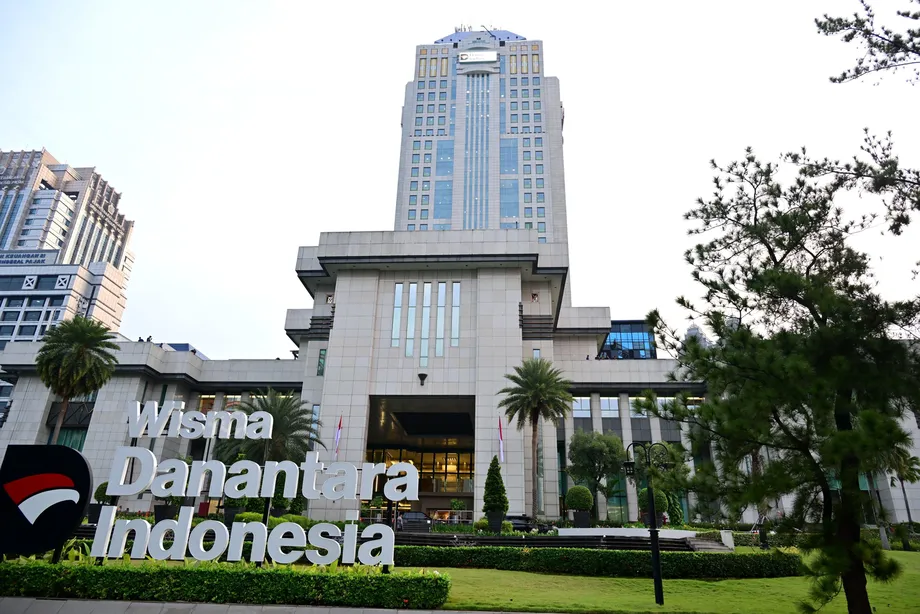
Moody's move in February reflected concern about the effect of large social programmes on fiscal discipline. Fitch's move in March highlighted rising policy uncertainty and questions about how the new Danantara sovereign wealth fund could affect state finances.
A sovereign wealth fund manages investments on behalf of the state. Questions about its relationship with public finances form part of the wider scrutiny of Indonesia's spending commitments and financial management.
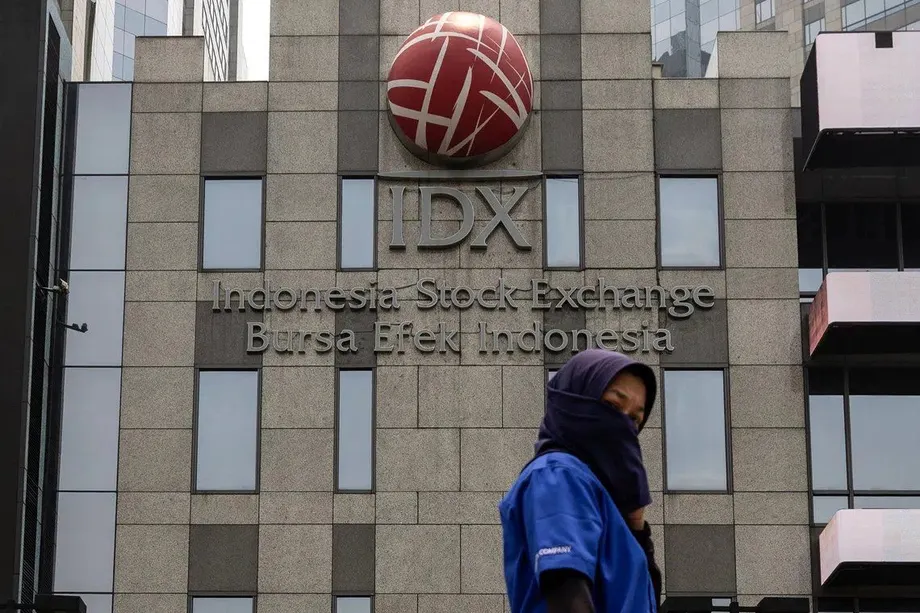
The Jakarta Composite Index fell to an eight month low in March as investors priced in the risk of a breach of the deficit ceiling. The stock index has declined 7.5 percent, while capital outflows have put pressure on the rupiah.
The currency has weakened more than 1 percent against the US dollar this year, placing it among Asia's worst performers. Money leaving Indonesian markets can add to pressure on the exchange rate, further increasing the rupiah cost of energy imports.
Purbaya has sought to reassure markets that the government will keep the deficit within 3 percent of GDP without exception. The finance minister said:
I won't surpass that limit anytime soon or in the future
Purbaya has also said economic growth and fiscal sustainability must be balanced. Fiscal sustainability means keeping spending and borrowing at levels the government can continue to manage.
Teuku Riefky, an economist at the University of Indonesia's Institute for Economic and Social Research (LPEM), said the importance of the ceiling lies in the government's credibility:
If the limit is breached, it signals that the government is unable to manage its finances prudently
Travel Cuts and Remote Work Plans
The government is restricting nonessential official travel, reducing meeting expenditure and considering salary reductions for ministers. Officials are also finalising a policy for government workers and certain private sector employees to work remotely one day a week, with the aim of cutting fuel use and traffic congestion.
Prabowo explained the proposed benefit during a cabinet meeting:
If some civil servants and officials do not need to come to the office, it would reduce traffic congestion and generate substantial savings
The remote work policy was still being finalised as of March 31. Its proposed weekly reduction in commuting would be another attempt to limit energy demand as imported fuel becomes more expensive.
Fahmy Radhi, an energy analyst at Gadjah Mada University, cautioned that reduced commuting could sharply lower earnings for ride hailing drivers and small food stall operators who depend on office workers. Savings for commuters and the government could therefore come with lower sales or fewer trips for people working in the informal economy.
The administration is also pursuing better tax compliance rather than increases in tax rates. Enforcing existing tax obligations is part of its effort to raise revenue while reducing expenditure.
Fuel Subsidies Remain Politically Sensitive
Indonesia has so far defended its fuel subsidy programme, which covers 30 to 40 percent of consumer costs and represents approximately 15 percent of the total budget. Subsidies allow consumers to pay less than the full cost, with the government covering part of the bill.
Past attempts to reduce fuel subsidies have triggered mass protests and social unrest. Raising fuel prices is therefore a politically volatile option, particularly when families are already facing changes to other government support.
Purbaya has acknowledged that consumers may have to share the burden if oil prices remain at crisis levels and the budget can no longer absorb the subsidy cost. He described a fuel price increase as a last resort:
If the budget cannot bear the subsidy at all, there's no other way; we have to share part of the burden with the people, meaning there'd be a fuel price increase
The combination of expensive oil, a weaker rupiah and a deficit already close to the legal ceiling leaves the government balancing several demands at once. Maintaining affordable fuel requires money, protecting nutrition requires money, and keeping borrowing within the ceiling requires either savings or more revenue.
Other Asian Countries Cut Energy Demand
Pakistan has instituted a work week of four days, closed schools for two weeks and reduced government fuel allowances by 50 percent. Its measures provide the example Prabowo cited when discussing further Indonesian conservation efforts.
Sri Lanka has introduced fuel rationing through its National Fuel Pass QR system, limiting private vehicles to 25 litres of petrol a week. Thailand has encouraged offices to raise air conditioning temperatures to 79 to 80 degrees Fahrenheit and reduce elevator use.
Philippine President Ferdinand Marcos has declared a state of energy emergency lasting a year and plans to expand power production from coal. China has banned refined fuel exports to avoid shortages at home, while India has invoked the Essential Commodities Act to prioritise domestic cooking gas consumers over businesses.
The International Energy Agency has published 10 emergency measures, including expanded work from home arrangements, lower highway speed limits and a switch from petroleum based cooking fuels to electric alternatives. These responses seek to reduce demand while governments face disrupted supplies.
Firman Noor, a political researcher at Indonesia's National Research and Innovation Agency (BRIN), said Indonesia needed to prepare alongside other countries:
This is a warning that we must get prepared like other countries
Noor connected the need for adjustment to uncertainty over how long the conflict would continue:
We need an adjustment because we never know when the war will end, which will surely drive oil prices higher.
Indonesia's immediate response is now visible in the meal schedule taking effect on March 31. The government expects that reduction to deliver half its targeted savings, while further conservation measures and spending restraint address the continuing strain from energy imports.
Key Points
- Regular free meal distribution falls from six days to five a week on March 31, 2026, with expected annual savings of 40 trillion rupiah.
- Remote areas and regions with high rates of stunting retain six days of distribution.
- The programme serves 61 million people and has a 2026 allocation of 335 trillion rupiah.
- Brent crude near $100 a barrel is far above the budget assumption of $70, increasing pressure on energy subsidies.
- Purbaya warned that oil averaging $90 to $92 could push the deficit to 3.6 percent of GDP without budget adjustments, above the legal 3 percent ceiling.
- The meal reduction reverses earlier assurances that the programme would be protected and supplies half the government's 80 trillion rupiah savings target.
- Moody's and Fitch changed Indonesia's rating outlooks to negative as fiscal and policy concerns grew.
- Further measures include spending restrictions and a proposed weekly remote work day. Fuel price increases remain a last resort.