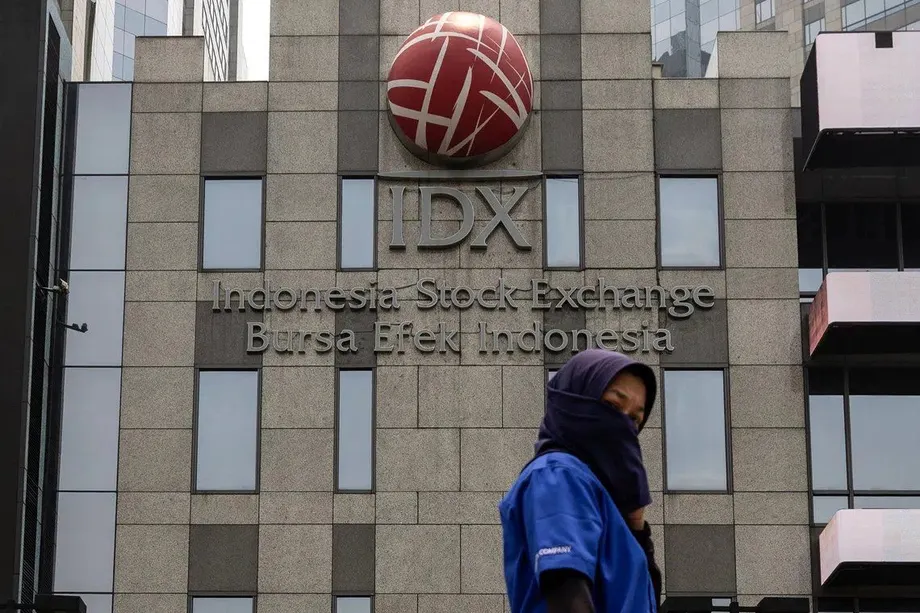
Indonesia Targets Market Manipulation and Disclosure Breaches
Indonesia's Financial Services Authority announced on November 21, 2026, a series of sanctions covering 10 separate capital market violation cases. The regulatory body, known as OJK, ordered the return of 23.77 billion rupiah in illicit gains stemming from three distinct stock manipulation schemes. Those actions involve shares of PT Grand House Mulia Tbk, PT Saraswanti Anugerah Makmur Tbk, and PT Suryamas Dutamakmur Tbk. In addition to recovering illegal profits, the agency levied administrative fines totaling 3.71 billion rupiah against seven listed companies for disclosure failures, material transaction breaches, and financial reporting errors.
Contents
- Indonesia Targets Market Manipulation and Disclosure Breaches
- Details of the Grand House Mulia Investigation
- Saraswanti Anugerah Makmur Trading Violations
- Suryamas Dutamakmur and Competition Trading Schemes
- Penalties Imposed on Corporate Disclosure and Governance Failures
- Timeline of Key Regulatory and Market Events
- Global Index Pressures and Market Reform Context
- At a Glance
Wahyu Budi Satriyo, who serves as acting head of the integrated financial services sector surveillance and policy department at OJK, explained the scope of the recent enforcement actions during a press briefing. The regulator also barred multiple individuals linked to the trading violations from participating in the capital markets, derivatives, and carbon exchange sectors for periods ranging from three to 10 years. These regulatory moves follow earlier penalties imposed on three other listed firms as Indonesian authorities work to address transparency concerns raised by global index providers.
Details of the Grand House Mulia Investigation
The first manipulation case centered on trading activity involving Grand House Mulia shares between March 20 and July 21, 2023. OJK investigators identified a transactional pattern that created a false or misleading appearance of active trading, thereby failing to reflect genuine supply and demand dynamics in the market. The inquiry revealed that 15 separate brokerage accounts were utilized in executing the coordinated trades.
Regulators ordered four parties to return a combined 6.89 billion rupiah in illegal profits derived from the Grand House Mulia scheme. The sanctioned entities and individuals include corporate vehicle PT Sakti Maju Berdikari, Teddi Budiman, Hermanto, and Indra S. Furthermore, OJK instructed the relevant securities firms to close the 15 accounts implicated in the trading activity. Individual bans ranged from three years for Indra S, five years for Teddi Budiman and the corporate entity, to 10 years for Hermanto.
Saraswanti Anugerah Makmur Trading Violations
The second inquiry focused on transactions involving Saraswanti Anugerah Makmur shares executed between May 4 and May 19, 2021. OJK found that six parties engaged in market practices designed to distort the true level of trading demand. Investigators discovered that several of the individuals involved conducted their orders from the exact same physical address associated with PT Bintang Pagi Kapital.
The inquiry established structural connections between certain participants and the listed company itself. Ir. JK Kristiyono serves as a director at PT Saraswanti Indo Genetech, which operates as an affiliate of Saraswanti Anugerah Makmur. Other participants were identified as employees of the listed issuer. OJK directed JK Kristiyono and corporate entity PT Surapon Berkah Makmur to return 10.84 billion rupiah, while four other individuals were ordered to pay back 1.72 billion rupiah.
Suryamas Dutamakmur and Competition Trading Schemes
The third stock manipulation case involved Suryamas Dutamakmur shares traded between September 6 and October 18, 2022. OJK determined that nine individuals acted together to manipulate market prices through artificial trading patterns. Several of the participants executed their trades while taking part in a trading competition known as the HOTS Championship Season 9 and Season 10, hosted by PT Mirae Asset Sekuritas Indonesia.
Regulators ordered the group of nine individuals to return 4.32 billion rupiah in unlawful gains. The participants in this case faced multi-year bans from operating in the capital market, derivatives, and carbon exchange sectors. The regulatory intervention aims to curb practices that undermine fair pricing mechanisms on the Jakarta exchange.
Penalties Imposed on Corporate Disclosure and Governance Failures
Beyond stock manipulation cases, OJK penalized seven additional companies for breaching disclosure rules, reporting standards, and affiliated transaction protocols. PT Indosterling Technomedia Tbk received a fine of 250 million rupiah for failing to disclose a supreme court decision regarding its former principal executive. Company executives, including former chief William Henley, received individual fines ranging from 80 million to 200 million rupiah.
PT Karya Bersama Anugerah Tbk was ordered to pay an 800 million rupiah fine for neglecting mandatory procedures on a major land transaction in Kalimantan. Two corporate directors received a joint penalty of 400 million rupiah for failing to exercise proper fiduciary duties. Additional fines targeted PT Steel Pipe Industry of Indonesia Tbk, PT Garudafood Putra Putri Jaya Tbk, PT Semen Indonesia Persero Tbk, PT Mark Dynamics Indonesia Tbk, and PT Anugerah Kagum Karya Utama Tbk for various compliance infractions.
Timeline of Key Regulatory and Market Events
- May 2021: Trading activity involving Saraswanti Anugerah Makmur shares occurred, later found to involve coordinated orders.
- September to October 2022: Participants in a brokerage trading competition engaged in manipulated transactions involving Suryamas Dutamakmur shares.
- March to July 2023: Brokers and accounts engaged in misleading trading patterns concerning Grand House Mulia shares.
- October 15, 2026: Following a major market decline, international index provider MSCI proposed moving Indonesia to standalone status.
- November 21, 2026: OJK announced administrative fines, asset return orders, and multi-year market bans across 10 capital market violation cases.
Global Index Pressures and Market Reform Context
The domestic enforcement push coincides with intense scrutiny from international investors regarding the investability and transparency of Indonesian equities. Earlier developments saw MSCI propose a reclassification of the Indonesian market, warning that weaker enforcement could lead to a downgrade out of emerging market benchmarks. Indonesian President Prabowo Subianto subsequently met with MSCI representatives to discuss regulatory improvements.
To satisfy institutional investors and prevent potential fund outflows, Indonesian authorities have rolled out a series of governance upgrades. These measures include expanding investor classifications, reporting high shareholding concentrations, and establishing a roadmap to raise the minimum free float requirement to 15 percent. Regulators hope that visible enforcement actions will reduce the governance risk premium that foreign investors apply to local stocks.
At a Glance
- OJK announced administrative sanctions across 10 capital market violation cases on November 21, 2026.
- Regulators ordered the return of 23.77 billion rupiah in illicit gains from manipulation cases involving three listed companies.
- Administrative fines totaling 3.71 billion rupiah were levied against seven corporations for disclosure and governance failures.
- Individuals found guilty of market manipulation faced trading bans lasting between three and 10 years.
- Authorities continue implementing market reforms to address transparency concerns raised by global index providers.