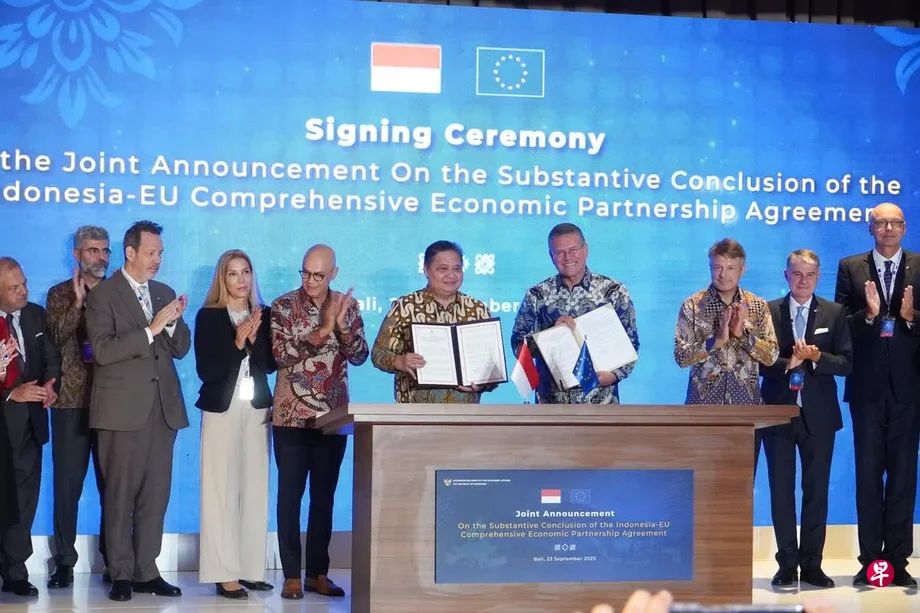
A Decade of Negotiations Culminates in Brussels
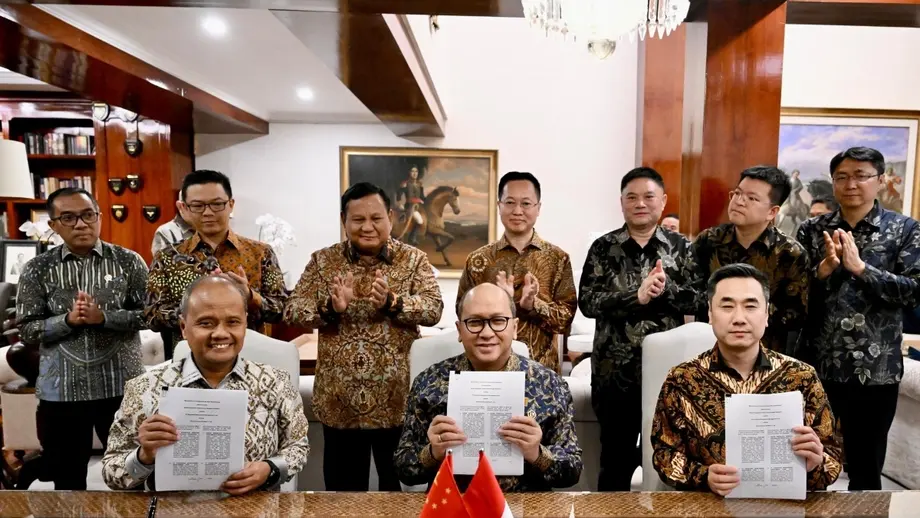
Indonesia and the European Union officially signed a comprehensive economic partnership and a separate investment protection pact on Saturday, November 21, 2026, at the European Commission headquarters in Brussels, Belgium. The signing ceremony marked the end of nearly 10 years of formal discussions that began with a joint announcement on July 18, 2016, in Jakarta and Brussels. Coordinating Minister for Economic Affairs Airlangga Hartarto represented Indonesia alongside Minister of Trade Budi Santoso, while European Commission President Ursula von der Leyen and EU Commissioner for Trade and Economic Security Maroš Šefčovič participated for the European Union. The agreements are designed to reshape commercial ties between the world's largest single market and Southeast Asia's largest economy.
Contents
- A Decade of Negotiations Culminates in Brussels
- Tariff Elimination and Immediate Duty Free Access
- Substantial Savings and Projected Economic Growth
- Expanding Market Reach Beyond Traditional Partners
- Support for Small Businesses and Geographical Indications
- Lower Production Costs and European Machinery Access
- Safeguarding Domestic Downstream Processing Policies
- Investment Protection and Strategic Diversification
- Timeline to Implementation and Ratification Steps
- Text and Ratification of the Agreements
- The Bottom Line
European Commission President Ursula von der Leyen described the accord during the live-broadcasted ceremony as one of the most ambitious trade agreements the European Union has ever concluded in Asia. She noted that the combined population of the 27 EU member states and Indonesia creates a shared economic zone encompassing approximately 730 million people. Bilateral trade in goods reached about €28.9 billion (approximately US$31.8 billion) in the previous year, while services trade climbed to €9.3 billion (approximately US$10.2 billion), creating a substantial baseline for future growth under the newly minted pacts.
This is one of the most ambitious agreements the European Union has achieved in Asia. This partnership will eliminate customs duties on almost all trade between our economies and foster long-term growth for workers, farmers, and small businesses.
Tariff Elimination and Immediate Duty Free Access
The core of the Indonesia-European Union Comprehensive Economic Partnership Agreement involves sweeping tariff reductions across thousands of product categories. When the agreement takes full effect, 98.5 percent of EU goods and more than 90 percent of Indonesian goods will be traded without customs duties. Coordinating Minister for Economic Affairs Airlangga Hartarto stated that 90.4 percent of Indonesian export tariff lines will immediately drop to zero on day one, providing instant relief for labor-intensive industries and leading agricultural commodities. The remaining portion of tariff lines will see gradual liberalization phased in over periods ranging from three to 15 years.
Indonesian exporters specializing in palm oil, footwear, textiles, garments, coffee, cocoa, rubber, furniture, automotive components, and fishery products stand to gain immediate advantages from the zero-tariff policy. For palm oil and its derivatives, the agreement establishes a specific zero-tariff quota starting at 1.9 million tonnes with an additional 140,000 tonnes, alongside provisions for gradual increases over the first nine years of implementation. Footwear items including leather shoes, sneakers, sports shoes, and sandals will similarly enjoy immediate duty-free entry into the European market.
Substantial Savings and Projected Economic Growth
The elimination of customs duties is projected to generate billions of dollars in commercial savings for businesses operating in both regions. The European Commission estimates that European exporters will save more than €600 million annually in customs duties once the provisions are fully operational. On the Indonesian side, government calculations put potential tariff savings at between 15 trillion and 17 trillion rupiah, making local manufactured goods significantly more competitive when distributed across the European market.
Economic modeling released by Brussels indicates that the agreement will boost European Union exports to Indonesia by nearly 40 percent within 15 years. Over the same timeline, Indonesian exports to the European bloc are expected to expand by more than 14 percent. Long-term econometric projections suggest that by 2042, the gross domestic product of the European Union will be 16 billion euros higher and Indonesia's gross domestic product will be 27 billion euros higher than they would have been without the trade pact.
Expanding Market Reach Beyond Traditional Partners
Trade between Indonesia and the European Union has historically concentrated in a small handful of destination countries within the bloc. Minister of Trade Budi Santoso noted that approximately 56 percent of Indonesian exports to Europe previously flowed exclusively into the Netherlands, Italy, and Germany. The new agreement is structured to encourage diversification by opening commercial pathways across the remaining 24 member states of the European Union, thereby distributing export volumes more evenly across the continent.
Government planners have also established ambitious growth targets to measure the success of the agreement during its early stages. Authorities in Jakarta have publicly targeted a 50 percent increase in total Indonesian exports to the European Union within the first five years following full implementation. This expansion is expected to be supported by the removal of structural trade barriers and the simplification of administrative procedures for businesses of all sizes.
Support for Small Businesses and Geographical Indications
Micro, small, and medium enterprises in Indonesia will receive dedicated administrative assistance designed to simplify the export process. Under the new framework, smaller businesses can utilize a self-certification mechanism known as a statement of origin to verify where their products were manufactured, bypassing lengthy bureaucratic approval processes. This self-management approach allows producers of specialty goods to ship directly to European buyers with fewer paperwork hurdles.
The agreement also extends legal recognition and protection to 72 Indonesian geographical indications within the European Union, safeguarding the regional identity of items such as Gayo coffee, Toraja coffee, and 12 distinct varieties of spices including nutmeg. Conversely, the agreement protects 221 European geographical indications in Indonesia, ensuring mutual respect for regional agricultural and manufactured specialties.
Lower Production Costs and European Machinery Access
Industrial sectors inside Indonesia stand to benefit from cheaper imports of heavy machinery, raw materials, and capital goods originating from European suppliers. The tariff reduction schedule encompasses 86.2 percent of machinery tariff lines, 83.5 percent of chemical industry tariff lines, and 73.9 percent of pharmaceutical industry tariff lines. Wakil Menteri Perindustrian Faisol Riza noted that cheaper access to advanced European manufacturing technology will help domestic factories lower their overall production expenses and improve product quality.
Concurrently, European automotive manufacturers will see Indonesian import tariffs on passenger vehicles, which have historically reached as high as 50 percent, phased out entirely over a five-year period. European industrial exporters will likewise gain improved access to raw materials such as nickel and cobalt, which are essential inputs for battery manufacturing and clean energy supply chains.
Safeguarding Domestic Downstream Processing Policies
Government officials have confirmed that the economic partnership agreement will not interfere with Indonesia's national downstream industrialization policies. The strategy of mandating domestic processing for raw natural resources before export will remain entirely under national control. Coordinating Minister for Economic Affairs Airlangga Hartarto emphasized that European Union institutions will not have oversight authority regarding how Indonesia manages its domestic natural resource extraction and refinement.
By maintaining these domestic processing mandates while securing preferential access to European markets, the government aims to encourage foreign entities to construct processing facilities locally. This approach is intended to generate higher-value manufactured goods within the country rather than exporting raw ores in their unprocessed state.
Investment Protection and Strategic Diversification
Alongside the trade agreement, the two regions signed the Indonesia-European Union Investment Protection Agreement to establish a stable legal framework for foreign direct investment. Over the past five years, accumulated foreign direct investment from the 27 European Union member states into Indonesia reached approximately US$25 billion, with the Netherlands accounting for roughly 55 percent of that total. Wakil Menteri Investasi dan Hilirisasi Todotua Pasaribu stated that the new investment pact is designed to attract capital into high-growth sectors such as electric vehicles, advanced electronics, and pharmaceuticals.
The trade pact arrives as European policymakers pursue a broader strategy to diversify global supply chains and mitigate trade frictions with the United States and China. For Indonesia, the agreement provides a reliable commercial anchor outside North American markets, arriving shortly after the finalization of a separate trade arrangement with Canada.
Timeline to Implementation and Ratification Steps
A structured legislative timeline governs the formal rollout of the trade and investment agreements before they become legally binding. The formal milestones include:
- July 18, 2016: Indonesia and the European Union launch formal negotiations through a joint announcement.
- July 13, 2025: Political agreement is reached between European Commission President Ursula von der Leyen and Indonesian President Prabowo Subianto.
- September 23, 2025: Negotiating teams formally conclude all chapters of the CEPA and IPA texts.
- November 21, 2026: Ministers and commissioners officially sign the IEU-CEPA and IEU-IPA documents in Brussels.
- December 11, 2026: Indonesian President Prabowo Subianto schedules an official visit to Brussels to meet with European leadership.
- January 1, 2027: Target effective date for provisional application, coinciding with Indonesia graduating from the EU Generalised Scheme of Preferences.
The formal entry into force requires approval from the European Parliament alongside the completion of internal legislative ratification procedures in Indonesia. Because Indonesia is scheduled to exit the European Union Generalized Scheme of Preferences on January 1, 2027, both administrations prioritized the signing ceremony to minimize any gap where standard tariffs might apply to Indonesian shipments.
Text and Ratification of the Agreements
The full text and outline of the Indonesia-EU Investment Protection Agreement and Comprehensive Economic Partnership Agreement are available through official channels. The EU-Indonesia Comprehensive Economic Partnership Agreement covers chapters and annexes ranging from Chapter 1 on Initial Provisions, Chapter 2 on National Treatment and Market Access for Goods (including Tariff Schedules for the EU and Indonesia), Chapter 3 on Rules of Origin, up to Chapter 25 on Final Provisions, alongside protocols on mutual administrative assistance in customs matters and sustainable palm oil. Similarly, the EU-Indonesia Investment Protection Agreement spans chapters from objective and general definitions to investment protection, dispute settlement, and final provisions.
Regarding the European Parliament voting schedule and committee docket numbers for the ratification process, official scheduling and docket numbers are pending formal assignment by the parliamentary committees.
The Bottom Line
At a Glance
- Indonesia and the European Union signed the Comprehensive Economic Partnership Agreement and Investment Protection Agreement on November 21, 2026, in Brussels.
- Tariffs will drop to 0 percent immediately for 90.4 percent of Indonesian export tariff lines entering the EU.
- The European Commission projects annual tariff savings of more than €600 million for EU exporters and a 40 percent rise in EU exports to Indonesia within 15 years.
- Palm oil secures a zero-tariff quota starting at 1.9 million tonnes with an additional 140,000 tonnes, alongside provisions for future increases.
- Full implementation requires approval from the European Parliament and completion of domestic ratification procedures by early 2027.