The Countdown to a New Wage Proposal
Bangladesh is moving toward a critical turning point for its massive ready-made garment industry as the 8th Minimum Wage Board prepares for an upcoming submission from factory owners. The board, which operates under the Ministry of Labour and Employment, was reconstituted on November 1, 2026, following mounting demonstrations across key industrial belts. Syed Azad Subhani, a district and sessions judge who serves as the chairman of the Minimum Wage Board, announced that owners are expected to put forward their official wage proposal. Subhani made his remarks on Saturday, November 21, 2026, during a field inspection tour in the Ashulia industrial area of Savar. The visit included a stop at Pearl Garments Limited in the Palashbari area, where the chairman and his team toured the production floor to speak directly with workers about their monthly salaries, household size, living expenses, and daily challenges.
Contents
- The Countdown to a New Wage Proposal
- Workers Push for Higher Pay While Research Groups Calculate Costs
- Industrial Unrest and Factory Closures Disrupt Production Belts
- Owners Weigh Financial Pressures and Export Competitiveness
- Wider Economic Debates and Proposed Structural Reforms
- Government Intervention and Public Food Distribution Plans
- At a Glance
The upcoming submission follows weeks of high-stakes negotiations and widespread worker unrest that began in late October 2026. The current minimum wage stands at Tk 12,500 per month, a figure that took effect in December 2023 after a 56.25 percent increase from the previous rate of Tk 8,000. Under amendments to the Bangladesh Labour Act passed in 2026, the mandatory wage revision cycle was shortened from five years to three years, bringing the review deadline to November 2026. The statutory framework gives the board six months from its formation date to complete its work, setting a final deadline of April 30, 2027. However, both labor representatives and industry owners have agreed to accelerate the process, with the stated goal of implementing the new wage structure from December 2026 so that workers receive their enhanced pay starting in January 2027.
Workers Push for Higher Pay While Research Groups Calculate Costs
Worker representatives on the wage board have formally proposed a minimum monthly wage of Tk 32,000 to lift households out of severe financial distress. Babul Akhter, the permanent workers' representative on the board and general secretary of the Bangladesh Garment and Industrial Workers Federation, detailed a grade-by-grade breakdown during the board's second meeting. For general production workers, the union demands range from Tk 32,000 for the fourth grade up to Tk 48,000 for the first grade, alongside a proposed starting rate of Tk 30,000 for apprentices. For office staff and administrative employees, the union proposal ranges from Tk 40,000 for the fourth grade to Tk 55,000 for the first grade. Akhter explained that these figures were scaled back from the actual cost of living after balancing workers' urgent needs with the economic realities of the export sector.
Independent research organizations and think tanks have also submitted formal assessments to guide the board. The Centre for Policy Dialogue (CPD) released a study proposing a minimum wage range between Tk 18,578 and Tk 24,204 per month. Presenting the findings at a press conference in Dhaka on Wednesday, CPD Executive Director Nazneen Ahmed explained that maintaining the exact purchasing power of the 2023 wage requires at least Tk 16,351 due to inflation. Furthermore, keeping a family of four above the upper poverty line requires an estimated Tk 18,578, while meeting basic nutritional and living needs requires Tk 24,204 monthly. Meanwhile, economic analysts point out that living costs have climbed significantly over the past three years, with general inflation and higher expenses for housing, transport, and utilities putting intense pressure on low-income households.
Industrial Unrest and Factory Closures Disrupt Production Belts
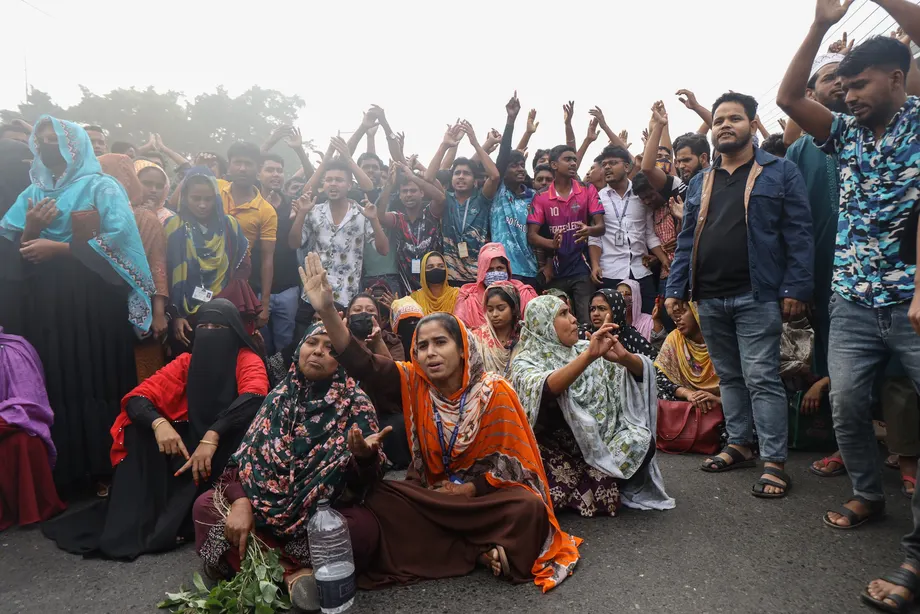
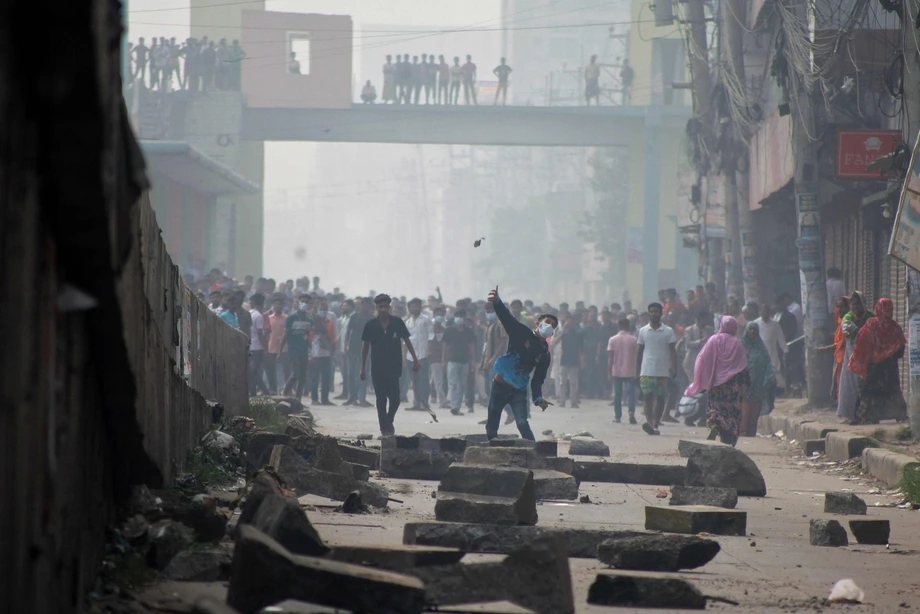
The wage negotiations have unfolded against a backdrop of intense labor friction, factory shutdowns, and highway blockades across major manufacturing hubs including Savar, Ashulia, Gazipur, Narayanganj, and Chattogram. Protests that erupted in late October 2026 shut down dozens of production units as workers demanded higher pay and better job security. The tension escalated further following the postponement of the board's third meeting, which had been scheduled for Monday, November 17, 2026, at Sram Bhaban in Dhaka. The session was suspended due to the sudden illness of Anwar Hossain, the permanent workers' representative on the board who serves as president of the Bangladesh Nationalist Workers Party, alongside wider security concerns in the industrial zones.
The meeting deferral sparked immediate demonstrations and protests outside the board's offices by labor leaders and workers who feared deliberate delays. In the industrial zones, factory owners responded to continuous strikes and work stoppages by invoking Section 13(1) of the Bangladesh Labour Act, a legal provision allowing management to suspend operations under a no-work, no-policy rule. Data from the Bangladesh Garment Manufacturers and Exporters Association (BGMEA) indicated that 98 factories remained closed under this provision on Monday, November 17, 2026, while another 24 suspended operations entirely. Labor leaders and industry executives have warned that prolonged closures threaten the livelihoods of the nation's four million garment workers and jeopardize vital export orders during a weak global demand cycle.
Owners Weigh Financial Pressures and Export Competitiveness
Factory owners and industry leaders have argued that the union's demand for a Tk 32,000 minimum wage exceeds the financial capacity of many manufacturing units, particularly small and medium enterprises operating on thin profit margins. Representatives from the BGMEA and the Bangladesh Knitwear Manufacturers and Exporters Association (BKMEA) held intensive consultations ahead of the scheduled submission, speaking with between 10 and 20 entrepreneurs across each major industrial zone. Discussions among factory owners centered on proposing an entry-level minimum wage ranging between Tk 14,000 and Tk 15,500, with late-stage meetings on Sunday night leaning toward a formal proposal of around Tk 15,000.
Industry representatives, including BGMEA President Mahmud Hasan Khan and BKMEA President Mohammad Hatem, noted that production costs have surged due to higher energy prices, expensive raw materials, and rising utility tariffs. BGMEA Director and owners' representative ABM Shamsuddin explained that employers initially sought a one-week extension to finalize their figures following weeks of supply chain disruptions and security challenges in Dhaka and its surrounding areas, though the board ultimately granted a four-working-day extension. Sector analysts have cautioned that sharp wage hikes without corresponding increases in worker productivity, technological modernization, and higher purchase prices from international clothing brands could drive smaller factories into bankruptcy and push international buyers to source from lower-cost competitors such as Ethiopia and Vietnam.
Wider Economic Debates and Proposed Structural Reforms
The wage dispute has triggered broader policy discussions regarding structural reforms in Bangladesh's export-oriented manufacturing sector. Economists and labor experts have proposed moving beyond a single national minimum wage toward a geographically differentiated system. Under a multi-zone proposal, base components like food and medical allowances would remain uniform, while housing allowances would vary to reflect local rental costs in major cities compared to rural districts. Proponents argue this approach would direct new industrial investments toward less-developed regions and ease the severe concentration of factories around Dhaka and Chattogram.
Additional policy proposals include establishing mandatory welfare funds financed through employer profits, providing direct digital subsidies for food and transport, and implementing an automatic annual wage increment of five percent on basic pay to protect purchasing power against inflation. Experts have also highlighted the severe youth unemployment crisis as a critical backdrop to the wage talks. According to data from the Bangladesh Bureau of Statistics (BBS) and international financial reports, graduate joblessness has surged in recent years, with a high percentage of university-educated young people remaining unemployed amid intense competition for white-collar positions.
Government Intervention and Public Food Distribution Plans
The government has moved to ease household financial burdens through targeted relief measures while wage negotiations proceed. The Food Ministry proposed a special Open Market Sale (OMS) program to distribute subsidized rice to garment workers through 75 mobile trucks deployed every Friday across key industrial zones in Dhaka, Gazipur, Narayanganj, and Chattogram. Under the plan, each eligible worker could purchase up to 10 kilograms of rice monthly at a subsidized rate of Tk 30 per kilogram, backed by a government allocation of 4,500 tonnes of rice from public stocks and associated distribution funding.
Despite these supportive programs, labor organizations and opposition parties have called for coordinated national action to stabilize the manufacturing sector. Parliamentary debates under Rule 147 addressed proposals for a national taskforce to coordinate energy supplies, secure financial assistance for struggling manufacturing units, and clear outstanding wage payments. As the Minimum Wage Board reconvenes to review submissions from both owners and workers, officials maintain that the statutory process will continue regardless of delays, ensuring that a final binding wage structure is established to protect the nation's economic backbone.
At a Glance
- The 8th Minimum Wage Board was formed on November 1, 2026, under the leadership of Chairman Syed Azad Subhani.
- Workers' representatives proposed a minimum monthly wage of Tk 32,000 during the board's second meeting.
- Factory owners held consultations to finalize a counter-proposal expected to range between Tk 14,000 and Tk 15,500.
- The Centre for Policy Dialogue (CPD) recommended a minimum wage range between Tk 18,578 and Tk 24,204 based on living costs and poverty lines.
- Industrial unrest and work stoppages led to the temporary closure of over 100 factories under Section 13(1) of the Bangladesh Labour Act.
- The new minimum wage structure is targeted to take effect in December 2026, with disbursements beginning in January 2027.