Two sides of a wage argument
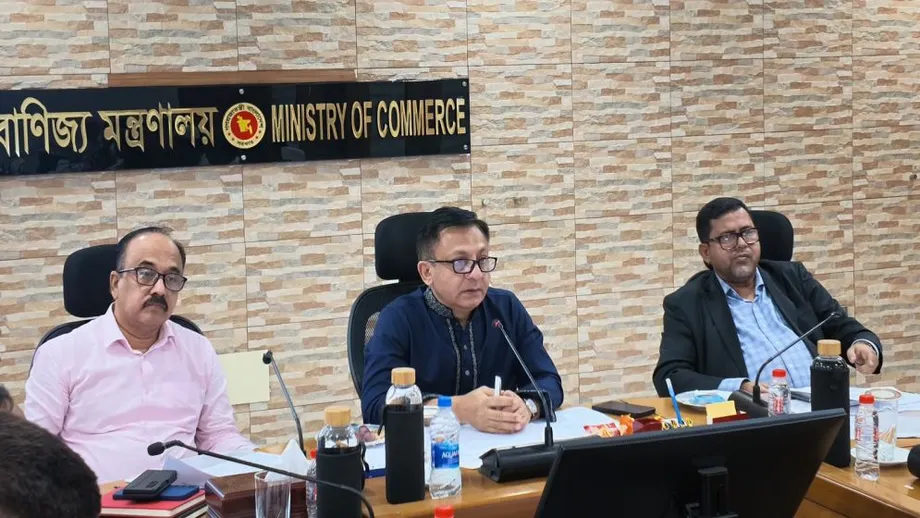
Bangladesh's garment wage debate now centres on a gap between a proposed monthly range of Tk18,578 to Tk24,204 and a workers' demand of Tk32,000. On November 19, the Bangladesh Garment Manufacturers and Exporters Association (BGMEA) wrote to Centre for Policy Dialogue (CPD) Executive Director Nazneen Ahmed, challenging how the think tank calculated the lower and upper figures. The Minimum Wage Board is due to meet on November 23, when factory owners are expected to present their proposal.
Contents
- Two sides of a wage argument
- What do CPD's proposed figures mean?
- Why does BGMEA question the household figures?
- How do poverty lines and housing costs enter the calculation?
- What does BGMEA say factories can afford?
- What are workers asking for, and what has the unrest changed?
- How could wage setting become more evidence based?
- What happens next?
- Key Points
The dispute is about more than the amount on a pay slip. CPD's figures depend on assumptions about how many people a worker supports, how many family members earn money, and what it costs to cover food, housing and other needs. BGMEA says some of those assumptions may overstate costs or miss changes in workers' pay since the last wage was set. CPD says wage decisions need reliable information about workers' living costs as well as employers' ability to pay.
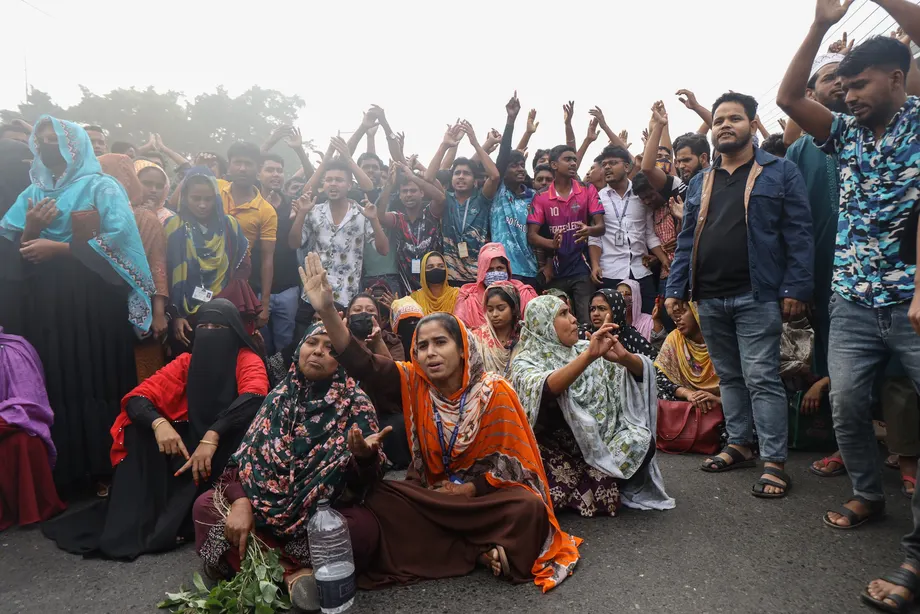
The debate is unfolding amid protests and factory stoppages. On November 17, BGMEA figures put production on hold at 525 factories, with another 115 closed indefinitely, or about 640 affected altogether. Earlier factory closures and protests had also left workers facing lost workdays and uncertain pay.
What do CPD's proposed figures mean?
At a Dhaka briefing on November 18, CPD proposed that negotiations consider monthly wages from Tk18,578 to Tk24,204. The lower figure is the amount it calculated would keep a family of four above the upper poverty line. The upper figure is its estimate of what the family needs for food, housing and other essentials, with a modest amount left for savings. CPD's calculations assume 1.58 earners in the household.
CPD also estimated that Tk16,351 a month in 2026 would buy what Tk12,500 bought when the existing minimum wage was set in 2023. That figure is an inflation adjustment: it aims to maintain the same purchasing power, rather than give workers a real increase in what they can buy. The government's 2023 wage gazette was published on December 21, 2023.
CPD Executive Director Nazneen Ahmed said the discussion should stay within the proposed range while moving gradually towards a living wage. She said:
In our view, discussions should take place between these two figures. However, we need to move gradually towards a living wage.
The figures are recommendations for the board's discussions, not an approved wage scale. Workers' representatives have proposed Tk32,000 at the board, while workers on the streets have called for Tk30,000 a month. Those demands are well above both ends of CPD's range.
Why does BGMEA question the household figures?
CPD used the middle, or median, result from five studies to estimate a household of four people with 1.58 earners. The median is the middle value when figures are arranged in order. BGMEA argues that an average, which combines all the figures, would better reflect the studies as a whole.
The association also points to CPD's own 2023 survey of garment workers. That survey found an average household of 3.7 people and two earners. BGMEA asks why the newer proposal assumes a larger family and fewer earners just three years later. A family's size and the number of people bringing in income affect how much money each worker may need to support the household.
BGMEA also cites Bangladesh Bureau of Statistics figures showing the national average household size fell from 4.66 people in 2004 to 4.35 in 2011 and 3.96 in 2023. These are national figures, not a direct measure of garment workers' households. BGMEA uses the downward trend to question whether the CPD assumption is suitable for the industry.
How do poverty lines and housing costs enter the calculation?
CPD used the Dhaka urban upper poverty line in calculating the amount needed to keep a family above the poverty threshold. A poverty line is an estimated level of spending below which a household cannot meet basic needs. BGMEA says Dhaka urban has the highest costs in the country, so applying that area's threshold across the whole garment industry could make the estimate too high for workers in other regions.
Using figures from the 2022 Household Income and Expenditure Survey, BGMEA proposes averaging the Dhaka urban and Dhaka rural upper poverty lines. It gives Tk4,234 as the rural Dhaka figure and Tk4,578 as the average of the two areas. The association says a better method would weight regional poverty lines according to where factories are located and how much they export. Its figures put Dhaka urban factories at 9 percent of garment exports in fiscal year 2025–26, with factories elsewhere accounting for 91 percent.
The association also disputes how CPD counted housing. CPD estimated expenses other than food at 86.67 percent of food spending, using the 40th percentile of the 2022 survey, and then added Tk10,000 for housing. BGMEA says the survey's non-food spending already includes housing, so adding rent separately could count the same cost twice. The disagreement turns on how the survey categories were used, and BGMEA has asked CPD to explain the calculation.
In its letter, BGMEA President Mahmud Hasan Khan said the data differences could create misunderstanding between the industry and its stakeholders. The letter said:
Such data discrepancies create confusion, which often builds a gap between the industry and its stakeholders.
What does BGMEA say factories can afford?
BGMEA argues that wage negotiations should also consider what factories earn and spend. It says production costs rose by 25 to 30 percent over three years while export prices fell by 2.6 percent, citing National Board of Revenue data for the price decline. It also says bank interest rates reached 12 to 16 percent, export incentives fell by nearly 70 percent and 287 factories shut over the same period. Those are figures and assessments presented by the association.
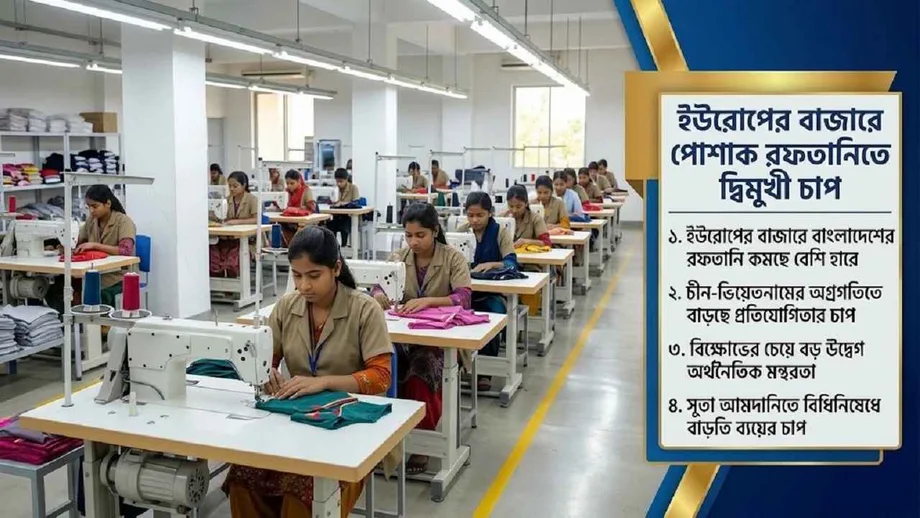
The trade body says gas and electricity shortages, weaker investment and policy uncertainty add pressure. It also points to Bangladesh's preparations to graduate from the United Nations' least developed country category, which could affect some trade advantages, and to additional US tariffs of 10 to 20 percent. BGMEA says India and Vietnam have secured trade agreements with the European Union, adding to competition for orders.
BGMEA compares increases in statutory minimum wages from 2016 to 2026: 136 percent in Bangladesh, 59 percent in India, 54 percent in Vietnam and 50 percent in Cambodia. The comparison describes growth in the minimum wage over that period, rather than how much workers can buy with their pay. BGMEA also says Bangladesh's average wage gap with India and Pakistan is narrow.
CPD Distinguished Fellow Mustafizur Rahman has challenged the idea that wage rises alone explain factory closures. He said:
To my knowledge, there is no evidence of factories closing solely because of wage increases.
Rahman has also urged international buyers to share the cost of higher wages and argued that government support could help businesses manage the change. That puts responsibility for the final cost beyond workers and factory owners alone.
What are workers asking for, and what has the unrest changed?
Workers have demanded Tk30,000 a month during protests, while their representatives proposed Tk32,000 to the Wage Board. The current minimum is Tk12,500. The board was formed on November 1 after weeks of protests over wages and living costs. Its meeting scheduled for November 16 was postponed because the workers' representative was ill, and the next meeting is set for November 23.
Protests and stoppages have disrupted industrial areas including Savar, Ashulia and Gazipur. A larger garment and energy crisis has also put pressure on factories through power shortages and closures. For workers, a stopped production line can mean a lost day of work or uncertainty about wages. For factories, interruptions can delay shipments and make it harder to secure future orders.
International clothing buyers, including H&M and Inditex, met BGMEA on November 18 and raised concerns about shipment delays and future orders. Some buyers were postponing purchasing decisions while the unrest continued. Their position matters because factories depend on orders from overseas brands to keep production and employment going.
How could wage setting become more evidence based?
CPD says Bangladesh's wage-setting process lacks a recent, broad survey of workers' living conditions and the garment industry's financial health. Section 141 of the Bangladesh Labour Act names factors to consider, including workers' needs and economic conditions, but CPD says the law does not set clear measures or a method for deciding how much weight each factor should receive.
The think tank has called for a large survey covering food prices, rents near industrial areas, household size, the number of earners, productivity, export prices, orders, production costs and factory profitability. Its proposed approach is for workers' basic needs to set a minimum floor and the industry's ability to pay to help set an upper limit. CPD also wants wage decisions made at least six months before they take effect, and has called for a permanent commission to review wages each year.
CPD points to Cambodia, which reviews wages annually using seven legally defined criteria and a 51-member council representing government, workers and employers. Bangladesh reviews wages every three years. A regular timetable and shared public data could give workers and employers more time to prepare and make the basis for decisions easier to check.
The International Labour Organization says wage setting should use reliable evidence and consider both workers' needs and economic factors such as productivity, employment and the ability of enterprises to remain sustainable. Its statement on wage review also calls for respect for workers' right to organize and bargain collectively, and for peaceful efforts to lower tensions. It supports an evidence based, gender responsive national wage policy.
What happens next?
The wage board's November 23 meeting is the next scheduled step. Factory owners are expected to present their proposal, after which the board will continue considering the competing positions. The final wage amount and the date it will be paid have not yet been decided in the information available as of November 20.
The main dates in the current review are:
- November 1, 2026: The government forms the Minimum Wage Board.
- November 9: Workers' representatives propose a monthly minimum of Tk32,000 at a board meeting.
- November 16: A scheduled meeting is postponed because the workers' representative is ill.
- November 18: CPD presents its proposed range of Tk18,578 to Tk24,204.
- November 19: BGMEA sends its questions to CPD, and the ILO issues a statement on the review and unrest.
- November 23: The board is scheduled to meet, with employers expected to submit their proposal.
The two sides are contesting both the amount and the method used to reach it. The board's task is to turn those arguments into a wage decision that accounts for household needs, the varied locations of factories and the costs of keeping businesses operating.
Key Points
- CPD recommends negotiations over a monthly wage of Tk18,578 to Tk24,204.
- BGMEA questions assumptions about household size, regional poverty costs, housing and annual wage increases.
- Workers' representatives have proposed Tk32,000, while workers have demanded Tk30,000.
- The Minimum Wage Board is scheduled to meet on November 23, when employers are expected to present their proposal.
- Factory stoppages and shipment concerns are adding urgency to the wage talks.