Restoration Continues Around a Working Royal Kitchen
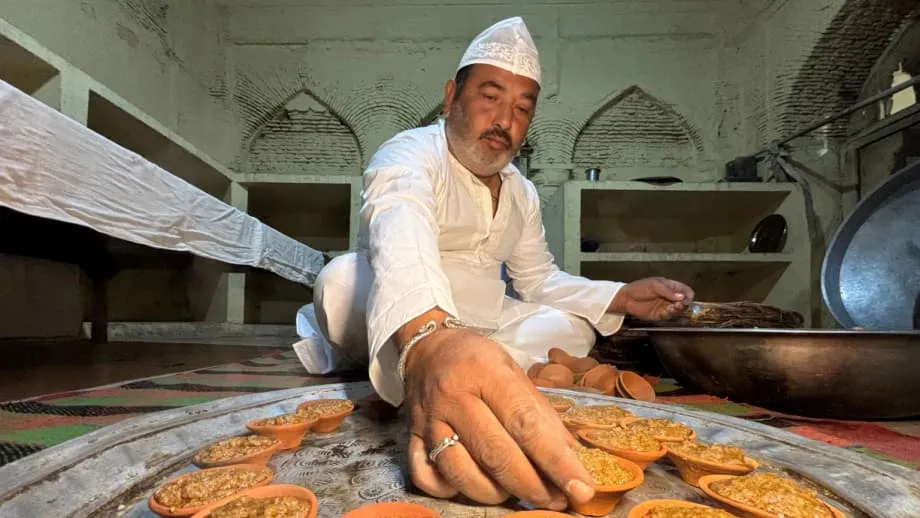
At Chota Imambara in Lucknow, the Archaeological Survey of India (ASI) is restoring a royal kitchen whose daily purpose still follows the wishes of its founder, Nawab Muhammad Ali Shah. During Muharram, the Shahi Bawarchi Khana prepares about 20,000 servings of blessed food a day. During Ramadan, it distributes approximately 700 coupons daily and sends cooked meals to 16 nearby mosques.
Contents
- Restoration Continues Around a Working Royal Kitchen
- The Endowment That Still Pays for Meals
- Two Kitchens Keep the Service Moving
- Why the Building Needed Repair
- A Mortar Recipe Rooted in Older Building Methods
- Ramadan Meals Follow the Nawab's Instructions
- Muharram Brings 20,000 Daily Servings
- Royal Recipes Survive Beyond Lucknow
- What Continuity Means to Families and Visitors
- The Essentials
The kitchen dates to 1839 and is described as an institution with 186 years of tradition. Its survival rests on an unusual combination: an endowment of 3.6 million rupees, detailed instructions for meals and portions, and two identical kitchens that allow cooking to move from one chamber to the other during repairs.
As of March 29, 2026, conservation work that began last October was expected to finish by the end of March. Workers were removing deteriorated material and restoring the structure with traditional lime mortar and thin clay bricks, while the kitchen continued its religious feeding obligations.
Muhammad Ali Shah, identified as the third ruler of Awadh, built the kitchen to feed royalty and ordinary people alike. Its charitable mission includes widows, orphans and people unable to provide for themselves. Slow cooked stews, freshly baked bread and recipes associated with the former royal household remain part of its working life.
Chota Imambara therefore presents the ASI with a task that extends beyond repairing an old building. The agency must protect a structure showing serious deterioration while allowing the service carried out inside it to continue. The kitchen's history survives through its walls, its cooking practices and the meals still reaching people across Lucknow.
The Endowment That Still Pays for Meals
Muhammad Ali Shah established the financial foundation for the kitchen in 1839, transferring 3.6 million rupees to the East India Company. The sum was enormous for the period. The arrangement required the British trading enterprise to maintain monuments built by the Awadh nawabs, while interest from the money would fund the kitchen in perpetuity.
An endowment is money set aside to support a continuing purpose. Here, the interest earned on the original funds was intended to keep the charitable kitchen operating long after its founder's lifetime. The arrangement joined the care of buildings to the provision of food, making both part of the ruler's lasting commitments.
After India gained independence in 1947, the funds were transferred to a local bank. They continue to generate the interest that sustains the kitchen. The Hussainabad Trust, a body monitored by the state government, now manages the resources and carries forward the charitable purpose attached to them.
The nawab's instructions went beyond allocating money. His will specified the dishes to be prepared, their exact weights and the standards of quality expected. It gave particular attention to Ramadan, the month of fasting, and Muharram, a period of mourning in the Shia Islamic calendar.
Those provisions linked the royal household with the wider public. Meals prepared to exacting standards were intended for the privileged and the needy, creating a shared charitable service rather than separate standards of food. The endowment also bound successive governments to commitments made by the former ruler, allowing the institution to survive political change.
Two Kitchens Keep the Service Moving
Muhammad Ali Shah built two identical kitchens flanking the main Imambara complex. Their placement reflected the importance of symmetry in Awadhi architecture, but the arrangement also served the practical demands of preparing large quantities of food.
Historian Roshan Taqui explains that the twin design supported the scale of cooking needed during major religious observances while preserving the balanced appearance associated with the region's buildings. Beauty and public usefulness were complementary parts of that planning.
The Hussainabad Trust can rotate operations between the two kitchens. During the current conservation work, that flexibility allows one chamber to remain in service while workers repair the other. An architectural choice made nearly two centuries ago is helping protect the continuity of the charity today.
The original endowment papers remain a guide to the work carried out inside the complex. Recipes, weights and quality requirements connect contemporary cooking to the founder's instructions. The kitchen adapts to present needs while retaining the community service at the centre of its purpose.
Why the Building Needed Repair
Cracked walls, peeling plaster and exposed brickwork had left the kitchen in a deteriorated condition before the ASI began conservation work last October. Sections of the floor showed signs of imminent collapse. Local residents, concerned about the condition of a resource used by their community, petitioned the agency to intervene.
Aftab Hussain, the ASI's superintending archaeologist, explains that the project goes beyond reinforcing the structure. The team is working to return the kitchen to its original condition, using materials and methods that its original builders would have recognised.
That approach requires particular ingredients and skilled craftspeople familiar with construction techniques used before industrialisation. Workers are carefully removing decades of deteriorated material to reveal the original lime mortar beneath, then carrying out repairs intended to suit the historic fabric.
The restoration and the charitable operation place different demands on the same space. Conservation workers need access to damaged walls and floors, while kitchen staff must maintain food preparation and distribution. Moving cooking between the twin chambers allows both tasks to proceed.
The main dates in the kitchen's history and current restoration are:
- 1839: Muhammad Ali Shah established the endowment supporting the royal kitchen and the care of Awadh monuments.
- 1947: After Indian independence, the funds were transferred to a local bank.
- Last October: The ASI began conservation work following concerns about the kitchen's condition.
- March 29, 2026: Restoration was expected to conclude by the end of March, with religious feeding continuing during the work.
A Mortar Recipe Rooted in Older Building Methods
The ASI team is using slaked lime as the base for its repair mortar. The lime is soaked for a full month before being mixed with wood apple pulp, black gram, natural gum known locally as gond, jaggery syrup and red brick dust.
This mixture of organic and mineral ingredients belongs to an indigenous building tradition widely used during the Mughal era. Mortar is the material that joins bricks and forms protective finishes on walls. In this kitchen, the traditional mixture is intended to provide strength while allowing moisture to move through the structure.
That ability to release moisture, often described as breathability, matters in a historic building. The traditional materials allow the walls to respond naturally to changes in temperature and humidity. Moisture buildup is a reason contemporary cement repairs can fail in such structures.
Workers are also using lakhauri bricks, the thin bricks made from burnt clay that are characteristic of Awadhi architecture. Their use helps retain the kitchen's authentic form rather than changing its appearance through incompatible replacement materials.
The month devoted to soaking the lime shows why this restoration involves more than applying a fresh surface. Preparing the mortar, sourcing its ingredients and working with traditional bricks are part of a method intended to preserve the building's original construction as well as its appearance.
Ramadan Meals Follow the Nawab's Instructions
During Ramadan, the kitchen distributes approximately 700 coupons each day to poor people, widows and others unable to provide for themselves. Cooked food also goes to 16 nearby mosques, reaching people in need and worshippers gathering for evening prayers.
The menu draws on Lucknow's culinary traditions, including meat curries, flatbreads, kebabs, fruit and sweets. These meals continue the founder's intention that religious observances should be accompanied by food prepared according to defined standards.
Murtaza Hussain Raju, the kitchen manager, maintains the portion sizes and quality requirements recorded in the nawab's will. Every dish is weighed and inspected for compliance with those instructions.
The weighing gives the old documents a direct role in present operations. A recipient's meal is part of a service whose quantities and standards were specified by the royal patron nearly two centuries ago. The trust manages the finances, while the kitchen staff translate the written requirements into food.
Ramadan distribution also connects the kitchen to places beyond Chota Imambara. The 16 mosques form part of a local network through which its food reaches both charitable recipients and people taking part in religious gatherings.
Muharram Brings 20,000 Daily Servings
During Muharram, the operation expands to approximately 20,000 daily servings of tabarruk, meaning blessed food. Meals travel to imambaras, mausoleums and karbalas across Lucknow for distribution among people attending religious gatherings.
The menu changes during the month. For the first nine days, the kitchen prepares simpler vegetarian food, including sweet flatbread, lentils and potato curry. Richer meat curries and kebabs are added during the remaining days.
Sixty workers cook around the clock over wood fires, using pure desi ghee. Daily consumption includes 14 quintals of flour and 11 quintals of potatoes. A quintal equals 100 kilograms, so those quantities amount to 1,400 kilograms of flour and 1,100 kilograms of potatoes each day.
Together, the flour and potatoes alone total 2,500 kilograms, or 2.5 tonnes, daily. Flour accounts for 56 percent of that combined weight and potatoes for 44 percent. These two ingredients give a concrete sense of the scale of preparation, alongside the other foods on the menu.
The budget for the entire Muharram arrangement is 47 lakh rupees, equivalent to 4.7 million rupees. Tabarruk also reaches 325 royal families with continuing connections to the former kingdom of Awadh.
The distribution joins public charity with obligations maintained among families associated with the old court. Both remain part of a network sustained through the kitchen, its endowment and the religious calendar. The changing menu also shows how closely its operations follow the occasions for which the founder made provision.
Royal Recipes Survive Beyond Lucknow
In Kolkata, Manzilat Fatima maintains another branch of Awadhi culinary heritage through a restaurant serving royal cuisine. She is the great-great-granddaughter of Nawab Wajid Ali Shah and Begum Hazrat Mahal.
Kolkata first encountered Awadhi food when the deposed Wajid Ali Shah was exiled there in 1856. He brought his entire culinary entourage to Metiabruz, transferring the royal kitchens of Lucknow to the banks of the Hooghly River.
Fatima learned through her grandmother and mother, without receiving a single written recipe. Her work shows how cooking knowledge passed through women in the family, surviving through spoken instruction and practice while adapting to a different city.
Another tradition continues at Mahmudabad House, approximately 50 kilometres from Lucknow, where the Qila maintains culinary practices dating to the 16th century. Head chef Afzal Ahmed Qureishi learned by watching and imitating his grandfather, Hazaari sahab, who served the Raja of Mahmudabad.
Some preparations remain closely guarded. One is kaanta gali machli, a fish dish in which the bones become edible while the flesh remains soft. Knowledge of such techniques passes between generations of cooks.
These traditions connect Chota Imambara with other places where royal cooking remains a living practice. Subtle flavours, yogurt and cultured dairy used to balance spices, and careful attention to presentation link the kitchens. Their shared approach values refinement over excess, whether knowledge survives through written instructions, family teaching or apprenticeship.
What Continuity Means to Families and Visitors
Yasir Abbas, a descendant of Muhammad Ali Shah, regards the restoration as essential to maintaining traditions that have endured for generations and form part of Awadhi culture. He points to the moral obligation to honour the king's will, which made serving food a permanent part of the religious landscape.
For regular visitors, the kitchen also carries memories of meals, religious gatherings and the physical scale of the old operation. Syed Haider Raza, an 80-year-old resident who has visited Chota Imambara since childhood, recalls its massive vessels and the abundance of food in earlier decades.
Raza says the feeling of the place has endured despite the passage of time. Describing the connection he still feels between today's meals and the royal founder, he said:
The spirit of the place is still the same. It feels as if the food is still being sent by Muhammad Ali Shah.
The restoration brings those memories together with a practical responsibility. Walls and floors need repair, the endowment needs management, and the cooks must continue producing meals that follow the founder's requirements. The twin kitchens allow these responsibilities to be carried out together.
As of March 29, completion remained an expectation for the end of the month. The charitable service was continuing while conservation proceeded, preserving both the historic building and the work that has kept it active across generations.
The Essentials
- The Shahi Bawarchi Khana at Chota Imambara in Lucknow dates to 1839 and was founded by Nawab Muhammad Ali Shah.
- Interest from an original endowment of 3.6 million rupees continues to sustain the kitchen under the Hussainabad Trust.
- The ASI is restoring the structure with traditional lime mortar and lakhauri bricks, with completion expected by the end of March 2026.
- Two identical kitchens allow cooking to continue while one chamber undergoes repairs.
- Ramadan operations include approximately 700 daily coupons and food sent to 16 nearby mosques.
- Muharram operations produce about 20,000 servings daily, employ 60 workers and have a budget of 47 lakh rupees.
- Menus, portions and quality standards continue to follow the nawab's will, while related royal cooking traditions survive in Kolkata and Mahmudabad.