A population count delayed, a welfare ceiling unchanged
India's food security system still uses the 2011 Census to set a national coverage ceiling of 813.5 million people, even as the country prepares for its next population count in 2027. Former Census Commissioner C. Chandramouli estimates that roughly 100 million eligible poor people may be missing out on food entitlements because that population base has not been updated.
Contents
- A population count delayed, a welfare ceiling unchanged
- How the food entitlement ceiling works
- States also have room to enrol more people now
- A parliamentary panel calls for a broader update
- What missing food assistance means for a household
- Schools and clinics need a local population picture
- The 2027 count follows several different calendars
- A digital census must still produce usable numbers
- Key Points
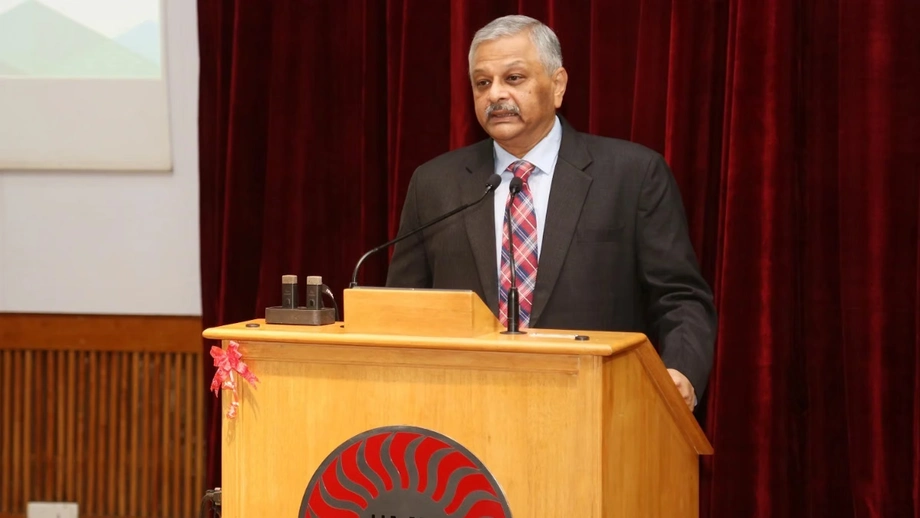
The warning comes in his forthcoming book, Counting a Nation: The Story of the Indian Census, published by Macmillan. Chandramouli, who led the 2011 count, argues that the gap between censuses has left decisions about food, schools, hospitals and housing dependent on an increasingly distant picture of where people live and what they need.
The next census was due in 2021 and was postponed because of the COVID-19 pandemic. With population enumeration scheduled for 2027, the interval between counts will reach 16 years. That includes a delay of six years beyond the expected census year.
Two problems now sit alongside each other. The population ceiling for food assistance remains anchored to 2011, while states have also left some places unfilled within that existing ceiling. Updating beneficiary lists can help people obtain assistance now; revising the population base determines how many people the system can accommodate.
Chandramouli served as Registrar General and Census Commissioner from November 2009 to July 2015, overseeing the census, the National Population Register and the Socio Economic and Caste Census. He describes the consequences of the missing count in direct terms:
Without regular enumeration, the state loses sight of itself. Budgets for schools and hospitals rely on decade-old figures; urban planning proceeds on outdated assumptions; poverty estimates drift without anchors; and the architecture of welfare is forced to operate on shadows rather than people.
How the food entitlement ceiling works
The National Food Security Act, 2013, provides for coverage of up to 75 percent of the rural population and 50 percent of the urban population. Applied to the 2011 Census, those limits produce the national total of 813.5 million people, or 81.35 crore. A crore equals 10 million.
The law is commonly described as covering about 67 percent of India's population. Its rural and urban limits matter because coverage is calculated for states using their population figures, rather than through a single list open to every applicant nationwide.
Section 9 ties those calculations to population estimates from a census whose relevant figures have been published. The legal connection therefore runs from the published census population to the number of people who can be covered in each state.
The 813.5 million figure is the ceiling derived from the 2011 population base for a law enacted in 2013. As the population grows, keeping the same numerical ceiling means the programme can reach a smaller share of residents.
Chandramouli writes that India's population had increased by more than 200 million by 2023, while the beneficiary ceiling remained unchanged. His estimate of around 100 million eligible people excluded concerns the additional need created beyond that old limit.
States also have room to enrol more people now
The Centre told Parliament that states and Union Territories had identified 790.8 million beneficiaries as of July 8, 2026. That left space for another 22.7 million people within the existing ceiling of 813.5 million.
Minister of State for Food Nimuben Jayantibhai Bambhaniya said state governments are responsible for identifying beneficiaries and issuing ration cards within their assigned coverage. She also said the Centre had repeatedly advised them to include eligible poor people and vulnerable households.
State authorities continuously update their databases by removing ineligible ration cards and adding eligible recipients, according to the government's reply. For a family seeking food assistance, this administrative process determines whether its members appear on the list used to distribute grain.
The two tasks operate at different levels: filling unused places brings more people into the current system, while revising coverage limits allows the system to respond to a larger population. Chandramouli's estimate concerns the latter; the Centre's 22.7 million figure measures vacancies within the present ceiling.
A parliamentary panel calls for a broader update
The Standing Committee on Consumer, Food and Public Distribution, chaired by DMK member Kanimozhi Karunanidhi, has called for a comprehensive exercise with a fixed deadline to update the beneficiary database. Its report was presented in the Lok Sabha on March 16, 2026.
The committee cited coverage of 805.6 million people against the intended 813.5 million, leaving 7.9 million places unfilled at that stage. Its concern extended beyond enrolling those remaining beneficiaries to the population figures used to determine coverage.
The committee explained why households could fall outside a system based on an old count:
The Committee are of the view that continued reliance on 2011 Census data for determining NFSA coverage may lead to exclusion of newly eligible and vulnerable households due to population growth, migration and socio-economic changes.
The panel recommended that the Centre work with states and Union Territories to update the database, intensify efforts to identify eligible people and periodically revise coverage limits using updated population estimates.
That recommendation addresses both the size of the programme and the accuracy of its lists. A household may become eligible as its circumstances change, while migration can move demand for assistance from one place to another.
What missing food assistance means for a household
Priority households under the food security law are entitled to 5 kilograms of grain per person each month. Antyodaya Anna Yojana households, a category intended for the poorest families, receive 35 kilograms per household each month.
The government now supplies foodgrains free to NFSA beneficiaries under the Pradhan Mantri Garib Kalyan Anna Yojana, or PMGKAY. The distinction between the two entitlement categories matters because one allocation depends on the number of people and the other is fixed for the household.
A priority household with four eligible members, for example, is entitled to 20 kilograms a month, calculated from the allowance of 5 kilograms each. Inclusion therefore affects a recurring food allocation, rather than a single payment or occasional benefit.
Ration cards and beneficiary databases connect that entitlement to actual recipients. Population coverage limits set the scale of assistance available, while state identification determines which eligible people receive it.
Schools and clinics need a local population picture
India's population was estimated by the United Nations at 1.43 billion in 2023, making it the world's most populous country. That figure comes from modelling, which uses demographic information and assumptions to estimate how a population changes between counts.
A census records people and their characteristics across local areas. For planning a school or a primary health centre, the number of residents in a district, their ages and their distribution can matter as much as the national total.
Chandramouli warns that the missing census leaves uncertainty about where population growth is concentrated, how many children are being born and how the balance between age groups is changing. Those questions affect where teachers, classrooms and health services are needed.
Anganwadis, local centres providing services such as nutrition and care for young children, also depend on knowing the size of the population they serve. A locality with more children needs a different allocation of staff and supplies from one where the number of children has fallen.
Migration adds another challenge. People moving for work or family reasons change the demand for housing, food assistance and public services in both the places they leave and the places they enter. A population map fixed in 2011 becomes less useful as those movements accumulate.
The 2027 count follows several different calendars
The next population enumeration will begin through online submissions on January 10, 2027, across most of India, followed by household visits from January 25. The distinction matters: January 10 opens the opportunity for residents to submit details themselves, rather than the main round of visits by enumerators.
The announced census timetable sets different dates for several states and areas affected by snow. Uttar Pradesh, Punjab, Goa and areas of Uttarakhand without snow have an earlier schedule because of upcoming elections.
- 2011: India conducts its last completed census.
- 2021: The next scheduled census is postponed because of COVID-19.
- April 1 to September 30, 2026: The first phase covers house listing and housing information, with Manipur excluded.
- November 16 to 30, 2026: Online population submissions are scheduled in the four states on the earlier calendar.
- December 1, 2026, to January 4, 2027: Household visits take place in those states.
- January 10 to 24, 2027: Online population submissions open across most remaining states and Union Territories.
- January 25 to February 28, 2027: The main household population count takes place, followed by revision from March 1 to 5.
The population reference time for the main count is midnight at the start of March 1, 2027. A reference time gives the count a common point against which to record the population, although visits take place over several weeks.
Manipur remains outside the announced population enumeration timetable pending a further declaration. Ladakh and designated areas affected by snow have separate arrangements. No date has been given here for publishing the population figures or revising the NFSA ceiling after the count.
A digital census must still produce usable numbers
Census 2027 will be India's first digital census and the first since Independence to collect caste details across communities. Its population questionnaire contains 40 questions, including subjects such as age, employment, digital literacy, bank accounts and personal identification numbers.
Delhi's earlier census preparations illustrate the scale of the work preceding population enumeration. Officials said its first phase covered nearly 7.6 million houses and about 5.5 million households, recording more than 23 million people ordinarily residing in the capital. That exercise concluded on June 14, 2026.
House listing and population enumeration serve related purposes. The first records buildings, households and housing conditions; the next gathers information about individuals. Together, they provide the basis for understanding both how people live and who needs services.
Chandramouli's concern also reaches international datasets. The UN Population Division, World Bank and International Monetary Fund have long relied on Indian census information. The extended gap means global population comparisons increasingly depend on projections for a country of 1.43 billion people.
A 1985 batch Tamil Nadu cadre IAS officer who retired as secretary in the Department of Personnel and Training in September 2020, Chandramouli argues that the missing count has weakened India's statistical standing. His central concern is practical: welfare programmes have expanded to cover food, housing, toilets, bank accounts and health insurance, while their foundational population dataset remains rooted in 2011.
Key Points
- India's next population count comes 16 years after the 2011 Census, following the postponement of the census due in 2021.
- The NFSA coverage ceiling remains 813.5 million people, calculated using the 2011 population base.
- Former Census Commissioner C. Chandramouli estimates that around 100 million eligible poor people may be excluded because the population base is outdated.
- The Centre said 22.7 million more people could be enrolled within the existing ceiling as of July 8, 2026.
- A parliamentary committee has called for updated beneficiary records and periodic revision of coverage limits.
- Across most of India, online population submissions begin January 10, 2027, and household visits begin January 25.