A jobs pledge with deadlines for delivery
Uzbekistan plans to create 2 million industrial jobs offering high incomes by 2030, with ministries required to define what those jobs should pay, count existing positions and divide new employment targets by year, region and industry. The pledge accompanies a goal to expand the economy to $300 billion by 2030 and attract $450 billion in foreign investment over the next decade.
Contents
- A jobs pledge with deadlines for delivery
- What will count as a high-income job?
- How the $450 billion investment plan would work
- Can the economy reach $300 billion?
- Three scenarios show the range of outcomes
- Training workers for more productive industry
- Helping companies grow and reach customers
- Seven programmes share the same economic task
- The dates that turn promises into plans
- Key Points
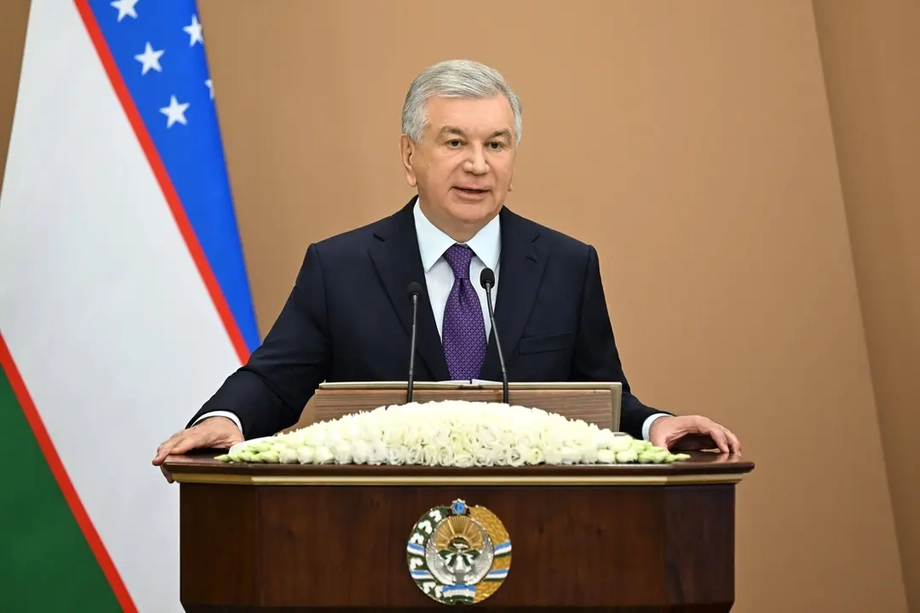
President Shavkat Mirziyoyev signed decree PF-242, titled "On measures to implement national programs aimed at honoring human dignity," on November 10, 2026. It moves an economic agenda announced during independence celebrations into a timetable for government action.
The Ministry of Economy and Finance, working with other agencies, must prepare a draft presidential decision by March 2027 setting out how the growth and industrial plans will work. A separate foreign investment strategy is due by June 2027.
For workers, the central promise is better paid employment in industries producing more valuable goods. For businesses, the agenda includes help to grow, fewer obstacles to competition and investment, and infrastructure suited to modern production.
The decree also requires an annual path toward GDP per person exceeding $10,000 over the next decade. That gives the income measure a longer timetable than the 2030 deadline for the $300 billion economy. GDP per person divides the value of everything an economy produces by its population; individual earnings depend on wages, employment and how income is distributed.
What will count as a high-income job?
Uzbekistan must first establish the criteria for its employment promise. The roadmap requires the government to approve a definition of industrial jobs offering high incomes and determine how many existed on October 1, 2026.
A wage threshold has not yet been specified in the announced measures. Workers and employers therefore still need the criteria that will turn the headline target into a measurable employment commitment.
Officials must allocate the jobs target across years, regions and industrial sectors, then track delivery through labour, tax and other official records. That would connect the national pledge to information about actual employment at businesses.
The plan links job creation to investment in industries producing goods with greater added value. Added value is the extra worth created when a business turns materials, skills and technology into a finished product. Processing a material into a sophisticated component can generate more value than selling the raw material alone.
Industrial zones are also supposed to receive the infrastructure they need, while training programmes should reflect employers' demand for particular skills. Together, those measures address two practical needs of a factory: somewhere suitable to operate and people able to run its equipment.
How the $450 billion investment plan would work
The Ministry of Investments, Industry and Trade must develop a foreign investment strategy by June 2027, concentrating on modern technologies and projects expected to generate high returns. The $450 billion target covers ten years, rather than ending in 2030.
Spread evenly, $450 billion would mean an average of $45 billion a year. That sits within the $40 billion to $50 billion range that Mirziyoyev said Uzbekistan now attracts annually, compared with roughly $2 billion to $3 billion previously. The earlier and current annual figures are the president's assessment.
The roadmap calls for precise investment targets for 2027 through 2030 and forecast figures for subsequent years. Those amounts must be divided by year, sector and region, with a portfolio of projects prepared and updated annually.
Private and foreign investment are intended to reach 80% of total investment. Priorities include attracting international brands, developing manufacturing using advanced technologies, expanding green energy and infrastructure, and increasing partnerships between government and businesses.
Each major project is supposed to have its own detailed record naming the investor, cost, funding sources, delivery dates, infrastructure requirements, expected exports and jobs. These records would give officials a way to compare investment commitments with what projects eventually deliver.
Can the economy reach $300 billion?
Mirziyoyev has raised Uzbekistan's economic ambitions as its output has grown. During his August 28 independence address, he said an earlier goal of reaching $160 billion in GDP by 2030 would be exceeded in 2026. Economist Mirkomil Kholboyev also recalled an intervening target of $240 billion before the president raised the ambition to $300 billion.
The new target is $60 billion, or 25%, above that $240 billion goal. Achieving it will depend on both the amount Uzbekistan produces and how that production is valued in US dollars.
Kholboyev cited updated October forecasts from the International Monetary Fund putting nominal GDP at about $276.2 billion in 2030 and $304.1 billion in 2031. Those figures place the government's 2030 target about $23.8 billion, or 8.6%, above the IMF forecast for that year.
Nominal GDP measures output at current prices. When expressed in dollars, it is affected by production, domestic prices and the exchange rate. A stronger Uzbek som makes the same amount of output measured in local currency worth more dollars; a weaker som has the opposite effect.
Kholboyev calculated that nominal GDP growth in dollars reached 21.1% in 2025 and 26.8% in the first half of 2026. He identified faster real economic growth and a 6.1% strengthening of the average exchange rate as two reasons for the acceleration.
Three scenarios show the range of outcomes
Kholboyev examined three possible paths based on different average annual rates of nominal growth in dollars. His calculations illustrate how strongly the final figure depends on the pace sustained over several years.
- At 20% annual growth, broadly maintaining the pace of 2024 through 2026, GDP could reach $389 billion in 2030.
- At 16% annual growth, reflecting the pace after the pandemic, GDP could reach $309 billion.
- At 9.8% annual growth, matching the average for 2017 through 2025, GDP could reach about $234 billion.
The economist described the fastest scenario as very optimistic. He also noted that the slower historical period included the coronavirus pandemic and years of substantial currency depreciation.
Kholboyev judged the $300 billion goal achievable if Uzbekistan avoids a major depreciation of the som and a shock comparable to the pandemic. His scenarios make the exchange rate a central part of the calculation, alongside the performance of factories and other businesses.
Workers will experience the programme through a different set of numbers: salaries, job openings and the cost of living. The decree's employment criteria and payroll monitoring will help show how the expansion of national output translates into earnings.
Training workers for more productive industry
Uzbekistan's education programme aims to train up to 1 million young people for professions offering higher incomes and move technical colleges toward international educational standards. Those measures sit alongside the industrial employment target.
The economic roadmap calls for dual education, which combines study with practical training at a workplace. It also requires training to take account of industrial employers' needs, connecting what students learn with the machinery and processes they may use at work.
Higher labour productivity is another central goal. In simple terms, productivity rises when a worker can produce more, or produce something more valuable, in the same amount of time. Better equipment, stronger skills and improved organisation can all contribute.
The wider education programme includes preparatory groups for all children aged six and a goal of placing at least 10 Uzbek universities among the world's top 1,000. Mirziyoyev also set an ambition to involve 10 million young people in the digital industry and training for future professions.
These commitments operate on different scales. Training 1 million young people for better paid professions is one part of building the workforce needed for the industrial plan, while the broader digital ambition reaches beyond factory employment.
Helping companies grow and reach customers
Small businesses are meant to receive support to become medium enterprises, while medium businesses should be helped to become large companies. Startups, venture financing and artificial intelligence are also priorities.
Venture financing provides money to young businesses in exchange for an ownership stake, with investors accepting the possibility of failure in pursuit of growth. The programme places it alongside industrial investment as a way to develop new companies and technologies.
The March 2027 draft decision must address structural reforms in six main areas and practical development measures for at least eight economic sectors. It must also identify contributions from individual regions and industries, investment sources and mechanisms for carrying out projects.
Export measures will focus on logistics, certification and access to foreign markets. These are concrete business costs: transporting goods to buyers, demonstrating that products meet required standards and obtaining access to customers abroad.
The roadmap also calls for removing obstacles to private enterprise and competition and identifying new sources of growth in services and modern infrastructure. That broadens the programme beyond manufacturing, even though the 2 million jobs pledge specifically concerns industry.
Seven programmes share the same economic task
Mirziyoyev presented the economic agenda as one of seven national programmes during an August 28 ceremony in New Tashkent marking the 35th anniversary of Uzbekistan's independence. The other programmes cover education, healthcare, water and the environment, justice, neighbourhood government and social harmony.
Healthcare commitments include raising state public health spending to 5% of GDP over five years, extending state health insurance to all households and attracting at least five leading international clinics into specialised medicine.
The environmental programme aims to extend technologies that save water to all cultivated land within five years. It also calls for green areas to cover 30% of district and city centres and for green spaces around schools, hospitals and residential buildings to receive protection as public assets.
Judicial measures seek stronger court independence and protections for citizens and businesses. At the local level, district budgets, investment programmes and infrastructure projects are supposed to respond to needs identified by mahallas, Uzbekistan's neighbourhood community organisations.
Those local decisions could connect the national industrial agenda with particular places. A region seeking new factories will need investment plans, infrastructure and training that fit its workforce and businesses.
The dates that turn promises into plans
Uzbekistan's next milestones are government planning deadlines. The March and June 2027 documents are expected to set out the growth model, investment strategy and more detailed distribution of targets.
- August 28, 2026: Mirziyoyev outlined seven national programmes at the independence anniversary ceremony in New Tashkent.
- October 1, 2026: The reference date for counting existing industrial jobs that meet the planned high-income criteria.
- November 10, 2026: The president signed decree PF-242.
- March 2027: A draft presidential decision on the new economic growth model and industrial policy is due.
- June 2027: The new foreign investment strategy is due.
- 2030: The deadline for GDP of $300 billion and the creation of 2 million industrial jobs offering high incomes.
The required annual targets, project records and employment reports will make delivery more specific. They should show which sectors are expected to grow, where investment will go and how many jobs individual projects are meant to create.
Key Points
- Uzbekistan aims to create 2 million industrial jobs offering high incomes by 2030.
- The government must define the employment criteria and establish an October 2026 baseline.
- The GDP target is $300 billion by 2030, while the $450 billion foreign investment goal covers ten years.
- An economic implementation proposal is due in March 2027 and an investment strategy in June 2027.
- Private and foreign investment are intended to reach 80% of total investment.
- Training, industrial infrastructure, export access and support for growing businesses are central parts of the plan.
- IMF figures cited by economist Mirkomil Kholboyev put GDP at $276.2 billion in 2030 and $304.1 billion in 2031.