A Sudden Departure Shakes Dhaka’s Financial District
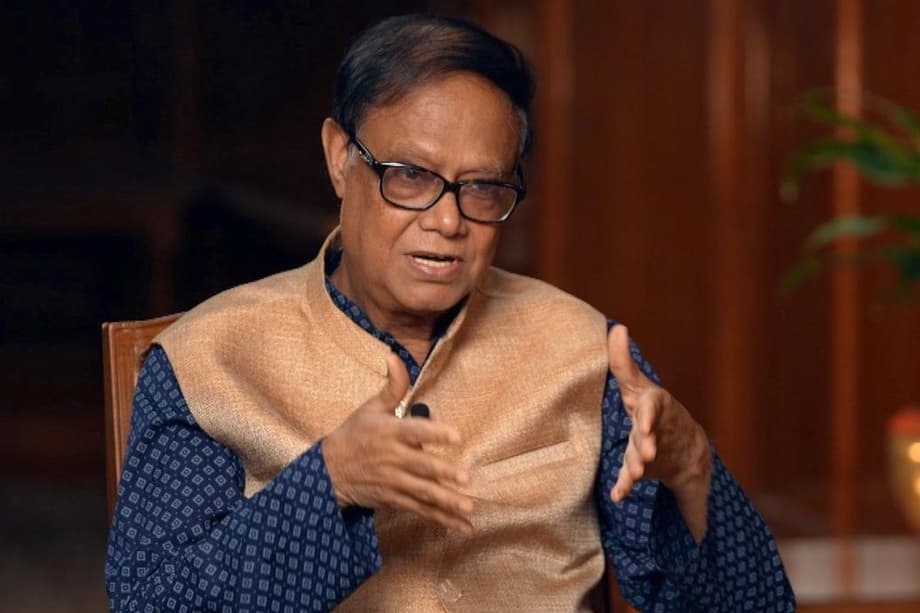
On February 25, 2026, Ahsan H. Mansur, the governor of Bangladesh Bank, arrived at his office in Dhaka’s Motijheel financial district expecting another routine day of steering his nation through a fragile economic recovery. Instead, he found himself locked in a confrontation with protesting central bank officials and, within hours, learned from television news that his tenure had been terminated. The 74-year-old former International Monetary Fund economist did not receive a phone call from the government, nor a formal notification, nor even the courtesy of a meeting with his superiors. I have not resigned, nor have I been removed. I saw it in the media, so I am going home, Mansur told journalists as he departed the central bank headquarters around 2:00 pm, barely two years into his four-year term.
The undignified exit marked a dramatic end to what many international observers considered one of the most successful economic stabilization programs in recent South Asian history. Just two days earlier, Mansur had met with Finance Minister Amir Khosru Mahmud Chowdhury, briefing him on banking reforms and receiving assurances that the new Bangladesh Nationalist Party (BNP) government intended to continue the recovery program. The reversal was as swift as it was brutal. As news of Mansur’s ouster spread, a group of central bank officials reportedly mobbed and forcibly removed his adviser, Ahsan Ullah, from the premises, escorting him out of the building in a scene that underscored the institutional chaos gripping the nation’s monetary authority.
The government immediately appointed Mustaqur Rahman, a 59-year-old garment exporter and cost management accountant with no central banking experience, as Mansur’s replacement. The decision represents an unprecedented experiment in Bangladeshi economic governance, replacing a seasoned macroeconomic technocrat with a businessman who sits on the ruling party’s inner circle. For a country that had barely escaped a balance-of-payments crisis just 18 months earlier, the gamble could not be more ill-timed.
The Architect of Stability
To understand the magnitude of Mansur’s ouster, one must recall the economic devastation he inherited when appointed by the interim government of Nobel laureate Muhammad Yunus in August 2024. The student-led revolution that toppled Sheikh Hasina’s autocratic regime had left Bangladesh’s financial system in ruins. Foreign exchange reserves, which stood above $48 billion in 2021, had hemorrhaged to roughly $18.8 billion by December 2024. The taka had collapsed under artificial exchange rate management, inflation had surged to a 12-year high of 11.36%, and the banking sector was riddled with what Mansur described as a designed robbery of the financial system orchestrated by politically connected industrialists.
Mansur moved with the precision of a crisis surgeon. A veteran of nearly three decades at the IMF in Washington, he implemented orthodox monetary policies that prioritized discipline over political expediency. He dismantled the rigid exchange rate regime that had created a black market for dollars, allowing the taka to find its market level while aggressively tightening monetary policy. Interest rates rose from 8.5% to 10%, choking off inflationary pressure and signaling that the era of politically motivated money-printing had ended.
The results were tangible and rapid. Within months, the taka stabilized between Tk122 and Tk123 per dollar, eliminating the volatility that had paralyzed trade. Remittances, which had been fleeing through informal channels due to unfavorable official rates, surged to record highs, bringing the total foreign exchange reserves to $30.3 billion by February 2026, enough to cover more than four months of imports. Inflation moderated from its peak toward single digits, while food inflation dropped from 14.5% to 8.5%. Mansur’s team also initiated the first bank mergers in Bangladeshi history, targeting distressed institutions, and pushed for the creation of an asset management company to handle toxic loans.
Beyond the numbers, Mansur provided something equally valuable: credibility. His IMF pedigree reassured international investors, rating agencies, and multilateral lenders that Bangladesh was committed to the rules of global finance. The IMF, which had extended a $4.7 billion bailout package, continued disbursements based on his stewardship, while Bangladesh sought an additional $3 billion in augmented financing.
Chasing the Looted Billions
As Mansur stabilized the macroeconomy, he launched an equally aggressive campaign that may have ultimately sealed his fate: the pursuit of billions of dollars allegedly laundered out of Bangladesh by allies of the previous regime. In late March 2025, Mansur traveled to London on a delicate mission, meeting with British Foreign Office ministers, the National Crime Agency (NCA), and private asset recovery firms to track down funds he believed had been siphoned from Bangladeshi banks and invested in UK property.
The scale of the alleged theft was staggering. Mansur estimated that tens of billions of dollars had been diverted from the banking system, with London serving as a primary destination. My primary target is those who have looted my banks, he told The Guardian during that visit, explaining that the stolen funds had been moved to Singapore, Dubai, London, and elsewhere. He hosted a summit of law firms and litigation funders in London to discuss recovery strategies, while the NCA provided technical assistance to Bangladeshi investigators.
The investigation had already claimed high-profile casualties. Tulip Siddiq, the UK’s former City minister and niece of Sheikh Hasina, resigned from her post after Dhaka’s Anti-Corruption Commission filed criminal cases against her family, though Mansur maintained he had never made public comments about her specifically. Nevertheless, a disinformation campaign targeting Mansur himself emerged just before his London trip. British MPs received emails containing links to articles by supposed journalists with fake names and stock photo profile pictures, attacking Mansur’s daughter and questioning his integrity.
Mansur believed these attacks originated from the very kleptocrats he was pursuing. The sole purpose is to diminish my reputation, he said at the time, vowing he would not quit despite the pressure. If I quit, they win. His reform agenda included a ring-fencing strategy for large industrial defaulters, keeping their operations running while preventing management from extracting further benefits, and he pushed for legal reforms to enable asset seizures both domestically and abroad.
The Businessman Governor
The man chosen to replace Mansur represents a radical departure from Bangladesh’s 50-year tradition of appointing bureaucrats, economists, or career bankers to the central bank governorship. Md Mostaqur Rahman is the managing director and CEO of Hera Sweaters Ltd., a garment export company, and serves as chairman of the Bangladesh Garment Manufacturers and Exporters Association’s standing committee on the central bank. He is also a member of the BNP’s election steering committee, placing him firmly within the ruling party’s political inner circle.
Rahman’s academic credentials differ markedly from his predecessor. While Mansur holds advanced degrees in economics and spent decades at the IMF, Rahman is a Fellow Cost and Management Accountant (FCMA) with degrees in accounting from Dhaka University. His supporters argue that this private sector background provides practical insight into the credit constraints facing Bangladeshi businesses. Restoring confidence in the banking sector has been identified as his immediate priority, with the new governor pledging to continue reforms while bringing a business-friendly perspective to monetary policy.
However, Rahman’s appointment has triggered alarm over conflicts of interest. In December 2025, just months before his elevation, Mutual Trust Bank rescheduled approximately Tk 89 crore in stressed loans for Hera Sweaters under a special facility for distressed borrowers, granting a 10-year restructuring with a two-year grace period. The revelation has led bankers to question how a governor who recently received favorable loan terms for his own company can objectively regulate the institutions he oversees. How can someone who rescheduled loans for his own company under special terms work in the interest of the country’s banks? one commercial bank managing director asked anonymously, highlighting the apparent ethical dilemma.
Legal experts note that Rahman must sever all professional ties with other institutions before assuming office, yet his business background raises fundamental questions about the central bank’s role. As Professor Deen Islam of Dhaka University observed, How can Bangladesh Bank remain independent if it is led by an active business figure from a sector it must regulate?
Autonomy Under Threat
The manner of Mansur’s removal has intensified concerns that Bangladesh is regressing toward an era of political interference in monetary policy. Finance Minister Chowdhury defended the decision as the prerogative of a newly elected administration, stating that changes were happening not only in Bangladesh Bank but in many places as the government implements its vision. Yet the abruptness of the transition, occurring while central bank employees were actively protesting against the governor, suggests a collapse of institutional decorum rather than an orderly transition.
The timing has particularly unsettled international observers. Mansur was in the midst of delicate negotiations with the IMF and World Bank, and his removal during active efforts to recover laundered assets creates a vacuum of trust. Selim Raihan, executive director of the South Asian Network on Economic Modeling, framed the episode starkly: A central bank is not merely a policy-making body; it is also the regulator and supervisor of commercial banks. He warned that a businessman governor may instinctively prioritize corporate interests over inflation control and financial stability.
Comparisons to global standards highlight the anomaly of Bangladesh’s action. In the United States, despite intense pressure from President Donald Trump on Federal Reserve Chairman Jerome Powell to lower interest rates, the legal framework prevents arbitrary removal of central bank chiefs to preserve monetary independence. Trump, who appointed Powell, has publicly demanded his resignation but cannot legally execute the dismissal. By contrast, Bangladesh’s Financial Institutions Division accomplished Mansur’s removal and Rahman’s appointment within hours through simple administrative notifications, highlighting the fragility of central bank autonomy in the country.
Birupaksha Paul, a professor of economics at the State University of New York, noted that since amendments to the Bangladesh Bank Order granting the institution greater autonomy have stalled, the governor’s selection remains effectively at the discretion of the finance minister. This structural weakness, combined with Rahman’s political connections, raises the specter of the central bank becoming an extension of the executive branch rather than an independent regulator.
What Happens Now
The economic stakes of this transition could not be higher. Bangladesh stands at an inflection point, having narrowly avoided the fate of Sri Lanka and Pakistan, which required severe IMF adjustment programs after exhausting their reserves. Mansur’s macroeconomic stabilization had created a platform for sustained recovery, but the banking sector remains fragile, with non-performing loans officially at 36% and several institutions requiring recapitalization or merger.
If Rahman maintains the tight monetary policy, flexible exchange rate, and aggressive anti-corruption stance of his predecessor, the transition might eventually be vindicated as a shift toward business-oriented pragmatism. His credibility with domestic entrepreneurs could theoretically help rebuild trust between banks and borrowers, accelerating private investment. However, if the appointment signals a return to loose credit, politically motivated lending, and tolerance for defaulted loans, the gains of the past 18 months could evaporate rapidly.
The international community is watching closely. Investor confidence in emerging markets rests heavily on the predictability of monetary policy and the independence of central banks. By firing the man who saved the economy just as the recovery gained traction, the Rahman administration has assumed full ownership of the next crisis. As markets digest the implications of Bangladesh’s unprecedented experiment with a businessman governor, one truth remains immutable: in the high-stakes world of global finance, credibility is the hardest currency to mint and the easiest to devalue.
Key Points
- Ahsan H. Mansur, a former IMF economist who stabilized Bangladesh’s economy after the 2024 political crisis, was abruptly removed as central bank governor on February 25, 2026, learning of his dismissal from television news.
- During his 18-month tenure, Mansur rebuilt foreign exchange reserves from $18.8 billion to $30.3 billion, stabilized the taka currency, reduced inflation from 11.36% to single digits, and initiated banking sector reforms including the country’s first bank mergers.
- His successor, Mustaqur Rahman, is a garment exporter and cost management accountant with no central banking experience, marking the first time a businessman has led Bangladesh Bank in its 50-year history.
- Mansur was actively pursuing the recovery of billions of dollars allegedly laundered by allies of the previous regime, conducting asset recovery negotiations in London shortly before his ouster, which may have triggered a disinformation campaign against him.
- Critics have raised concerns about conflicts of interest involving Rahman, noting that a bank rescheduled nearly Tk 90 crore in loans for his company just months before his appointment.
- Economists warn that the abrupt leadership change threatens Bangladesh’s fragile economic recovery, risks politicizing monetary policy, and undermines central bank independence during crucial IMF negotiations.