The Night Explosions Shook the Afghan Capital
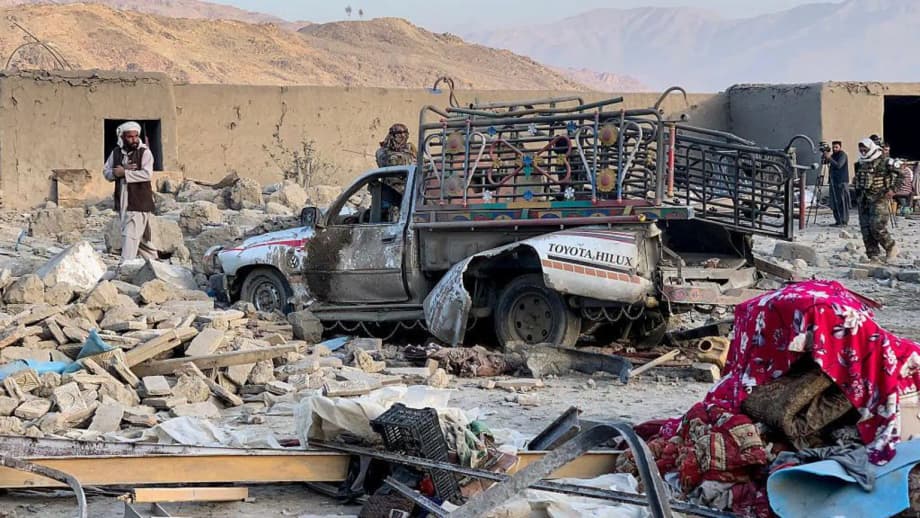
Residents of Kabul’s District 6 were awakened abruptly late Thursday night by explosions that rattled their homes and shattered windows across the neighborhood. Rushing into the streets, they heard the roar of jets overhead and watched as flames engulfed a military weapons depot on the western outskirts of the city, triggering hours of secondary detonations that lit up the night sky until dawn. The strikes marked a dramatic escalation in the long-festering conflict between Afghanistan and Pakistan, transforming a simmering border dispute into what Pakistani officials have explicitly labeled “open war.”
- The Night Explosions Shook the Afghan Capital
- A Rapidly Unfolding Crisis
- Competing Narratives and the Question of First Strikes
- The TTP Sanctuary at the Heart of the Dispute
- Asymmetric Warfare and the Drone Factor
- The Collapse of Diplomacy
- Geopolitical Realignments and Regional Implications
- Humanitarian Consequences and Economic Strangulation
- What to Know
The bombardment of Kabul represented the most serious phase of hostilities between the neighboring countries since the Taliban returned to power in Afghanistan in 2021. Pakistan’s military confirmed it conducted airstrikes not only in the Afghan capital but also in the provinces of Kandahar and Paktia, targeting what it described as Taliban military infrastructure. The Afghan Taliban government responded by claiming it had launched drone strikes deep inside Pakistani territory, hitting military installations near Abbottabad and Nowshehra, locations hundreds of kilometers from the border that were previously considered secure.
A Rapidly Unfolding Crisis
The violence followed a precise and escalating sequence of events that began just days earlier. On Sunday, February 22, Pakistan launched overnight airstrikes against targets in Afghanistan’s eastern Nangarhar and Paktika provinces. Islamabad claimed these attacks killed at least 70 members of the Tehreek-i-Taliban Pakistan (TTP), a militant group also known as the Pakistani Taliban or Fitna al Khawarij. The United Nations reported credible evidence that 13 Afghan civilians, including women and children, died in those strikes.
The Taliban government characterized those Sunday attacks as unprovoked violations of sovereignty. On Thursday night, Afghan forces launched what they termed “retaliatory operations” against Pakistani military positions along the 2,611-kilometer Durand Line border. Afghan officials claimed their forces captured multiple Pakistani border posts and inflicted heavy casualties. Within hours, Pakistan responded with the airstrikes on Kabul and other cities, while simultaneously declaring that its patience had “overflowed.”
By Friday morning, both sides were issuing starkly different accounts of the casualties. Pakistan’s military claimed it had killed 274 Afghan Taliban fighters and destroyed 83 posts, while acknowledging the loss of 12 Pakistani soldiers. The Taliban government asserted it had killed 55 Pakistani soldiers, captured others alive, and destroyed 19 Pakistani posts, while suffering only eight dead among its own forces. Independent verification of these claims remains impossible, as both countries restrict access to conflict zones and control information flow tightly.
Competing Narratives and the Question of First Strikes
Determining who bears responsibility for initiating hostilities depends entirely on which government’s account one accepts. Pakistan maintains that its actions constitute necessary self-defense against cross-border terrorism. Islamabad accuses the Afghan Taliban of providing sanctuary to the TTP, which it blames for a wave of deadly attacks inside Pakistan, including a suicide bombing at a Shia mosque in Islamabad that killed more than 30 people in February, and an assault in Bajaur that killed 11 soldiers. Pakistani officials claim they possess “conclusive evidence” that TTP leadership operates from Afghan soil with the knowledge and support of the Taliban government.
The Taliban government rejects these accusations entirely, insisting that Afghan territory is not used to threaten any neighboring country. Zabihullah Mujahid, the Taliban spokesman, characterized the Pakistani airstrikes as aggression against civilians and religious sites. Afghan authorities highlighted the bombing of a farmer’s home in Jalalabad that reportedly killed most of his family, and an attack on a religious school in Paktika, as evidence that Pakistan targets non-combatants. The Taliban frames its Thursday night offensive as legitimate retaliation for earlier Pakistani incursions that caused civilian deaths.
Our cup of patience has overflowed. Now it is open war between us and you. The Taliban became a proxy for India and began exporting terrorism.
Pakistani Defence Minister Khawaja Muhammad Asif issued this statement on Friday, explaining the decision to escalate. His reference to India reflects a growing concern in Islamabad that the Taliban government is realigning itself with Pakistan’s arch-rival, a development that complicates an already volatile security dynamic.
The TTP Sanctuary at the Heart of the Dispute
The conflict centers on the status of the Tehreek-i-Taliban Pakistan, a militant organization founded in 2007 as an umbrella group for various terror outfits operating in Pakistan’s northwestern tribal regions. Though distinct from the Afghan Taliban, the two groups share deep ideological bonds, Pashtun ethnic identity, and years of joint battlefield experience fighting against Western forces and the former Afghan government. During the two-decade war in Afghanistan, TTP fighters served as a force multiplier for the Afghan Taliban, providing manpower and tactical support.
When the Taliban returned to power in Kabul in August 2021, Pakistani leaders initially welcomed the development, expecting their longtime allies to cooperate against anti-Pakistan militants. Instead, the Taliban adopted a posture of calculated ambiguity. While occasionally relocating TTP members away from the border as a symbolic gesture to placate Islamabad, the Afghan government has refused to sever ties with the group or take decisive action against its leadership. This creates a security dilemma for Pakistan: its former strategic asset in Afghanistan now shelters its most lethal domestic threat.
In response, Pakistan has developed what analysts describe as a strategy of “hybrid coercion,” combining limited military strikes with economic pressure and diplomatic isolation. Islamabad has closed major border crossings, imposed tariffs on Afghan transit goods, and expelled hundreds of thousands of Afghan refugees. These measures aim to raise the costs for the Taliban of continuing to harbor TTP elements, while avoiding the expense and risk of a full-scale invasion. However, the strategy assumes that the Taliban will prioritize economic interests over ideological solidarity with the TTP, an assumption that has proven questionable.
Asymmetric Warfare and the Drone Factor
The military disparity between the two states is stark. Pakistan possesses one of Asia’s largest militaries, equipped with hundreds of tanks, F-16 fighter jets, and advanced precision munitions. The Afghan Taliban, by contrast, relies primarily on equipment abandoned by Western forces in 2021 and black market purchases, with no known capacity to deploy manned aircraft or conduct conventional operations deep into Pakistani territory.
Yet the Taliban brings two decades of guerrilla warfare experience against the world’s most advanced military powers. In the current conflict, they have introduced a new and concerning capability: drone strikes. Taliban forces used commercially available drones carrying improvised explosives to target three locations inside Pakistan on Friday, including areas near the Pakistan Military Academy in Abbottabad and an artillery school in Nowshehra. While Pakistani officials claimed to have destroyed these drones with anti-drone systems, the attacks demonstrated an unprecedented reach that could alter the conflict’s nature.
Analysts note that cheap, accessible drone technology allows non-state actors and under-equipped militaries to project force far beyond their conventional reach. For Pakistan, the prospect of Taliban drones striking military installations or even civilian targets in major cities represents a significant escalation of risk, even as Islamabad maintains overwhelming superiority in traditional warfare metrics.
The Collapse of Diplomacy
The current violence represents the collapse of mediation efforts that had previously contained the conflict. In October 2025, following days of cross-border clashes that killed more than 70 people, Qatar and Turkey brokered a fragile ceasefire between the two sides. Negotiators established mechanisms for border management and agreed to verification protocols. That truce held for several months but ultimately failed to address the fundamental dispute over TTP sanctuaries.
Multiple international actors have now intervened to prevent further escalation. Iran, which shares borders with both nations, has offered to mediate, with Foreign Minister Abbas Araqchi noting the conflict’s timing during Ramadan. China, which maintains friendly relations with both governments and significant economic interests in the region, called for immediate restraint and a return to dialogue. The United Nations Secretary-General António Guterres urged both sides to protect civilians and resolve differences through diplomacy rather than force.
Former U.S. ambassador to Afghanistan Zalmay Khalilzad described the tit-for-tat attacks as a “terrible dynamic that must stop,” proposing that a trusted third party such as Turkey monitor a new agreement in which neither country allows its territory to be used for attacks against the other. However, previous diplomatic initiatives have foundered on the Taliban’s refusal to accept limits on its relationship with the TTP and Pakistan’s insistence that Afghan sovereignty does not preclude cross-border strikes against perceived threats.
Geopolitical Realignments and Regional Implications
The conflict occurs against a backdrop of shifting regional alliances that worry Pakistani strategists. In October 2025, Taliban Foreign Minister Amir Khan Muttaqi made an unprecedented visit to India, Pakistan’s primary regional rival. During that trip, India announced it would upgrade its diplomatic mission in Kabul to a full embassy, signaling New Delhi’s willingness to engage with the Taliban government despite their historical opposition. Pakistan’s Defence Minister Asif explicitly accused the Taliban of becoming a “colony of India,” suggesting that Islamabad views the Kabul government not merely as a failed neighbor but as a potential strategic adversary.
This realignment threatens Pakistan’s long-standing policy of seeking “strategic depth” in Afghanistan, a concept predicated on having a friendly, pliant government in Kabul that would provide security in the event of conflict with India. Instead, Pakistan now faces the prospect of a Taliban government that asserts its autonomy, cultivates ties with India, and shelters militants who attack Pakistani forces. The irony is acute: Islamabad supported the Taliban for decades to prevent Indian influence in Afghanistan, only to see that influence grow precisely because of the Taliban’s return to power.
For the United States and other Western powers, the conflict presents complex counter-terrorism challenges. Washington must weigh the risks of engaging with the Taliban against the dangers of allowing the TTP to operate with impunity from Afghan soil. Any intervention could inadvertently reinforce the Taliban’s alignment with regional powers like Russia and China, or deepen Pakistan’s security crisis without resolving the underlying militant threat.
Humanitarian Consequences and Economic Strangulation
Beyond the military clashes, the conflict has inflicted severe hardship on civilian populations in both countries. Trade between Afghanistan and Pakistan has remained closed since October 2025, the longest disruption in decades. This closure affects Afghan small businesses and creates shortages of crucial medicines and supplies in a country already facing severe hunger and poverty following the collapse of international aid after 2021.
In Pakistan, authorities have conducted mass deportations of Afghan refugees, expelling hundreds of thousands of people who had lived in the country for decades. The border regions on both sides have seen civilian evacuations, with refugee camps near the Torkham crossing coming under fire. In Kabul, residents express despair that the relative security they enjoyed since the Taliban takeover has evaporated.
Tamim, a taxi driver living near the weapons depot struck in Kabul, described the panic when the bombardment began shortly after midnight. “Everyone ran down from the second floor of the house,” he said. “The ammunition inside the depot kept exploding on its own.” For ordinary Afghans who endured four decades of war, the return of airstrikes to their capital represents a devastating reversal of the one modest improvement in their lives since 2021: the absence of bombs falling from the sky.
What to Know
- Pakistan declared “open war” on Afghanistan following Taliban drone strikes and ground attacks on Pakistani positions, responding with airstrikes on Kabul, Kandahar, and Paktia.
- The immediate trigger was a sequence beginning with Pakistani strikes on February 22 targeting alleged TTP militants, followed by Afghan retaliation on February 26, and the subsequent Pakistani declaration of war.
- Pakistan accuses the Afghan Taliban of harboring the Tehreek-i-Taliban Pakistan (TTP), which Islamabad blames for recent deadly attacks including an Islamabad mosque bombing.
- The Taliban government denies supporting the TTP and claims its actions are retaliatory for Pakistani violations of Afghan sovereignty and civilian casualties.
- Taliban forces demonstrated new drone warfare capabilities, striking targets near Abbottabad and Nowshehra inside Pakistan, though Pakistan claims to have intercepted the drones.
- A Qatar-mediated ceasefire brokered in October 2025 has effectively collapsed, with Turkey, Iran, China, and Saudi Arabia now offering to mediate the escalating conflict.
- Pakistan alleges the Taliban government has become a proxy for India, complicating regional security dynamics that have historically seen Afghanistan as Pakistan’s strategic backyard.
- Trade between the two countries remains closed since October 2025, exacerbating humanitarian crises on both sides of the border and affecting millions of Afghan refugees in Pakistan.