A Four-Decade Alliance Adapts to Modern Threats
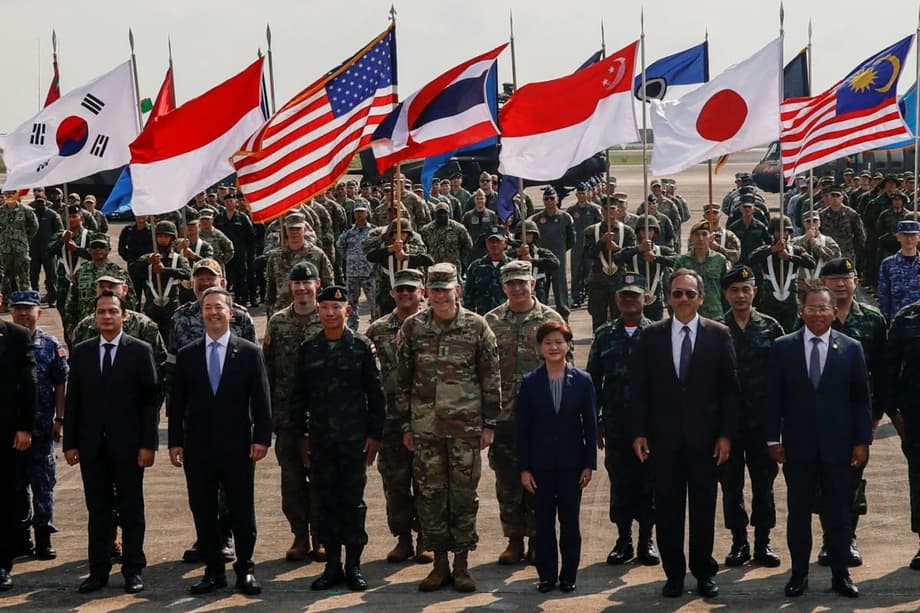
More than 8,000 military personnel from 30 countries have converged on Thailand for the 45th iteration of Cobra Gold, the largest and longest-running multinational military exercise in Southeast Asia. The annual drill, co-hosted by the Royal Thai Armed Forces and United States Indo-Pacific Command, commenced on February 24, 2026, with an opening ceremony at U-Tapao Royal Thai Airfield in Rayong province, and will continue through March 6 across multiple Thai provinces including Chonburi and Sattahip.
This year marks a significant evolution for the exercise, which began in 1982 as a modest maritime training event between the United States and Thailand. Now, four decades later, Cobra Gold 2026 has transformed into a complex, multi-domain operation that reflects the changing nature of global security threats. The exercise has shifted from traditional land, sea, and air maneuvers to incorporate sophisticated cyber warfare training and space-based operations, addressing what military planners call Combined Joint All-Domain Operations, or CJADO.
The participation roster reveals the exercise’s broad regional appeal. Seven nations serve as full participants: Thailand, the United States, Singapore, Indonesia, Japan, South Korea, and Malaysia. Three additional countries, China, India, and Australia, engage in selected activities including humanitarian aid programs. Ten nations operate under the Multinational Planning Augmentation Team framework: Bangladesh, Canada, Fiji, France, the United Kingdom, Italy, Mongolia, Nepal, New Zealand, and the Philippines. Another ten countries, including Germany, Saudi Arabia, and Vietnam, participate as observers through the Combined Observer Liaison Team.
At the opening ceremony, U.S. Ambassador to Thailand Sean O’Neill stressed the exercise’s continued relevance in an uncertain world.
As the world changes, so must Cobra Gold. We must always ensure Cobra Gold adapts to meet new challenges and improves the interoperability we need to defend our sovereignty and prosperity now, and in the future.
General Ukrit Boontanon, Thailand’s Chief of Defence Forces, presided over the ceremony alongside Ambassador O’Neill and Lieutenant General Matthew McFarlane, Commanding General of America’s First Corps. The presence of senior military leaders from across the Indo-Pacific signals the high stakes of this year’s activities, designated as a Heavy Year featuring full-scale field training exercises rather than the lighter command post simulations that alternate annually.
Advanced Warfare in the Digital Domain
The 2026 exercise introduces capabilities that would have been unimaginable when Cobra Gold began over 40 years ago. This year’s focus on Combined Joint All-Domain Operations integrates traditional kinetic warfare with operations in space and cyberspace, reflecting how modern conflicts increasingly blend physical and digital battlegrounds.
During the opening amphibious assault at Hat Yao beach, military personnel deployed advanced technological systems alongside traditional landing craft. Andrew Emslie, space integrator for Pacific Multi-Domain Training Experimentation Capability, explained that the exercise included the first integration of a U.S. Army multi-domain task force space system. This deployable technology monitors communications signals throughout operations, detecting electromagnetic interference and distinguishing between friendly and hostile signals.
When you talk about electromagnetic warfare, an adversary would be looking to deny our capabilities, our ability to talk, communicate, all that kind of stuff, Emslie told military media from Camp Red Horse. The system allows operators to identify the source of signals and respond appropriately, either coordinating with allies to adjust communications or pinpointing enemy electronic warfare attempts.
Cyber warfare training at Cobra Gold involves simulated attacks on communication networks and defensive responses to digital intrusions. These exercises help participating nations develop protocols for maintaining secure communications when adversaries attempt to disrupt command and control systems. The space component includes monitoring satellite communications and ensuring GPS integrity, critical capabilities for navigation and precision operations in the geographically complex Southeast Asian theater.
General Boontanon specifically highlighted these new dimensions during his opening remarks, noting that the exercise would emphasize military capabilities in joint multi-domain operations consisting of land, sea and air, and importantly space and cyber. The inclusion of geospatial intelligence and signals intelligence training represents a significant expansion from previous years, preparing forces for scenarios where satellite networks and digital infrastructure play decisive roles in combat outcomes.
Allied Forces Storm the Beaches
The operational tempo intensified rapidly following the ceremonial opening, with multinational forces conducting their first major amphibious landing at Hat Yao. Dozens of amphibious vehicles, ship-to-shore vessels, and landing craft swarmed the remote beach on February 26, supported by pre-set pyrotechnics and smoke screens that simulated battlefield conditions.
U.S. Marines joined counterparts from Thailand, Singapore, and South Korea in storming the shoreline, demonstrating the coordinated assault capabilities that remain central to the exercise despite its technological evolution. The amphibious operations training involved intensive coordination between the Royal Thai Navy and U.S. Navy assets, including the amphibious dock landing ship USS Ashland (LSD-48), which arrived in Thailand carrying approximately 200 Marines and sailors from the 15th Marine Expeditionary Unit, 3rd Assault Amphibian Battalion, and Combat Logistics Regiment 17.
U.S. Navy Commander Adam Peeples, commanding officer of the Ashland, stressed the strategic significance of the naval presence. We are honored to arrive in the Kingdom of Thailand and participate in Cobra Gold alongside our Royal Thai Navy counterparts and multinational partners, Peeples stated. Cobra Gold provides a vital opportunity to strengthen interoperability, reinforce longstanding relationships and demonstrate our shared commitment to the Indo-Pacific.
Lieutenant Colonel Matt Bride, commander of Task Force Ashland troops, framed the deployment in stronger terms. Task Force Ashland is more than a partnership. It’s a statement of commitment forged in the crucible of realism, he said. Here at Cobra Gold 26, we are sharpening the spear and honing the cutting edge of our combined military power. These alliances aren’t just on paper, they’re built on the sweat and shared determination of our Marines, sailors, partners and allies, creating an unshakeable foundation for regional security that potential adversaries will recognize.
The amphibious landing served as the capstone event for the maritime component of Cobra Gold, testing the ability of four nations to coordinate ship-to-shore movements under simulated combat conditions. The exercise required precise timing between naval gunfire support, aerial reconnaissance, and beach assault elements, with each nation contributing specific capabilities to the combined force.
Humanitarian Assistance and Civilian Protection
While combat readiness remains the primary focus, Cobra Gold 2026 dedicates significant resources to humanitarian assistance and disaster relief operations, reflecting Southeast Asia’s vulnerability to natural disasters and the region’s need for coordinated emergency response capabilities. The exercise includes a major Non-combatant Evacuation Operations demonstration and a Humanitarian Assistance and Disaster Relief demonstration.
The NEO training addresses scenarios where military forces must rapidly extract civilians from conflict zones or disaster areas, a capability that has gained urgency following recent global crises. Ambassador O’Neill specifically discussed the importance of these operations during his visit to the exercise sites, highlighting how allied cooperation in civilian protection serves as a foundation for broader security partnerships.
The humanitarian components also feature highly specialized search and rescue capabilities. The K9 USAR Thailand team participated in the Amphibious Exercise, deploying search and rescue dog units to simulate the aftermath of a catastrophic tsunami. In a notable moment that captured local attention, MI-6, the royal pet dog of Her Royal Highness Princess Sirivannavari Nariratana Rajakanya, joined the exercise. The K9 units were deployed from ship to shore via Amphibious Assault Vehicles to reach a simulated disaster zone where land routes had been destroyed, then conducted systematic searches for victims buried in debris.
The participation of the royal K9 unit underscores the deep cultural connections between Thailand’s monarchy and its military institutions. Princess Sirivannavari Nariratana Rajakanya has long supported animal welfare and working dog programs, and MI-6’s deployment demonstrated the practical application of these royal initiatives in disaster scenarios. The dog’s participation also generated significant local media interest, helping to publicize the exercise’s humanitarian aspects to the Thai public.
These humanitarian elements serve a dual purpose. While providing practical training for disaster response, they also offer lower-intensity opportunities for nations like China and India to participate in select activities, building trust and communication protocols that could prove essential during actual regional crises.
Equipment and Interoperability Milestones
The exercise coincides with significant developments in U.S.-Thailand defense cooperation regarding military hardware. The Royal Thai Army recently received 17 additional Stryker infantry fighting vehicles under the U.S. government’s Excess Defense Articles program, which transfers surplus military assets to allied nations. The delivery, announced on February 23, brings the total number of these advanced armored vehicles in Thai service to a substantial fleet.
The Stryker vehicles, 8×8 wheeled armored platforms produced by General Dynamics Land Systems, represent a significant capability upgrade for the Royal Thai Army. These vehicles feature remote-control weapon systems, advanced network-centric warfare capabilities, and superior mobility compared to older armored personnel carriers. The timing of the delivery, coinciding with Cobra Gold and the concurrent Hanuman Guardian exercise, allows for immediate integration of the equipment into joint training scenarios.
The Stryker delivery represents part of a broader modernization effort for the Royal Thai Army, which has sought to upgrade its armored capabilities while maintaining interoperability with American systems. These vehicles complement Thailand’s existing fleet of armored personnel carriers and provide enhanced protection for infantry units during both conventional operations and peacekeeping missions. The 8×8 wheeled configuration offers superior road mobility compared to tracked vehicles, allowing for rapid deployment across Thailand’s varied terrain from urban centers to rural border regions.
Under the cooperation framework, a Stryker Brigade Combat Team will deploy to Thailand to provide training in maintenance and network-centric warfare tactics, ensuring that Thai forces can maximize the potential of the new equipment. This transfer illustrates how Cobra Gold serves not merely as an annual event but as a anchor for year-round military cooperation and capability development between the United States and its Thai allies.
Strategic Significance in a Shifting World
Cobra Gold 2026 occurs against a backdrop of increasing strategic competition in the Indo-Pacific region. The exercise demonstrates the United States’ continued commitment to the region despite global tensions elsewhere, while allowing Thailand to maintain its traditional role as a bridge between competing powers through the inclusion of Chinese and Indian observers in humanitarian components.
Lieutenant General Matthew McFarlane articulated the broader strategic message during the opening ceremonies. Our nations share a commitment to stability, prosperity and a peaceful region where all nations can thrive, he stated. This exercise reflects that commitment. It shows the world that we stand together.
The U.S. Embassy in Bangkok reinforced this message through official channels, noting that Cobra Gold 2026 strengthens peace through shared strength with allies and partners, improves interoperability, integrates advanced technologies and builds readiness to address future challenges across the Indo-Pacific region.
The exercise timing carries particular weight as it coincides with the United States’ upcoming 250th Independence anniversary, with commemorative activities planned throughout 2026 to underscore cooperation with allies. Military officials noted that the exercise would continue regardless of changes in U.S. administration, reflecting the institutional nature of the U.S.-Thai relationship that has persisted through multiple governments on both sides.
For Thailand, the exercise represents a continuation of its oldest military alliance in the region. The U.S.-Thai partnership, formalized through the 1954 Manila Pact and subsequent agreements, has survived numerous geopolitical shifts over seven decades. Cobra Gold serves as the operational expression of this treaty relationship, testing and validating the procedures that would guide actual combined operations in crisis scenarios.
The participation of 30 nations, ranging from core NATO allies like the United Kingdom and Germany to regional powers like Japan and South Korea, creates a unique forum for multilateral coordination. Unlike bilateral exercises that focus on specific paired capabilities, Cobra Gold’s multilateral structure forces participants to develop common standards and communication protocols that could facilitate coalition operations during actual contingencies, from humanitarian disasters to regional security threats.
The Bottom Line
- Cobra Gold 2026 marks the 45th iteration of the annual exercise, with over 8,000 personnel from 30 nations participating through March 6 across multiple Thai provinces.
- The 2026 drill introduces Combined Joint All-Domain Operations, integrating cyber warfare and space-based capabilities with traditional land, sea, and air maneuvers for the first time.
- Seven nations serve as full participants including Thailand, the United States, Japan, and South Korea, while China, India, and Australia join selected humanitarian activities.
- Major training events include amphibious assaults at Hat Yao beach, non-combatant evacuation operations, and search and rescue demonstrations featuring specialized K9 units.
- The exercise coincides with the delivery of 17 additional Stryker armored vehicles to Thailand under U.S. defense cooperation programs, enhancing Royal Thai Army capabilities.
- Officials stress the drill demonstrates enduring U.S. commitment to Indo-Pacific security while strengthening interoperability among allied and partner nations.